
Review · spring · summer · fall
The North Face Wawona 6 Footprint Review: Purpose-Built Protection for Family Base Camping
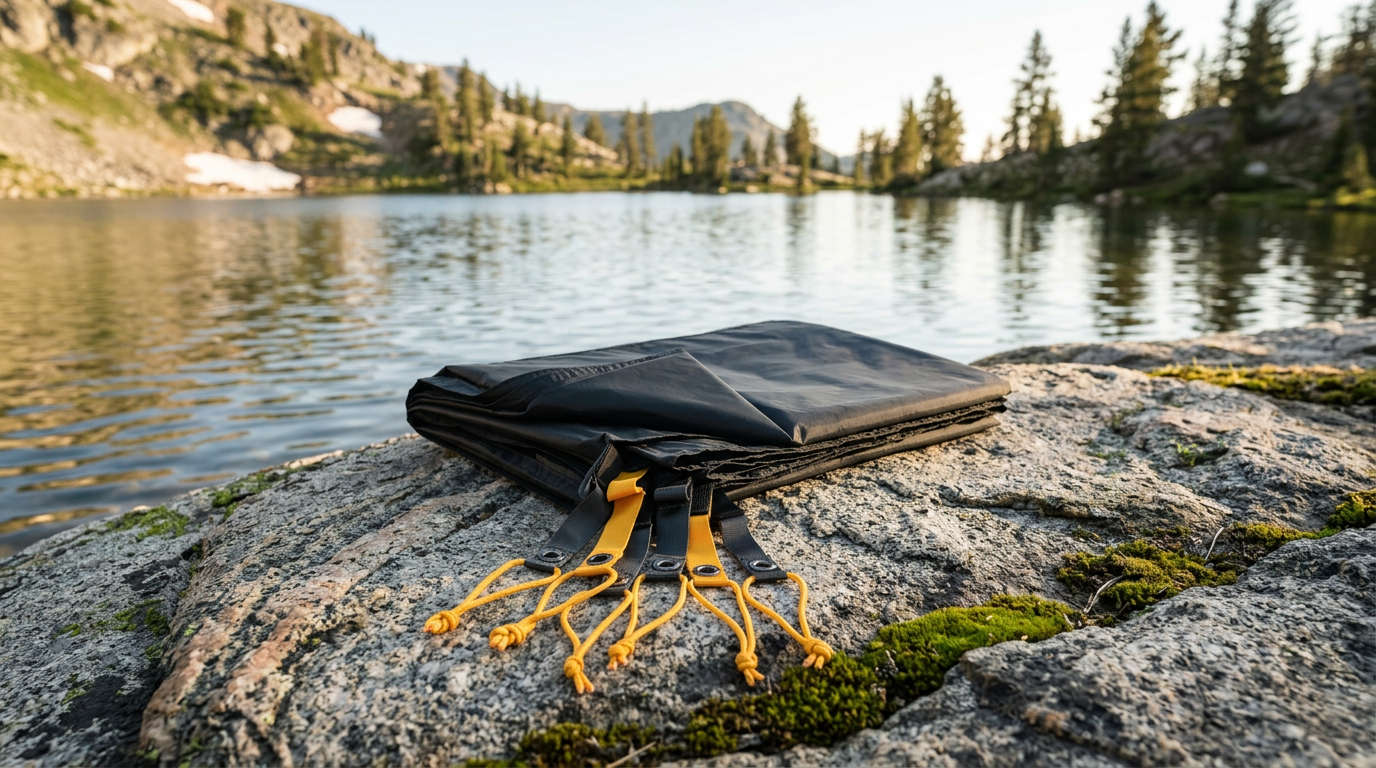
The North Face Wawona 6 Footprint is a custom-fit ground sheet engineered specifically for the Wawona 6 tent, delivering 907 g (2 lbs) of abrasion resistance and moisture protection via 75-denier polyester taffeta with a 1500 mm PU coating. This is for car campers and family groups prioritizing tent longevity over pack weight—those willing to carry dedicated protection to extend the life of a $500+ shelter investment across rocky, wet, or debris-laden sites.
Disclosure: Four Seasons Gear is reader-supported. When you buy through links on our site, we may earn an affiliate commission at no extra cost to you. Prices and availability are accurate as of the time we last checked.
Construction and Materials
The Wawona 6 Footprint uses 75-denier polyester taffeta—a tightly woven fabric balancing tear resistance with reasonable packability. The North Face applies a 1500 mm polyurethane coating to the underside, matching the waterproof rating of many three-season tent floors. The non-PFC durable water repellent finish sheds surface moisture without relying on perfluorinated chemicals, aligning with current environmental standards. At 907 g, this footprint adds roughly 15% to the Wawona 6's packed weight but spreads that mass across a large surface area, so it rolls compactly for car transport.
Specs
The footprint's perimeter is cut to match the Wawona 6's floor geometry, preventing water pooling between tent and ground sheet—a common issue when generic tarps extend beyond the tent body. Corner grommets and attachment points (manufacturer does not publish exact count) integrate with the tent's pole system for secure positioning.
Intended Use and Performance Context
This footprint targets established campgrounds, national park sites, and anywhere sharp gravel, roots, or pine cones threaten tent floors. The 1500 mm coating handles overnight condensation and light ground moisture but is not a substitute for site selection—standing water will eventually wick around edges. Switchback Travel's Wawona 6 review emphasizes the tent's family-camping focus, noting its 10 lb 5 oz base weight and spacious 100 sq ft floor area; the footprint extends that investment by preventing punctures and abrasion that accumulate over seasons of use.
The marketing mentions fly-only pitching capability, a minimalist setup where you omit the tent body and pitch just the rainfly over the footprint. This configuration suits afternoon rainstorms or ultralight scouts, though at 907 g the footprint itself is heavier than many solo shelters. REI's product listing confirms compatibility with this setup, provided you have the Wawona 6's pole set.
Comparison Context
Generic hardware-store tarps cost $10–$20 but require field trimming and lack integrated attachment points, often bunching under the tent or channeling water inward. Aftermarket footprints from brands like Big Agnes or MSR typically run $40–$60 for four-person models; the Wawona 6 Footprint's $70 price reflects its six-person scale and custom geometry. Treeline Review's Wawona 6 assessment highlights the tent's $549 MSRP, positioning the footprint as a 13% add-on that protects a significant gear investment.
Backpackers prioritizing weight savings—those drawn to shelters like the Big Agnes Copper Spur HV UL Ultralight Bikepacking Tent—will find this footprint incompatible with gram-counting goals. The Wawona system is engineered for car-accessible sites where comfort and durability outweigh portability.
Durability Considerations
Seventy-five-denier polyester taffeta sits in the mid-range for tent footprints—thicker than ultralight 30D fabrics but less bombproof than 210D oxford weaves used in expedition gear. The PU coating will degrade with UV exposure over years, so store the footprint dry and out of direct sunlight between trips. The non-PFC DWR requires periodic reapplication (via spray-on treatments like Nikwax) to maintain bead-up performance, typically every 10–20 nights of use depending on soil contact and cleaning frequency.
Seam integrity depends on stitching quality and edge binding; The North Face does not specify whether seams are taped or sealed. Inspect edges after each trip for fraying, especially if dragging the footprint across gravel during setup.
Value Proposition
At $70, this footprint costs 13% of the Wawona 6 tent's retail price. Replacement tent floors—if even available separately—typically run $100–$150 plus labor for field repair kits. Over 50+ nights of camping, the footprint amortizes to $1.40 per trip, a reasonable insurance premium for families using the tent seasonally. The custom fit eliminates the trial-and-error of trimming generic tarps, saving setup time and frustration.
Budget-conscious campers can substitute a painter's tarp or Tyvek sheet cut to size for under $15, accepting the tradeoffs in attachment convenience and aesthetic integration. Those already invested in the Wawona 6 ecosystem will appreciate the plug-and-play compatibility and material consistency.
Pros and Cons
What we like
Trade-offs
Frequently Asked Questions
+Can I use this footprint with other six-person tents?
No. The Wawona 6 Footprint is precision-cut to match the Wawona 6's floor shape and pole attachment points. Using it with other tents will result in poor fit, exposed edges, or water channeling issues. For universal protection, consider cutting a Tyvek or polycryo sheet to your tent's dimensions.
+How do I clean and maintain the footprint?
Shake off loose debris after each trip, then spot-clean with mild soap and water. Avoid machine washing, which can delaminate the PU coating. Hang to dry completely before storage—trapped moisture promotes mildew. Reapply non-PFC DWR spray (Nikwax, Granger's) every 10–20 nights or when water stops beading on the surface. Store loosely rolled in a cool, dry location away from direct sunlight.
+Does the footprint add significant bulk to my camp kit?
At 907 g and approximately 30 cm × 15 cm rolled (manufacturer does not publish packed dimensions, verify before purchase), the footprint fits easily in a car trunk or large duffel. It is not designed for backpacking—the weight and volume exceed most hikers' ground-sheet budgets. For car camping, the bulk is negligible compared to the tent itself.
+Will this footprint work for fly-only pitching?
Yes, when paired with the Wawona 6's rainfly and pole set. This minimalist configuration omits the tent body, using the footprint as a floor under the fly. It suits afternoon storms or ultralight scouts but sacrifices the tent's mesh ventilation and interior organization. At 907 g, the footprint alone weighs more than many solo tarp shelters, so this setup primarily benefits those already carrying the Wawona 6 system.
The Bottom Line
The North Face Wawona 6 Footprint delivers purpose-built protection for a specific tent, trading universal compatibility and ultralight credentials for precise fit and integrated attachment. Families and groups investing in the Wawona 6 for seasons of car camping will find the $70 cost justified by extended tent life and simplified setup. Backpackers and budget minimalists should look elsewhere—generic tarps or omitting a footprint entirely make more sense when every gram and dollar counts.

Read next
More from this category
REVIEW
MSR Hubba Hubba LT 2-Person Lightweight Backpacking Tent Review
REVIEW
NEMO Equipment Hornet OSMO Ultralight Backpacking Tent Review
REVIEW
Big Agnes Tiger Wall UL Ultralight Bikepacking Tent with UV-Resistant Solution Dyed Fabric Review
REVIEW
MSR Freelite 2-Person Ultralight Backpacking Tent Review
REVIEW
Coleman Sundome Camping Tent Review: Affordable 3-Season Shelter for Casual Campers
REVIEW