
Review · spring · summer · fall
Coleman Sundome Camping Tent Review: Affordable 3-Season Shelter for Casual Campers
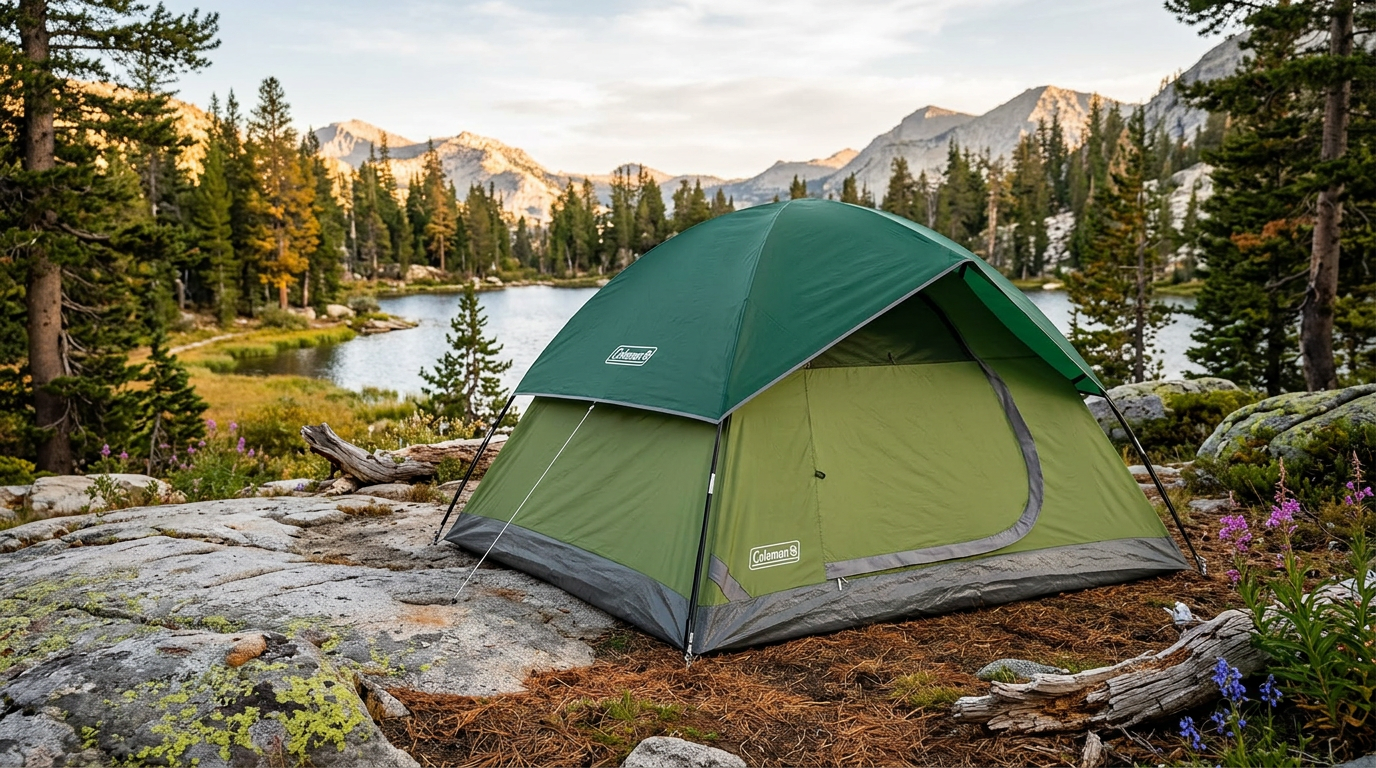
The Coleman Sundome is a budget-friendly, three-season dome tent designed for car camping, festivals, and backyard use. With WeatherTec construction, a 10-minute setup, and multiple size options (2/3/4/6-person), it prioritizes ease of use and weather protection over weight and packability. Best for casual campers who drive to their site and value straightforward setup and proven weather resistance at an accessible price point.
Disclosure: Four Seasons Gear is reader-supported. When you buy through links on our site, we may earn an affiliate commission at no extra cost to you. Prices and availability are accurate as of the time we last checked.
Construction & Materials
The Sundome employs Coleman's WeatherTec system: a tub-style floor with welded corners, inverted seams, and a taped rainfly. This construction method keeps the floor seams elevated above ground contact and seals critical junction points against wind-driven rain. The continuous pole sleeves run the length of the tent body without interruption, reducing snag points during setup. Coleman pre-attaches the poles to the tent body at the hub, so you're threading already-connected pole segments rather than assembling a separate frame.
The frame uses fiberglass poles, a standard choice in this price bracket. Fiberglass offers reasonable strength-to-cost ratio but weighs more than aluminum and can splinter under extreme stress or cold temperatures. The manufacturer rates the frame to withstand winds up to 35 mph when properly staked. The rainfly attaches via clips and covers the tent body, leaving the door vestibule exposed—a typical dome tent configuration that prioritizes ventilation over vestibule storage space.
Specs
Ventilation & Livability
Two large mesh windows on opposite walls and a ground vent create cross-ventilation to reduce condensation buildup on cool mornings. The dome profile provides generous center height—exact dimensions vary by model size, but the design prioritizes headroom over floor area, a tradeoff that improves comfort when changing clothes or moving around inside. Interior gear pockets keep small items organized, and the E-Port allows you to run an extension cord from a campground power pedestal into the tent for charging devices or running a small fan.
The Sundome's ventilation strategy works well in moderate conditions but has limits. The rainfly covers the windows during rain, reducing airflow and increasing condensation potential. Ground vents help, but they're less effective than high/low vent combinations found on pricier tents. In humid climates or during extended rainy periods, expect some interior moisture accumulation—wipe down the tent body in the morning and air it out when weather permits.
Setup & Ease of Use
The pre-attached pole system and continuous sleeves deliver on the 10-minute setup claim once you've practiced the sequence. Thread the poles through the sleeves, clip the tent body to the frame at designated points, stake out the corners, and attach the rainfly. The process is intuitive enough for first-time campers, and the lack of loose pole segments reduces the chance of losing components. Coleman includes a carry bag, stakes, and guy lines; the stakes are basic steel pegs adequate for soft ground but less effective in sand or hard-packed soil.
Durability Considerations
Fiberglass poles are the primary durability concern. They perform reliably in typical three-season conditions but can crack or splinter if overtightened, stepped on, or exposed to freezing temperatures during setup. Coleman includes a repair sleeve in the package; carry it. The welded floor corners and inverted seams are more durable than stitched-and-taped construction, reducing the likelihood of seam failure during the tent's first few seasons.
The polyester tent body and rainfly resist UV degradation better than nylon but will still degrade with prolonged sun exposure. Store the tent dry and out of direct sunlight between trips. The zippers are coil-style, which handle dirt and minor misalignment better than toothed zippers but can separate under heavy lateral stress—close and open zippers smoothly rather than forcing them. The 1-year warranty covers manufacturing defects but not wear from normal use or improper setup.
Value & Category Context
At approximately $77, the Sundome occupies the entry-level car-camping segment. It competes with similar dome tents from Ozark Trail, Eureka, and ALPS Mountaineering, all offering comparable features and construction at similar price points. The Sundome's advantage is Coleman's distribution network—you can find it at most big-box retailers, and replacement parts are widely available.
The tent makes sense for families trying camping for the first time, festival-goers who need shelter for a weekend, or backyard sleepover hosts. It does not make sense for backpackers (too heavy), winter campers (three-season only), or users who prioritize packability and weight. The WeatherTec system provides reliable rain protection for weekend trips, but extended exposure to severe weather will reveal the limits of fiberglass poles and basic stake-out points.
What we like
Trade-offs
Frequently Asked Questions
+Can I use the Coleman Sundome in winter or snow?
No. The Sundome is rated for three-season use (spring/summer/fall). The single-wall rainfly, mesh windows, and fiberglass poles are not designed for snow loads or freezing temperatures. Fiberglass becomes brittle in cold, and the tent lacks the structural reinforcement and ventilation control needed for winter camping.
+How much does the Sundome weigh, and can I backpack with it?
Coleman does not publish official weights, but the Sundome typically weighs 4.5–7 kg depending on size—far too heavy for backpacking. The packed size also exceeds what fits in a backpack. This tent is designed for car camping, where you drive to your site and carry the tent a short distance.
+What's the difference between the 2-person, 4-person, and 6-person models?
The models share the same dome architecture and WeatherTec construction but differ in floor area and peak height. The 2-person fits two sleeping pads with minimal extra space; the 4-person accommodates four pads or two adults and gear; the 6-person fits six pads or a family with children. Larger models take slightly longer to set up but use the same pole-sleeve system.
+How well does the Sundome handle rain and wind?
The WeatherTec system (tub floor, welded corners, taped rainfly) provides reliable protection against moderate rain. The frame is tested to 35 mph winds when properly staked. In sustained heavy rain or wind gusts above 35 mph, stake out all guy lines and ensure the rainfly is taut. The tent will handle typical summer thunderstorms but is not designed for extreme weather.
+Do I need to seam-seal the Sundome before use?
The rainfly seams come factory-taped, and the floor uses welded construction, so additional seam sealing is not required out of the box. After several seasons of use, inspect the taped seams for peeling or gaps and reapply seam sealer (like Gear Aid Seam Grip) if needed.
Final Recommendation
The Coleman Sundome delivers straightforward, weatherproof shelter for car campers who value ease of setup and proven performance over weight savings. The WeatherTec construction handles typical three-season conditions, the pre-attached poles simplify pitching, and the multiple size options accommodate solo campers through families. Fiberglass poles and basic stakes limit durability and versatility, but at this price point, the Sundome offers a sensible entry into camping without requiring a significant upfront investment.

Read next
More from this category
REVIEW
MSR Hubba Hubba LT 2-Person Lightweight Backpacking Tent Review
REVIEW
NEMO Equipment Hornet OSMO Ultralight Backpacking Tent Review
REVIEW
Big Agnes Tiger Wall UL Ultralight Bikepacking Tent with UV-Resistant Solution Dyed Fabric Review
REVIEW
MSR Freelite 2-Person Ultralight Backpacking Tent Review
REVIEW
The North Face Wawona 6 Footprint Review: Purpose-Built Protection for Family Base Camping
REVIEW