
Review · spring · summer · fall
Kelty Discovery Basecamp 4 Person Tent + Tent Footprint Bundle Review
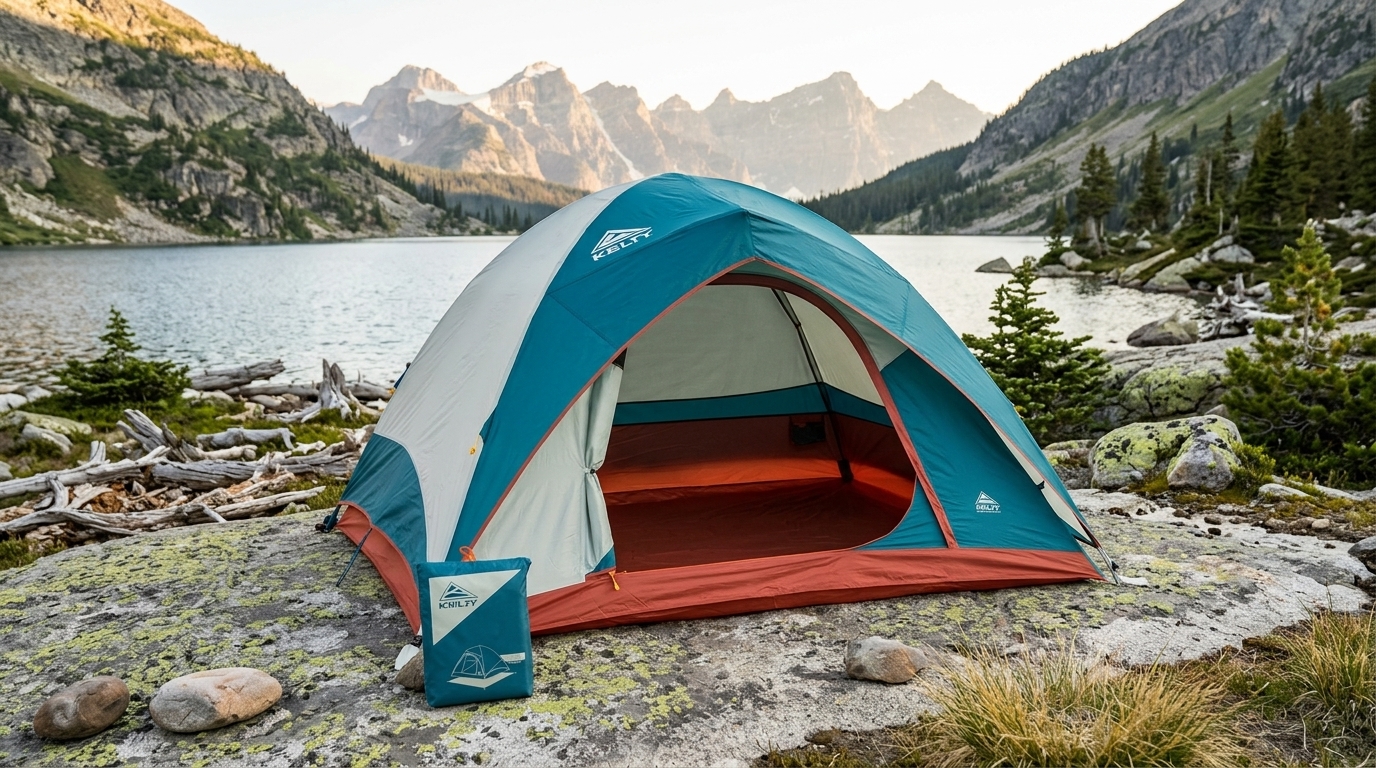
The Kelty Discovery Basecamp 4 is a 3-season car-camping tent that prioritizes group shelter efficiency over ultralight credentials. At 7 lb 8 oz minimum weight (approximately 3.4 kg) for 53 square feet of floor space, it delivers 13.25 square feet per person in a 4-person configuration—generous by backpacking standards but heavy for solo carry. The bundle includes a footprint for floor protection. This is purpose-built for groups willing to designate one person to carry the tent while others distribute gear, trading individual pack weight for communal living space. The 56-inch peak height and single large D-door favor livability over vestibule storage, making it best for established campsites rather than alpine or winter conditions.
Disclosure: Four Seasons Gear is reader-supported. When you buy through links on our site, we may earn an affiliate commission at no extra cost to you. Prices and availability are accurate as of the time we last checked.
Specifications
Specs
Construction and Materials
Kelty employs DWR/PFC-free fabric treatments across the Discovery Basecamp line, eliminating perfluorinated compounds that persist in ecosystems. The manufacturer does not publish specific denier ratings or waterproof ratings (typically measured in millimeters of hydrostatic head) for the floor or rainfly, which is unusual for a tent at this price point. The X-frame pole configuration—two poles crossing at the apex—creates a simple geometric structure that maximizes usable interior volume relative to pole count.
Kelty's Quickcorners system uses color-coded pole sleeves and corner grommets to accelerate setup. Pre-attached guylines eliminate the need to thread cordage through loops in low light or rain. The included 'shark mouth duffel' stuff sack features a wide opening that simplifies packing when the tent body is damp or when multiple people are breaking camp simultaneously. The footprint adds approximately 8–12 oz (estimated, manufacturer does not specify) and extends tent floor lifespan on abrasive surfaces like gravel or decomposed granite.
Intended Use and Livability
At 13.25 square feet per occupant, the Basecamp 4 provides more elbow room than many backpacking tents, which typically allocate 10–12 square feet per person. The 56-inch peak height allows most adults to sit upright near the center, though the single-wall sloped architecture reduces headroom toward the perimeter. Internal storage pockets organize small items like headlamps, cards, or snacks, but the manufacturer does not specify pocket count or dimensions.
The single large D-door simplifies entry but creates a potential bottleneck when four occupants need to exit simultaneously for a midnight bathroom run. The tent lacks vestibules—covered areas outside the sleeping compartment for boot and pack storage—so wet gear either stays inside the tent body or outside exposed to weather. This design choice reduces weight and complexity but assumes users will store gear in vehicles or under separate tarps.
Category Context and Comparison
The Basecamp 4's 7.5 lb minimum weight positions it between ultralight backpacking shelters and heavy car-camping domes. For reference, the Big Agnes Copper Spur HV UL Ultralight Bikepacking Tent (2-person) weighs 2 lb 12 oz, delivering 29 square feet at 1.38 kg—a radically different weight-to-space ratio optimized for solo carry. The Basecamp 4 instead optimizes for group efficiency: one person carries 3.4 kg to shelter four, while each member of a hypothetical quartet using individual 2-person ultralight tents would carry 1.4–1.8 kg of shelter.
The tradeoff becomes unfavorable if the group splits or if terrain requires distributing the tent components (poles, body, fly, footprint) across multiple packs. The 23-inch packed length may not fit inside smaller backpacks, necessitating external strapping. Groups prioritizing modularity—the ability to pitch a tarp-only configuration or split into smaller shelters—should consider multi-tent systems instead.
Durability Considerations
The absence of published fabric denier and waterproof ratings makes it difficult to assess floor abrasion resistance or rainfly performance in sustained precipitation. DWR/PFC-free treatments generally require more frequent reapplication than fluorinated alternatives, as they rely on silicone or polyurethane chemistries that degrade faster under UV exposure and mechanical wear. Plan to reapply aftermarket DWR spray every 10–15 nights of use, or sooner if water stops beading on the fly.
The included footprint mitigates floor wear but adds weight and bulk. Users camping exclusively on soft surfaces like grass or forest duff may choose to leave it behind to save ounces. The X-frame pole geometry concentrates stress at the apex hub; inspect this junction for cracks or deformation after 20+ pitches, especially if the tent has been set up in high wind.
Kelty does not specify pole material (likely aluminum alloy, standard for this price bracket) or shock cord replacement intervals. The pre-attached guylines are convenient but may fray faster than user-installed cordage, as they remain permanently exposed to UV and abrasion during packing and transport.
Value Proposition
At approximately $139 (verify current pricing), the Basecamp 4 bundle delivers a footprint-included package at roughly $35 per person sheltered. This undercuts many 4-person car-camping tents, which range from $200–$400 without footprints. The value calculation hinges on group dynamics: a stable quartet splitting costs benefits more than a variable group where one person frequently absorbs the full weight.
The lack of vestibules and the single-door configuration represent cost-saving simplifications. Users accustomed to double-door tents with dual vestibules (common on $250+ models) will notice the ergonomic compromise. The environmental commitment to PFC-free fabrics adds value for buyers prioritizing sustainability, though it requires accepting shorter DWR lifespan.
What we like
Trade-offs
Best For
- Groups of 3–4 with one designated tent carrier
- Car campers upgrading to occasional backpacking trips
- Scout troops or youth groups prioritizing cost per person
- Buyers seeking PFC-free fabrics for environmental reasons
- Campers with vehicle or tarp-based gear storage solutions
- Users who value setup speed over vestibule storage
Not For
- Solo or duo backpackers (weight inefficient)
- Groups requiring modular shelter configurations
- Alpine or winter conditions (3-season rating)
- Users needing vestibules for wet gear management
- Buyers prioritizing published waterproof ratings
- Backpackers who frequently split or regroup mid-trip
Frequently Asked Questions
+Can two people comfortably use this tent with gear inside?
Yes, with 53 square feet total, two occupants would have 26.5 square feet each—well above the 15–18 square feet typically considered comfortable for two people plus packs. The single door becomes less of a limitation with fewer occupants. However, the lack of vestibules means wet boots and packs must stay inside the tent body or outside exposed to weather.
+What is the actual waterproof rating of the rainfly and floor?
Kelty does not publish hydrostatic head ratings (measured in millimeters) for the Discovery Basecamp 4. Most 3-season tents use 1200–3000 mm floors and 1000–1500 mm rainflies. Contact Kelty customer service for specific ratings, or plan to seam-seal and apply aftermarket waterproofing if you anticipate sustained heavy rain.
+How does the PFC-free DWR perform compared to traditional treatments?
PFC-free DWR (durable water repellent) treatments use silicone or polyurethane instead of perfluorinated compounds. They typically bead water effectively when new but degrade faster under UV and abrasion, requiring reapplication every 10–15 nights of use. Traditional fluorinated DWR lasts longer but persists in ecosystems. Carry a spray-on DWR product like Nikwax TX.Direct for field reapplication.
+Will the 23-inch packed length fit inside my backpack?
A 23-inch (58 cm) packed tent typically exceeds the internal height of 50–60 L backpacks, which measure 24–28 inches tall but taper toward the bottom. Most users will strap the tent horizontally across the top or bottom of the pack using compression straps or lash points. Verify your pack's external attachment options before committing to this tent for backpacking.
+Can I pitch the rainfly alone as a tarp shelter?
The manufacturer does not specify whether the rainfly includes grommets or stake loops for standalone pitching. The X-frame pole configuration suggests the fly is designed to drape over the tent body rather than function independently. If you need a tarp-only mode for ultralight trips, verify this capability with Kelty before purchase or consider a dedicated tarp system.
The Bottom Line
The Kelty Discovery Basecamp 4 delivers 53 square feet of 3-season shelter at 7 lb 8 oz, optimizing for group weight efficiency rather than individual ultralight carry. The included footprint, Quickcorners setup system, and PFC-free fabrics add value at approximately $139, but the single D-door and absent vestibules represent clear compromises. Groups with stable membership and vehicle-accessible campsites will appreciate the cost-per-person and livability; solo backpackers and alpine users should look elsewhere. The lack of published waterproof ratings and the faster DWR degradation curve require proactive maintenance, but the tent's fundamental geometry and materials suggest it will handle typical 3-season conditions when properly cared for.

Read next
More from this category
REVIEW
MSR Hubba Hubba LT 2-Person Lightweight Backpacking Tent Review
REVIEW
NEMO Equipment Hornet OSMO Ultralight Backpacking Tent Review
REVIEW
Big Agnes Tiger Wall UL Ultralight Bikepacking Tent with UV-Resistant Solution Dyed Fabric Review
REVIEW
MSR Freelite 2-Person Ultralight Backpacking Tent Review
REVIEW
Coleman Sundome Camping Tent Review: Affordable 3-Season Shelter for Casual Campers
REVIEW