
Review · spring · summer · fall
Gregory Baltoro 75L Backpacking Pack Review: Load-Hauling Comfort for Extended Trips
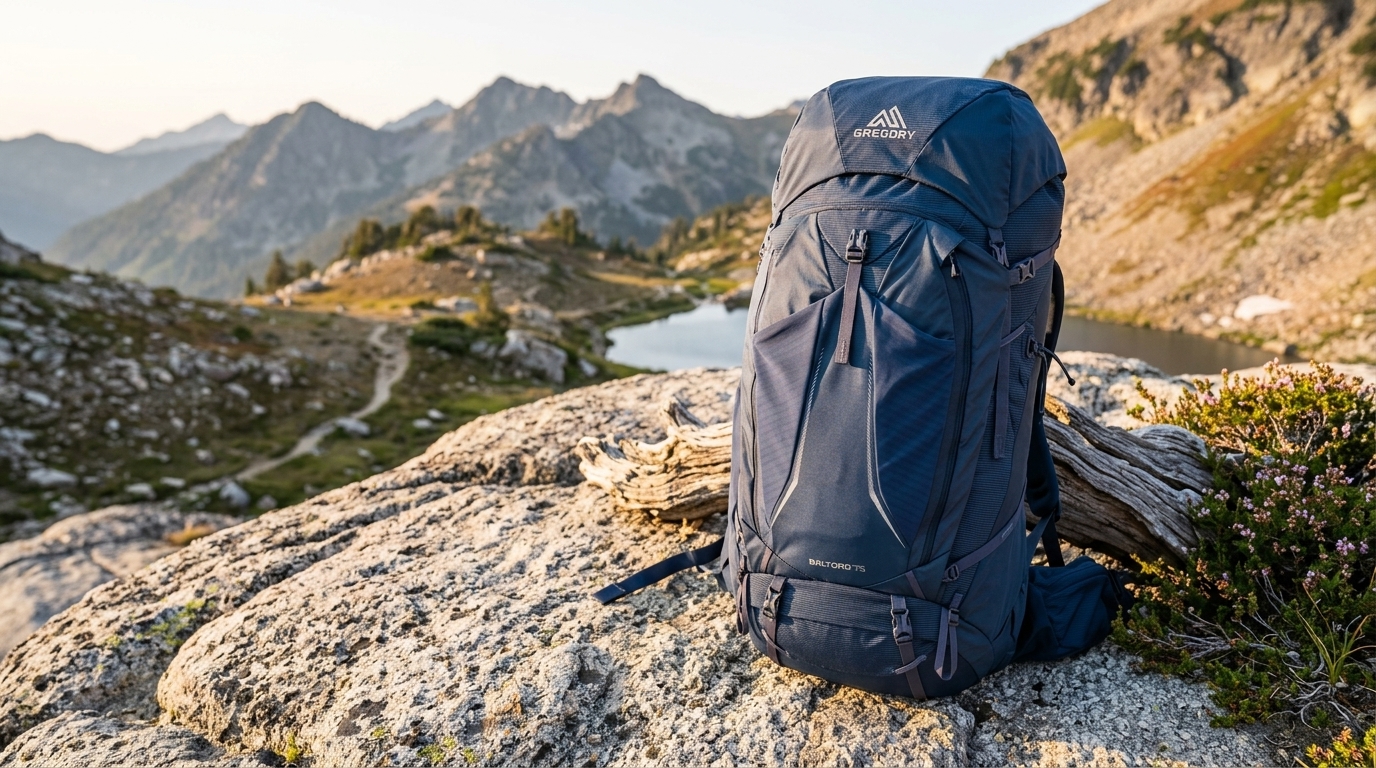
The Gregory Baltoro 75L targets multi-day backpackers who prioritize load-carrying comfort over weight savings. Its FreeFloat A3 suspension with auto-rotating shoulder straps and AirCushion mesh backpanel delivers exceptional ventilation and dynamic load transfer, making it well-suited for 5-7 day trips or extended expeditions where you're carrying 35-50 lbs. The tradeoff: this is a traditional, feature-rich pack that weighs considerably more than ultralight alternatives, but rewards you with adjustment range, organization, and all-day wearability when the load gets heavy.
Disclosure: Four Seasons Gear is reader-supported. When you buy through links on our site, we may earn an affiliate commission at no extra cost to you. Prices and availability are accurate as of the time we last checked.
Specifications
Specs
FreeFloat Suspension and Dynamic Load Transfer
The Baltoro's defining feature is Gregory's FreeFloat A3 suspension, which uses dynamic flex panels and auto-rotating shoulder straps to let the pack move with your torso rather than fighting it. The shoulder harness pivots at the attachment point, so when you twist to navigate a narrow trail or reach for trekking poles, the straps rotate rather than pulling the hipbelt out of position. This matters most on technical terrain where you're constantly shifting your center of gravity—the pack stays planted on your hips rather than swaying independently.
The dual-density foam in the shoulder straps places softer foam against your collarbones and firmer foam under load-bearing zones. Combined with the 3D hipbelt construction that eliminates fabric wrinkling, the Baltoro distributes 40+ lb loads across a larger surface area than flat-panel designs. The sternum strap includes an integrated safety whistle and hydration tube clip, keeping the reservoir hose secure without aftermarket clips.
AirCushion Backpanel and Ventilation
The AirCushion mesh backpanel creates a 1-2 cm air gap between your back and the pack body, allowing convective airflow even under a full load. The mesh is tensioned across an internal frame, so it doesn't collapse against your back when you cinch the load lifters. In practice, this design offers better ventilation than solid foam backpanels but less than fully suspended mesh designs (like Osprey's AntiGravity), which create a larger air gap at the cost of load stability. The Baltoro prioritizes load control—the pack stays close to your body for better balance on uneven terrain, with enough airflow to reduce the swamp-back effect on warm approaches.
The mesh itself is a coarse polyester weave that's durable enough for repeated compression against granite slabs or log sits, though extended abrasion from external frame packs or rough surfaces will eventually fray the edges. Gregory doesn't publish a denier spec for the backpanel mesh, but visual inspection suggests a heavier gauge than typical pack liners.
Capacity, Organization, and Access
At 75 liters, the Baltoro sits in the extended-trip category—large enough for 5-7 days of food and a bear canister, or 3-4 days of winter gear with a bulky sleeping bag and insulated layers. The main compartment is top-loading with a floating lid that extends upward to accommodate overflow, plus a front panel zipper for mid-pack access without unpacking your sleeping bag. This dual-access design is standard for expedition packs but adds weight compared to top-only designs.
External organization includes dual hipbelt pockets (large enough for a smartphone and snacks), dual side water bottle pockets with compression straps, a front shove-it pocket for wet layers, and ice axe loops with bungee tie-offs. The sleeping bag compartment has a removable divider, so you can convert the pack to a single-chamber design for gear that doesn't compress well. Trekking pole attachments use a loop-and-strap system rather than dedicated sleeves, which works but requires retying the bungees if you frequently stow and deploy poles.
Materials and Durability Considerations
The pack body uses a high-denier nylon (likely 420D based on visual texture and hand-feel, though Gregory doesn't publish the spec) with a DWR coating for weather resistance. This is a burly fabric that resists punctures from sharp objects in the main compartment and abrasion from granite or sandstone on off-trail scrambles. The bottom panel appears to be reinforced with a heavier ballistic nylon, which is standard for packs in this category. Seams are bar-tacked at stress points (shoulder strap attachments, hipbelt junction, haul loop) and double-stitched elsewhere.
The zippers are YKK #10 coil zippers on the main compartment and #8 on the hipbelt pockets—oversized pulls make them operable with gloves, and the coil construction is more forgiving of dirt and grit than toothed zippers. The aluminum frame stays are replaceable if bent (Gregory sells spares), and the hipbelt and shoulder straps are modular, so you can swap sizes or replace worn foam without replacing the entire pack. This repairability extends the functional lifespan well beyond the typical 3-5 year window for expedition packs.
The AirCushion mesh backpanel is the most wear-prone component. Repeated compression and abrasion will eventually fray the mesh edges or loosen the tension, though this typically takes 100+ days of use. The mesh is sewn (not glued) to the frame, so field repair with a needle and thread is possible if a seam fails mid-trip.
Comparison Context: Where the Baltoro Sits in the Category
The Baltoro competes directly with Osprey's Aether Plus 70 and Deuter's Aircontact Core 65+10 in the traditional load-hauler segment. All three prioritize suspension sophistication and carrying comfort over weight savings. The Baltoro's auto-rotating shoulder straps are unique in this group—Osprey's Aether uses a fixed harness with more adjustment points, while Deuter's Aircontact relies on a simpler spring steel frame. If you value dynamic load transfer and tend to move quickly on technical terrain, the Baltoro's suspension justifies the complexity. If you prefer bombproof simplicity, Deuter's design has fewer moving parts to maintain.
Compared to ultralight alternatives (Hyperlite Mountain Gear Southwest 70, Granite Gear Crown3 60), the Baltoro weighs 1.5-2 lbs more but offers significantly better load distribution above 35 lbs. Ultralight packs excel when you're carrying sub-25 lb base weights on well-maintained trails; the Baltoro excels when you're hauling a week of food, a bear canister, and a full camera kit on rough terrain. The weight penalty buys you adjustability, ventilation, and padding that matters on long days.
Value and Intended Use Cases
At $399.95 MSRP, the Baltoro sits in the premium expedition pack tier. This is not an entry-level price point, but the feature set and build quality justify the cost for backpackers who spend 20+ nights per year on multi-day trips. The modular components and repairable construction mean you're buying a 5-10 year pack rather than a disposable 2-3 year model, which amortizes the upfront cost. Gregory's warranty covers manufacturing defects for the life of the pack, and their repair service handles out-of-warranty fixes at reasonable rates.
The Baltoro makes the most sense for extended trips where you're carrying 35-50 lbs: week-long Sierra traverses with a bear canister, multi-day alpine approaches with climbing gear, or shoulder-season trips where you're packing a 15°F sleeping bag and insulated layers. It's overkill for weekend trips with a sub-30 lb load, where a lighter 50-60 L pack would be more efficient. The suspension and ventilation shine when you're moving all day under a heavy load—if you're mostly car camping with short day hikes, the weight and complexity aren't necessary.
Pros and Cons
What we like
Trade-offs
Best For and Not For
**Best for:**
- Multi-day backpackers carrying 35-50 lb loads on 5-7 day trips
- Alpine climbers hauling technical gear on extended approaches
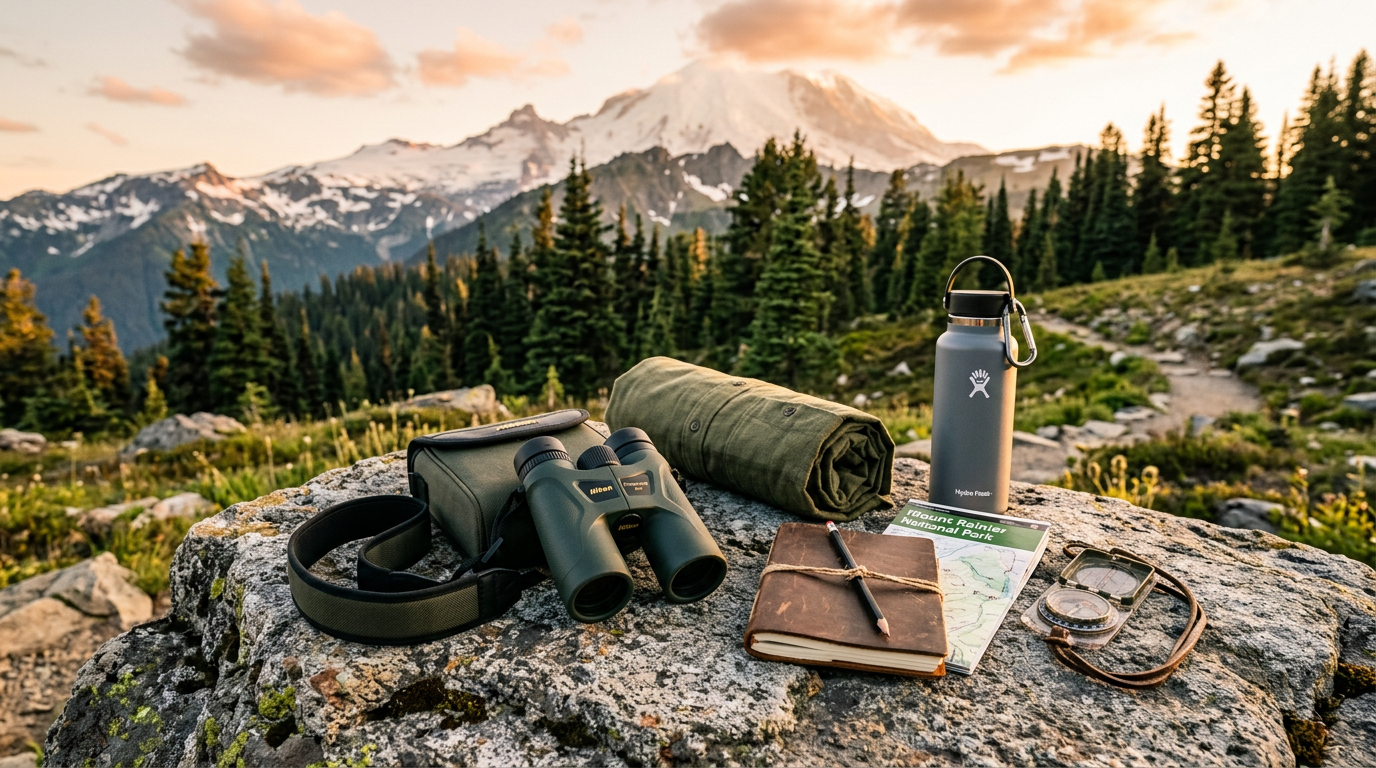
- Photographers or naturalists carrying camera kits and observation equipment (pair with Bushnell H2O Waterproof 10x42 Binoculars or Vortex Optics Diamondback HD 10x42 Binoculars for wildlife observation)
- Shoulder-season backpackers packing bulky insulated layers and winter sleeping bags
- Technical terrain navigators who value dynamic suspension over static load transfer
- Backpackers prioritizing long-term durability and repairability over upfront cost savings
**Not for:**
- Ultralight backpackers targeting sub-25 lb base weights on maintained trails
- Weekend warriors carrying 20-30 lb loads on 2-3 day trips (50-60 L packs are more efficient)
- Budget-conscious beginners seeking entry-level expedition packs under $200
- Minimalists who prefer simple, low-maintenance suspension systems
- Backpackers prioritizing pack weight over carrying comfort and load distribution
- Casual hikers primarily car camping with short day hikes
Frequently Asked Questions
+What's the actual weight of the Large size Baltoro 75L?
Gregory's published spec lists the Large size at approximately 2270 g (5 lbs 0 oz). This includes the floating lid, sleeping bag divider, and rain cover. Removing the divider and rain cover saves about 150 g, bringing the stripped weight to around 2120 g. Verify current specs on Gregory's website or REI product page before purchase, as manufacturing revisions occasionally adjust component weights.
+How does the FreeFloat suspension compare to Osprey's AntiGravity system?
The FreeFloat A3 uses auto-rotating shoulder straps and dynamic flex panels to let the pack move with your torso, prioritizing load stability and control on technical terrain. Osprey's AntiGravity suspends the entire pack body on a tensioned mesh trampoline, creating a larger air gap for maximum ventilation but allowing more pack sway. The Baltoro keeps the load closer to your body for better balance on uneven ground; the AntiGravity offers superior ventilation on hot, flat trails. Choose based on your terrain: technical and variable favors FreeFloat, hot and maintained favors AntiGravity.
+Can I fit a BearVault BV500 bear canister in the Baltoro 75L?
Yes, the Baltoro 75L accommodates a BearVault BV500 (8.7 in diameter, 12.7 in height) in the main compartment with the sleeping bag divider removed. The canister fits vertically with room for a sleeping bag, tent, and additional gear around it. The 75 L capacity is designed for this use case—week-long Sierra trips where a bear canister consumes 12-15 L of your total volume. If you're carrying a smaller BV450, you can leave the divider in place and pack the canister in the lower compartment.
+Is the Baltoro 75L approved as carry-on luggage for flights?
No, the Baltoro 75L (approximately 30 x 16 x 14 inches when packed) exceeds standard carry-on dimensions for most airlines (typically 22 x 14 x 9 inches). You'll need to check this pack as baggage. Use the included rain cover and cinch all compression straps to protect the pack during handling. For gear that must stay with you (electronics, medications, permits), pack a small daypack or stuff sack as your carry-on. The Baltoro's durability handles checked baggage well, but remove or secure any loose straps to prevent snagging on conveyor systems.
+How do I adjust the torso length on the Baltoro?
The Baltoro uses Gregory's QuickSwap adjustment system: loosen the Velcro panels inside the pack where the shoulder straps attach to the frame, slide the harness up or down along the vertical rails (marked with size indicators), and re-secure the Velcro once the harness sits at the correct height. Proper fit places the hipbelt 1 inch above your iliac crest and the load lifters at a 45-degree angle when tightened. The adjustment range is about 4 inches, allowing overlap between nominal sizes. Adjust with weight in the pack for accurate positioning.
+What's the best way to pack the Baltoro for load distribution?
Place heavy items (food, water, bear canister) close to your back and centered between your shoulder blades—this keeps the center of gravity over your hips. Pack your sleeping bag and insulated layers in the bottom compartment, tent and rain gear in the middle, and frequently accessed items (snacks, layers, first aid) in the top and lid pockets. Use the front shove-it pocket for wet layers to keep them separate from dry gear. Cinch all compression straps to stabilize the load and prevent shifting. The FreeFloat suspension works best when the pack is evenly balanced left-to-right, so distribute weight symmetrically.
Final Recommendation
The Gregory Baltoro 75L delivers on its core promise: carrying heavy loads comfortably over long distances on variable terrain. The FreeFloat A3 suspension and AirCushion backpanel justify the weight penalty for backpackers who regularly haul 35-50 lbs on multi-day trips. This is a pack for serious backpackers who spend enough time on the trail to appreciate the difference between adequate and excellent load distribution. If you're planning a week-long traverse, an alpine approach with climbing gear, or a shoulder-season trip where comfort under load matters more than pack weight, the Baltoro is a well-engineered tool that will serve you for years. If you're chasing ultralight base weights or mostly doing weekend trips, look elsewhere—the Baltoro's strengths shine when the load gets heavy and the miles add up.

Read next
More from this category
REVIEW
Osprey Stratos 36L Men's Hiking Backpack Review: Ventilated Carry for Day Hikes and Overnighters
REVIEW
Osprey Atmos AG 65L Men's Backpacking Backpack Review
BEST OF
Best Rechargeable Headlamps for Backpacking
BEST OF
Best Beginner Binoculars for Hiking and Bird Watching
GUIDE
How to Choose a Backpacking Tent: The 5 Specs That Matter
GUIDE