Buying guide
How to Choose a Backpacking Tent: The 5 Specs That Matter
Disclosure: Four Seasons Gear is reader-supported. When you buy through links on our site, we may earn an affiliate commission at no extra cost to you. Prices and availability are accurate as of the time we last checked.
What You're Really Deciding
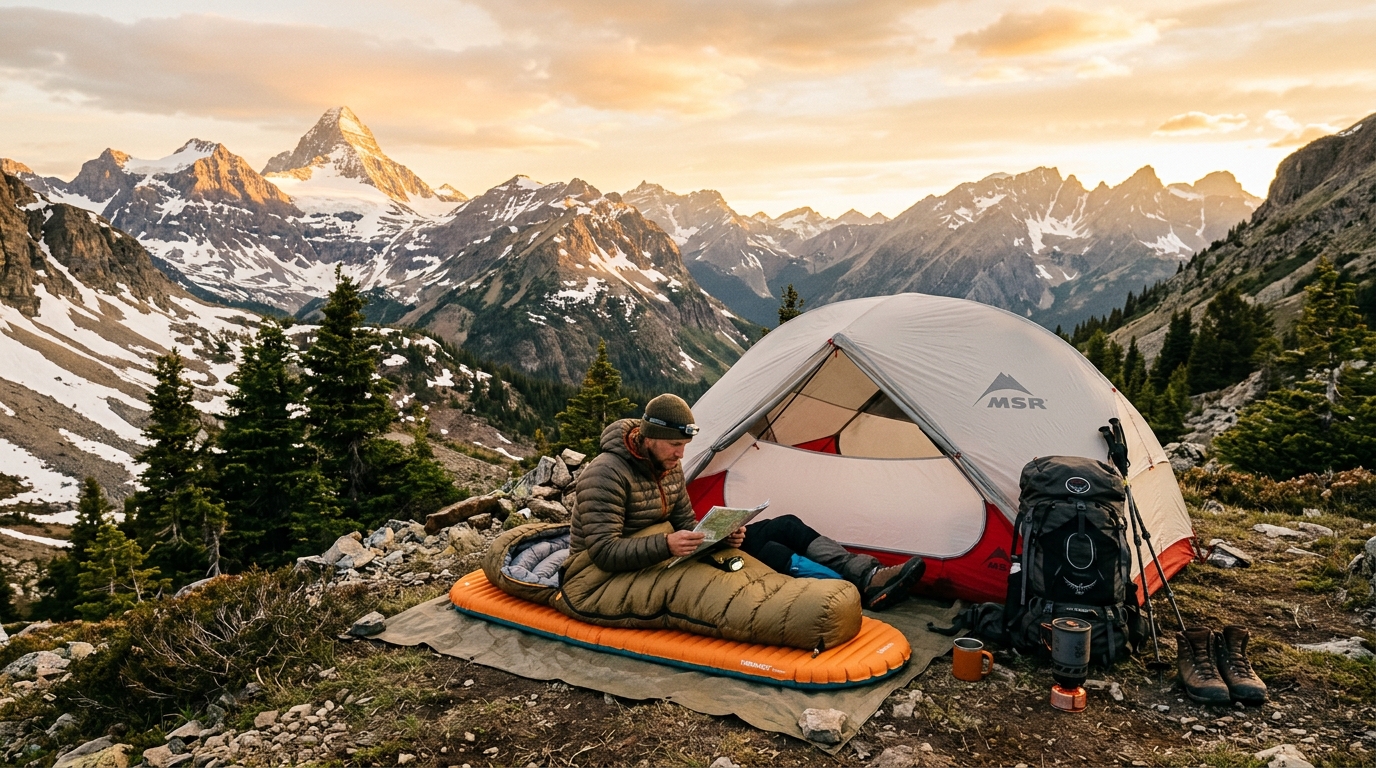
The backpacking tent market spans from 1-pound ultralight shelters requiring trekking poles to 8-pound expedition tents built for alpine storms. Your decision hinges on three axes: trail weight versus livable space, single-wall simplicity versus double-wall versatility, and three-season comfort versus four-season capability. A solo thru-hiker on the Pacific Crest Trail makes different tradeoffs than a weekend warrior camping with a partner in the Adirondacks. Understanding the five core specifications below lets you identify which compromises align with your actual use case rather than aspirational scenarios.
Spec 1: Minimum Trail Weight vs. Packed Weight
Manufacturers list two weight figures, and the difference matters. Packed weight includes tent body, rainfly, poles, stakes, guylines, stuff sacks, and repair kit—everything in the box. Minimum trail weight strips out stakes, stuff sacks, and sometimes guylines, assuming you'll substitute lighter aftermarket stakes or cut your own from the ground. The gap between these numbers typically runs 4-12 ounces.
Specs
When weight matters: On trips exceeding 3 days where you're carrying all food and water, every ounce compounds fatigue. Thru-hikers targeting 15+ mile days routinely choose tents under 2 pounds even if it means sacrificing headroom. When weight doesn't matter: Weekend trips under 5 miles from trailhead, or when splitting tent components between two partners (one carries body, one carries poles and fly), the 1-2 pound difference becomes negligible compared to comfort gains.
Spec 2: Floor Area and Peak Height
Floor area is measured in square feet, but that number alone misleads because tent shapes vary dramatically. A 28-square-foot tent with a rectangular floor feels more spacious than a 30-square-foot tent with an aggressive taper. Peak height determines whether you can sit upright or must crouch. These dimensions directly trade against weight—every additional square foot of floor space adds 2-4 ounces, and every inch of peak height adds fabric and pole length.
Specs
When space matters: Multi-day trips in rainy climates where you'll spend waking hours inside the tent, or when camping with a partner who needs room to change clothes without touching wet walls. Taller users (over 6'2") should add 4-6 inches to standard length specs. When space doesn't matter: Fair-weather trips where the tent is purely for sleeping, or solo users comfortable with minimalist shelters who prioritize weight savings over interior volume.
Spec 3: Fabric Denier and Waterproof Rating
Denier measures fabric thread thickness—higher numbers mean heavier, more durable material. Floor fabrics run 30D-70D, while canopy and fly fabrics run 10D-40D. Waterproof ratings use millimeters of hydrostatic head (HH): the height of water column the fabric withstands before leaking. Floors need 3000mm+ to resist ground moisture and body pressure. Rainflies need 1200-1500mm minimum, though 2000-3000mm provides margin for aging fabric and extended storms.
Specs
When durability matters: Rocky terrain, frequent setup/teardown, or trips where gear failure means serious consequences (alpine environments, remote locations). Floors under 40D puncture easily on granite or lava rock without a footprint. When you can go lighter: Established trails with soft ground, careful site selection, or when using a footprint or ground cloth adds acceptable weight for fabric protection. Silnylon and silpoly fabrics at 1500mm HH have proven adequate for three-season use across thousands of PCT and AT thru-hikes.
Spec 4: Single-Wall vs. Double-Wall Construction
Single-wall tents combine waterproof protection and living space in one layer, eliminating the separate rainfly. This saves 8-16 ounces but creates condensation management challenges—your breath has nowhere to go except the interior fabric surface. Double-wall tents use a breathable inner canopy (often mesh) plus a separate waterproof fly with an air gap between layers. Moisture escapes through the canopy and condenses on the fly exterior, keeping the interior dry.
- Single-wall advantages: 8-16 oz lighter, faster setup (one structure), smaller packed size, better wind protection (no fly flapping)
- Single-wall disadvantages: Interior condensation in humid conditions, limited ventilation options, typically more expensive per ounce
- Double-wall advantages: Superior condensation management, better ventilation control, often includes vestibules for gear storage
- Double-wall disadvantages: Heavier, more complex setup, fly can sag and touch canopy in heavy rain if poorly pitched
When single-wall works: Dry climates (Southwest desert, high alpine above treeline), solo users who can carefully manage ventilation, or weight-obsessed users willing to accept condensation tradeoffs. When double-wall wins: Humid environments (Pacific Northwest, Southeast, anywhere near water), trips with temperature swings causing condensation, or users who want foolproof moisture management without technique requirements.
Spec 5: Three-Season vs. Four-Season Design
Three-season tents prioritize ventilation for spring through fall use, with generous mesh panels and flies that can be partially opened. Four-season tents minimize mesh, use heavier fabrics, and employ dome or tunnel shapes that shed snow and resist high winds. The distinction isn't about temperature—a good sleeping bag handles cold—but about structural integrity under snow load and wind, plus reduced spindrift infiltration.
Specs
When you need four-season: Winter camping, shoulder season above treeline where surprise storms dump snow, or any trip where high winds are expected (exposed ridgelines, alpine basins, tundra). Four-season tents typically weigh 1.5-3 pounds more than equivalent three-season models. When three-season suffices: Spring through fall below treeline, summer alpine trips, or any environment where you can wait out storms rather than enduring them. Most backpackers—including those doing occasional snow camping with careful weather monitoring—never need four-season capabilities.
Match the Gear to Your Trip
Use this decision tree to identify which spec combinations align with your typical use case:
- Solo thru-hiker, 3-season, dry climate: Single-wall or trekking-pole-supported shelter, 16-28 oz, 18-22 sq ft, 10-20D fabrics, minimal peak height acceptable
- Solo thru-hiker, 3-season, wet climate: Double-wall freestanding, 28-36 oz, 22-26 sq ft, 20-30D fabrics, prioritize ventilation over weight
- Weekend warrior, 2-person, 3-season: Double-wall freestanding, 42-60 oz, 32-38 sq ft, 30-40D fabrics, 42+ inch peak height for livability
- Basecamp or car camping, 2-3 person: Double-wall freestanding, 60-96 oz, 40-55 sq ft, 40-70D fabrics, maximize interior volume and vestibule space
- Alpine or winter, 2-person: Four-season double-wall, 72-108 oz, 30-38 sq ft, 40-70D fabrics, dome structure with 3-4 poles, minimal mesh
- Fastpacking or ultralight obsessed, solo: Tarp-tent or single-wall, under 20 oz, 17-20 sq ft, accept condensation and minimal protection for weight savings
If you're between categories, round up in capacity (1-person to 2-person, 2-person to 3-person) rather than down. The weight penalty is 8-16 ounces, but the comfort gain during bad weather or rest days is substantial. Conversely, if you're certain about fair-weather use and high-mileage days, round down in weight by accepting minimalist dimensions.
Secondary Specs Worth Considering
Beyond the five primary specs, several factors influence real-world usability:
- Vestibule area: 6-10 sq ft per person minimum for pack storage. Dual vestibules on 2-person tents prevent territorial disputes.
- Door count: Two doors on 2+ person tents eliminate the midnight crawl-over when someone needs to exit. Worth 4-8 oz for multi-night trips.
- Pole material: Aluminum poles (DAC, Easton) bend rather than shatter, critical for remote trips. Carbon fiber saves 2-4 oz but risks catastrophic failure.
- Bathtub floor height: 4-6 inch sidewalls prevent water intrusion during ground-level flooding. Essential for established campsites with compacted soil.
- Guyout points: 6+ attachment points let you tension the fly away from the canopy and adjust for wind direction. More points mean better storm performance.
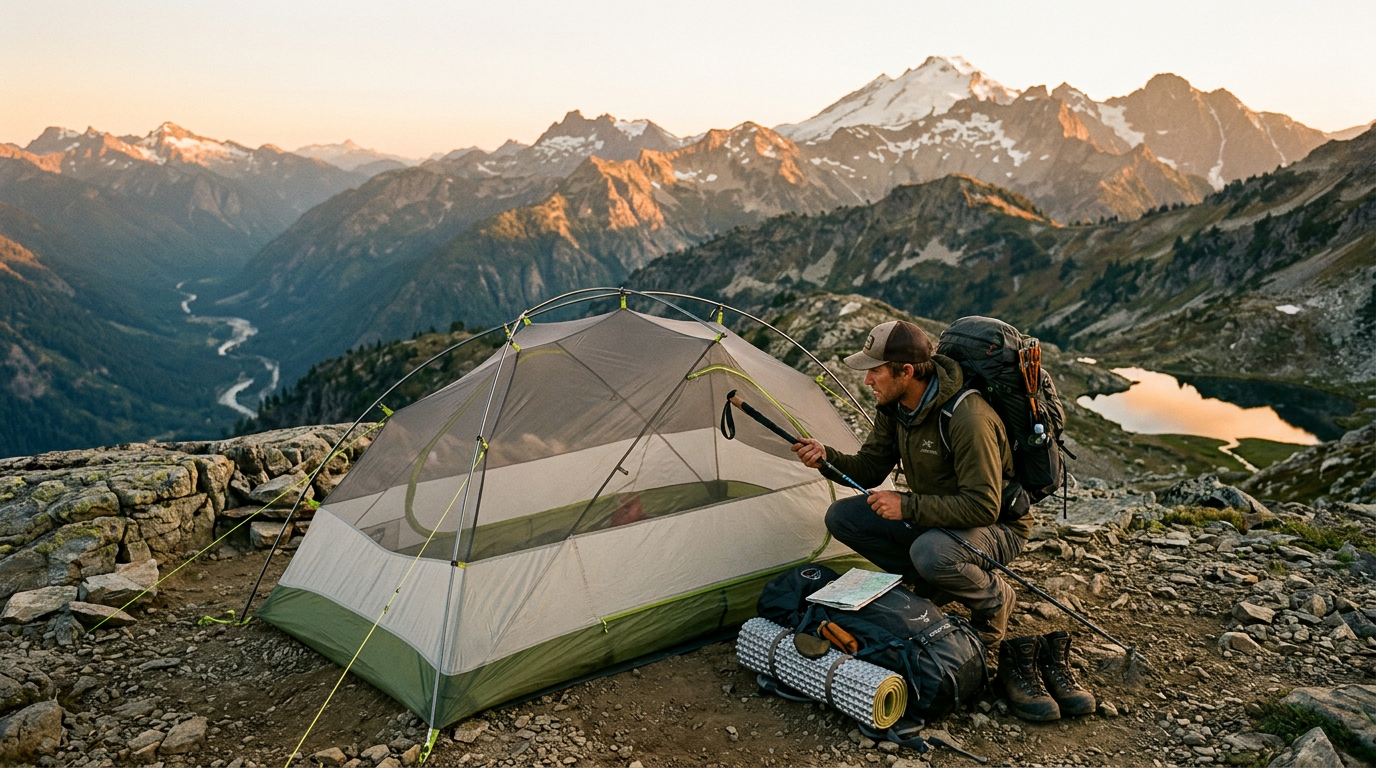
- Setup complexity: Freestanding tents (stand without stakes) offer flexibility on rock slabs or platforms. Non-freestanding saves weight but requires stakeable ground.
Fabric Technology: What Actually Matters
Tent fabrics fall into three families, each with distinct performance characteristics. Silnylon (silicone-coated nylon) offers the best strength-to-weight ratio at the lowest cost, but stretches when wet and requires retensioning after rain. Silpoly (silicone-coated polyester) eliminates wet stretch while maintaining similar weight, though it costs 15-25% more. DCF (Dyneema Composite Fabric, formerly Cuben Fiber) delivers the lightest weight and zero stretch but costs 2-3x more and has limited abrasion resistance—acceptable for careful users, problematic for rough terrain or frequent setup.
Polyurethane (PU) coatings are common on budget tents but degrade under UV exposure, typically lasting 50-100 nights before the waterproof coating delaminates. Silicone coatings last 300+ nights. For tents you'll use across multiple seasons, silicone-treated fabrics justify the upfront cost through extended lifespan. For occasional-use tents, PU coatings provide adequate short-term performance.
Ventilation and Condensation Management
A sleeping human exhales approximately 1 liter of water vapor over 8 hours. In a sealed tent, this moisture condenses on the coldest surface—typically the fly interior on double-wall tents or the tent interior on single-wall designs. Effective ventilation requires cross-flow: air entering low (floor-level vents) and exiting high (peak vents or rolled-back fly sections). Tents with only a single door or peak vent create minimal airflow.
- Minimum ventilation: Dual-zipper door allowing top-crack opening plus peak vent. Adequate for dry climates.
- Good ventilation: Above plus floor-level vents on opposite wall. Handles most three-season conditions.
- Excellent ventilation: Above plus ability to roll back fly sections independently. Essential for humid environments or temperature inversions.
- Overkill ventilation: Full-mesh canopy with oversized fly. Maximizes airflow but adds weight and reduces warmth in cold conditions.
Even well-ventilated tents accumulate some condensation in humid conditions or during temperature swings. Wiping down the interior with a bandana each morning prevents drips during pack-up. Pitching with maximum fly tension and clearance from the canopy gives condensation somewhere to form besides your sleeping bag.
Durability and Longevity Expectations
Tent lifespan depends more on setup frequency and storage conditions than total nights used. A tent used 20 nights per year but left compressed in a stuff sack between trips degrades faster than one used 50 nights per year but stored loosely in a garage. UV exposure is the primary killer—fabrics lose 50% of tear strength after 100-150 days of direct sunlight. Storing tents in the shade and using a footprint to protect the floor from abrasion extends life significantly.
Specs
Field-repairable failures include torn fabric (tenacious tape or sil-net patches), broken poles (splint with tent stake and duct tape), and failed zippers (safety pin as temporary pull). Non-repairable failures include delaminated waterproof coatings, shattered pole sections without splint material, and torn-out stake loops. Carrying 2 feet of duct tape and a 6-inch aluminum pole splint handles most trail emergencies.
Footprint and Ground Protection
Manufacturer footprints add 4-10 ounces and cost $40-80 but extend floor life by preventing abrasion and punctures. Alternatives include Tyvek sheets (2-3 oz per person, $5-10), Polycro window film (1-2 oz per person, $3-5), or 0.5mm EVA foam (3-5 oz per person, $8-15). The footprint should be slightly smaller than the tent floor—if it extends beyond the edges, it channels water underneath rather than away.
On soft ground (forest duff, sand, grass), footprints are optional unless the tent floor is under 30D. On rocky, rooty, or desert terrain, footprints prevent punctures that end trips. Some ultralight users skip footprints entirely and accept floor replacement after 30-50 nights as a maintenance cost—floor repairs cost $40-80 from manufacturers.
+Should I buy a freestanding or non-freestanding tent?
Freestanding tents use poles to create a structure that stands without stakes, offering setup flexibility on rock slabs, platforms, or anywhere stakes won't penetrate. They typically weigh 8-16 oz more than non-freestanding designs. Non-freestanding tents require stakes or guylines to tension the structure, saving weight but demanding stakeable ground. Choose freestanding if you camp on established platforms, above treeline on rock, or want easy repositioning after setup. Choose non-freestanding if you camp on soft ground, prioritize weight savings, and don't mind more complex pitching.
+How much should I spend on a backpacking tent?
Budget tents ($100-200) use heavier fabrics, PU coatings, and basic pole materials—acceptable for occasional use but expect 50-100 night lifespan. Mid-range tents ($250-400) use silnylon or silpoly fabrics, aluminum poles, and better construction—these deliver 100-200 nights and represent the best value for most users. Premium tents ($400-700) save 8-16 oz through advanced materials like DCF or use four-season construction. Spend at the mid-range unless you're a thru-hiker obsessing over ounces or need expedition-grade durability. The $300-400 category offers proven designs that last multiple seasons.
+Can I use a three-season tent in winter?
Three-season tents work for winter camping below treeline if you understand the limitations. The primary risks are pole failure under snow load (clear snow from the fly every 2-3 hours during active snowfall), spindrift infiltration through mesh panels (accept some snow inside or cover mesh with a pack or clothing), and reduced wind resistance (choose protected sites and use all guyout points). This works for occasional winter trips with good weather forecasts. For regular winter camping, exposed locations, or multi-day storms, four-season tents provide necessary structural margin.
+How do I minimize condensation in a single-wall tent?
Single-wall condensation management requires active technique: pitch with maximum fabric tension so moisture runs down rather than dripping, crack vents even in rain to maintain airflow, avoid cooking inside (moisture from food adds to the problem), and wipe down interior surfaces in the morning before they drip on gear. Choose campsites with natural airflow (slight breeze, not in a hollow). Accept that humid conditions will produce some condensation regardless—a small pack towel or bandana for morning wipe-down is standard equipment. If you camp frequently in humid climates, double-wall tents eliminate this management burden.
+What's the real difference between 1-person and 2-person tent capacity?
A 1-person tent (17-28 sq ft) fits one sleeping pad, one person, and minimal interior gear storage—expect to keep your pack in the vestibule or outside. A 2-person tent (27-42 sq ft) comfortably fits one person plus backpack inside, or two people sleeping shoulder-to-shoulder with packs in vestibules. For actual two-person comfort with interior gear storage, size up to a 3-person tent (42-55 sq ft). Solo users who want interior space for gear, cooking in bad weather, or simply stretching out should consider 2-person tents despite the 12-20 oz weight penalty. The extra space transforms livability during multi-day trips.
+Do I need a tent footprint or can I skip it?
Footprints extend floor life but aren't universally necessary. Skip the footprint on soft ground (forest duff, grass, sand) if your tent floor is 40D or heavier—you'll get 100+ nights before significant wear. Use a footprint on rocky terrain, desert hardpan, or rooty ground regardless of floor denier, and always use one if your floor is under 40D. Polycro window film (1-2 oz, $3-5 for a tent-sized piece) or Tyvek house wrap (2-4 oz, $5-10) provide 80% of the protection at 25% of the weight and cost of manufacturer footprints. Cut your footprint 2 inches smaller than the tent floor on all sides so it doesn't channel water underneath.
+How important is peak height in a backpacking tent?
Peak height determines whether you can sit upright (42+ inches for most adults) or must crouch and lie down. This matters enormously on multi-day trips with bad weather when you're spending waking hours inside the tent. For weekend trips in fair weather where the tent is purely for sleeping, minimal peak height (36-40 inches) is acceptable and saves 4-8 oz. For trips exceeding 3 nights, rainy climates, or camping with a partner, the ability to sit up and move around without touching wet fabric justifies the weight penalty. Users over 6'2" should add 4-6 inches to manufacturer peak height specs since these assume average torso length.