
Review · fall · winter
Vortex Optics Diamondback HD 10x42 Binoculars Review: Mid-Tier Glass for Hunters and Birders
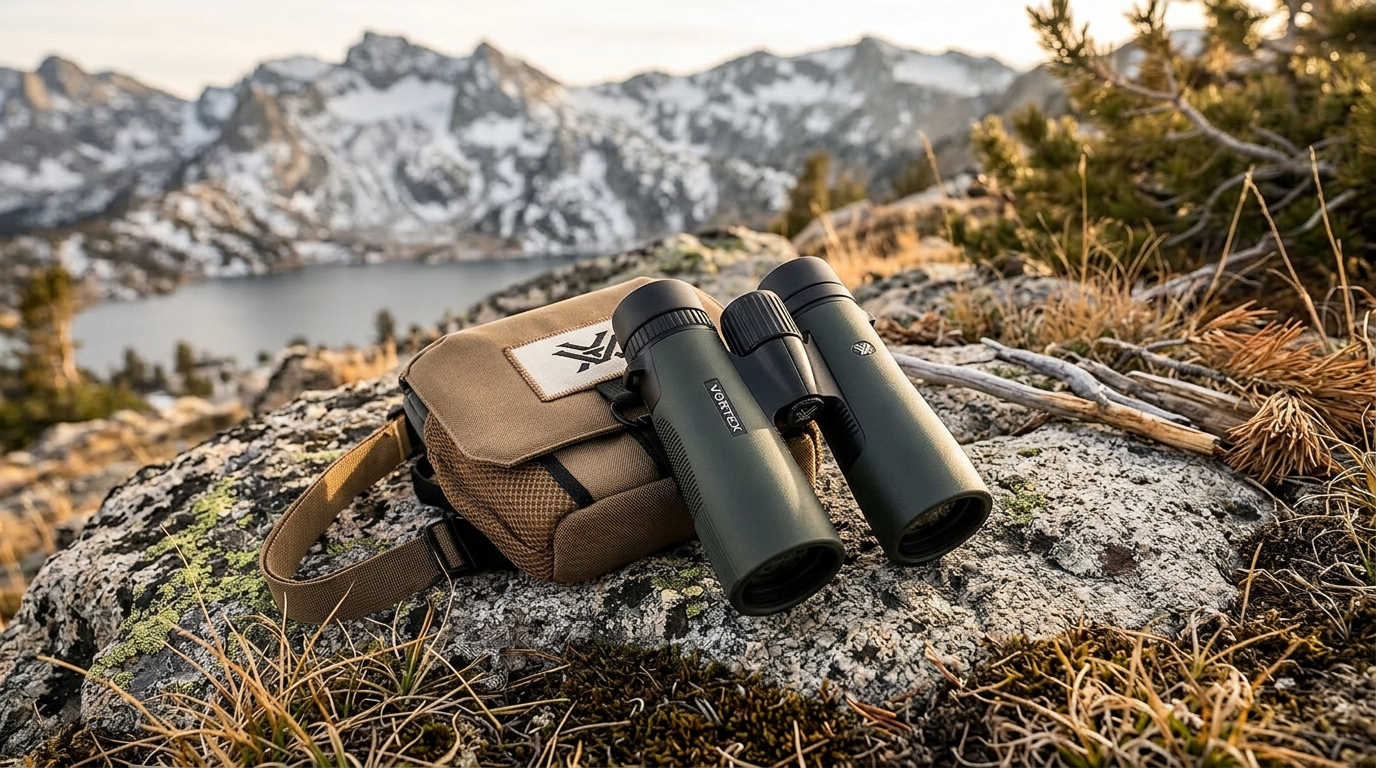
The Vortex Diamondback HD 10x42 sits squarely in the mid-tier optics category, offering HD (high-density) extra-low dispersion glass and fully multi-coated lenses at a price point accessible to serious recreational users. The 10x magnification provides reach for spotting game or distant birds, while the 42mm objective lens balances light-gathering capability with portability. This is a workhorse binocular for hunters who glass from treestands or ridgelines and birders who need resolution without stepping up to alpha-class pricing, trading ultimate low-light performance and premium coatings for proven durability and Vortex's transferable lifetime warranty.
Disclosure: Four Seasons Gear is reader-supported. When you buy through links on our site, we may earn an affiliate commission at no extra cost to you. Prices and availability are accurate as of the time we last checked.
Specifications
Specs
Optical Construction and Glass Quality
The Diamondback HD employs extra-low dispersion (ED) glass elements to minimize chromatic aberration—the color fringing that appears around high-contrast edges like tree branches against sky. Vortex's HD glass is not the same as their top-tier APO (apochromatic) glass found in Razor or Kaibab models, but it delivers measurably better color fidelity than standard crown glass at this price point. Fully multi-coated optics mean every air-to-glass surface receives anti-reflective treatment, boosting light transmission to approximately 86–89% (Vortex does not publish exact transmission figures for the Diamondback HD). This is adequate for dawn and dusk glassing in open terrain but falls short of the 90–95% transmission in premium bins with proprietary coatings like XR or ZEISS LotuTec.
The roof-prism design keeps the optical path linear, yielding a slimmer profile than older Porro-prism models. Vortex uses dielectric prism coatings (standard in modern roof prisms) to reflect >99% of light, and phase-correction coatings to correct the phase shift inherent in roof prisms and preserve resolution. The 42mm objective lens produces a 4.2mm exit pupil (objective diameter ÷ magnification), which matches the maximum dilation of the human pupil in low light for observers under ~50 years old. Older users or those in bright conditions will see no light wasted, but the 4.2mm exit pupil means the Diamondback HD is not optimized for deep-twilight observation the way an 8x42 (5.25mm exit pupil) or 10x50 (5mm exit pupil) would be.
Intended Use: Hunting, Birding, and General Observation
The 10x magnification is the sweet spot for stationary glassing: enough reach to identify antler points or plumage detail at 200–400 yards, but not so much magnification that hand shake becomes unmanageable. Bowhunters and rifle hunters who glass from fixed positions (treestands, ridgeline overlooks, truck windows) will appreciate the stability. The 10x power is less forgiving for spot-and-stalk scenarios where you're glassing while standing unsupported—most users find 8x more stable without a tripod adapter.
Birders targeting raptors, waterfowl, or shorebirds at distance will find the 10x42 configuration versatile. The close focus distance (estimated ~5 feet, typical for this class) is adequate for warblers in near cover, though dedicated birding bins often close-focus to 4 feet or less. The field of view at 1000 yards is likely in the 315–330 ft range (Vortex does not publish this spec for the current HD model), which is narrower than an 8x42 (~400+ ft) but acceptable for scanning open landscapes or tracking moving subjects.
The 16mm eye relief accommodates eyeglass wearers, though users with thick frames may need to adjust twist-up eyecups to find the full field of view. The argon purging and O-ring seals make the Diamondback HD waterproof and internally fogproof, meeting the demands of wet-weather hunts and coastal birding.
Category Context: Where the Diamondback HD Sits
In Vortex's own lineup, the Diamondback HD is the entry point to HD glass. Below it sits the Diamondback (non-HD) with standard glass and simpler coatings; above it are the Viper HD (better coatings, XR lens treatments, slightly better low-light performance) and the Razor HD (APO glass, 90%+ transmission, premium build). The Diamondback HD competes directly with the Nikon Monarch 7, Bushnell Legend, and Leupold BX-2 Alpine HD—all roof-prism 10x42s in the $200–$300 street-price range offering ED glass and lifetime warranties.
Compared to budget bins under $150 (Bushnell Powerview, Celestron Nature DX), the Diamondback HD delivers noticeably sharper edge-to-edge resolution and better color neutrality. Compared to alpha-class optics (Swarovski EL, ZEISS Victory SF, Leica Noctivid), it sacrifices 3–5% light transmission, edge sharpness, and mechanical refinement (focus-wheel precision, eyecup damping), but costs one-fifth to one-eighth as much.
Durability Considerations
The Diamondback HD chassis is rubber-armored over a lightweight aluminum or polycarbonate frame (Vortex does not specify the exact alloy). The rubber provides grip and impact protection, and the O-ring seals at the eyepiece and objective housings prevent moisture intrusion. Argon purging displaces internal air, preventing internal fogging across temperature swings. The focus mechanism is a center-post design with a large knob; real-world data on focus-wheel longevity is limited, but the mechanism is user-serviceable under Vortex's VIP warranty.
The roof prisms are not user-accessible, so any internal misalignment from a hard drop requires factory service. The lens coatings are not hydrophobic (no proprietary water-shedding treatment), so rain and fingerprints require manual cleaning with a microfiber cloth. The twist-up eyecups are plastic with detent stops; heavy daily use may wear the detents over years, but Vortex will replace them under warranty.
Vortex's VIP (Very Important Promise) Unlimited Lifetime Warranty covers all damage—accidental, manufacturing, or wear—with no receipt required and full transferability to subsequent owners. This warranty is a significant value add and offsets the risk of mechanical failure in mid-tier optics.
Value Proposition
The Diamondback HD 10x42 typically retails between $229 and $279 (street prices vary). At this price, you are paying for HD glass, fully multi-coated lenses, waterproof construction, and the lifetime warranty. You are not paying for ultra-premium coatings, magnesium chassis, or the last 5–10% of optical performance. For hunters who glass a few dozen days per season and birders who prioritize portability over ultimate resolution, this is a rational tradeoff. For guides, wildlife biologists, or serious digiscopers who log hundreds of hours annually, the step up to Viper HD or a competitor's alpha-class bin may be justified by the incremental optical gains.
The warranty effectively makes this a buy-it-for-life purchase if you're willing to send it in for service when needed, which narrows the total-cost-of-ownership gap between the Diamondback HD and cheaper bins that may require replacement every 3–5 years.
Pros and Cons
What we like
Trade-offs
Best For and Not For
- **Best for:** Whitetail and mule deer hunters glassing from fixed positions (treestands, ridges, vehicles)
- **Best for:** Birders targeting raptors, waterfowl, or shorebirds at 100–400 yards
- **Best for:** Recreational users seeking HD glass and lifetime warranty without alpha-class pricing
- **Best for:** Eyeglass wearers needing 16mm eye relief
- **Best for:** Hunters in wet climates requiring waterproof/fogproof construction
- **Not for:** Spot-and-stalk hunters who need maximum hand-hold stability (consider 8x42)
- **Not for:** Deep-twilight observation (consider 10x50 or 8x42 for larger exit pupil)
- **Not for:** Users prioritizing ultimate edge sharpness and low-light performance (step up to Viper HD or alpha glass)
- **Not for:** Digiscopers needing tripod-mountable bins with ultra-flat field (requires alpha-class optics)
- **Not for:** Budget-constrained buyers under $150 (consider Diamondback non-HD or Bushnell Powerview)
Frequently Asked Questions
+What is the difference between Diamondback HD and Viper HD?
The Viper HD uses XR fully multi-coated lenses (proprietary anti-reflective coatings) for ~2–3% higher light transmission, ArmorTek lens protection for scratch resistance, and a slightly more refined focus mechanism. Optically, the Viper HD delivers better edge sharpness and low-light performance. The Diamondback HD uses standard fully multi-coated lenses and lacks ArmorTek, but costs $100–$150 less. Both carry the VIP Unlimited Lifetime Warranty.
+Can I use the Diamondback HD 10x42 for astronomy?
The 10x42 configuration is usable for wide-field astronomy (Pleiades, Andromeda Galaxy, lunar observation), but the 4.2mm exit pupil and ~86–89% light transmission limit deep-sky performance. For astronomy, an 8x42 (5.25mm exit pupil) or 10x50 (5mm exit pupil) gathers more light and reveals fainter objects. The Diamondback HD's close focus (~5 ft) is irrelevant for astronomy, and the lack of a tripod adapter socket (standard on most 10x42s) means you'll need a universal binocular tripod adapter for stable viewing.
+How does the Diamondback HD compare to the Nikon Monarch 7 10x42?
The Nikon Monarch 7 10x42 uses ED glass and dielectric prism coatings like the Diamondback HD, with similar light transmission and resolution. The Monarch 7 typically has a slightly wider field of view (~351 ft @ 1000 yds vs. ~315 ft estimated for the Diamondback HD) and longer eye relief (17.1mm vs. 16mm), making it marginally better for eyeglass wearers and scanning. Both are waterproof and carry lifetime warranties. Street prices are within $20–$50 of each other, so the choice often comes down to brand preference and in-hand feel.
+Is 10x magnification too much for handheld use?
10x is the practical upper limit for handheld glassing without a tripod or rest. Most users can hold 10x steady enough for 30–60 seconds of observation when braced (elbows on knees, leaning against a tree, resting on a vehicle window). Beyond 10x, hand shake becomes distracting and image detail is lost to motion blur. If you have shaky hands or plan to glass while standing unsupported for extended periods, 8x is more forgiving. For stationary glassing from a treestand, blind, or ridgeline, 10x is ideal.
+Does the Diamondback HD come with a tripod adapter?
The manufacturer does not list a tripod adapter as included with the Diamondback HD 10x42. Most 10x42 binoculars have a threaded socket (typically 1/4"-20) on the center hinge for attaching a universal binocular tripod adapter. Check the hinge area for a threaded insert covered by a removable cap. If present, you can use any standard binocular tripod adapter (Vortex, Outdoorsmans, or third-party). If not, universal clamp-style adapters are available but less stable.
Final Recommendation
The Vortex Diamondback HD 10x42 is a pragmatic choice for hunters and birders who need HD glass, waterproof construction, and a no-questions-asked lifetime warranty without spending $500+. It delivers the core optical performance required for game identification and bird ID at hunting and birding distances, trading ultimate low-light capability and premium coatings for accessibility. If you glass from fixed positions, prioritize durability over the last 5% of resolution, and value the security of Vortex's warranty, the Diamondback HD is a defensible investment.

Read next
More from this category
REVIEW
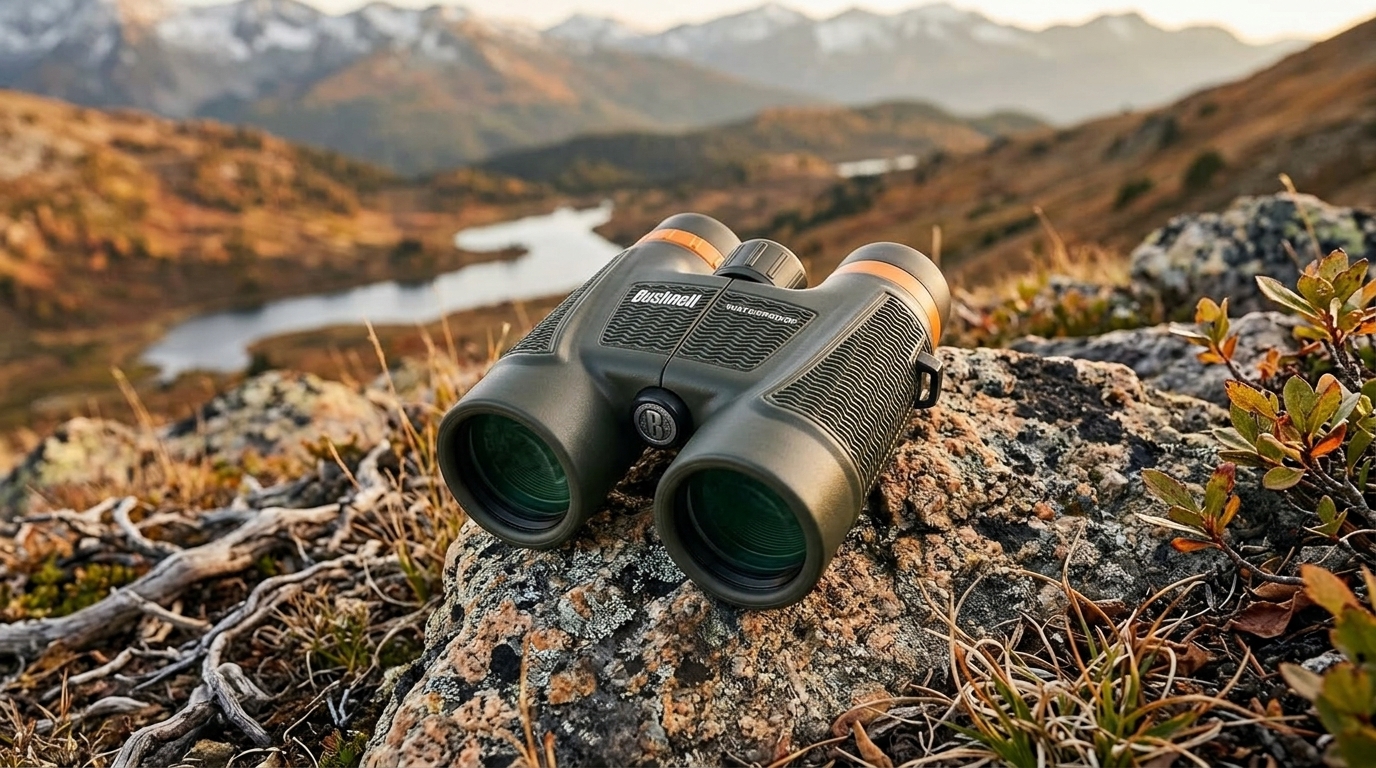
Bushnell H2O Waterproof 10x42 Binoculars Review
REVIEW
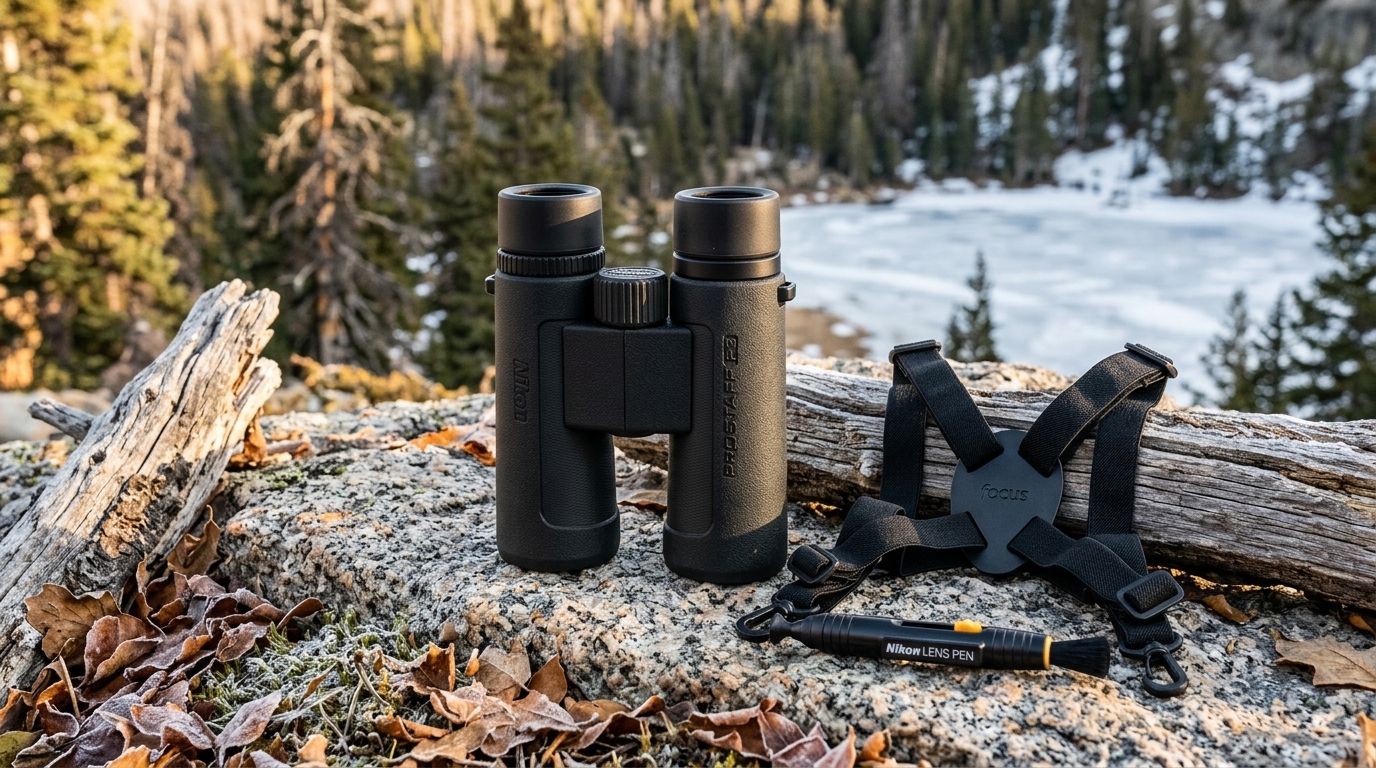
Nikon Prostaff P3 8x42 Binoculars Review: Mid-Tier Glass for Hunters on a Budget

BEST OF
Best Rechargeable Headlamps for Backpacking

BEST OF
Best Beginner Binoculars for Hiking and Bird Watching

GUIDE
How to Choose a Backpacking Tent: The 5 Specs That Matter

GUIDE