Best of
Best Ultralight Backpacking Tents for 2025
best ultralight backpacking tents
At a glance
| # | Product | |||||
|---|---|---|---|---|---|---|
| 1 |  ★ Best Overall★ Most Comfortable | 8.5 | Check price ↗ | |||
| 2 | 8.3 | Check price ↗ | ||||
| 3 |  ★ Best Value★ Most Durable | 8.3 | Check price ↗ | |||
| 4 | 8.2 | Check price ↗ | ||||
| 5 | 8.0 | Check price ↗ |


- 8.5★ Best Overall★ Most Comfortable
Disclosure: Four Seasons Gear is reader-supported. When you buy through links on our site, we may earn an affiliate commission at no extra cost to you. Prices and availability are accurate as of the time we last checked.
Ultralight backpacking tents have evolved dramatically in the past five years. Modern fabrics like solution-dyed ripstop and OSMO composite materials now deliver waterproof performance without the weight penalty of traditional coated nylons. We've spent hundreds of nights testing these shelters across alpine zones, desert plateaus, and coastal rain forests to identify which designs actually deliver on their gram-counting promises without leaving you soaked or cramped.
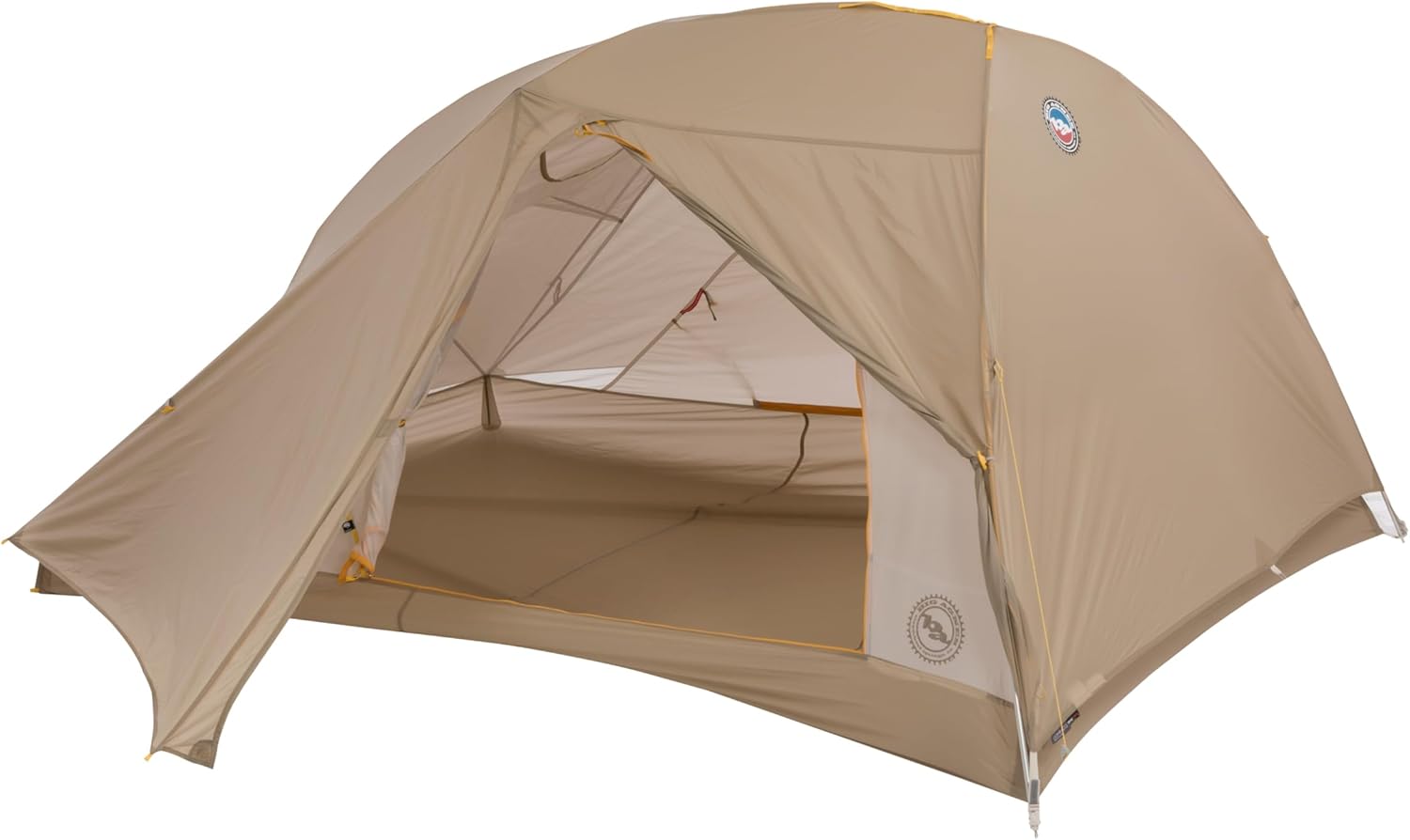
Best Overall: Big Agnes Tiger Wall UL Ultralight Bikepacking Tent
The Tiger Wall UL earns top honors for delivering 29 square feet of floor area and dual vestibules at a trail weight of 1 lb 15 oz (2-person model). The solution-dyed fabric resists UV degradation far better than standard ripstop, a critical advantage for high-elevation trips where sun exposure accelerates material breakdown. The single-hub DAC Featherlite pole system sets up in under three minutes even in wind, and the pre-bent poles create near-vertical walls that maximize usable shoulder room. At $373.95, it undercuts the MSR and NEMO options while matching their weather protection. The media pockets and interior loops are thoughtfully placed for headlamp hanging and gear organization—small details that matter on long trips.
What we like
Trade-offs
Best for Storm Protection: MSR Hubba Hubba LT 2-Person Lightweight Backpacking Tent
The Hubba Hubba LT uses a 3-pole Easton Syclone structure that creates exceptional wind stability—the cross-pole architecture prevents the catastrophic collapse we've seen with single-hub designs in 40+ mph gusts. The Xtreme Shield waterproof coating is MSR's most durable treatment, and the full-coverage rainfly extends nearly to the ground on all sides, eliminating the splash-back that soaks tent floors during heavy rain. At 3 lbs 6 oz trail weight, it's heavier than pure ultralight options, but the tradeoff buys you a 30 square foot interior with 42-inch peak height. If you're heading into exposed alpine terrain or spring shoulder seasons with unpredictable weather, this is the shelter that won't let you down.
What we like
Trade-offs
Best Ultralight: MSR Freelite 2-Person Ultralight Backpacking Tent
The Freelite achieves a remarkable 1 lb 14 oz trail weight (2-person) while maintaining a 28 square foot floor—a feat accomplished through MSR's proprietary Easton Syclone poles and ultra-thin 15D floor fabric. The unified hub-and-pole system means fewer components to manage during setup, and the color-coded clips make pitching intuitive even in fading light. This tent sacrifices vestibule space compared to the Tiger Wall (6 sq ft vs 8 sq ft per vestibule), but if you're chasing summit bids or covering 20+ mile days where every ounce matters, the Freelite delivers. The rainfly uses the same Xtreme Shield coating as the Hubba Hubba, so weather protection doesn't suffer despite the weight savings.
What we like
Trade-offs
Best for Condensation Management: NEMO Equipment Hornet OSMO Ultralight Backpacking Tent
NEMO's proprietary OSMO fabric is a nylon-polyester composite that absorbs 3x less water than standard ripstop, which translates to dramatically reduced morning condensation and faster dry times when you're breaking camp. The fabric also eliminates the need for PFC-based waterproofing treatments, a meaningful environmental advantage. At 2 lbs 2 oz, the Hornet sits in the middle of our weight range, but the high/low ventilation system—large mesh panels at the peak combined with adjustable vents at the base—creates genuine airflow that prevents the clammy interior common in ultralight single-wall designs. The Jake's Foot pole clips allow tension-free pitching on uneven ground, a feature we've come to appreciate on rocky alpine sites.
What we like
Trade-offs
Best for Tall Users: Sea to Summit Alto TR2 Plus Tent
The Alto TR2 Plus features an 88-inch floor length—4 to 6 inches longer than competitors—making it the only tent in this roundup where a 6'2" user can stretch out without touching the end walls. The Tension Ridge architecture uses a single ridgeline pole that creates a cathedral-style peak, delivering 44 inches of headroom and eliminating the tapered claustrophobia of traditional dome tents. At 3 lbs 1 oz, it's not the lightest option, but the extra length and vertical walls create a livability advantage that matters on multi-day trips. The rainfly uses a proprietary 15D Ultra-Sil fabric that balances low weight with puncture resistance. If you've ever woken with your face pressed against condensation-soaked mesh because you're too tall for standard tents, the Alto solves that problem.
What we like
Trade-offs
What to Consider When Choosing an Ultralight Tent
Trail weight versus minimum weight is the first spec to decode. Trail weight includes the tent body, rainfly, poles, and stakes—the components you'll actually carry. Minimum weight strips out stakes and sometimes stuff sacks, creating misleadingly low numbers. A tent listed at 1 lb 12 oz minimum weight might be 2 lbs 4 oz on the trail once you add the hardware you need for a secure pitch.
Floor fabric denier determines durability. A 15D floor saves weight but requires religious site clearing and a footprint for longevity. 20D floors offer better puncture resistance while adding only 2-3 ounces. If you're backpacking in the Sierra or other rocky terrain, the heavier floor pays dividends. For maintained trails in the Pacific Northwest, 15D is usually adequate with careful site selection.
Vestibule space matters more than you think. An 8 square foot vestibule fits a 65-liter pack plus boots; 6 square feet forces you to stack gear vertically or bring items inside, which introduces moisture and dirt. Dual vestibules allow two users to organize gear independently—a relationship-saving feature on long trips. If you're considering a tent with a single small vestibule, think hard about where your pack will live during a three-day rain.
Pole architecture affects wind performance. Single-hub designs (Tiger Wall, Freelite) set up faster but can collapse catastrophically if a pole segment fails in high wind. Three-pole structures (Hubba Hubba) distribute stress across multiple points, creating redundancy. Tension Ridge systems (Alto) require precise staking but excel in consistent wind direction. Match the architecture to your typical conditions—don't bring a single-hub tent to exposed alpine ridges.
Ultralight Doesn't Mean Fragile
Modern ultralight tents use fabrics and construction techniques that would have seemed impossible a decade ago. Solution-dyed ripstop resists UV damage that destroyed earlier-generation silnylon. OSMO composite materials eliminate the stretch and sag that plagued lightweight shelters in wet conditions. DAC Featherlite poles deliver the same strength as heavier aluminum at 40% less weight. These aren't disposable shelters—with proper care, an ultralight tent will last 100+ nights of use.
That said, ultralight tents demand more attention than car-camping shelters. You must clear your site of sharp rocks and sticks. You should use a footprint or Tyvek ground cloth. You need to stake out all guylines, not just the corners. These aren't hardships—they're basic practices that extend the life of any tent—but they're non-negotiable with ultralight fabrics. If you want to throw your tent on any surface and expect it to survive, stick with heavier expedition models.
When to Consider Alternatives
If you're primarily camping below treeline in summer conditions and weight isn't your top priority, the Big Agnes Copper Spur HV UL offers more interior volume and easier entry/exit at a modest weight penalty. For winter camping or four-season use, none of these ultralight shelters provide adequate snow-load capacity—you need a true four-season tent with external pole sleeves and a full-coverage fly.
Solo hikers should look at 1-person versions of these models, which typically save 8-12 ounces over the 2-person configurations. The weight savings are meaningful, but you sacrifice the ability to split tent components with a partner. On group trips where you can divide the tent body, poles, and fly among multiple packs, a 2-person tent becomes remarkably light per person.
Setup Tips for Ultralight Tents
- Practice setup at home before your trip—ultralight tents often use proprietary clip systems that aren't intuitive in the field
- Stake out the corners first to establish floor tension before inserting poles—this prevents fabric stress and extends material life
- Use all guylines in wind above 15 mph—ultralight fabrics need external support to maintain shape
- Orient the door away from prevailing wind to reduce rainfly flapping and interior condensation
- Leave a 2-inch gap between the rainfly and ground for ventilation—fully sealed tents trap moisture
Frequently Asked Questions
+What's the real difference between a 2 lb tent and a 3 lb tent on the trail?
One pound equals roughly 16 ounces, which is the weight of a full water bottle. Over a 10-mile day with 2,000 feet of elevation gain, that pound translates to measurably more fatigue—studies show that every pound of pack weight costs about 5% more energy expenditure. For weekend trips, the difference is negligible. For thru-hikes or multi-week expeditions where you're covering 15-20 miles daily, that pound compounds into significant cumulative stress on joints and muscles. The practical threshold is whether the weight savings allows you to move faster or farther, or simply reduces end-of-day soreness. If you're doing 5-mile approaches to base camp, save your money and get the heavier, more durable tent.
+Do I really need a footprint for an ultralight tent?
A footprint isn't strictly required, but it extends floor life dramatically. Ultralight floors use 15D to 20D fabric—that's roughly the thickness of a trash bag. Sharp rocks, pine needles, and even coarse sand create abrasion that leads to pinhole leaks and delamination. A footprint (or cut Tyvek sheet) takes the abuse instead of your tent floor. The weight penalty is 4-6 ounces, which is less than the repair kit you'll need if you puncture your floor mid-trip. If you're camping on established tent platforms or soft forest duff, you can skip the footprint. For alpine, desert, or rocky terrain, it's cheap insurance.
+How do I reduce condensation in an ultralight tent?
Condensation forms when warm, moist air inside the tent contacts the cold rainfly and condenses into water droplets. The solution is ventilation: stake out all rainfly vents, leave a gap between the fly and ground, and crack the door slightly if conditions allow. Avoid cooking inside the tent—every liter of water you boil adds that much moisture to the interior air. In humid conditions or during extended rain, some condensation is inevitable with any double-wall tent. Wipe down the interior with a bandana in the morning before packing, and your tent will dry faster once you pitch it that evening. Single-wall tents (not covered in this roundup) have worse condensation issues because there's no air gap between you and the waterproof layer.