Best of
Best 2-Person Backpacking Tents of 2025
best 2 person backpacking tents
At a glance
| # | Product | |||||
|---|---|---|---|---|---|---|
| 1 |  ★ Best Overall★ Most Comfortable | 8.3 | Check price ↗ | |||
| 2 |  ★ Most Durable | 8.3 | Check price ↗ | |||
| 3 | 8.2 | Check price ↗ | ||||
| 4 | 8.0 | Check price ↗ | ||||
| 5 |  ★ Best Value | 7.8 | Check price ↗ | |||
| 6 | 7.2 | Check price ↗ |
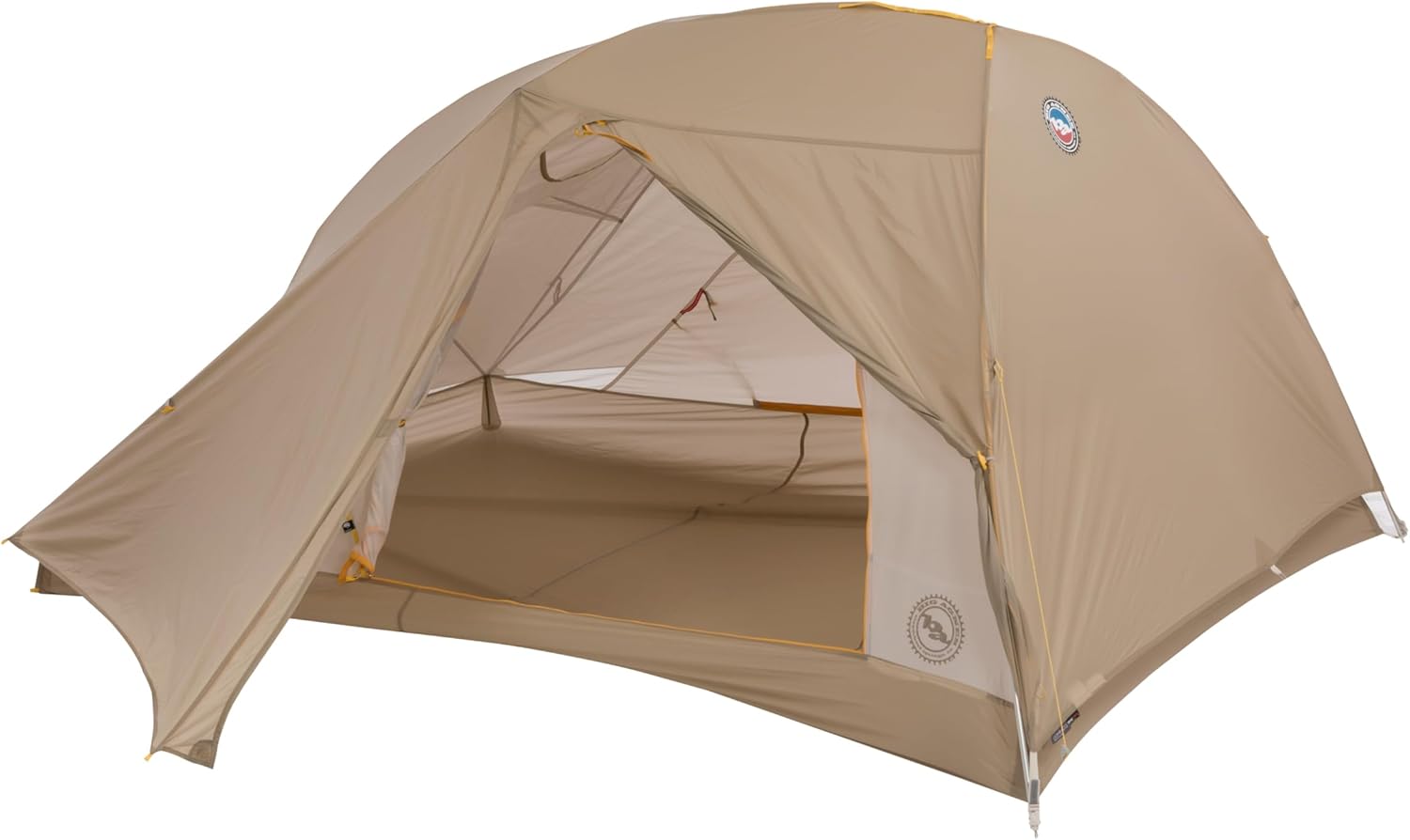


- 8.3★ Best Overall★ Most Comfortable
Disclosure: Four Seasons Gear is reader-supported. When you buy through links on our site, we may earn an affiliate commission at no extra cost to you. Prices and availability are accurate as of the time we last checked.
Two-person backpacking tents occupy the sweet spot where solo hikers gain elbow room and couples share the load. After evaluating the current field, we've identified clear winners across weight classes, weather protection, and budget tiers. These picks represent shelters we'd trust on everything from summer thru-hikes to shoulder-season alpine routes.
Best Overall: MSR Hubba Hubba LT 2-Person Lightweight Backpacking Tent
The MSR Hubba Hubba LT earns the top spot by nailing the balance between weight, weather protection, and long-term durability. Its Easton Syclone pole architecture creates near-vertical sidewalls that maximize usable floor space, while dual vestibules provide 18 square feet of combined gear storage—enough for two full packs plus boots. The rainfly uses MSR's Xtreme Shield waterproof coating with fully taped seams, and the bathtub floor extends 6 inches up the sidewalls to keep water out during heavy rain. At approximately 3 pounds 5 ounces packed weight, it's not the lightest option here, but the construction quality justifies the extra ounces. The DAC Featherlite NSL poles resist permanent deformation better than cheaper aluminum, and MSR's reinforced stake-out points won't rip out after a season of use.
What we like
Trade-offs
Best Ultralight: MSR Freelite 2-Person Ultralight Backpacking Tent
When every ounce matters, the MSR Freelite 2 shaves weight without sacrificing MSR's reputation for bombproof construction. Tipping the scales at approximately 2 pounds 14 ounces, it achieves its featherweight status through Easton's ultralight Syclone poles and a single-wall design in the canopy that reduces fabric layers. The asymmetric pole structure still delivers impressive headroom—44 inches at the peak—and the single vestibule provides 8 square feet of covered storage. MSR uses their proprietary Xtreme Shield coating on 15-denier nylon, a fabric thin enough to pack down to grapefruit size but tough enough for alpine exposure. The tradeoff is reduced vestibule space compared to the Hubba Hubba LT, so this tent works best for minimalist packers or those splitting gear between partners.
What we like
Trade-offs
Best Value: Big Agnes Tiger Wall UL Ultralight Bikepacking Tent
The Big Agnes Tiger Wall UL delivers ultralight performance at a price point $175 below the MSR Freelite. Its solution-dyed fabric resists UV degradation better than standard nylon, extending the tent's usable lifespan in high-altitude environments where sun exposure accelerates material breakdown. Big Agnes uses a proprietary media pocket system that keeps phones and headlamps organized, and the dual doors with dual vestibules provide independent entry—a feature usually reserved for heavier expedition tents. The tent weighs approximately 2 pounds 8 ounces in its trail configuration, making it lighter than the Hubba Hubba LT while maintaining two-door convenience. If you're considering something even lighter for solo trips, the Big Agnes Copper Spur HV UL Ultralight Bikepacking Tent offers a one-person option with similar construction quality.
What we like
Trade-offs
Best for Shoulder Season: Sea to Summit Alto TR2 Plus Tent
The Sea to Summit Alto TR2 Plus stands out for its Tension Ridge architecture, which uses a central ridgeline to maintain taut fabric in variable weather without requiring perfect stake placement. This design shines during spring and fall trips when condensation management becomes critical—the increased airflow between canopy and fly reduces interior moisture buildup that plagues single-wall designs. The tent uses Sea to Summit's proprietary Tension Lock buckles that allow fly adjustment without re-staking, a feature that proves invaluable when weather shifts overnight. At approximately 3 pounds 7 ounces, it trades a few ounces for superior ventilation and a more forgiving pitch. The rectangular floor plan provides better sleeping pad placement than tapered designs, and the twin apex vents actively exhaust warm air even with the fly fully deployed.
What we like
Trade-offs
Best Budget: Geertop Portable 2 Person 4 Season Tent
At under $180, the Geertop 4 Season Tent delivers genuine four-season construction at a fraction of premium tent costs. Its double-layer design uses a full-coverage rainfly that extends to the ground, creating a snow-shedding profile suitable for winter camping. The aluminum pole structure employs a geodesic-inspired cross-bracing that distributes wind loads across multiple points, and the 210T polyester fabric resists tearing better than lightweight nylon. This tent weighs approximately 6 pounds 8 ounces—more than twice the ultralight options—but that heft translates to stability in exposed campsites. The double-door configuration provides symmetric entry, and the dual vestibules offer adequate gear storage. This is the tent for budget-conscious backpackers who prioritize weather protection over gram counting, or for those building an entry-level kit before investing in premium ultralight gear.
What we like
Trade-offs
Best for Car Camping Transition: Tungsten 2-Person Tent
The Tungsten 2 bridges the gap between car camping and backpacking with a design that prioritizes livability over ultralight credentials. Its freestanding construction requires minimal staking for initial setup, making it ideal for rocky campsites where finding stake placements challenges lighter tents. The tent uses color-coded pole sleeves and clips that simplify setup in fading light—a feature that benefits beginners still developing camp routines. At approximately 4 pounds 12 ounces, it's too heavy for long-distance thru-hiking but perfectly suited for weekend trips where the extra weight buys significantly more interior space. The vertical sidewalls create a rectangular floor plan that accommodates wider sleeping pads, and the dual vestibules provide 16 square feet of combined storage. This tent works best for couples transitioning from car camping to backpacking, or as a basecamp shelter for alpine climbing trips.
What we like
Trade-offs
What to Consider When Choosing a 2-Person Backpacking Tent
Weight distribution matters more than total weight when sharing a tent. A 3-pound tent splits to 1.5 pounds per person, while a 2.5-pound ultralight model saves only 4 ounces per person but often sacrifices vestibule space. Consider whether you'll actually split the load—solo hikers carrying a two-person tent for extra space should prioritize total weight over per-person calculations.
Floor dimensions tell only part of the livability story. A tent measuring 88 inches long by 52 inches wide sounds spacious, but tapered designs concentrate that width at the head end, leaving your feet in a narrow footbox. Rectangular floor plans provide consistent width throughout, improving sleeping pad placement and reducing the claustrophobic feel of tapered tents. Peak height matters less than sidewall angle—near-vertical walls create usable space where sloped walls force you toward the center.
Vestibule space directly impacts livability on multi-day trips. Calculate total vestibule area, not just the presence of dual vestibules—two 6-square-foot vestibules provide less storage than one 14-square-foot vestibule. Plan for approximately 8-10 square feet per person to store packs, boots, and wet gear. Vestibules also create airflow buffers that reduce condensation transfer from fly to canopy.
Pole Materials and Architecture
Pole material determines both weight and long-term reliability. DAC Featherlite poles use proprietary aluminum alloys that resist the permanent bending that plagues cheaper poles after repeated use. Easton Syclone poles achieve similar performance at slightly lower weight. Budget tents use generic aluminum that bends more easily but costs significantly less to replace. Carbon fiber poles save weight but crack rather than bend when overloaded, creating catastrophic failures instead of repairable damage.
Pole architecture affects both interior volume and weather resistance. Hub-based designs concentrate stress at junction points, while continuous pole sleeves distribute loads across longer sections. Cross-pole configurations create dome structures that shed wind better than tunnel designs, but tunnel tents pack smaller and pitch faster. Single-pole designs minimize weight but require guy lines for stability, increasing setup complexity in challenging conditions.
Fabric Specifications and Coatings
Denier ratings indicate fabric thickness, with lower numbers representing lighter, thinner material. A 15-denier canopy saves weight but tears more easily than 20-denier fabric. Floor fabric should use 30-denier minimum for puncture resistance, with 40-denier providing better durability on rocky sites. Ripstop weaving patterns contain tears but don't prevent initial punctures—they're damage mitigation, not damage prevention.
Waterproof coatings degrade over time regardless of quality. Silicone-treated nylon (silnylon) maintains waterproofing longer than polyurethane coatings but can't be seam-taped, requiring seam-sealing during setup. Polyurethane-coated fabrics accept tape sealing but break down faster under UV exposure. Solution-dyed fabrics resist UV degradation by incorporating color during fiber production rather than surface dyeing, extending usable life in high-altitude environments where UV intensity accelerates material breakdown.
Ventilation and Condensation Management
Condensation forms when warm, moist air contacts cold surfaces—unavoidable in single-wall designs and manageable in double-wall tents. Mesh canopy panels promote airflow but reduce warmth in cold conditions. Adjustable vents at the apex exhaust rising warm air, while low vents near the floor draw in cool air, creating convection currents that reduce moisture buildup. The gap between canopy and fly determines airflow volume—larger gaps ventilate better but increase packed size and weight.
Vestibule design affects condensation transfer. Vestibules that extend far from the canopy create larger air gaps that reduce fly-to-canopy contact, while short vestibules save weight but increase condensation transfer during rain. Vestibule vents allow airflow without removing the fly, but they're only effective if positioned to create cross-ventilation with canopy vents.
Setup Complexity and Site Requirements
Freestanding tents maintain their shape without stakes, allowing you to position the tent before staking and move it if the initial placement proves suboptimal. Non-freestanding designs require staking before the tent takes shape, demanding more careful initial placement. Freestanding tents still require staking for wind resistance—the freestanding designation indicates only that the tent holds its shape unstaked, not that staking is optional.
Guy line requirements increase with lighter tents. Ultralight designs use guy lines to maintain fabric tension that heavier tents achieve through pole structure alone. More guy lines mean more stake points and longer setup times, but they also allow fine-tuning of fabric tension that improves weather resistance. Color-coded guy lines and reflective elements simplify setup and reduce tripping hazards after dark.
- Stake out all corners and guy lines even in calm conditions—wind can arrive suddenly
- Pitch the tent with the door facing away from prevailing wind to reduce fly flapping
- Leave boots in vestibules rather than inside the canopy to reduce interior moisture
- Wipe down the interior canopy each morning to remove condensation before it soaks gear
- Practice setup at home before your trip to identify missing stakes or damaged poles
+Should I choose a freestanding or non-freestanding tent?
Freestanding tents work better for rocky campsites where finding stake placements challenges non-freestanding designs. They allow you to pick up the tent and move it after initial setup, useful when you discover a rock under your sleeping pad. Non-freestanding tents save weight by using fewer poles and relying on stakes for structure, but they require more careful initial placement. If you frequently camp above treeline on granite slabs or in desert hardpan, freestanding designs prove more versatile. If you stick to established campsites with soft soil, non-freestanding tents offer better weight savings.
+How much weight difference matters between tents?
Every pound saved in base weight allows you to carry more food, water, or comfort items. A 1-pound difference between tents translates to an extra day's food supply or a full water bottle. However, weight savings that sacrifice durability cost more in the long run—a tent that fails mid-trip weighs nothing because you're not carrying it home. Prioritize weight savings that come from smarter design rather than thinner materials. A tent that weighs 3 pounds and lasts five seasons provides better value than a 2-pound tent that needs replacement after two seasons.
+Do I need a footprint for my backpacking tent?
Footprints extend tent floor life by protecting against abrasion and punctures, but they add 6-12 ounces to your pack weight. On established tent sites with cleared ground, you can skip the footprint and accept slightly faster floor wear. On rocky, exposed sites or when camping off-trail, a footprint prevents catastrophic floor damage that ends your trip early. An alternative is using a piece of Tyvek cut to size, which costs less and weighs similar to proprietary footprints. If you're camping frequently on rough terrain, the footprint pays for itself by extending floor life. For occasional use on groomed sites, skip it and save the weight.