
Review · spring · summer · fall
Outdoor Research Men's Helium Rain Jacket Review
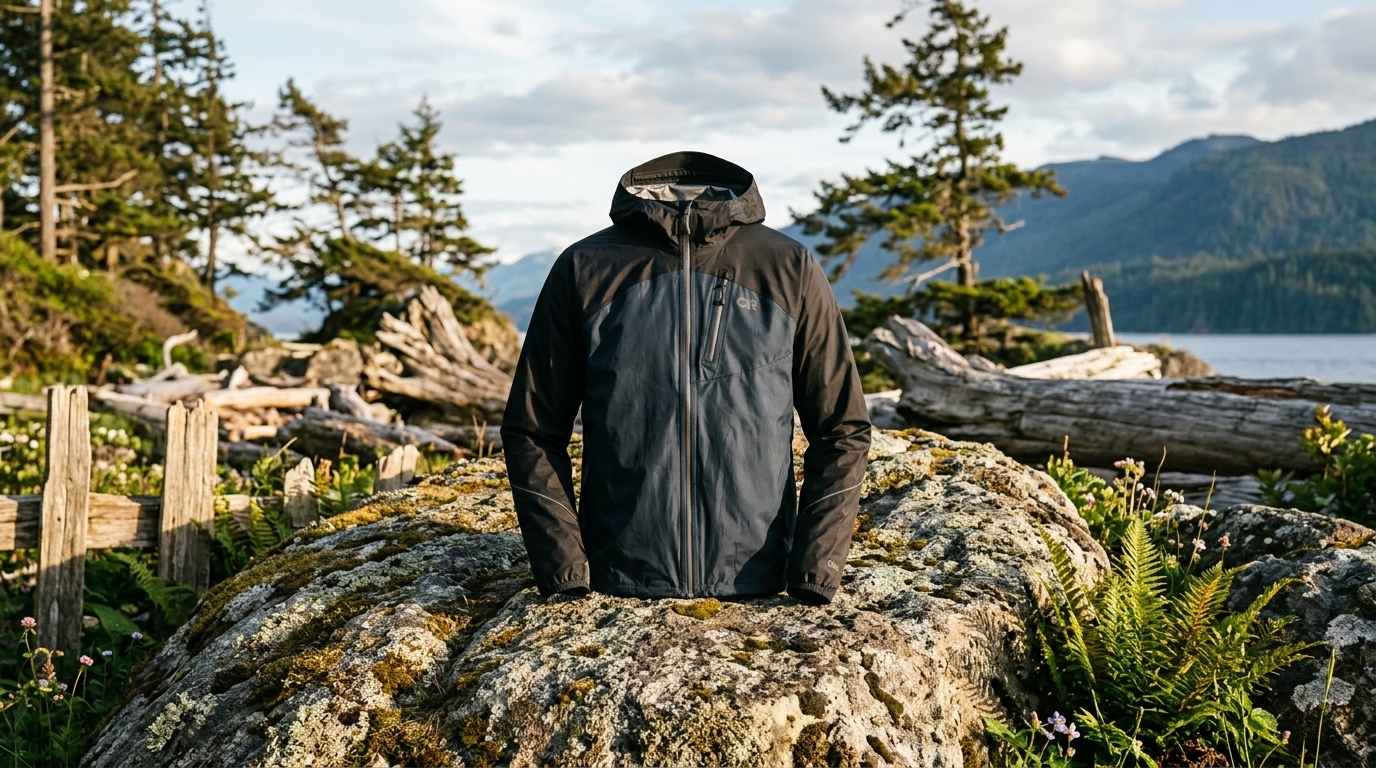
The Outdoor Research Helium Rain Jacket targets fast-and-light backpackers and trail runners who prioritize packability and low weight over extended-wear comfort. Built from 30-denier ripstop nylon with fully-taped seams, it delivers waterproof protection in a jacket that stuffs into its own chest pocket, making it an ideal emergency shell for weight-conscious users willing to accept minimal features and a slightly crinkly hand feel in exchange for sub-200-gram protection.
Disclosure: Four Seasons Gear is reader-supported. When you buy through links on our site, we may earn an affiliate commission at no extra cost to you. Prices and availability are accurate as of the time we last checked.
Construction and Materials
The Helium uses 100% nylon 30D ripstop fabric with a waterproof/breathable laminate and fully-taped seams. Outdoor Research describes the weave as diamond-shaped yarn that locks together for abrasion resistance while maintaining breathability. At 30 denier, this sits in the ultralight category—thicker than the sub-15D fabrics on race-weight shells, but thinner than the 40–70D face fabrics common on burlier three-season jackets. The ripstop grid adds tear resistance without significant weight penalty.
The jacket features a fully adjustable hood, elastic cuffs, and a drawcord hem. A single chest pocket with a waterproof zipper doubles as a stuff sack when the jacket is packed, with an integrated carabiner loop and key clip. OutdoorGearLab's testing noted the hood adjusts well over a helmet, and Section Hiker's review highlighted the chest-pocket stuff-sack design as particularly convenient for quick deployment during weather changes.
Specs
Intended Use and Performance Context
This jacket occupies the emergency-shell niche: a piece you pack for weather insurance rather than wear all day. Trail reports from CleverHiker and Section Hiker emphasize its role as a stash-and-forget layer for fast-moving activities where every gram counts. The 30D fabric and minimal features keep weight low, but the tradeoff is reduced durability under sustained abrasion (pack straps, rock contact) and less ventilation than pit-zipped alternatives.
The standard fit hangs naturally without excess fabric, suitable for layering over a base layer or light midlayer. OutdoorGearLab noted the cut works well for active pursuits but may feel snug over bulky fleeces. The elastic cuffs seal without Velcro tabs, reducing weight but limiting adjustability for different glove thicknesses.
Durability Considerations
Thirty-denier ripstop nylon with a waterproof laminate will show wear faster than heavier-duty shells. The ripstop grid mitigates catastrophic tears, but sustained friction from pack shoulder straps or bushwhacking will eventually abrade the face fabric and compromise the laminate. Fully-taped seams prevent leaks at stitching, but the thin fabric requires careful handling—snagging on sharp branches or crampon points can puncture the shell.
The chest pocket's dual role as a stuff sack introduces a potential stress point: repeated packing and unpacking can fatigue the zipper and surrounding fabric over hundreds of cycles. Section Hiker's review mentioned the jacket held up well through a season of use, but users should expect a 2–4 year lifespan with regular backpacking rather than the 5+ years typical of burlier shells.
Comparison and Category Context
The Helium sits between true ultralight race shells (sub-100 g, 7–15D fabrics, minimal features) and workhorse three-season jackets (250–400 g, 40–70D fabrics, pit zips, multiple pockets). It offers more durability than the lightest options without the bulk of full-featured alternatives. Compared to emergency shells in the same weight class, the single chest pocket and lack of hand pockets may frustrate users accustomed to stashing snacks or a phone while moving.
For buyers prioritizing ventilation, jackets with pit zips provide better airflow during high-output activity, though they add 30–60 g. For those needing a shell that doubles as a wind layer on cool mornings, the Helium's breathability works, but the crinkly fabric and minimal insulation mean it won't replace a dedicated wind shirt for comfort.
Value and Buyer Fit
At approximately $119 MSRP, the Helium delivers competitive grams-per-dollar in the ultralight rain shell category. It costs less than premium ultralight shells (often $200–300) while offering similar packability and waterproof performance. The tradeoff is durability and feature set: buyers paying for a multi-season workhorse should look at heavier, more robust options.
The standard fit and inclusive sizing (XS–XXXL) accommodate a range of body types, though the non-athletic cut may feel boxy on smaller frames. The elastic cuffs and drawcord hem allow some fit customization, but the lack of Velcro or snap adjustments limits fine-tuning.
What we like
Trade-offs
Frequently Asked Questions
+What does the Helium weigh, and how small does it pack?
The manufacturer does not publish exact weight by size on all product pages, but independent reviews place a size medium around 180–200 g. The jacket stuffs into its own chest pocket, compressing to roughly the size of a grapefruit or large apple—small enough to stash in a hydration pack or lash to a harness with the carabiner loop.
+Is the Helium breathable enough for trail running or high-output hiking?
The 30D ripstop nylon with a waterproof/breathable laminate offers moderate breathability, but the lack of pit zips limits airflow during sustained high-output activity. Trail runners and fast hikers in humid conditions may experience clamminess. It works best as an emergency layer you deploy during rain, then remove when intensity drops or precipitation stops.
+How does the standard fit compare to athletic or slim cuts?
The standard fit hangs naturally on the body without excess fabric, suitable for layering over a base layer or light fleece. It's not tailored or athletic—expect a traditional cut that accommodates a range of torso shapes. Users accustomed to slim-fit technical apparel may find it slightly boxy, while those layering bulky midlayers may feel restricted.
+Will the Helium hold up to bushwhacking or scrambling?
The 30D ripstop fabric resists tears better than sub-15D ultralight shells, but it's not designed for sustained abrasion against rock or dense brush. Expect accelerated wear on high-friction zones (shoulders under pack straps, elbows during scrambling). For technical alpine routes or heavy bushwhacking, a 40–70D shell offers better longevity.
+Can I wear the Helium over a puffy jacket?
The standard fit allows layering over a thin down or synthetic puffy, but the single chest pocket and lack of hand pockets mean you'll lose access to your insulation layer's pockets. The elastic cuffs may also bind over bulky sleeves. It's better suited as an outer layer over base or light midlayers.
Best For
- Ultralight backpackers prioritizing packability and low weight
- Trail runners needing emergency rain protection without bulk
- Fast-and-light hikers who stash a shell for weather insurance
- Three-season users in moderate climates where extended rain is rare
- Buyers seeking a sub-$150 ultralight rain shell with helmet-compatible hood
Not For
- Users needing hand pockets for snacks, phone, or warming fingers
- High-output athletes requiring pit zips for ventilation
- Bushwhackers or scramblers prioritizing abrasion resistance
- All-day wear in sustained rain (minimal features reduce comfort)
- Buyers wanting a multi-season workhorse shell for 5+ years of heavy use

Read next
More from this category
REVIEW
Columbia Men's Watertight II Waterproof Rain Jacket Review
REVIEW
FROGG TOGGS Men's Ultra-Lite2 Rain Suit Review: Budget Emergency Rain Protection
REVIEW
Marmot Women's Precip Eco Rain Jacket Review: Budget-Friendly 2.5-Layer Shell

BEST OF
Best Rechargeable Headlamps for Backpacking

BEST OF
Best Beginner Binoculars for Hiking and Bird Watching

GUIDE