
Review · spring · summer · fall
LifeStraw Peak Series 3L Gravity Filter: Modular Filtration for Groups and Solo Backpackers
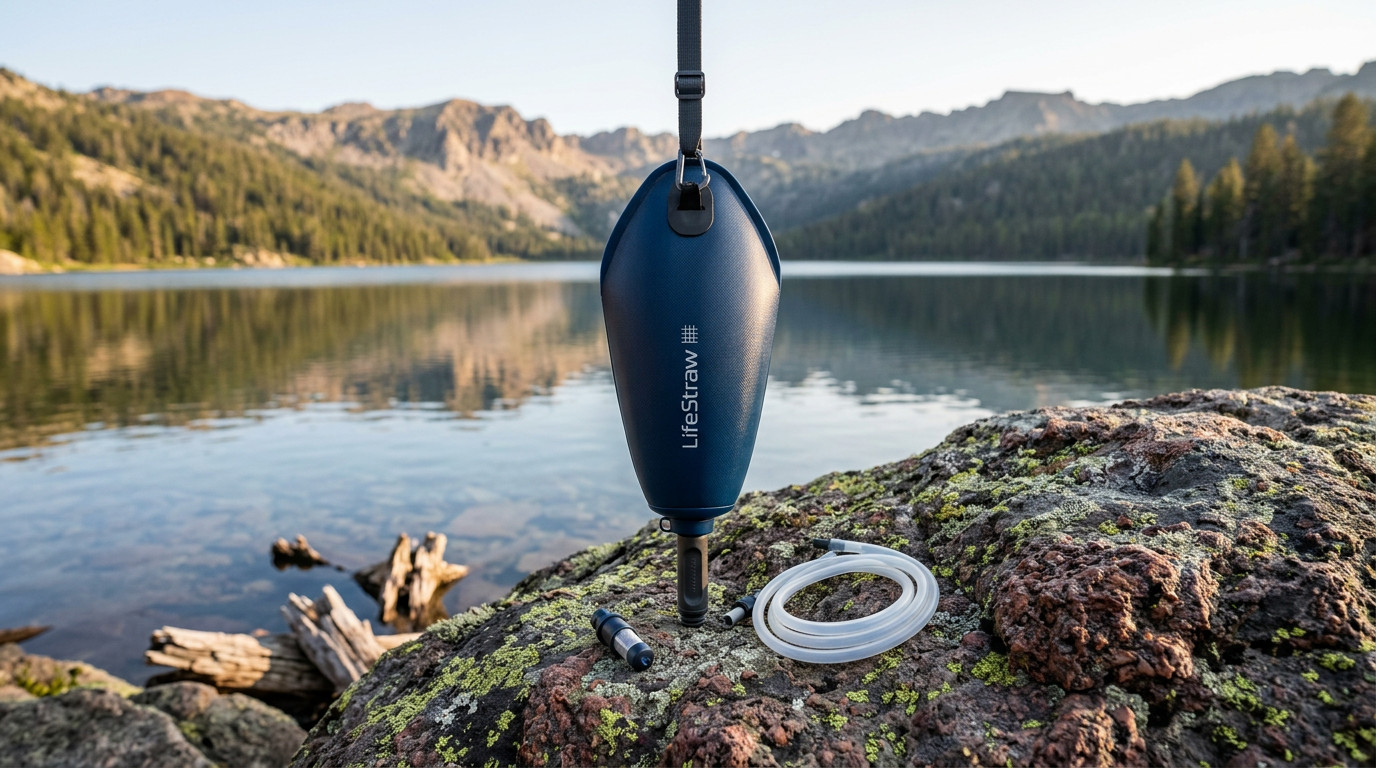
The LifeStraw Peak Series 3L gravity filter targets backpackers and small groups who want a versatile, multi-mode filtration system that can function as gravity feed, squeeze bottle, inline filter, or straw. The tradeoff is modularity over simplicity: you gain configuration flexibility and a custom backwash accessory for silt-heavy sources, but accept a higher price point (approximately $65.95 MSRP) and slightly more complexity than dedicated squeeze systems like the Sawyer Squeeze Water Filter System. The re-engineered hollow-fiber membrane and premium construction materials position this as LifeStraw's answer to backcountry users who've outgrown the LifeStraw Personal Water Filter and need group capacity with maintained flow rates in turbid water.
Disclosure: Four Seasons Gear is reader-supported. When you buy through links on our site, we may earn an affiliate commission at no extra cost to you. Prices and availability are accurate as of the time we last checked.
Construction and Materials
The Peak Series 3L uses a 3-liter reservoir constructed from durable TPU (thermoplastic polyurethane) with welded seams, addressing the leak-prone vulnerabilities of earlier gravity bag designs. The hollow-fiber microfilter cartridge is housed in a reinforced polymer body with threaded connections rather than press-fit adapters, improving seal integrity under pressure. LifeStraw rates the membrane at 0.2 microns, meeting NSF 53 and P231 protocols for bacteria (99.999999% reduction including E.coli and Salmonella) and parasites (99.999% reduction including Giardia and Cryptosporidium). The filter also addresses microplastics, silt, sand, and turbidity, though like all hollow-fiber filters it does not remove viruses, dissolved chemicals, or heavy metals without additional treatment.
The included backwash accessory—a syringe-style plunger that connects to the clean-water outlet—distinguishes this system from competitors. Hollow-fiber membranes clog progressively when processing silty alpine snowmelt or glacial runoff; the backwash tool reverses flow to purge trapped particulates from the membrane fibers, restoring flow rate without field disassembly. This addresses a common concern with gravity systems in high-sediment environments where flow can drop from 1.5+ liters per minute to under 0.5 L/min after just a few liters of turbid water.
Specs
Versatility and Use Modes
The Peak Series' defining feature is its four operational modes. In gravity configuration, you hang the reservoir from a tree or trekking pole and let hydrostatic pressure drive water through the filter into your bottle or hydration bladder—ideal for camp when filtering 6+ liters for a group or next-day needs. Remove the filter cartridge from the gravity hose and thread it onto the reservoir cap to create a 3L squeeze bottle, useful when trees are scarce or you're filtering on the move. The filter cartridge also accepts standard 28mm bottle threads (compatible with many disposable water bottles and the Nalgene 32 oz Wide Mouth Water Bottle) and includes a straw adapter for direct drinking from the reservoir or a water source. Finally, the hose can be configured inline with a hydration bladder, filtering as you drink during active hiking.
This modularity appeals to users who encounter varied terrain and group sizes—solo fastpackers who want squeeze-bottle speed on-trail but gravity convenience in camp, or small groups who need 3L batch capacity but don't want to carry a dedicated gravity system and a separate personal filter. The Sawyer Squeeze Water Filter System offers similar squeeze and inline functionality but lacks integrated gravity capability and the backwash tool, requiring a separate cleaning plunger and more frequent backflushing in silty conditions.
Performance in Turbid Water
LifeStraw's marketing emphasizes "enhanced microfilter performance" and "better performance against sand and silt," claims supported by the inclusion of the backwash accessory. Hollow-fiber membranes are inherently vulnerable to particulate clogging—the 0.2-micron pores trap sediment on the membrane surface, progressively restricting flow. In field use, filtering directly from a muddy streambed or glacial meltwater source can reduce flow rate by 50-70% after just 2-3 liters without backflushing. The Peak Series' backwash syringe lets you restore flow in 30-60 seconds by pushing clean water backward through the membrane, dislodging trapped particles. This is faster and more effective than the shake-and-blow method used with the Sawyer Mini Water Filter, though it requires carrying the small syringe and accessing clean water for backflushing.
Durability Considerations
The TPU reservoir and welded seams provide better abrasion resistance and puncture tolerance than the laminated nylon bags used in some budget gravity systems, though sharp granite edges and crampon points remain threats. The threaded filter connections eliminate the failure-prone quick-disconnect fittings found on earlier LifeStraw models, reducing the risk of cross-threading or cracked adapter bodies. The filter cartridge itself is rated for approximately 2,000 liters—roughly 100 days of 20-liter daily consumption for a solo hiker, or 15-20 weekend trips for a group of four. Unlike the LifeStraw Personal Water Filter (which has no replaceable parts), the Peak Series uses a replaceable cartridge, extending the system's usable life beyond the membrane's lifespan.
The hollow-fiber membrane is susceptible to freeze damage—ice crystals rupture the fibers, creating unfiltered bypass channels. Store the filter in your sleeping bag or insulated jacket pocket in subfreezing conditions, and never store a wet filter below 32°F. If the filter freezes, assume it's compromised and replace the cartridge. This limits the Peak Series to three-season use (spring, summer, fall) unless you're willing to manage freeze protection protocols.
Value and Category Context
At approximately $65.95, the Peak Series 3L sits in the mid-to-upper price tier for backpacking gravity filters. The Platypus GravityWorks 3L retails around $120-140 with a dual-bag system and faster flow rates but lacks squeeze and inline modes. Budget options like the Sawyer Squeeze Water Filter System (approximately $40-45) offer lower upfront cost and proven reliability but require manual squeezing or a separate gravity adapter. The Peak Series' value proposition rests on its modularity: if you'll genuinely use multiple modes across different trips, the $65.95 investment consolidates what might otherwise require two separate systems. If you exclusively filter in gravity mode or exclusively squeeze, dedicated single-purpose systems offer better weight-to-performance ratios.
The 2,000-liter cartridge lifespan translates to approximately $0.033 per liter filtered (assuming full cartridge use), competitive with other hollow-fiber systems. Replacement cartridges retail around $30-35, making long-term ownership costs manageable for frequent users.
What we like
Trade-offs
Frequently Asked Questions
+Can I use the Peak Series 3L in winter or below-freezing temperatures?
No, the hollow-fiber membrane is susceptible to freeze damage. Ice crystals rupture the 0.2-micron fibers, creating bypass channels that allow unfiltered water through. If you must use it in near-freezing conditions, store the filter in your sleeping bag or insulated jacket pocket and never store a wet filter below 32°F. If the filter freezes, replace the cartridge before further use. For reliable winter filtration, consider chemical treatment (iodine, chlorine dioxide) or a stove-based boiling protocol.
+How often do I need to backflush the filter in typical use?
In clear alpine lakes or streams, you may filter 10-20 liters before noticing flow rate degradation. In turbid sources (glacial melt, muddy runoff, desert seeps), backflush every 2-4 liters to maintain 1+ L/min flow. The backwash process takes 30-60 seconds: fill the syringe with clean filtered water, attach it to the clean-water outlet, and push forcefully to reverse-flush particulates from the membrane. You'll see cloudy water discharge from the dirty-water inlet side.
+Does the Peak Series remove viruses or chemicals?
No. The 0.2-micron hollow-fiber membrane removes bacteria (99.999999%), parasites (99.999%), and microplastics, but viruses (typically 0.02-0.1 microns) pass through. It also does not remove dissolved chemicals, pesticides, heavy metals, or pharmaceuticals. For international travel or areas with suspected viral contamination, add chemical treatment (chlorine dioxide tablets, iodine) or UV purification (SteriPEN) as a second stage. In North American backcountry, bacterial and parasitic pathogens are the primary waterborne threats, making the Peak Series' filtration adequate for most use.
+Can I use the filter cartridge with other water bottles?
Yes, the filter cartridge uses standard 28mm threads compatible with many disposable water bottles (Smartwater, Dasani, Aquafina) and wide-mouth bottles like the Nalgene 32 oz Wide Mouth Water Bottle. This lets you create a squeeze-filter setup with a lightweight disposable bottle if you want to reduce carried weight, or use the filter inline with a hydration bladder via the included hose adapter.
The Bottom Line
The LifeStraw Peak Series 3L gravity filter delivers genuine versatility for backpackers who value operational flexibility over single-mode optimization. The backwash accessory and re-engineered membrane address flow maintenance in turbid water—a real-world pain point with hollow-fiber systems—while the four-mode design consolidates gravity, squeeze, inline, and straw functions into one approximately 200 g package. You pay a premium over dedicated systems like the Sawyer Squeeze Water Filter System, and you accept three-season limitations due to freeze vulnerability, but for small groups or solo users who encounter varied terrain and water sources, the Peak Series' modularity justifies the $65.95 investment. It's not the lightest option (ultralight purists will prefer a 30 g Sawyer Mini Water Filter) or the fastest (dual-bag gravity systems flow faster), but it's the most adaptable hollow-fiber system for users who refuse to choose between gravity convenience and squeeze portability.

Read next
More from this category
REVIEW
MSR Guardian Water Purifier Annual Maintenance Kit Review
REVIEW
GRAYL GeoPress 24 oz Water Purifier Bottle Review: Press-Filter Speed for Backcountry and Travel
REVIEW
Platypus GravityWorks Group Camping Water Filter System Review
REVIEW
KATADYN Steripen Classic 3 UV Water Purifier Review: Battery-Powered Pathogen Control for Clear Water
REVIEW
Katadyn Hiker Microfilter Review: Pump-Action Reliability for Group Trips
REVIEW