
Review · spring · summer · fall
Sawyer Mini Water Filter Review: Ultralight Filtration with Real-World Tradeoffs
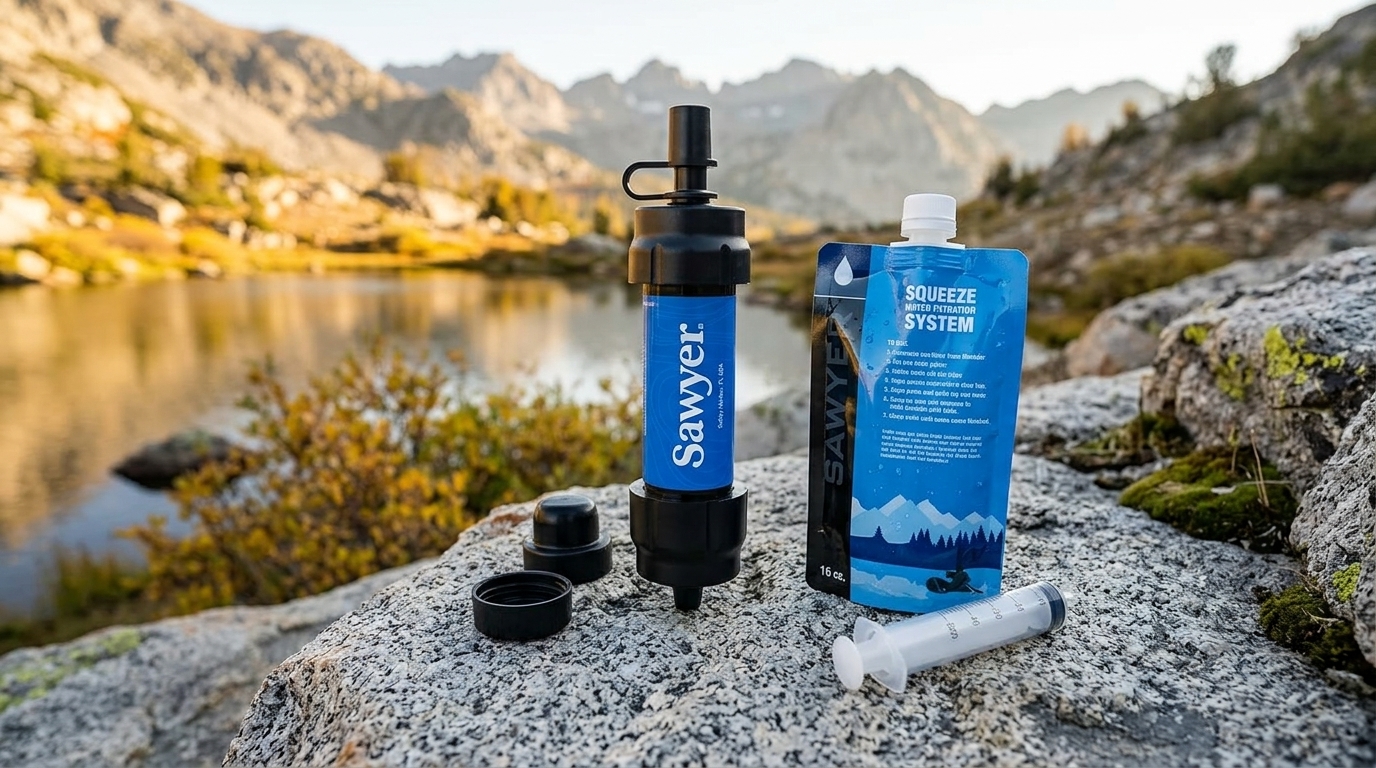
The Sawyer Mini delivers genuine 0.1-micron absolute filtration in a 2-ounce package that fits in your palm, making it the go-to choice for gram-counting backpackers and minimalist hikers who prioritize pack weight above flow rate. This is filtration stripped to essentials: a hollow-fiber membrane rated to 100,000 gallons, inline or squeeze-bag versatility, and a price point under $25. The tradeoff is patience—flow rates are measurably slower than larger filters, and field maintenance (backflushing) becomes non-negotiable on turbid water sources. If you're willing to spend an extra 60 seconds per liter and carry a syringe for cleaning, the Mini earns its place in ultralight kits.
Disclosure: Four Seasons Gear is reader-supported. When you buy through links on our site, we may earn an affiliate commission at no extra cost to you. Prices and availability are accurate as of the time we last checked.
Specifications
Specs
Construction and Filtration Technology
The Mini uses the same hollow-fiber membrane technology as Sawyer's full-size Squeeze—thousands of 0.1-micron pores running through bundled fibers—but in a body roughly 40% shorter and lighter. The outer shell is BPA-free plastic with 28mm threads on both ends, allowing inline use between a pouch and a bottle, direct threading onto smartwater or soda bottles, or gravity setups with compatible reservoirs. The membrane itself is rated to EPA/NSF standards for bacteria and protozoa removal, meaning it handles giardia, cryptosporidium, E. coli, and salmonella to log-6 and log-4 reduction respectively.
Critically, the Mini does not remove viruses (which are smaller than 0.1 microns), dissolved chemicals, or taste/odor compounds. In North American backcountry where viral contamination is rare, this is acceptable; in international travel or suspect water sources, you'll need chemical treatment (Aquatabs, chlorine dioxide) as a secondary step. The included 16-ounce pouch is a rollable mylar-laminate squeeze bag with a push-pull cap; it's functional but known to develop pinhole leaks after 20-30 uses. Many users replace it immediately with a Platypus SoftBottle or Evernew bag for durability.
Field Performance and Flow Rate Reality
Flow rate is where the Mini's compact design extracts its cost. With a clean filter and firm squeeze pressure, expect approximately 1 liter per 2 to 3 minutes—roughly half the throughput of the full-size Sawyer Squeeze and a third of what you'd get from a Katadyn BeFree. This isn't a dealbreaker for solo hikers filtering 2-3 liters per day, but it becomes tedious when filling cookpots for groups or processing large volumes at camp. The smaller membrane surface area means the Mini clogs faster in silty or algae-heavy sources; after filtering from a turbid alpine tarn, flow can drop to a trickle within a single liter.
Backflushing with the included cleaning plunger restores most of the flow, but this requires carrying the syringe (adds 14 grams) and access to clean water—you're pushing filtered water backward through the membrane to dislodge particulates. Field reports from long-distance hikers note backflushing every 5-10 liters in dirty water, versus every 20-30 liters with larger filters. In freezing conditions, the hollow fibers are vulnerable: ice expansion can rupture the membrane, rendering the filter useless. Sawyer states the Mini should never be allowed to freeze after first use, which limits its utility for shoulder-season or alpine trips where overnight temps drop below 0°C.
Use Case Positioning
The Mini occupies the ultralight-budget intersection of the water filter category. At 56 grams and typically under $25, it undercuts the Katadyn BeFree (59 g, $45), Platypus QuickDraw (85 g, $45), and MSR TrailShot (142 g, $50) on both weight and price. The tradeoff matrix is clear: you're exchanging convenience (flow rate, ease of cleaning) for grams and dollars. For thru-hikers on the PCT or AT where water sources are frequent and relatively clear, the Mini's limitations are manageable. For weekend warriors carrying 3 liters at a time or anyone filtering for a group, the time penalty adds up quickly.
The inline/straw functionality adds versatility that pure squeeze filters lack. You can drink directly from a stream using the included straw (useful for fast-and-light day hikes), configure it as a gravity filter with a hydration bladder, or screw it onto a disposable water bottle for urban travel. This modularity explains the Mini's popularity beyond backpacking—it's a common choice for international travel, emergency kits, and scout troops.
Durability Considerations
The hollow-fiber membrane itself is remarkably robust when handled correctly. The 100,000-gallon rating is based on clean-water lab testing; real-world lifespan depends entirely on source water quality and maintenance discipline. Backflushing after every trip and storing the filter dry extends longevity significantly—many users report 2-3 years of regular use before noticing flow degradation. The plastic housing is less durable: the threads can cross-thread if forced, and the body can crack if dropped on rock or frozen solid.
The included pouch is the weak link. The seams and material are prone to delamination and pinhole leaks, often within the first season. This isn't unique to the Mini—most squeeze-bag systems have this issue—but it's worth budgeting $12-$15 for a replacement Evernew or CNOC bag if you plan to use the filter beyond a few trips. The cleaning syringe is simple and durable, though the rubber plunger seal can degrade after a year of UV exposure; replacements are available for under $5.
Value Proposition
At its typical retail price, the Mini delivers exceptional cost-per-filtered-liter. The 100,000-gallon capacity means you're paying roughly $0.0002 per liter filtered—orders of magnitude cheaper than pump filters with replaceable cartridges or chemical tablets. The low entry cost makes it accessible for beginners testing the backpacking waters (pun intended) without committing $50+ to a premium system. For ultralight purists, the 56-gram weight is competitive with anything short of Aquamira droplets, and unlike chemical treatment, filtration is instant—no 30-minute wait times.
The value calculation shifts if you need to replace the pouch annually and you're filtering high volumes. A BeFree or Platypus QuickDraw costs twice as much upfront but filters faster and integrates with more durable soft flasks, potentially reducing long-term accessory costs. Still, for solo hikers on clear-water trails who don't mind the slower pace, the Mini's price-to-performance ratio is difficult to beat.
What we like
Trade-offs
Best For
- Solo ultralight backpackers prioritizing pack weight over flow speed
- Thru-hikers on trails with frequent, relatively clear water sources
- Budget-conscious beginners seeking proven filtration under $25
- Day hikers wanting inline or straw capability for fast refills
- International travelers needing compact filtration for bottled-water backup
- Emergency preparedness kits requiring long shelf-life filtration
Not For
- Groups or partners needing to filter 4+ liters quickly at camp
- Hikers in regions with heavy silt, glacial melt, or algae blooms
- Cold-weather backpackers where overnight freezing is likely
- Users unwilling to carry and use a backflushing syringe regularly
- Anyone requiring virus removal without chemical treatment
- Impatient filterers—this rewards a slower, more deliberate pace
Frequently Asked Questions
+How does the Mini compare to the full-size Sawyer Squeeze?
The Mini uses the same 0.1-micron hollow-fiber membrane but in a smaller housing—56 g versus 85 g, and roughly 40% less membrane surface area. This translates to approximately half the flow rate and faster clogging in dirty water. The Squeeze filters about 1 liter per minute with firm pressure; the Mini takes 2-3 minutes. Both have the same 100,000-gallon rating and require backflushing. If you're filtering more than 2 liters per session or dealing with turbid sources, the Squeeze's extra 29 grams pays dividends in convenience.
+Can I use the Mini in freezing temperatures?
No. Once the Mini has been wetted (used for the first time), it must never be allowed to freeze. Water trapped in the hollow fibers expands when frozen, rupturing the membrane and compromising filtration integrity. Sawyer provides no reliable field test to verify membrane integrity after freezing. For shoulder-season or winter trips, keep the filter inside your sleeping bag at night or choose a chemical treatment system (Aquamira, chlorine dioxide) that isn't freeze-sensitive.
+Do I need to replace the filter cartridge, or does it last 100,000 gallons?
The Mini has no replaceable cartridge—the entire unit is the filter. The 100,000-gallon rating is based on clean-water lab testing; real-world lifespan depends on source water quality and maintenance. With regular backflushing and proper storage (dry, unfrozen), many users report 2-4 years of regular use. Flow rate will gradually decrease over time as the membrane accumulates particulates that backflushing can't fully remove. When flow becomes unacceptably slow even after cleaning, it's time to replace the entire filter unit.
+Should I replace the included squeeze pouch immediately?
Many experienced users do. The included 16-ounce mylar pouch is functional but develops pinhole leaks and seam failures after 20-30 uses in typical field conditions. Aftermarket options like the Evernew 2L bag ($12), CNOC Vecto ($35), or even a Smartwater bottle (screw the Mini directly onto the threads) offer better durability. If you're testing the Mini for a single trip, the stock pouch is adequate; for regular use, budget for a replacement bag as part of the system cost.
+Does the Mini remove viruses or chemicals?
No. The 0.1-micron pore size removes bacteria (0.2-2 microns) and protozoa (2-15 microns) but not viruses (0.02-0.3 microns), dissolved chemicals, heavy metals, or taste/odor compounds. In North American backcountry where viral contamination from human waste is rare, this is generally acceptable. For international travel or suspect water sources, pair the Mini with Aquatabs or chlorine dioxide drops for viral protection. For agricultural runoff or chemical concerns, you'd need an activated carbon post-filter or a different system entirely.
The Bottom Line
The Sawyer Mini succeeds precisely because it makes no apologies for its tradeoffs. This is a 56-gram, sub-$25 filter that removes pathogens to EPA standards and lasts for years—but it asks you to slow down, to carry a cleaning syringe, to plan around freezing temps, and to accept that filtering 3 liters will take 8 minutes instead of 3. For the ultralight community and budget-conscious beginners, those are acceptable terms. For anyone prioritizing convenience or filtering for groups, the Mini's limitations outweigh the weight savings. It's not the fastest, not the easiest, but it might be the lightest legitimate filtration you can hang on your pack.

Read next
More from this category
REVIEW
MSR Guardian Water Purifier Annual Maintenance Kit Review
REVIEW
GRAYL GeoPress 24 oz Water Purifier Bottle Review: Press-Filter Speed for Backcountry and Travel
REVIEW
Platypus GravityWorks Group Camping Water Filter System Review
REVIEW
KATADYN Steripen Classic 3 UV Water Purifier Review: Battery-Powered Pathogen Control for Clear Water
REVIEW
Katadyn Hiker Microfilter Review: Pump-Action Reliability for Group Trips
REVIEW