
Review · spring · summer · fall
Aquamira Water Treatment Drops 1 Oz Review: Ultralight Chemical Purification for Backcountry Water
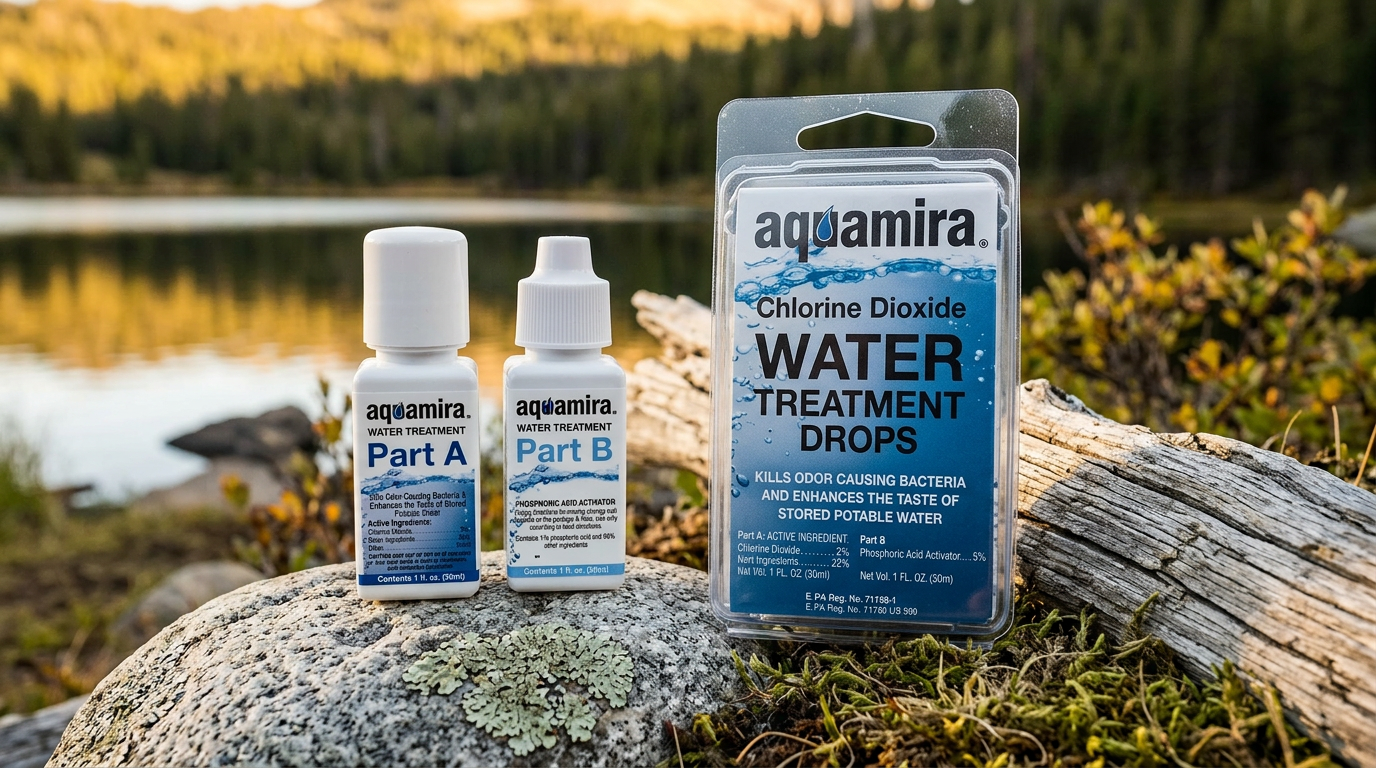
Aquamira Water Treatment Drops deliver EPA-registered chemical purification in a 1 oz package weighing approximately 3 oz total (both bottles combined), making them one of the lightest water treatment options for backpackers who prioritize pack weight over convenience. The two-part chlorine dioxide system requires a 15-30 minute wait time and careful mixing, trading speed and simplicity for gram savings and shelf stability that physical filters can't match.
Disclosure: Four Seasons Gear is reader-supported. When you buy through links on our site, we may earn an affiliate commission at no extra cost to you. Prices and availability are accurate as of the time we last checked.
Chemical Purification System and Active Ingredients
Aquamira uses a two-part chlorine dioxide system: Part A (sodium chlorite) and Part B (phosphoric acid activator). When mixed in equal drops and allowed to activate for 5 minutes, they generate chlorine dioxide (ClO₂), an EPA-registered disinfectant effective against bacteria, viruses, Giardia, and Cryptosporidium. This chemistry differs fundamentally from iodine-based treatments and physical filtration systems like the Sawyer Squeeze Water Filter System or LifeStraw Personal Water Filter, which rely on hollow-fiber membranes to mechanically remove pathogens.
Specs
Treatment Process and Wait Times
The treatment protocol requires three distinct steps: mix 7 drops from Part A and 7 drops from Part B in the bottle cap, wait 5 minutes for activation (the solution turns yellow), then add the activated mixture to 1 liter of water. CleverHiker's field testing confirms the manufacturer's 15-minute wait for clear, warm water and 30-minute wait for cold or turbid sources. This multi-step process and extended wait time contrasts sharply with squeeze filters that provide immediate drinkable water—a significant consideration when you're thirsty after a steep climb or need to break camp quickly.
Weight Advantage and Packaging Durability
At approximately 85 g for both bottles, Aquamira undercuts the Sawyer Mini Water Filter (56 g without bag or syringe, but 142 g complete system) and significantly beats the Sawyer Squeeze Water Filter System (approximately 160 g with bags). For thru-hikers counting every gram or ultralight backpackers on short trips, this 60-100 g savings is meaningful. The small dropper bottles fit easily in hip belt pockets or first aid kits. However, REI customer feedback flags occasional dropper tip failures and bottle leakage, suggesting the need for double-bagging in waterproof pouches. The plastic bottles lack the robust construction of a Nalgene 32 oz Wide Mouth Water Bottle, so careful packing is essential.
Effectiveness Against Pathogens
Chlorine dioxide is EPA-registered as effective against Giardia cysts (15 minutes), bacteria (15 minutes), viruses (15 minutes), and Cryptosporidium oocysts (30 minutes in cold water, 4 hours for complete inactivation per CDC guidelines). This broad-spectrum coverage includes viruses, which hollow-fiber filters like the Sawyer Squeeze cannot remove due to their 0.1-micron pore size (viruses are typically 0.02-0.3 microns). For international travel or water sources with potential fecal contamination, chemical purification offers more comprehensive protection than filtration alone.
Capacity and Cost Per Gallon
The 1 oz bottles treat up to 30 gallons (114 liters) at the standard 7+7 drop dosage. At approximately $15 per set, this works out to roughly $0.50 per gallon—significantly higher per-gallon cost than the Sawyer Squeeze, which treats up to 100,000 gallons before the filter requires replacement (though real-world backflushing maintenance typically necessitates replacement much sooner). For weekend trips or section hikes under 100 miles, Aquamira's capacity is adequate. For thru-hikes or extended expeditions, you'll need to resupply or carry multiple sets, adding logistical complexity.
Temperature Sensitivity and Cold-Weather Performance
Chlorine dioxide generation slows in cold temperatures, extending wait times from 15 minutes to 30+ minutes when treating near-freezing water. The liquid drops themselves won't freeze in the bottles until well below 32°F due to their chemical composition, giving Aquamira an advantage over pump filters with moving parts that can freeze. However, the extended wait time in cold conditions tests patience when you're trying to hydrate during a winter alpine start. Physical filters like the Sawyer Squeeze can freeze and crack if water remains in the membrane, but they provide instant flow-through once thawed—a different tradeoff.
Comparison Context in the Water Treatment Category
Aquamira occupies a specific niche: ultralight chemical purification for backpackers willing to plan ahead and wait for safe water. The Sawyer Squeeze Water Filter System offers faster treatment (immediate) and higher total capacity, but weighs nearly twice as much and requires backflushing maintenance. The LifeStraw Personal Water Filter provides on-demand drinking from sources but lacks storage capability and doesn't remove viruses. Pump filters like the MSR Guardian add mechanical reliability and fast flow rates but push 500+ grams. Aquamira's value proposition is clearest for gram-counting backpackers on established trails with reliable water sources, where the 15-30 minute wait can be absorbed into break times.
Durability Considerations
The thin-walled plastic dropper bottles represent the system's durability weak point. Unlike the robust polyethylene construction of a Nalgene bottle or the reinforced TPU of a Sawyer squeeze pouch, these bottles can crack under pack compression or puncture from sharp objects. The dropper tips are small-diameter plastic that can break if the cap is over-tightened or the bottle is dropped on rock. There are no moving parts to clog or membranes to tear, which is a durability advantage over physical filters, but the packaging itself requires careful handling. Carrying the bottles in a hard-sided container or padded pouch mitigates breakage risk.
Value Proposition
At approximately $15 for 30 gallons of treatment capacity, Aquamira's upfront cost is moderate, but the per-gallon cost and limited reusability (6 months after opening) make it less economical than long-lasting filters for frequent backpackers. The value equation shifts for specific users: thru-hikers who can resupply every few hundred miles and prioritize base weight, international travelers needing virus protection, or weekend warriors making 4-6 trips per season. For backpackers who log 30+ nights per year, a Sawyer Squeeze's higher upfront cost amortizes better over hundreds of liters treated.
What we like
Trade-offs
Best For
- Ultralight backpackers prioritizing every gram of base weight
- Thru-hikers on established trails with regular resupply access
- International trekkers needing virus protection in developing regions
- Backpackers treating clear water sources where wait time is acceptable
- Users seeking a backup purification method to complement a physical filter
- Cold-weather campers who need liquid treatment that won't freeze in bottles
Not For
- Backpackers who need immediate drinking water without wait times
- Users treating large volumes daily (5+ liters) over extended trips
- Hikers who prefer single-step, foolproof water treatment
- Backpackers concerned about carrying fragile plastic bottles
- Frequent users seeking lowest per-gallon treatment cost
- Those who dislike any chemical taste in treated water
Frequently Asked Questions
+How long do Aquamira drops last after opening the bottles?
Once opened, the manufacturer states the drops remain effective for approximately 6 months. The unopened shelf life is 4 years. For a thru-hike lasting 4-6 months, you'll likely need to purchase fresh bottles mid-trail to ensure full potency. Store opened bottles in a cool, dark place and check that the Part A solution remains clear yellow (not brown) as an indicator of viability.
+Can Aquamira remove sediment or particles from cloudy water?
No. Aquamira is a chemical purifier that kills pathogens but does not remove particulates, sediment, or improve water clarity. For turbid sources, pre-filter through a bandana, coffee filter, or let sediment settle before treating. The chlorine dioxide will still be effective against pathogens in cloudy water, but you'll need to extend the wait time to 30 minutes and the water will remain visibly murky.
+How does Aquamira compare to the Sawyer Squeeze for thru-hiking?
Aquamira weighs approximately 85 g versus the Sawyer Squeeze Water Filter System at roughly 160 g—a meaningful 75 g savings for ultralight hikers. However, the Sawyer provides immediate drinking water, treats effectively unlimited volume with proper backflushing, and costs less per gallon over a long trail. Aquamira requires 15-30 minute wait times, needs resupply every 30 gallons, and demands careful mixing. Many thru-hikers carry Aquamira as a backup to a Sawyer for redundancy or for treating larger camp volumes overnight.
+Does Aquamira work in freezing temperatures?
The liquid drops won't freeze solid in the bottles until well below 32°F due to their chemical composition, giving Aquamira an advantage over filters with water-filled membranes that can crack. However, chlorine dioxide generation slows significantly in cold water, extending treatment times from 15 minutes to 30+ minutes. Keep the bottles inside your jacket or sleeping bag in sub-freezing conditions to maintain liquid state and faster reaction times.
+What's the correct dosage for different water volumes?
For 1 liter (32 oz): 7 drops from Part A + 7 drops from Part B. For 2 liters: 14+14 drops. For 0.5 liter: 3-4 drops each. Mix the drops together first in the bottle cap, wait 5 minutes for the yellow activation color, then add to your water container. The manufacturer provides a dosage chart on the packaging, and many backpackers mark common volumes on their water bottles for quick reference.

Read next
More from this category
REVIEW
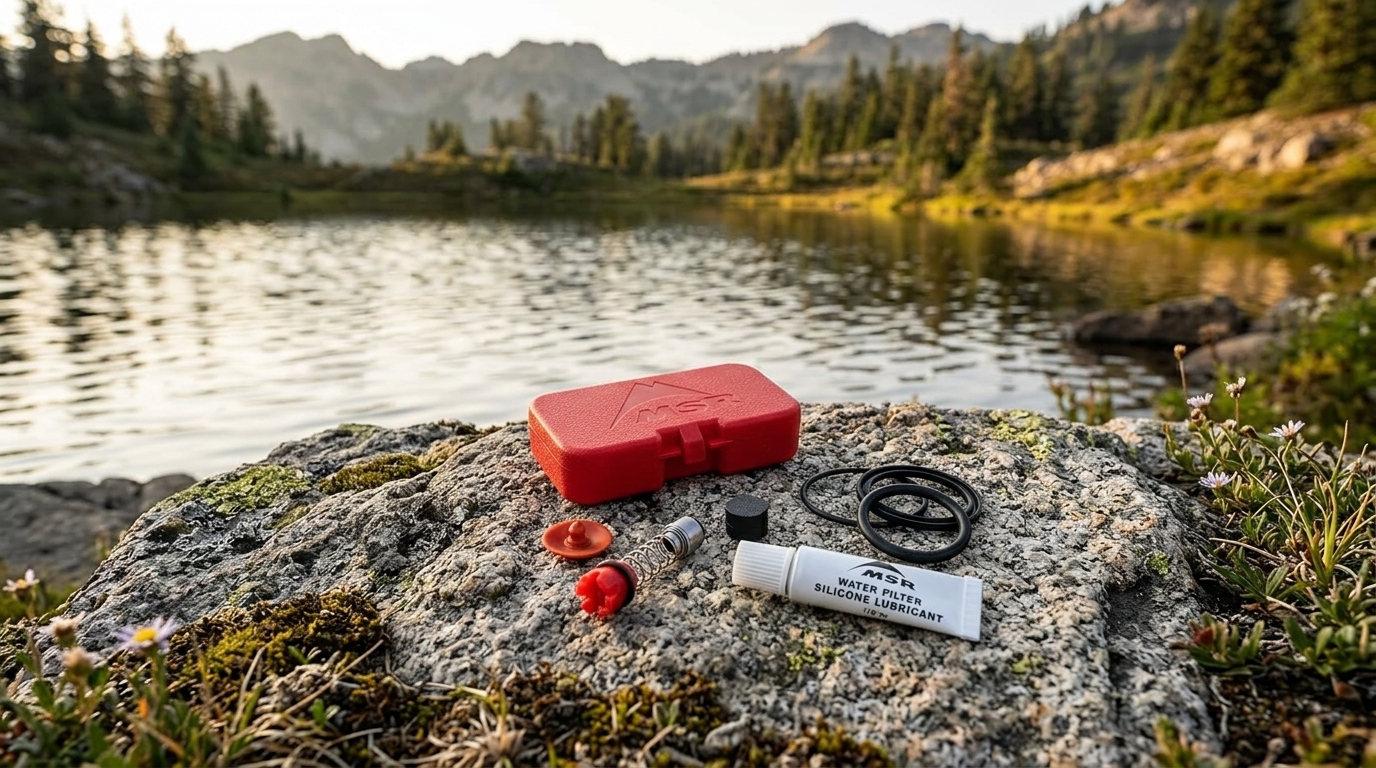
MSR Guardian Water Purifier Annual Maintenance Kit Review
REVIEW
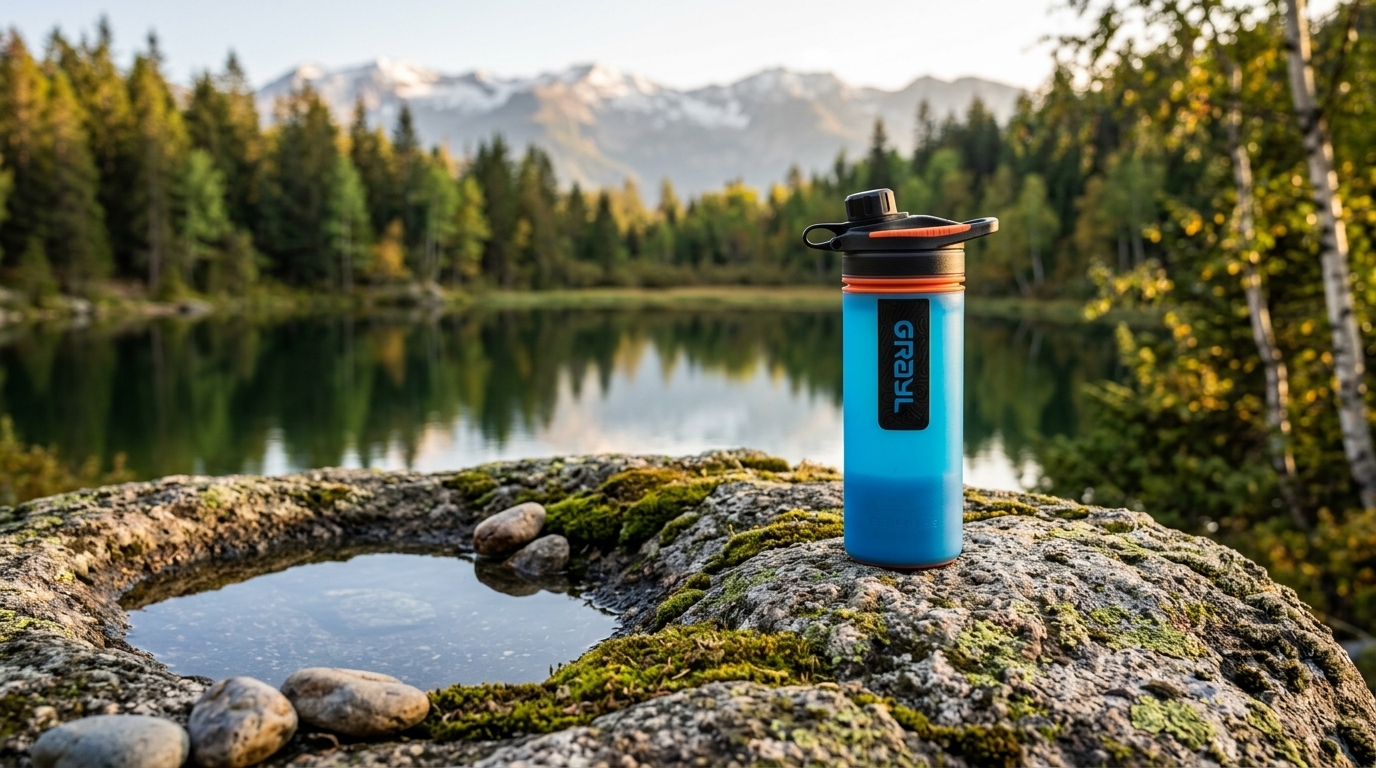
GRAYL GeoPress 24 oz Water Purifier Bottle Review: Press-Filter Speed for Backcountry and Travel
REVIEW
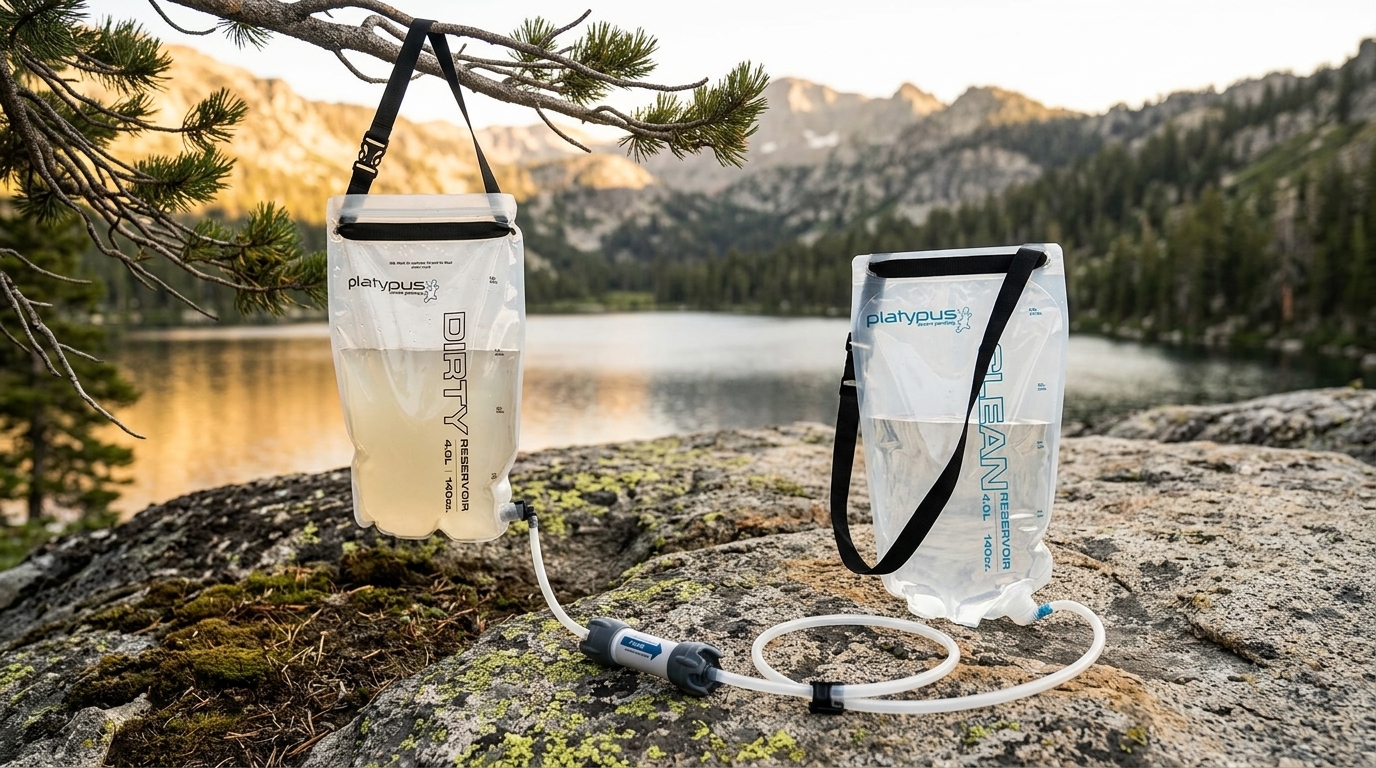
Platypus GravityWorks Group Camping Water Filter System Review
REVIEW
KATADYN Steripen Classic 3 UV Water Purifier Review: Battery-Powered Pathogen Control for Clear Water
REVIEW
Katadyn Hiker Microfilter Review: Pump-Action Reliability for Group Trips
REVIEW