
Head-to-head
Therm-a-Rest NeoAir XTherm NXT vs NeoAir XTherm NXT MAX: Which Winter Sleeping Pad Is Right for You?
The NeoAir XTherm NXT MAX wins for most winter backpackers thanks to its 25-inch width offering significantly better comfort for side sleepers and restless movers without a meaningful weight penalty. However, the standard NeoAir XTherm NXT is the better choice for ultralight purists counting every ounce, solo fastpackers using narrow shelters, or anyone on a tighter budget who sleeps still on their back.
Disclosure: Four Seasons Gear is reader-supported. When you buy through links on our site, we may earn an affiliate commission at no extra cost to you. Prices and availability are accurate as of the time we last checked.
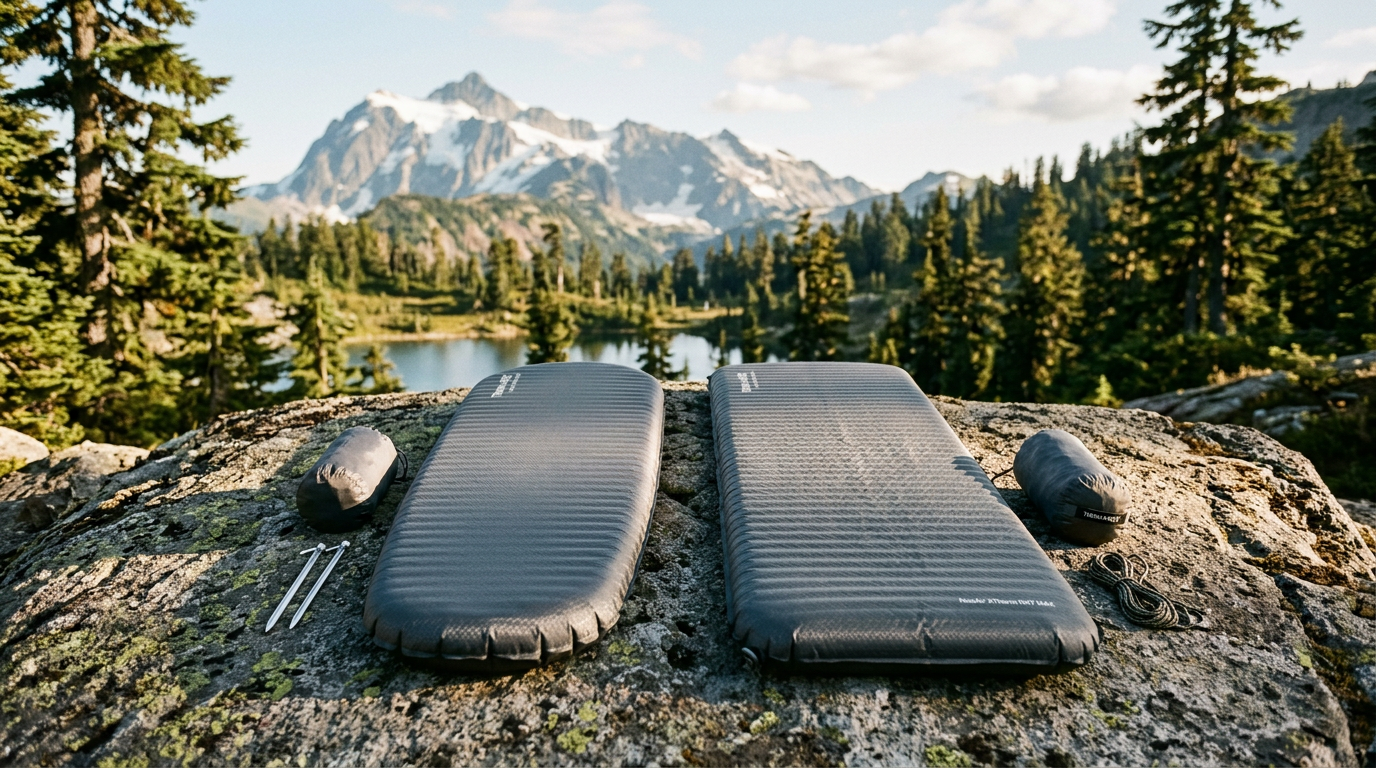
Therm-a-Rest's NeoAir XTherm NXT line represents the gold standard in four-season insulated sleeping pads, and the company now offers two width options: the standard 20-inch NXT and the 25-inch NXT MAX. Both share the same legendary 7.3 R-value insulation and ThermaCapture reflective technology, but that extra five inches of width fundamentally changes how these pads perform in real-world winter camping.
Spec Comparison
Specs
Width: The Defining Difference
The five-inch width gap between these pads is not subtle. The standard XTherm NXT at 20 inches forces most adults into a mummy-like sleep position with arms tucked in, while the MAX's 25-inch platform allows side sleeping with bent elbows and natural shoulder rotation. In winter bags where you're already constrained by insulation loft, that extra room prevents the claustrophobic feeling of rolling onto cold tent floor at 2 AM. For reference, most standard rectangular sleeping pads measure 20-22 inches wide, while wide models typically hit 25-30 inches. The MAX sits at the narrow end of the wide category, making it a Goldilocks option for winter use where you want comfort but can't afford to carry a full 30-inch pad.
Weight and Packed Size: Minimal Penalty for Maximum Comfort
The standard XTherm NXT weighs 15 ounces in regular length, while the MAX adds approximately 4 ounces to hit 19 ounces. That 4-ounce difference is the weight of a single energy bar—negligible for most winter trips where you're already carrying a 2-3 pound sleeping bag and insulated layers. Packed size grows from 4.1 inches diameter to roughly 5.1 inches, which still fits easily in the bottom of any winter pack. Ultralight ski tourers or fastpackers running sub-30-liter packs might feel the squeeze, but for standard 50-65 liter winter backpacking loads, the MAX's bulk is a non-issue.
Shelter Compatibility: Where Width Matters Beyond Comfort
The standard 20-inch XTherm NXT fits comfortably in any solo tent, including ultralight shelters like the Big Agnes Copper Spur HV UL with its tapered floor. The 25-inch MAX, however, pushes against the walls in narrow single-wall shelters and bivy sacks. If you're running a sub-26-inch floor width tent for weight savings, the standard pad is your only realistic option. Two-person tents easily accommodate the MAX, and for winter camping where you're often in larger four-season shelters anyway, the width constraint rarely matters.
Durability and Construction: Identical Build Quality
Both pads use the same 30-denier ripstop nylon face fabric with a slightly textured finish to prevent bag slip. The seam construction, valve design, and internal baffle architecture are identical. Neither pad includes a repair kit in the box, so budget an extra $8 for Therm-a-Rest's universal repair kit. The wider MAX does present a marginally larger surface area for potential punctures, but in practice, both pads demand the same careful site prep and groundsheet use that any inflatable pad requires in winter conditions.
Value Proposition: $10 for Five Inches
At $239.95 versus $249.95, the MAX commands a $10 premium—essentially $2 per inch of width. Given that aftermarket wide pads from other manufacturers typically cost $40-60 more than standard widths, Therm-a-Rest's pricing is aggressive. The real value calculation comes down to how many nights per year you'll use this pad. If you're a dedicated winter camper logging 15+ cold nights annually, the MAX's comfort upgrade pays for itself in better sleep quality. Occasional winter users might find the standard width adequate and pocket the $10 toward other gear.
Decision Tree: Which Pad to Buy
Buy the NeoAir XTherm NXT (Standard) if:
- You sleep primarily on your back with minimal movement
- You're using an ultralight solo shelter with a floor width under 26 inches
- Every ounce matters for your fastpacking or ski touring objectives
- You're on a strict budget and the $10 savings makes a difference
- You're under 5'8" and naturally fit within a 20-inch platform
Buy the NeoAir XTherm NXT MAX if:
- You're a side sleeper or change positions frequently during the night
- You have broad shoulders (over 18 inches) and feel cramped on standard pads
- You're using a two-person tent or a roomy solo shelter
- Comfort is your priority and 4 ounces is an acceptable trade-off
- You want insurance against rolling off the pad in your sleep
Frequently Asked Questions
+Can I use the XTherm NXT MAX in a standard mummy sleeping bag?
Yes, but with caveats. Most mummy bags are designed around 20-22 inch pad widths, so the MAX's 25-inch platform will push against the bag's side baffles. This can create cold spots where insulation compresses. If you're buying the MAX, consider pairing it with a semi-rectangular or wide mummy bag rated for your temperature range. The extra pad width is wasted if your bag constrains your movement anyway.
+How much louder is the XTherm compared to summer pads?
Both XTherm models use the same reflective ThermaCapture layers that create the characteristic crinkly sound when you move. It's noticeably louder than foam or non-insulated air pads, roughly comparable to crinkling a mylar emergency blanket. The sound bothers some users initially but most adapt within 2-3 nights. The MAX is marginally quieter per movement since your body weight distributes across more surface area, reducing the intensity of fabric flex.
+Do I need a different stuff sack for the MAX?
The MAX includes an appropriately sized stuff sack that accommodates its larger packed diameter. If you're upgrading from a standard XTherm NXT, your old stuff sack will be too small. The MAX's 5.1-inch packed diameter requires a sack with at least a 6-inch opening for comfortable packing. Therm-a-Rest's included sack works fine, though some users prefer aftermarket compression sacks to squeeze out extra air and reduce bulk.

Read next
More comparisons + reviews
REVIEW
Therm-a-Rest NeoAir XTherm NXT MAX Review: 7.3 R-Value in 650 Grams
REVIEW
Nemo Tensor Trail Ultralight Insulated Sleeping Pad Review: Wide Comfort at 3.5-Inch Loft
REVIEW
Therm-a-Rest NeoAir XTherm NXT Ultralight Camping and Backpacking Sleeping Pad Review
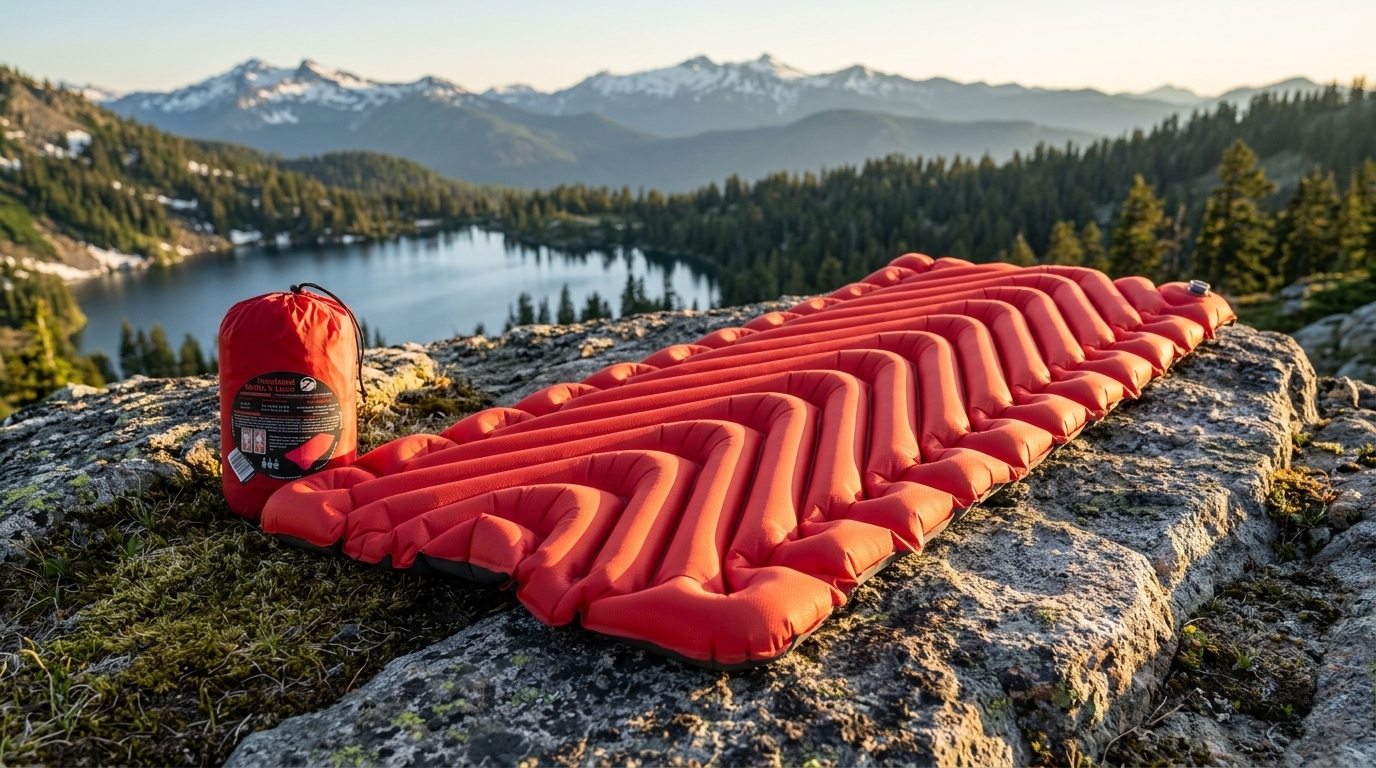
REVIEW
Klymit Insulated Static V Luxe Sleeping Pad Review
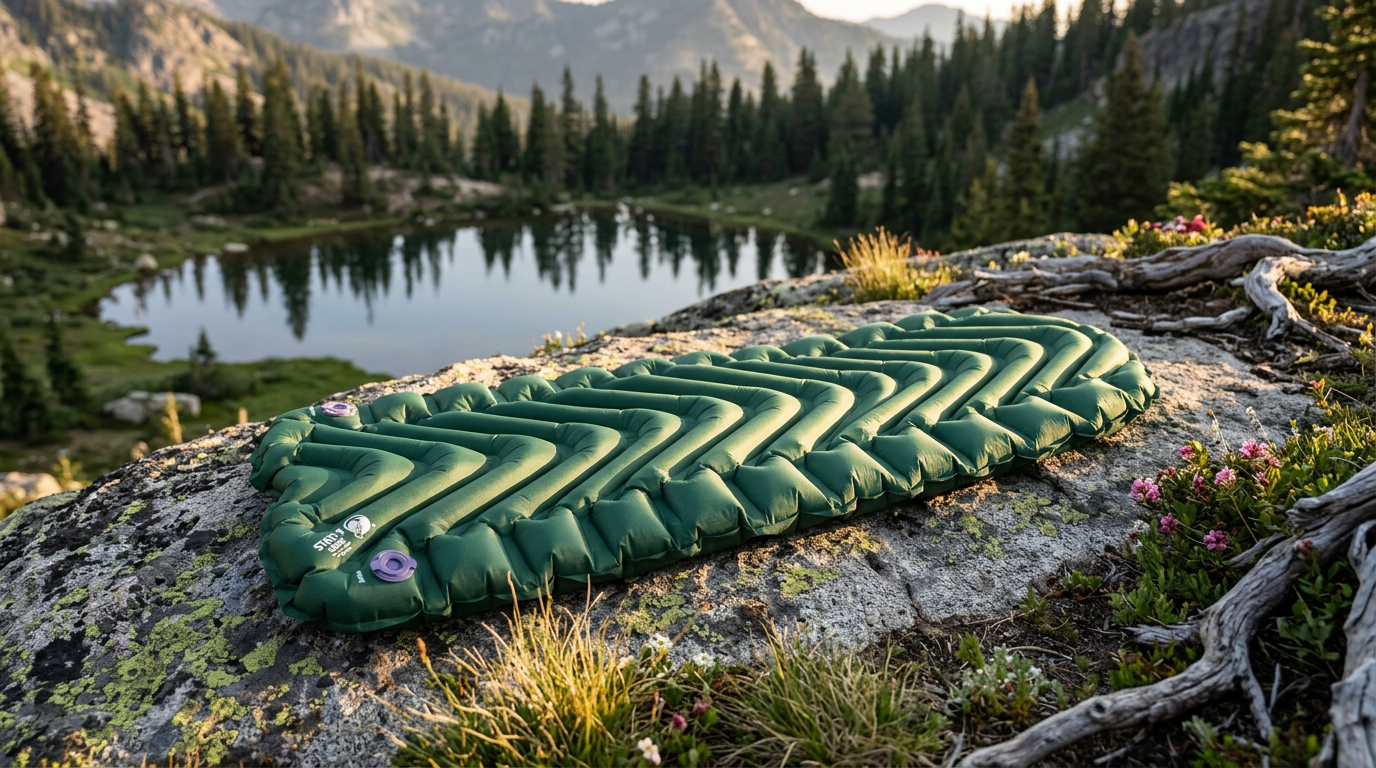
REVIEW
Klymit Static V Sleeping Pad Review: Budget-Friendly V-Chamber Design for Three-Season Backpackers
REVIEW