
Review · spring · summer · fall · winter
Nemo Tensor Trail Ultralight Insulated Sleeping Pad Review: Wide Comfort at 3.5-Inch Loft
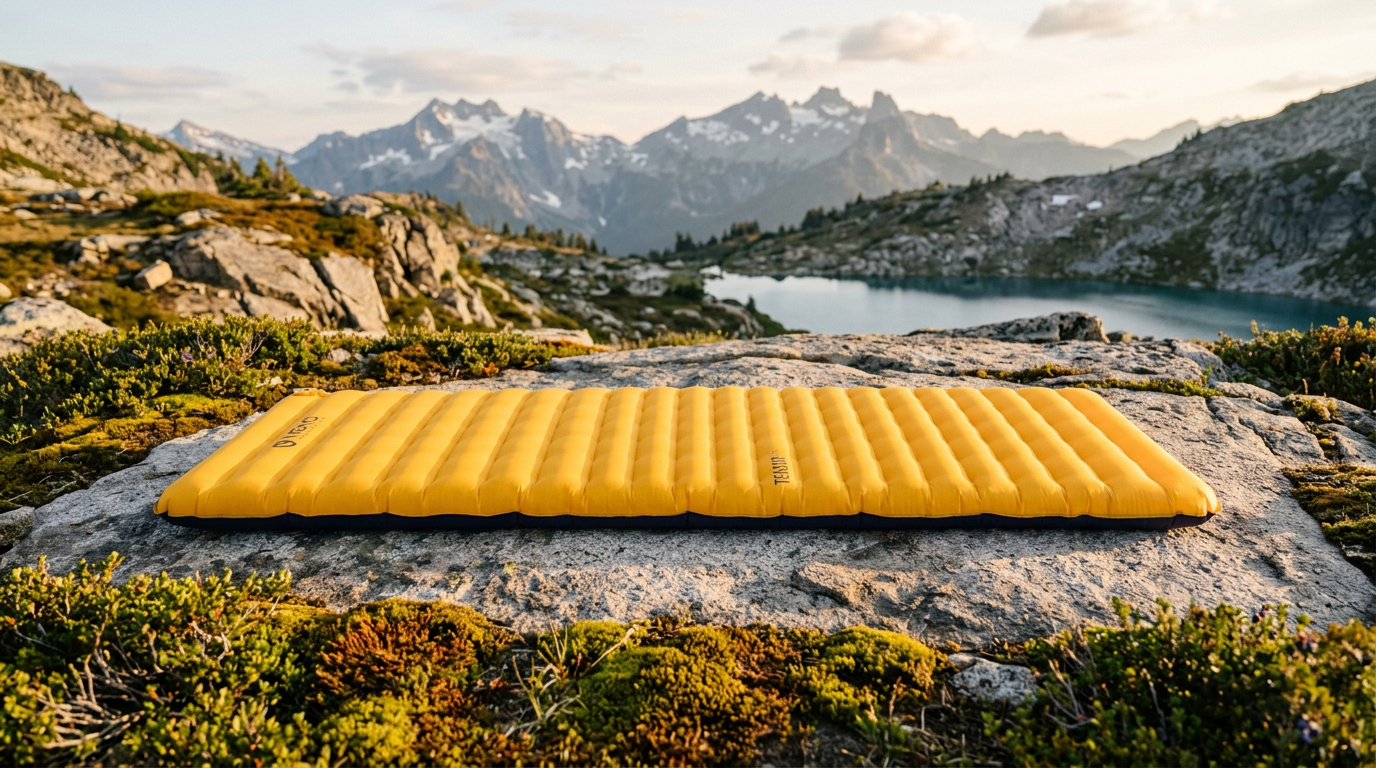
The Nemo Tensor Trail Regular Wide (72"×25") targets backpackers who want the lateral room of a wide pad without abandoning ultralight principles. At 3.5 inches of loft with Spaceframe baffle architecture and a single layer of Thermal Mirror metallized film, it delivers insulated comfort across three seasons while staying notably quiet—a meaningful upgrade over crinkly aluminized pads. The wide format adds roughly 60–80 g over standard 20-inch pads but rewards side sleepers and restless movers with elbow room that prevents rolling off mid-night.
Disclosure: Four Seasons Gear is reader-supported. When you buy through links on our site, we may earn an affiliate commission at no extra cost to you. Prices and availability are accurate as of the time we last checked.
Construction and Materials
Nemo uses bluesign-approved 20D ripstop nylon for both top and bottom faces, balancing puncture resistance against pack weight. The single layer of Thermal Mirror metallized film sits between the fabric and air chambers—this is a departure from double-layer insulation schemes and keeps the pad quiet during movement. Spaceframe baffles are die-cut from low-stretch material, creating a truss geometry that distributes weight laterally and longitudinally without the trampoline effect common in simple horizontal baffles.
The 3.5-inch loft when fully inflated provides clearance for hip and shoulder pressure points. Nemo's integrated foot pump (a fabric bellows built into the stuff sack) allows inflation without breath moisture, which can freeze in cold conditions or promote mildew in storage. The valve is a flat, low-profile design that won't dig into your back if you shift near the head end.
Specs
Intended Use and Fit
The Regular Wide length (72 inches) accommodates users up to approximately 6 feet tall; taller sleepers will need the Long Wide variant. The 25-inch width is 5 inches broader than standard 20-inch pads, which matters for side sleepers whose elbows and knees migrate outward. If you've ever woken on bare tent floor after rolling off a narrow pad, the extra real estate here is tangible insurance.
An R-value around 3.5 places this pad in the three-season window—spring through fall in temperate zones, or summer in alpine environments. Winter campers below 20°F should layer a closed-cell foam pad underneath or step up to Nemo's higher-R models. The Spaceframe baffles prevent the sinking-into-a-hammock feel that plagues some air pads; your hips stay level with your shoulders rather than bottoming out.
Comparison Context
In the ultralight insulated category, the Tensor Trail competes with Therm-a-Rest NeoAir XLite and Sea to Summit Ether Light XT. The XLite is lighter (approximately 340 g in regular width) but noisier and narrower; the Ether Light XT is plusher (4 inches) but heavier (approximately 460 g in regular, more in wide). Nemo's Spaceframe architecture is the differentiator—it delivers lateral stability that air-sprung competitors lack, which translates to fewer micro-adjustments through the night.
The wide format makes sense if you're already carrying a pad over 400 g; the incremental weight penalty is modest relative to the comfort gain. Gram-counting solo hikers on summer trips might prefer a narrower, lighter option, but anyone sharing a two-person tent or prone to restless sleep will appreciate the elbow room.
Durability Considerations
The 20D nylon face fabric is thinner than the 30D or 40D materials on car-camping pads, so ground prep matters. Clear sticks, pinecones, and sharp gravel before laying the pad down; a footprint or Tyvek groundsheet adds insurance. The bluesign certification indicates the fabric passed third-party testing for tear and abrasion resistance, but ultralight materials always trade some toughness for grams saved.
Nemo includes a repair kit (fabric patches and adhesive). The single-layer Thermal Mirror film is bonded to the baffle structure, so a puncture doesn't cascade across multiple chambers the way it might in a simpler design. Still, carry the repair kit and know how to patch in the field—air pads are inherently more vulnerable than closed-cell foam.
The integrated foot pump eliminates the need for a separate inflation bag, which is one fewer item to lose or puncture. The valve's flat profile reduces the chance of accidental opening during pack jostling, though you should still store the pad loosely (not compressed) between trips to preserve baffle elasticity.
Value and Tradeoffs
At approximately $160 MSRP, the Tensor Trail sits in the premium tier of three-season pads. You're paying for the Spaceframe engineering, quiet insulation, and wide format—all features that directly improve sleep quality. Budget alternatives (sub-$100 pads from Klymit or REI Co-op) will be heavier, noisier, or less stable, but they'll keep you off the ground for half the price.
The weight-to-warmth ratio is competitive: approximately 520 g for an R-value around 3.5 in a wide format is within 10% of category benchmarks. If you're building a sleep system for multi-day trips where rest quality affects next-day performance, the investment makes sense. Weekend warriors or car campers might find better value in a heavier, cheaper pad that doesn't demand careful ground prep.
What we like
Trade-offs
Best For and Not For
- Side sleepers who need lateral room without adding 200+ g
- Backpackers sharing two-person tents where noise discipline matters
- Three-season campers in temperate zones (spring through fall)
- Restless sleepers prone to rolling off narrow 20-inch pads
- Multi-day trekkers where sleep quality affects next-day mileage
This pad is NOT ideal for:
- Gram-counting solo hikers prioritizing sub-400 g pack weight
- Winter campers below 20°F without a supplemental foam pad
- Car campers who can carry heavier, cheaper, more durable pads
- Users under 5'6" who don't need the wide format's extra grams
Frequently Asked Questions
+How does the 25-inch width compare to a standard sleeping pad?
Standard backpacking pads are 20 inches wide; the Tensor Trail's 25-inch width adds 5 inches of lateral space, which prevents elbows and knees from hanging off the edge when you shift to your side. The tradeoff is approximately 60–80 g of additional weight and slightly more packed volume. If you've never rolled off a pad mid-night, you might not need the extra width; if you have, it's worth the grams.
+Can I use this pad in winter or just three seasons?
The R-value around 3.5 is rated for temperatures down to approximately 20°F when paired with an appropriate sleeping bag. Below that threshold, you'll need supplemental insulation—either a closed-cell foam pad underneath (like a Therm-a-Rest Z Lite Sol) or a higher-R pad. Winter campers in sub-zero conditions should look at pads with R-values of 5.0 or higher.
+How many breaths does it take to inflate with the foot pump?
Nemo's integrated foot pump typically requires 15–25 pumps to fully inflate the Regular Wide size, depending on your body weight and the firmness you prefer. The advantage over mouth inflation is that you avoid introducing breath moisture, which can freeze in cold weather or promote mildew during storage. The pump adds negligible weight since it's built into the stuff sack.
+What's the packed size compared to a water bottle?
The Tensor Trail Regular Wide packs down to approximately 8 inches long by 5 inches in diameter, which is slightly larger than a Nalgene 32 oz Wide Mouth Water Bottle in both length and girth. It will fit inside most backpack main compartments but won't slip into a side water-bottle pocket. Plan to stow it horizontally or vertically in your pack's core.
+Do I need a footprint or groundsheet with this pad?
The 20D nylon face fabric is puncture-resistant but not indestructible. A footprint (Tyvek, Polycro, or a purpose-cut groundsheet) adds 60–100 g but significantly reduces the chance of a twig or sharp rock puncturing the pad during the night. If you're camping on established tent platforms or smooth ground, you can skip it; if you're setting up on rocky alpine terrain, the insurance is worthwhile.

Read next
More from this category
REVIEW
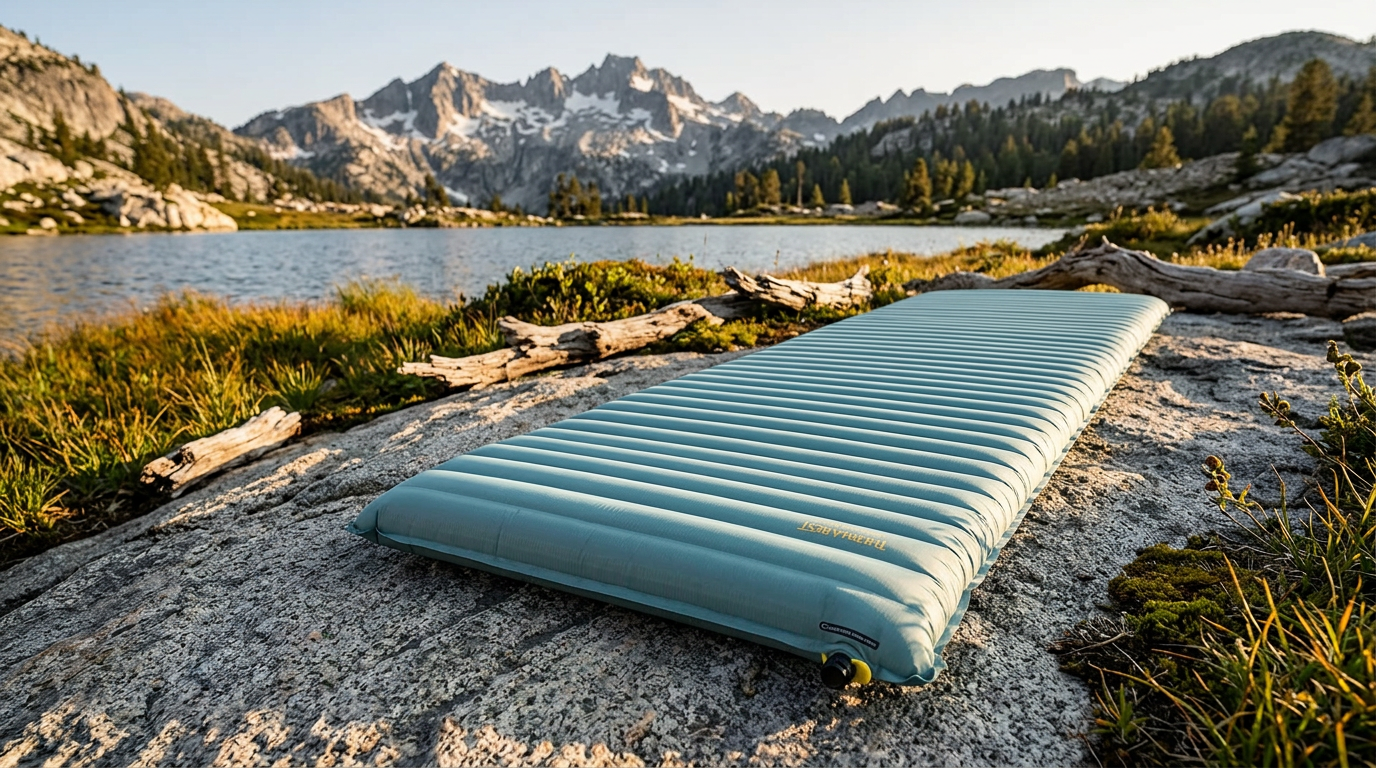
Therm-a-Rest NeoAir XTherm NXT MAX Review: 7.3 R-Value in 650 Grams
REVIEW
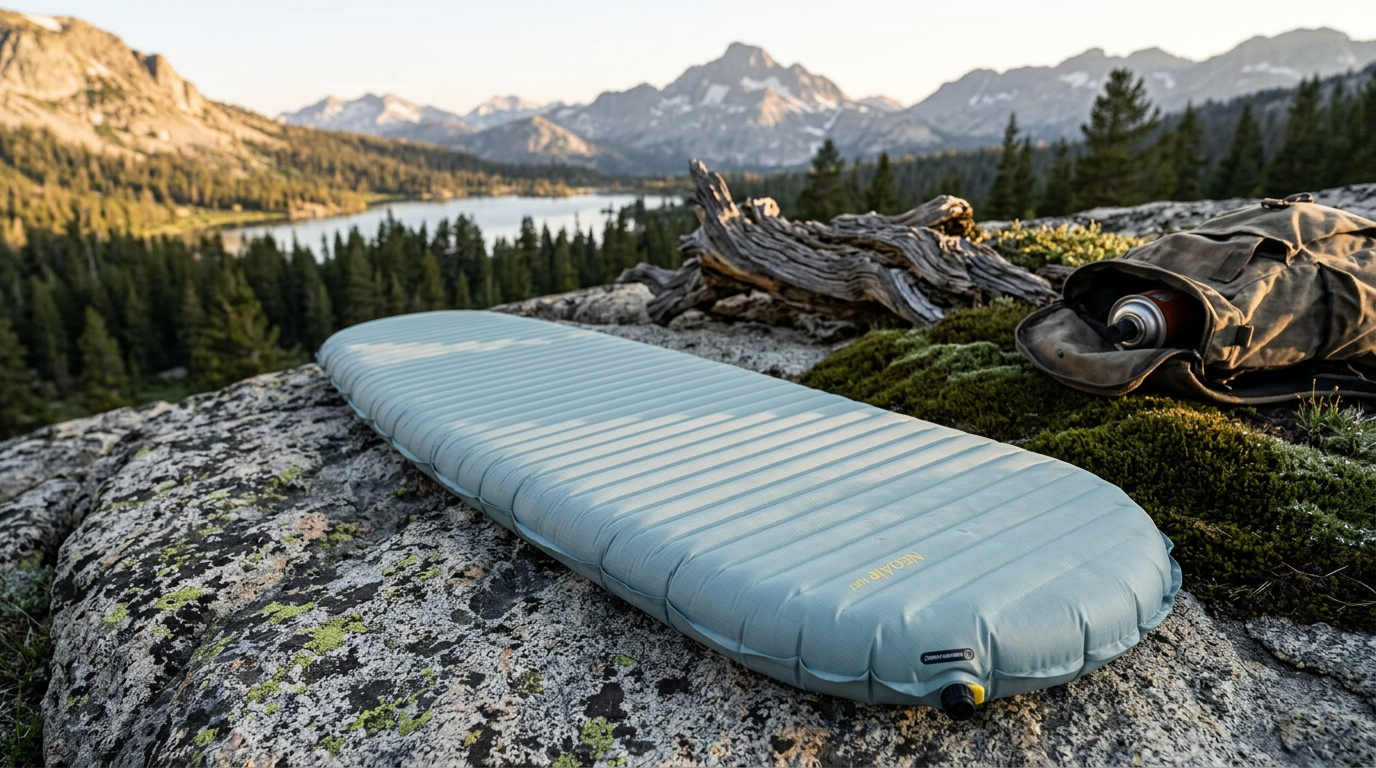
Therm-a-Rest NeoAir XTherm NXT Ultralight Camping and Backpacking Sleeping Pad Review
REVIEW
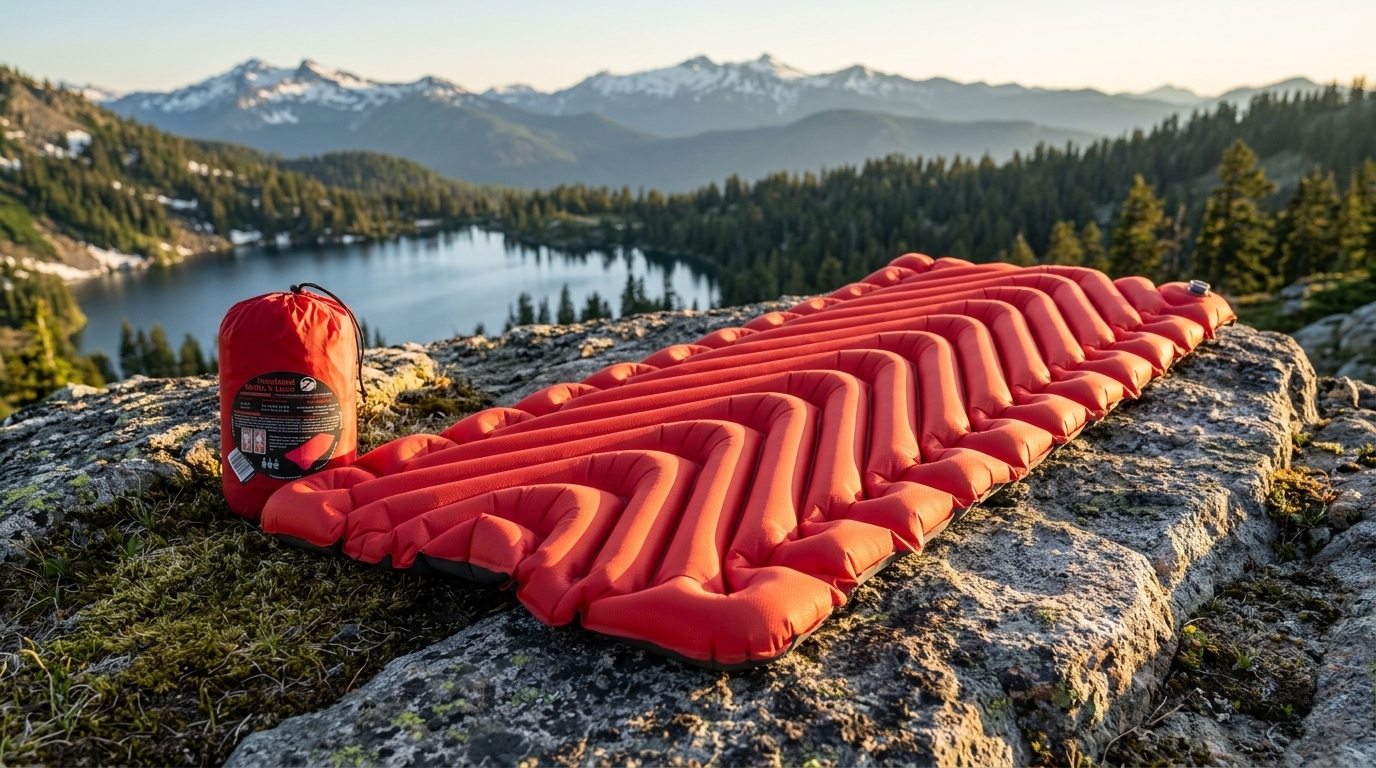
Klymit Insulated Static V Luxe Sleeping Pad Review
REVIEW
Klymit Static V Sleeping Pad Review: Budget-Friendly V-Chamber Design for Three-Season Backpackers
REVIEW
Therm-a-Rest ProLite Plus WR Sleeping Pad Review
REVIEW