
Head-to-head
Sawyer Squeeze vs LifeStraw Personal Water Filter: Which Backcountry Filter Wins?
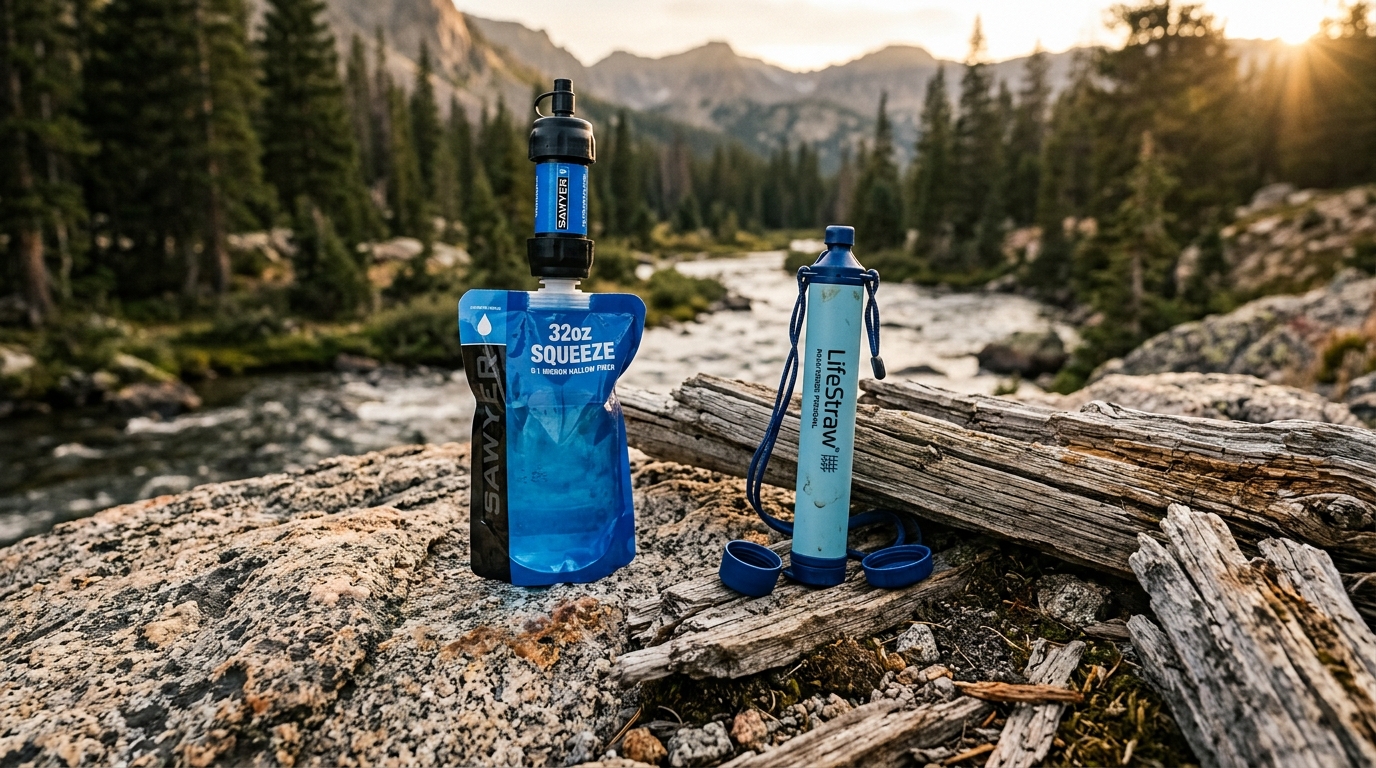
The Sawyer Squeeze is the clear winner for backpackers and multi-day trips, offering 100,000-gallon capacity, versatile squeeze-bag and inline hydration compatibility, and the ability to filter into containers for group use. The LifeStraw Personal is the better choice for ultralight day hikers, emergency kits, and international travelers who need a no-maintenance straw-style filter at half the weight and price, despite its 1,000-gallon lifespan and drink-directly-only design.
Disclosure: Four Seasons Gear is reader-supported. When you buy through links on our site, we may earn an affiliate commission at no extra cost to you. Prices and availability are accurate as of the time we last checked.
The Sawyer Squeeze and LifeStraw Personal represent two fundamentally different approaches to backcountry water treatment. The Squeeze is a versatile squeeze-bag system that filters into bottles and integrates with hydration bladders, while the LifeStraw is a personal straw designed for drinking directly from sources. Both use hollow-fiber membrane technology rated to 0.1 micron absolute filtration, removing 99.99999% of bacteria and 99.9999% of protozoa, but their capacity, weight, and use cases diverge dramatically.
Spec Comparison
Specs
Capacity and Lifespan: 100x Difference
The Sawyer Squeeze's 100,000-gallon rated capacity versus the LifeStraw's 1,000-gallon lifespan represents the most dramatic spec difference between these filters. For a thru-hiker consuming 3 liters daily, the Sawyer theoretically lasts 126,000 days while the LifeStraw covers 1,260 days (3.5 years). In practice, the LifeStraw's hollow fibers degrade faster in silty water, and the unit is not backflushable—once flow slows significantly, it's done. The Sawyer includes a cleaning syringe that reverses flow to purge trapped sediment, restoring near-original flow rates even after hundreds of liters. This maintenance capability means the Sawyer genuinely serves as a multi-season or even lifetime filter for most recreational users, while the LifeStraw is better viewed as a consumable item for shorter trips or emergency backup.
Versatility: Squeeze Bags vs Straw-Only Design
The Sawyer Squeeze threads onto the included collapsible pouches (32 oz), standard disposable water bottles, and hydration bladder hoses via an inline adapter, letting you filter into cookware, share with partners, or drink hands-free while hiking. The LifeStraw requires you to kneel or lie prone at the water source and sip directly—there's no way to filter water into a pot for cooking or fill a companion's bottle. This straw-only design is lighter and simpler (no pouches to puncture, no threads to cross), but it's limiting on alpine scrambles where water sources are infrequent, or in camp when you need 2 liters for dinner prep. Buyers comparing these should also consider the Sawyer Mini Water Filter, which offers Squeeze-style versatility at 2 oz but with slower flow and more frequent backflushing needs.
Flow Rate and Effort
The Sawyer Squeeze delivers approximately 1.7 liters per minute when the pouch is full and squeezed firmly—you can fill a 1-liter bottle in about 35 seconds. The LifeStraw's straw mechanism requires continuous suction and produces roughly 0.5 liters per minute under ideal conditions, meaning 2 minutes of steady drawing to consume a liter. In cold conditions or when the filter is partially clogged, that suction effort increases noticeably. The Sawyer's squeeze-bag system is less fatiguing for high-volume filtering (filling a 3-liter bladder takes under 2 minutes versus 6+ minutes of sucking through the LifeStraw), but the pouches are the system's weak point—they puncture on sharp rocks and the seams can fail after a season of heavy use. Replacement pouches cost $8-12, while the LifeStraw has no consumable parts beyond the filter itself.
Weight and Packability
The LifeStraw weighs 2.0 oz and measures 8.9 inches long by 1 inch diameter—it fits in a side pocket or lashes to a pack strap. The Sawyer Squeeze filter cartridge alone is 3.0 oz, but the complete system (filter, one 32 oz pouch, cleaning syringe, and inline adapter) totals 5.3 oz. For ultralight gram-counters on day hikes with reliable water, the LifeStraw's 3.3 oz savings is meaningful. For overnight trips where you're already carrying a water bottle or bladder, the Sawyer's extra ounce (filter-only comparison) is negligible, and you gain the ability to filter hands-free via inline setup or gravity feed by hanging the pouch from a tree.
Durability and Freeze Tolerance
Both filters use hollow-fiber membranes that rupture permanently if water inside freezes and expands. The Sawyer's backflush syringe lets you purge all water from the fibers before freezing temps, and the company states the filter survives freezing if completely dry. The LifeStraw cannot be backflushed or blown dry—residual water remains in the fibers, making it vulnerable to freeze damage. In practice, this means the Sawyer can be used in shoulder-season conditions (spring snowmelt, fall alpine trips) if you dry it each night, while the LifeStraw is strictly a warm-weather or emergency-only tool for cold environments. The Sawyer's threaded connections are also more robust than the LifeStraw's molded plastic body, which can crack if stepped on.
Value and Use Case
At roughly $40, the Sawyer Squeeze costs double the LifeStraw's $20 street price, but its 100x longer lifespan and multi-use versatility make it the better per-liter value for anyone filtering more than 50 liters per year. The LifeStraw's appeal is its simplicity and low entry cost—it's an ideal emergency kit addition, a backup filter for day hikes, or a travel filter for short international trips where you'll drink directly from bottles or streams. The Sawyer is the tool for backpackers, bike tourers, and paddlers who need to filter several liters daily, share water with partners, or cook with filtered water.
Pros and Cons
What we like
Trade-offs
Decision Tree
Buy the Sawyer Squeeze if you're backpacking overnight or longer, need to filter water for cooking or multiple people, want inline hydration-bladder compatibility, or hike in cold conditions where you can dry the filter nightly. Its higher upfront cost and slightly greater weight are offset by decade-long lifespan and operational flexibility.
Buy the LifeStraw Personal if you're day hiking with minimal gear, building an emergency kit where simplicity and shelf-stability matter more than versatility, or traveling internationally for short trips where you'll drink directly from bottles. Its lighter weight, lower price, and zero-maintenance design are ideal for infrequent use or backup scenarios where you won't filter more than a few hundred liters total.
Frequently Asked Questions
+Can I use either filter with a hydration bladder?
The Sawyer Squeeze threads onto hydration bladder hoses via the included inline adapter, letting you drink filtered water hands-free while hiking. The LifeStraw has no attachment mechanism and cannot connect to bladders or bottles—it only works as a personal straw for direct drinking from sources.
+How do I know when the LifeStraw is done?
The LifeStraw's flow rate gradually decreases as the hollow fibers clog with sediment. When suction becomes difficult and flow drops below a usable rate (typically after 1,000 liters in clean water, less in silty conditions), the filter has reached end-of-life. There's no backflushing or maintenance—you replace the entire unit. The Sawyer Squeeze can be backflushed repeatedly to restore flow.
+Do these filters remove viruses or chemicals?
No. Both use 0.1-micron hollow-fiber membranes that remove bacteria (E. coli, Salmonella) and protozoa (Giardia, Cryptosporidium) but not viruses (Hepatitis A, Norovirus), which are smaller, or dissolved chemicals like pesticides or heavy metals. For virus protection in developing countries or areas with human waste contamination, add chemical treatment or use a purifier. For chemicals, you need activated carbon (not included in either filter) or a reverse-osmosis system.

Read next
More comparisons + reviews
REVIEW
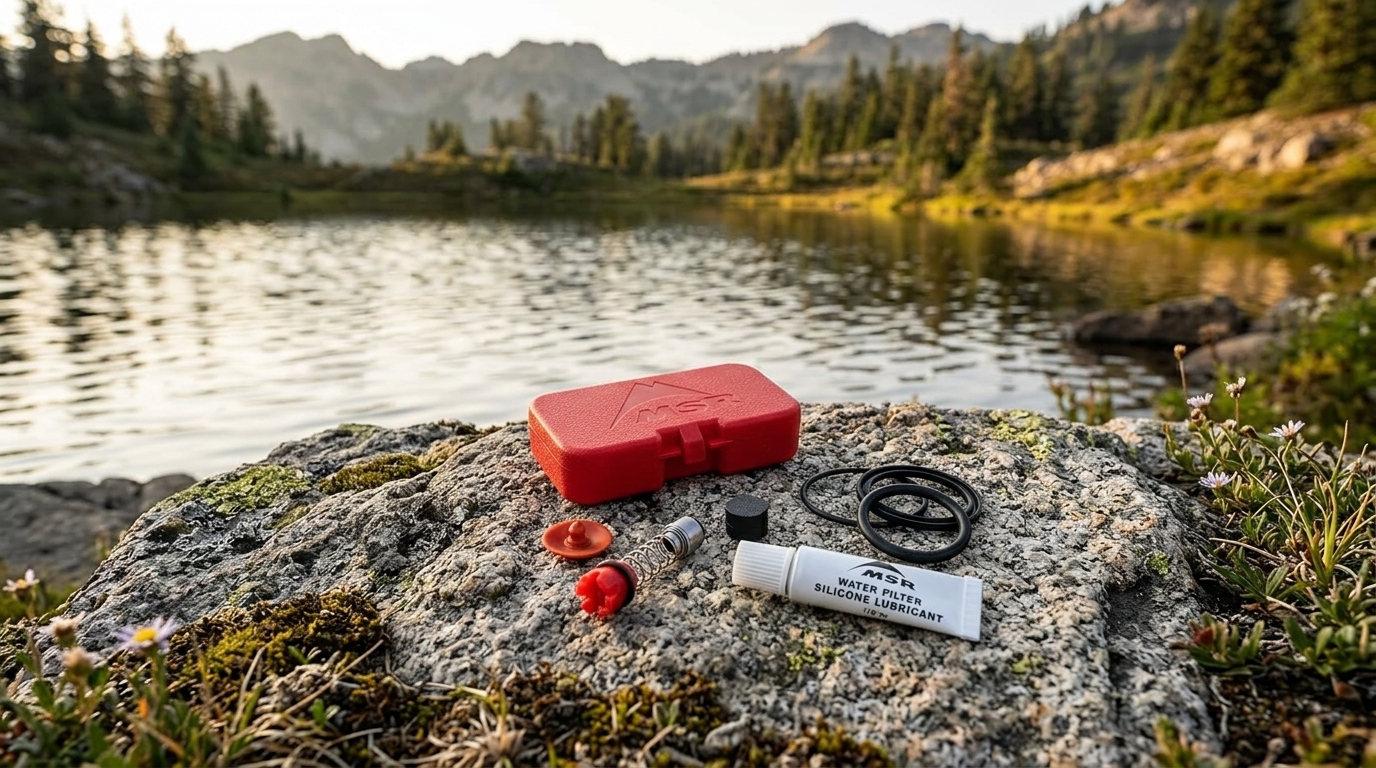
MSR Guardian Water Purifier Annual Maintenance Kit Review
REVIEW
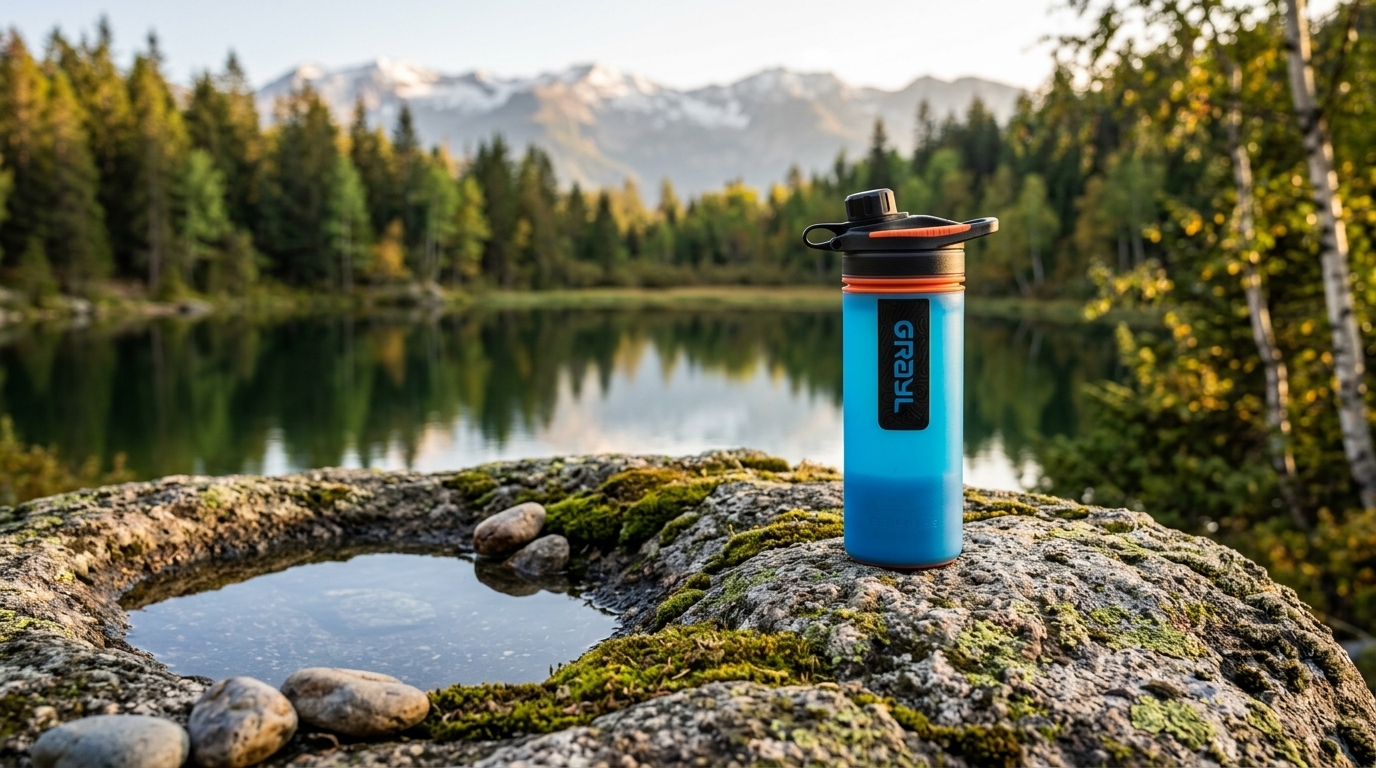
GRAYL GeoPress 24 oz Water Purifier Bottle Review: Press-Filter Speed for Backcountry and Travel
REVIEW
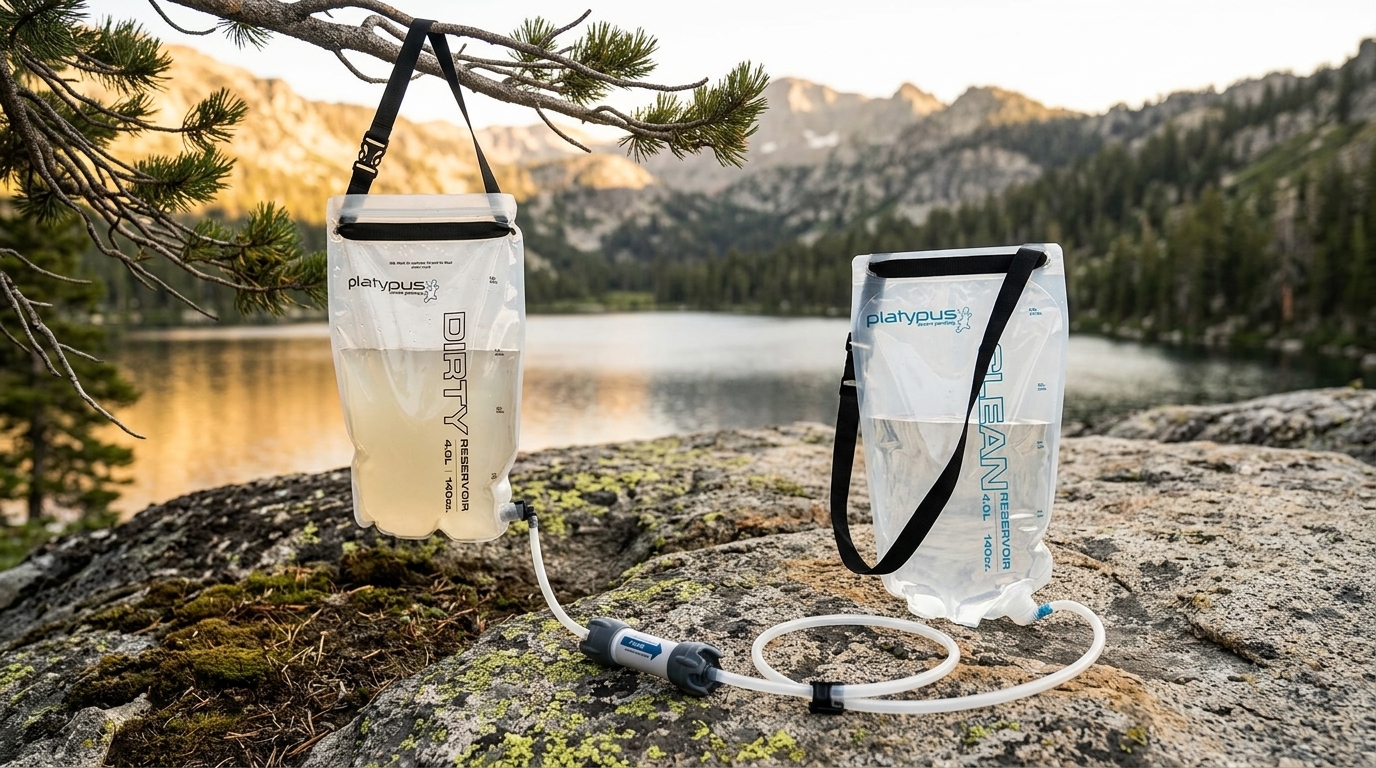
Platypus GravityWorks Group Camping Water Filter System Review
REVIEW
KATADYN Steripen Classic 3 UV Water Purifier Review: Battery-Powered Pathogen Control for Clear Water
REVIEW
Katadyn Hiker Microfilter Review: Pump-Action Reliability for Group Trips
REVIEW