
Head-to-head
Platypus GravityWorks vs LifeStraw Peak Series 3L: Which Gravity Filter Is Right for Your Group?
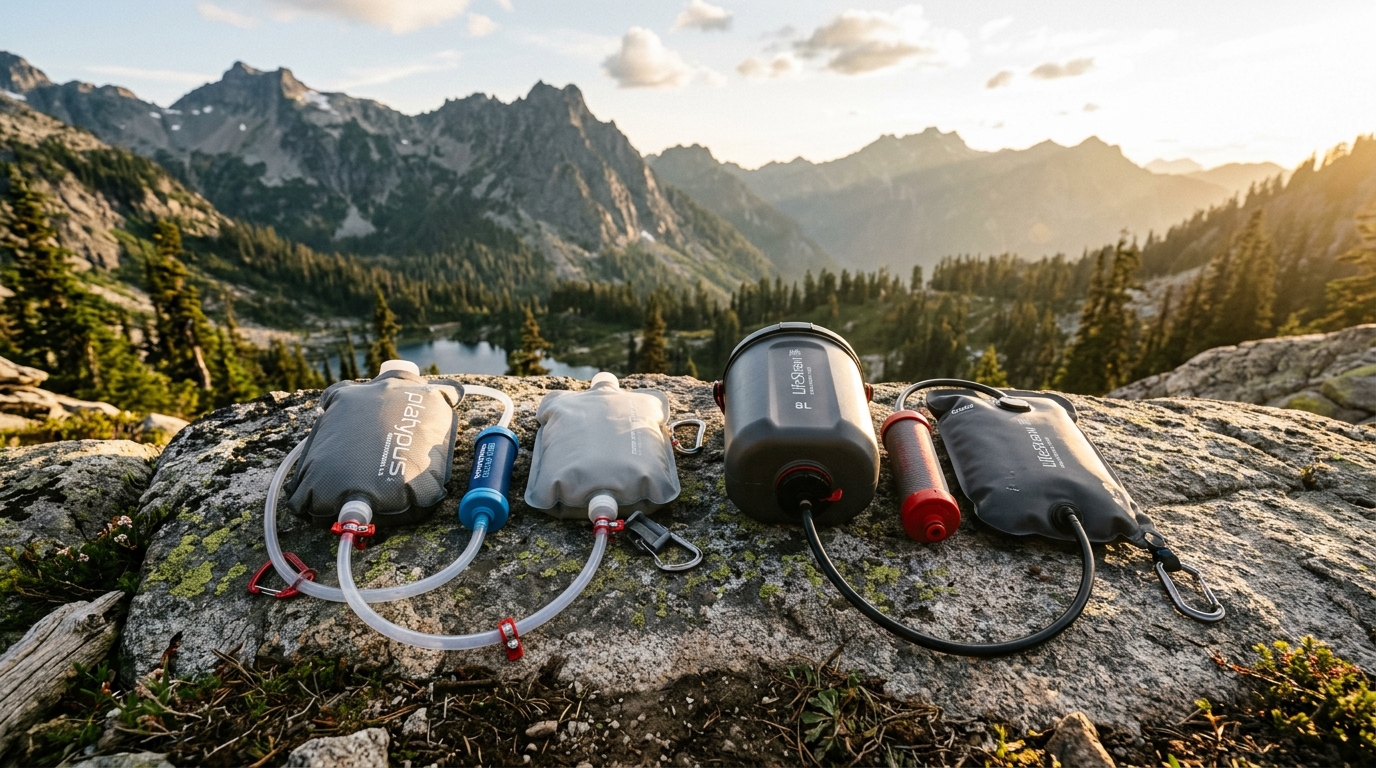
The Platypus GravityWorks wins for groups prioritizing speed and versatility, delivering 1.75 liters per minute and offering a dual-reservoir design that lets you filter and store simultaneously. However, the LifeStraw Peak Series 3L is the smarter buy for budget-conscious backpackers and smaller groups who can tolerate slower flow rates—it costs roughly half the price at $65.95 versus $134.05 and still filters effectively for 2-4 people.
Disclosure: Four Seasons Gear is reader-supported. When you buy through links on our site, we may earn an affiliate commission at no extra cost to you. Prices and availability are accurate as of the time we last checked.
Gravity filters have become the go-to water treatment method for group camping and basecamp scenarios where you need multiple liters filtered without pumping. Both the Platypus GravityWorks and LifeStraw Peak Series 3L hang from a tree or trekking pole and use gravity to push water through a hollow-fiber filter, removing protozoa and bacteria. The question is whether the Platypus system's premium features justify spending more than double the LifeStraw's price.
Spec Comparison
Specs
Flow Rate and Filtering Speed
The Platypus GravityWorks filters at 1.75 liters per minute under optimal conditions, making it 75% faster than the LifeStraw Peak Series 3L's approximately 1 liter per minute. In real-world use, this means the Platypus can deliver 4 liters of clean water in roughly 2.5 minutes, while the LifeStraw takes closer to 4 minutes to filter its full 3-liter capacity. For groups of 4-6 people needing to hydrate quickly at camp or during a lunch break, those saved minutes compound across multiple filtering sessions per day.
The flow rate advantage comes from the Platypus system's larger filter cartridge surface area and optimized hose diameter. If you're filtering water once or twice daily for 2-3 people, the LifeStraw's slower pace is tolerable. But for larger groups or high-volume scenarios—think trail crews, scout troops, or multi-day basecamps—the Platypus pays back its premium in time savings.
Reservoir Design and Versatility
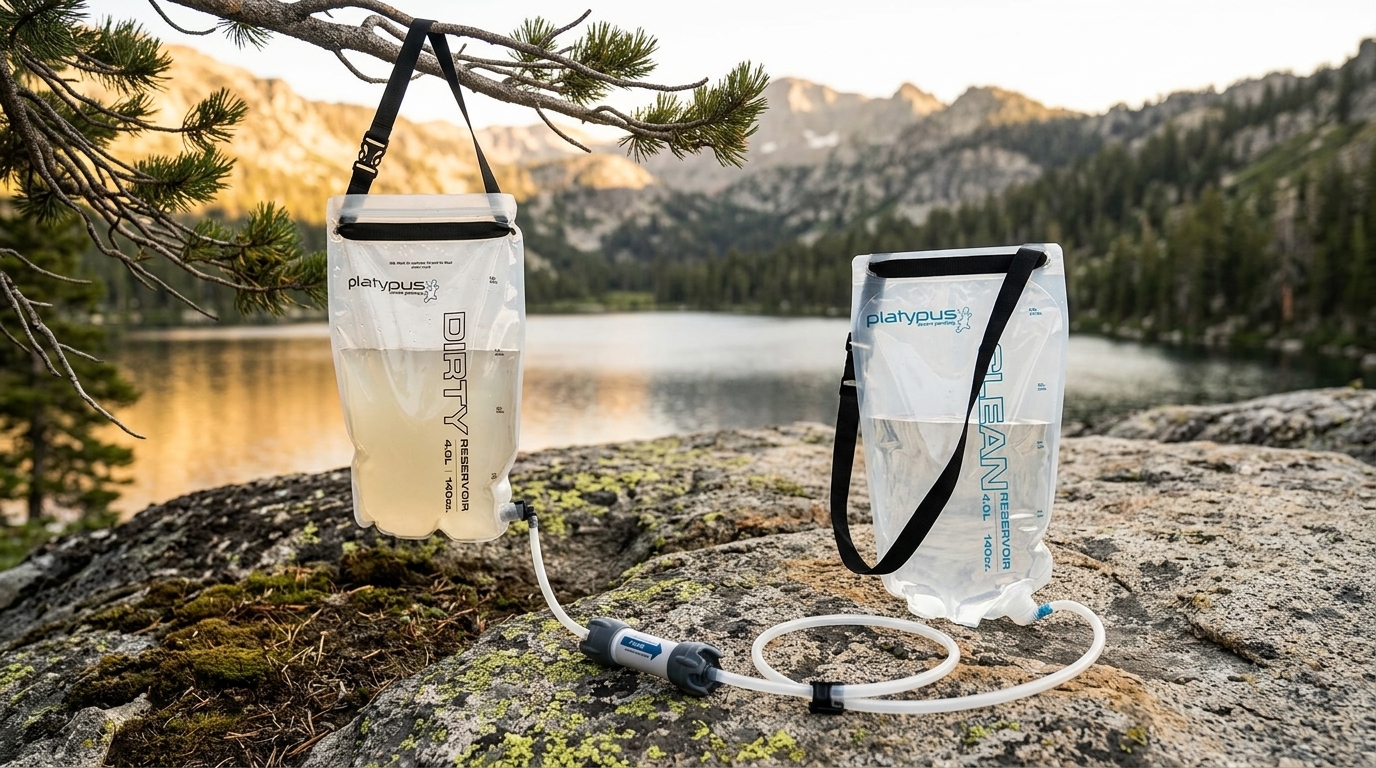
The Platypus GravityWorks includes both a 4-liter dirty reservoir and a 4-liter clean reservoir, connected by the filter cartridge. You fill the dirty bag, hang it, and gravity pushes clean water into the lower reservoir—giving you 4 liters of treated water ready to pour into bottles or a hydration bladder. The LifeStraw Peak Series 3L ships with only the 3-liter dirty reservoir; filtered water flows directly into your water bottles or cookware through the output hose.
This dual-reservoir design makes the Platypus significantly more convenient for basecamp use. You can hang the clean bag in your tent vestibule or kitchen area and dispense water throughout the evening without returning to the water source. The LifeStraw requires you to hold bottles under the output or rig a collection system. For backpackers who already carry a Nalgene 32 oz Wide Mouth Water Bottle or similar container, the LifeStraw's bottle-filling approach works fine and saves 4 ounces of packed weight by eliminating the clean reservoir.
Filter Lifespan and Maintenance
The LifeStraw Peak Series filter is rated for 2,000 liters before replacement, compared to the Platypus GravityWorks filter's 1,500-liter lifespan. For a group of four filtering 6 liters per day, the LifeStraw filter lasts roughly 333 days of use versus the Platypus's 250 days. Replacement filters cost approximately $40-50 for both systems, so the LifeStraw offers slightly better long-term value on consumables.
Both systems use backflushable hollow-fiber filters that can be cleaned in the field using the included cleaning plunger or syringe. The Platypus filter cartridge is notably easier to backflush due to its quick-disconnect fittings—you can remove it from the hose assembly in seconds. The LifeStraw filter threads into the reservoir cap, requiring more disassembly for thorough cleaning. Neither filter removes viruses, so if you're traveling internationally or in areas with questionable water sanitation, you'll need to add chemical treatment or consider a system with a purifier cartridge.
Weight and Packability
The LifeStraw Peak Series 3L system weighs approximately 7.5 ounces including the reservoir, filter, and hose—making it 4 ounces lighter than the Platypus GravityWorks' 11.5-ounce complete kit. That weight difference is almost entirely the clean reservoir; if you remove the Platypus clean bag and filter directly into bottles (which the system allows), the two are nearly equivalent in weight.
Packed size favors the LifeStraw slightly. The 3-liter reservoir rolls smaller than the Platypus 4-liter bags, and the filter cartridge is more compact. Both systems pack down to roughly the size of a 1-liter Nalgene bottle, so neither presents a packing challenge for weekend trips. For ultralighters counting every ounce, the LifeStraw edges ahead—but those same ultralighters might consider a squeeze-style filter like the Sawyer Squeeze Water Filter System, which weighs just 3 ounces.
Price and Value Proposition
At $134.05, the Platypus GravityWorks costs more than twice the LifeStraw Peak Series 3L's $65.95 price point. That $68 premium buys you faster flow, larger capacity, the clean reservoir, and more robust construction with metal fittings. For groups who filter water multiple times daily or use the system for extended trips, the time savings and convenience features justify the cost.
The LifeStraw represents exceptional value for occasional users, small groups, or backpackers who already own a good water bottle setup. At half the price, it delivers the same filtration quality and adequate flow for 2-4 people. The longer filter lifespan partially offsets the initial savings gap over years of use. Budget-conscious buyers should note that the LifeStraw Peak Series frequently appears on sale for $50-55, making it an even more compelling choice for price-sensitive shoppers.
Decision Tree: Which System to Buy
Buy the Platypus GravityWorks if:
- You regularly filter water for groups of 4+ people and value speed
- You want a dedicated clean water reservoir for basecamp convenience
- You're willing to pay a premium for faster flow rates (1.75 L/min vs 1 L/min)
- You prefer metal fittings and more robust construction for long-term durability
- You need to filter large volumes quickly—8+ liters per session
Buy the LifeStraw Peak Series 3L if:
- You're filtering for 2-4 people and can tolerate slower flow rates
- You want to save $68+ and already own good water bottles for collection
- You prioritize lighter weight (7.5 oz vs 11.5 oz) for backpacking
- You value longer filter lifespan (2,000L vs 1,500L) for lower long-term costs
- You're an occasional user who filters once or twice per trip
Frequently Asked Questions
+Can I use either system in freezing temperatures?
No. Both the Platypus GravityWorks and LifeStraw Peak Series use hollow-fiber filters that can be permanently damaged if water inside freezes and expands. If you're camping in sub-freezing conditions, you must dry the filter completely after each use or sleep with it in your sleeping bag. For winter camping, consider chemical treatment or a stove-based purification method instead.
+How do these compare to squeeze filters like the Sawyer Squeeze?
Gravity filters like these excel for group use and basecamp scenarios where you need hands-free filtering of large volumes. The Sawyer Squeeze Water Filter System weighs just 3 ounces and works well for solo backpackers or fast-and-light trips, but requires manual squeezing for each liter—tedious for groups. Gravity systems are slower to set up but faster overall for filtering 4+ liters. Choose squeeze filters for solo trips under 3 days, gravity systems for groups or longer outings.
+Do I need to backflush these filters after every trip?
You should backflush when you notice flow rate decreasing, typically every 10-20 liters of filtered water depending on source water turbidity. After a trip, rinse the filter with clean water and allow it to air dry completely before storage. Both systems include backflushing tools—the Platypus uses a cleaning plunger, the LifeStraw includes a syringe. Proper backflushing extends filter life significantly and maintains flow rate.

Read next
More comparisons + reviews
REVIEW
MSR Guardian Water Purifier Annual Maintenance Kit Review
REVIEW
GRAYL GeoPress 24 oz Water Purifier Bottle Review: Press-Filter Speed for Backcountry and Travel
REVIEW
Platypus GravityWorks Group Camping Water Filter System Review
REVIEW
KATADYN Steripen Classic 3 UV Water Purifier Review: Battery-Powered Pathogen Control for Clear Water
REVIEW
Katadyn Hiker Microfilter Review: Pump-Action Reliability for Group Trips
REVIEW