
Head-to-head
Kelty Cosmic 20 vs Naturehike Ultralight Down Sleeping Bag Comparison
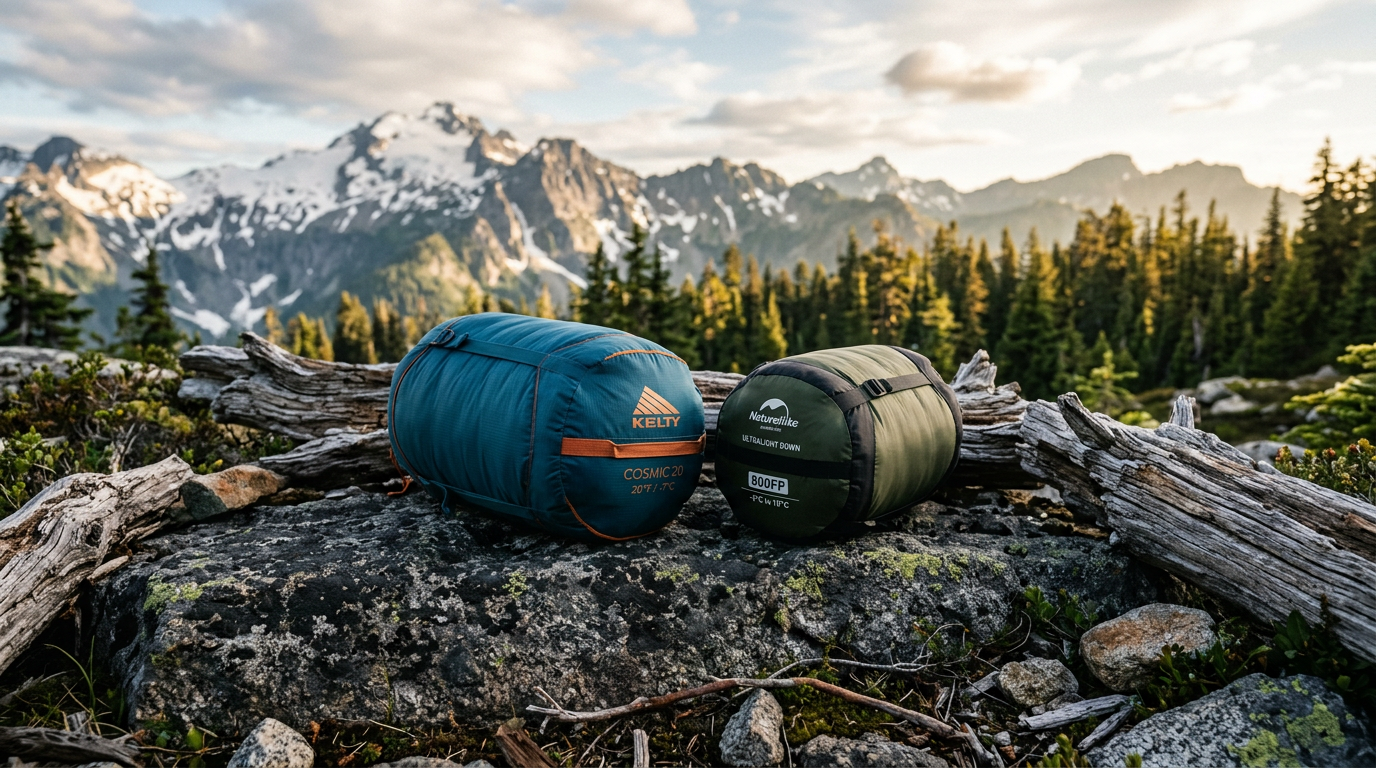
The Kelty Cosmic 20 wins for most three-season backpackers seeking proven reliability, superior warmth-to-weight ratio, and better construction quality at the 20°F temperature rating. However, the Naturehike Ultralight represents exceptional value for budget-conscious campers willing to accept a 40°F comfort limit and less refined details — it costs less than half the Kelty while delivering adequate performance for summer trips and car camping.
Disclosure: Four Seasons Gear is reader-supported. When you buy through links on our site, we may earn an affiliate commission at no extra cost to you. Prices and availability are accurate as of the time we last checked.
Choosing between the Kelty Cosmic 20 and Naturehike Ultralight Down Sleeping Bag comes down to temperature rating, build quality, and budget. The Kelty targets serious backpackers who need reliable 20°F performance, while the Naturehike serves warm-weather campers and those prioritizing cost savings over extended-season capability.
Specifications at a Glance
Specs
Temperature Rating and Season Capability
The 20-degree difference in temperature ratings fundamentally separates these bags. The Kelty Cosmic 20's rating means it handles spring and fall shoulder seasons where overnight lows dip into the 20s, extending your camping window by months. The Naturehike's 40.4°F rating confines it to summer use and mild-weather trips — adequate for June through August in most regions, but limiting for three-season backpackers.
This isn't just about numbers. The Kelty uses more insulation throughout the bag and features a draft tube along the zipper plus a contoured hood with drawcord adjustment to seal in warmth. The Naturehike's simpler construction lacks these heat-retention details, which becomes noticeable when temperatures approach its lower limit.
Fill Power and Insulation Quality
The Naturehike's 650FP down technically offers better loft-per-ounce than the Kelty's 550FP, but this advantage gets offset by two factors: the Kelty uses significantly more fill to achieve its lower temperature rating, and Kelty's DriDown treatment adds hydrophobic properties that maintain loft in damp conditions. Standard untreated down, like the Naturehike uses, clumps when exposed to moisture and loses insulating ability.
In practical terms, the Kelty recovers faster from condensation inside your tent and maintains warmth better in humid climates. The Naturehike requires more careful management — keep it in a waterproof stuff sack and air it out daily during multi-day trips. For desert camping or consistently dry conditions, this matters less.
Construction and Durability
The Kelty Cosmic 20 uses 50-denier polyester shell fabric with reinforced stitching at stress points and a full-length YKK zipper with anti-snag slider. This construction withstands 50+ nights of use without fabric wear or zipper failures. The mummy cut includes a footbox with additional insulation and an internal stash pocket for small items.
The Naturehike employs thinner nylon with a waterproof coating and simpler construction throughout. The zipper functions adequately but uses a lighter-duty mechanism. Seam quality is acceptable for the price point but shows less consistency than Kelty's manufacturing. Expect 20-30 nights of careful use before minor issues emerge — still reasonable value at half the cost.
What we like
Trade-offs
Packed Size and Portability
Both bags include compression stuff sacks, but the Kelty's larger fill volume means it compresses to approximately 8 x 16 inches, while the Naturehike achieves a smaller 7 x 14 inch package. For ultralight backpackers counting every cubic inch, the Naturehike's advantage here is real. However, the Kelty still fits comfortably in the bottom of a 50-60L backpack, so this difference rarely becomes a dealbreaker unless you're optimizing a sub-40L ultralight setup.
The compression difference stems directly from fill quantity — the Kelty simply contains more down to achieve its lower temperature rating. You're not paying a penalty for poor design; you're carrying the insulation you need for colder nights.
Value Proposition
At $189.95, the Kelty Cosmic 20 sits in the mid-range for 20-degree down bags — comparable options from established brands run $160-250. You're paying for proven performance, warranty support from a company with decades in the outdoor industry, and construction that lasts multiple seasons. The cost-per-night over 50+ uses makes this reasonable.
The Naturehike at $89.99 undercuts the Kelty by 53%, making it accessible for casual campers, first-time backpackers, or those building a gear closet on a budget. If your camping happens primarily in summer or you're outfitting multiple family members, the savings multiply quickly. Just understand you're accepting limitations in temperature range and longevity.
Decision Framework
Buy the Kelty Cosmic 20 if you camp in spring or fall when temperatures drop into the 20s and 30s, prioritize durability for frequent use, want moisture-resistant down for humid climates, or need a bag that performs reliably across varied conditions. The higher cost pays for extended-season capability and construction that withstands years of regular trips.
Buy the Naturehike Ultralight if you camp exclusively in summer when lows stay above 45°F, want to minimize initial investment while testing whether backpacking suits you, need multiple bags for family camping, or prioritize the smallest possible packed size for ultralight setups. Accept that you'll need supplemental layers on cooler nights and that longevity won't match pricier bags.
Frequently Asked Questions
+Can I use the Naturehike in 30-degree weather if I wear layers?
You can survive 30°F nights in the Naturehike with a base layer, insulated jacket, and hat, but you won't sleep comfortably. The bag lacks draft protection and sufficient loft to maintain warmth when you're stationary for 8 hours. If you regularly encounter temperatures below 40°F, the Kelty's proper insulation and construction details make a measurable difference in sleep quality.
+How much does the DriDown treatment actually matter?
DriDown's hydrophobic coating becomes critical in humid environments or multi-day trips where condensation accumulates inside your tent. Untreated down absorbs moisture from your breath and body vapor overnight, losing 30-50% of its insulating ability when damp. DriDown maintains 90% of its loft when exposed to the same moisture. In dry climates like the Southwest, this matters less. In the Pacific Northwest or Southeast, it's essential.
+Which bag is better for backpacking versus car camping?
For backpacking where weight and packed size matter, both work depending on season — the Naturehike for summer trips, the Kelty for three-season use. For car camping where you're not carrying the bag on your back, the Kelty's superior warmth and durability make it the better choice at any time of year. The $100 price difference becomes less significant when you're not constrained by pack space or weight limits.

Read next
More comparisons + reviews
REVIEW
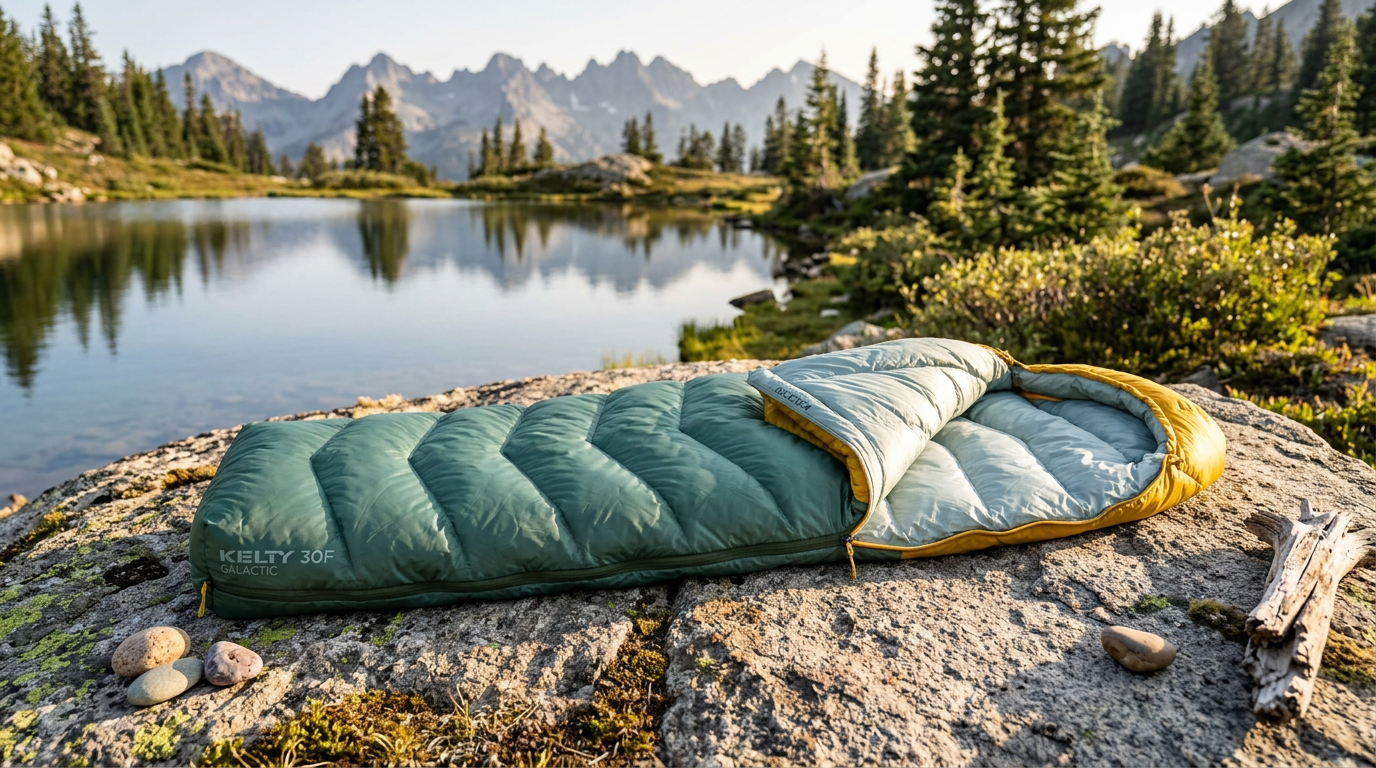
Kelty Galactic Down 30 Degree Sleeping Bag Review
REVIEW
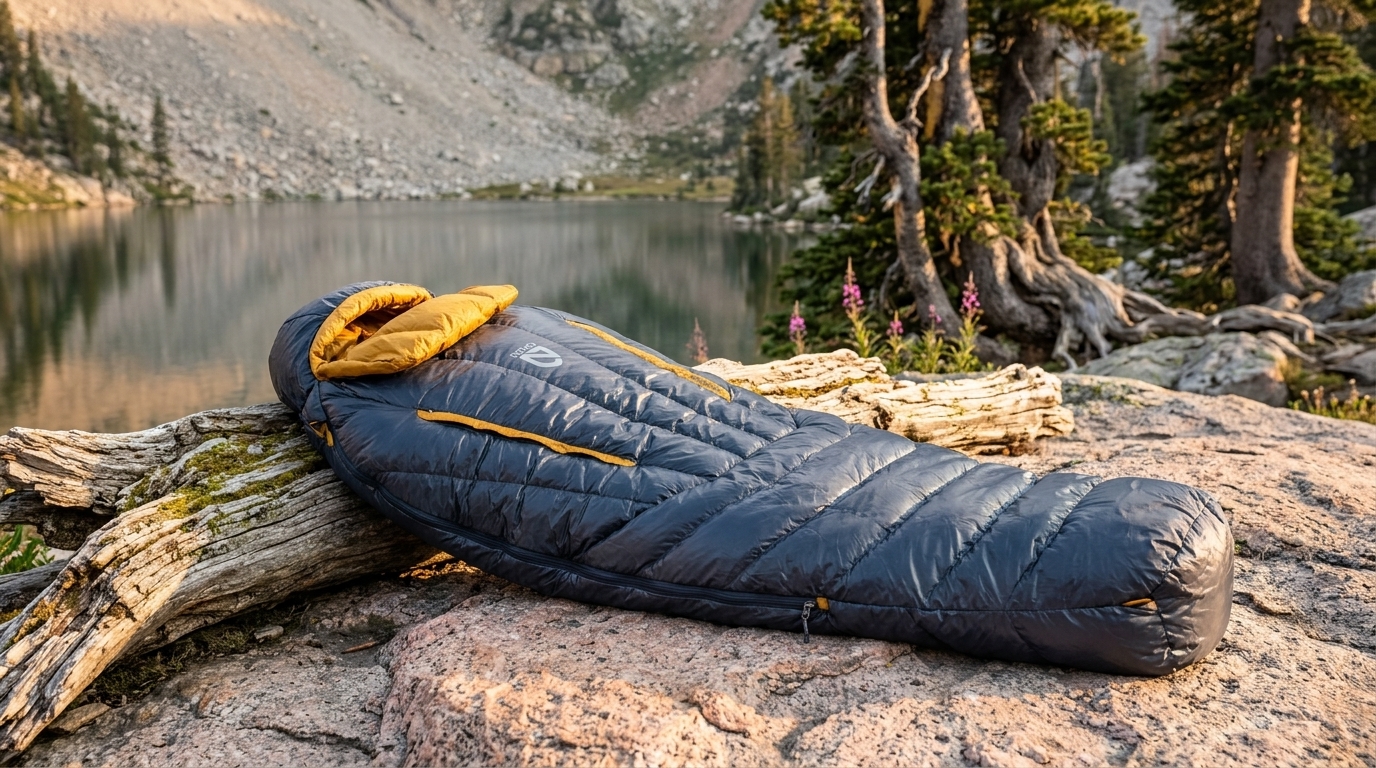
NEMO Disco Endless Promise Down Sleeping Bag Review
REVIEW
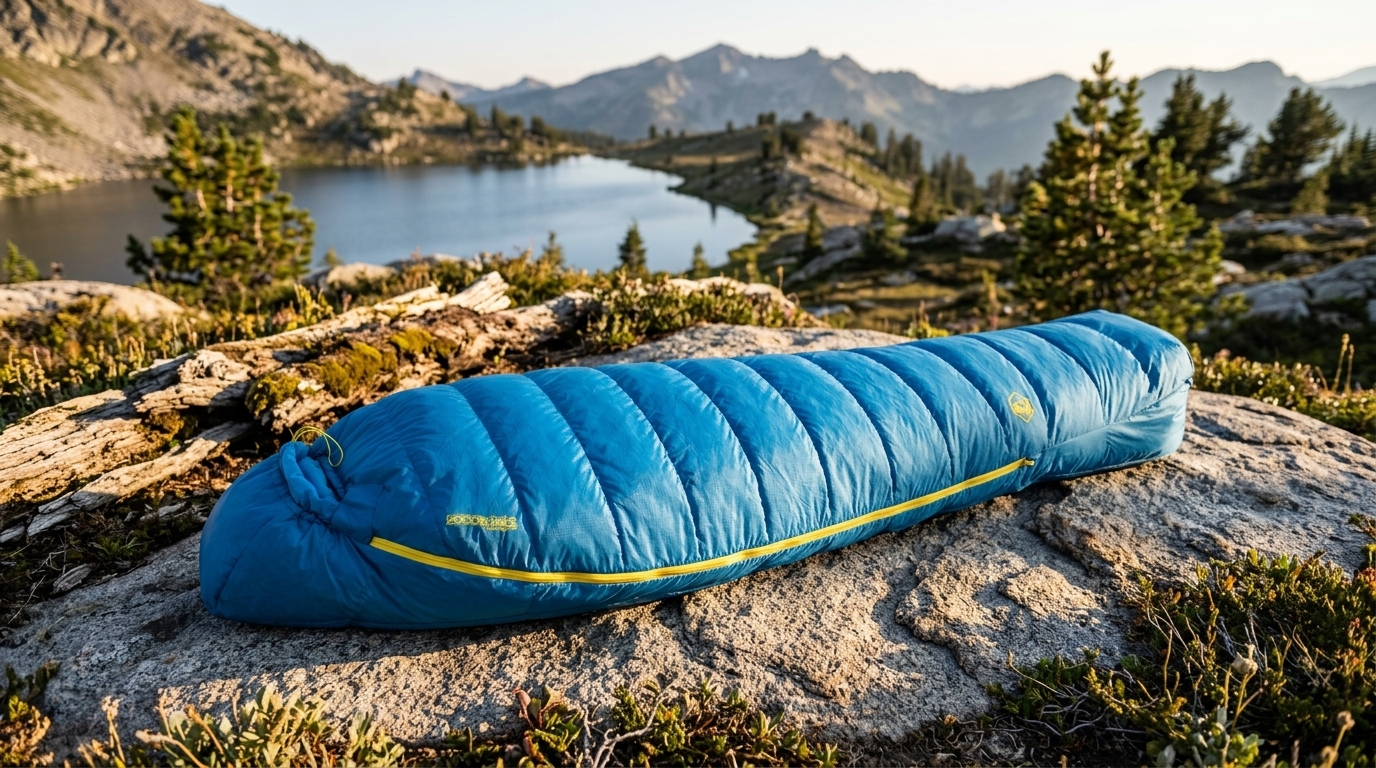
ZOOOBELIVES AlpliveD1500 10°F Down Sleeping Bag Review
REVIEW
Therm-a-Rest 20F/-6C Down Sleeping Bag Review: 900-Fill Premium Insulation with Ethical Sourcing
REVIEW
Big Agnes Women's Torchlight Sleeping Bag w/600 DownTek Review
REVIEW