
Review · spring · summer · fall · winter
Naturehike Ultralight Down Sleeping Bag Review: 650FP Three-Season Bag at 910 g
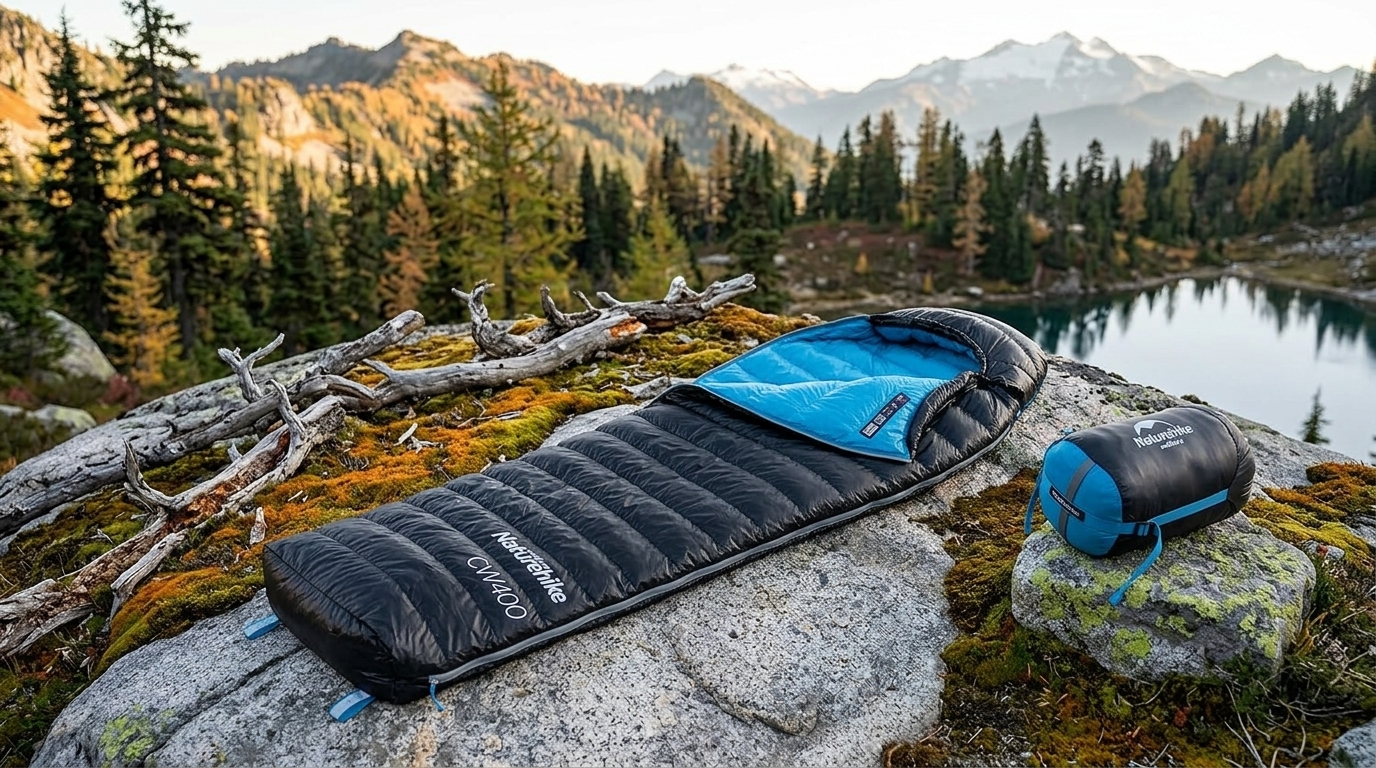
The Naturehike Ultralight Down Sleeping Bag targets weight-conscious backpackers who need a three-season bag under $100. At 910 g (2 lbs) with 650 fill-power duck down and a 40.4°F comfort rating, it undercuts many cottage-brand bags by $100–200, trading proven field history and premium materials for aggressive pricing. The hybrid mummy-rectangular design and RDS-certified down are thoughtful touches, but the 400T 20D ripstop shell and YKK zippers (unspecified grade) sit at the budget end of the durability spectrum.
Disclosure: Four Seasons Gear is reader-supported. When you buy through links on our site, we may earn an affiliate commission at no extra cost to you. Prices and availability are accurate as of the time we last checked.
Specifications
Specs
Construction and Materials
Naturehike uses 650 fill-power duck down with RDS (Responsible Down Standard) certification, a mid-tier loft rating that balances warmth-to-weight against cost. Each bag includes a traceability label documenting the down's origin. The 400T 20D ripstop nylon shell is lighter and thinner than the 20D fabrics found in premium bags (which typically run 30D or heavier in high-abrasion zones), prioritizing pack weight over long-term durability. The manufacturer states the shell is waterproof, likely meaning DWR-treated rather than laminated; down loses insulating value when wet, so a waterproof stuff sack or pack liner remains essential.
The hybrid silhouette—mummy-tapered at the shoulders, rectangular at the feet—attempts to split the difference between thermal efficiency and freedom of movement. The mummy upper reduces dead air space around the torso and head; the rectangular lower allows side-sleepers to shift knees or vent feet without fighting a tight footbox. YKK zippers run the length (specific model unspecified; budget bags often use YKK #3 or #5 coil zippers rather than the anti-snag #8 found in expedition bags). Compression and storage sacks are included.
Intended Use and Temperature Range
The 40.4°F comfort rating places this bag in the warm three-season category: late spring through early fall in temperate climates, or summer in alpine zones. Naturehike does not publish an EN or ISO temperature test result, so the stated comfort rating is manufacturer-estimated. Cold sleepers or those camping below 45°F should plan on a sleeping pad with R-value ≥3.5 and a puffy jacket as a quilt supplement. The 910 g weight makes this competitive with quilts in the same temperature range, though the full-zipper enclosure appeals to sleepers who prefer traditional bag security over the drafty hem management of a quilt.
Comparison Context
At $90, the Naturehike undercuts established ultralight bags by a significant margin. A Western Mountaineering UltraLite or Feathered Friends Hummingbird in a similar temperature range costs $400–500 but delivers 850–900 FP goose down, 10D Pertex Quantum shells, and field-proven construction. The tradeoff: Naturehike's 650 FP down requires more fill weight to achieve the same warmth, and the 20D shell is more prone to snags than premium fabrics. For weekend warriors building their first lightweight kit on a budget, that's often an acceptable exchange. For thru-hikers planning 2,000+ trail miles, the durability gap becomes more consequential.
The hybrid shape differentiates this bag from pure mummy designs. Sleepers who find mummy bags claustrophobic but don't want a full rectangular bag (which can weigh 1,200–1,500 g in down versions) may appreciate the middle ground. The rectangular footbox does sacrifice some thermal efficiency compared to a tapered mummy, so expect the effective comfort rating to drop 3–5°F if you're a cold sleeper.
Durability Considerations
The 400T 20D ripstop nylon shell is thinner than the 30D or 40D fabrics used in mid-range bags, making it more susceptible to punctures from sharp tent-floor debris, Velcro snags, or crampon contact during alpine use. The ripstop weave limits tear propagation once a hole starts, but the low denier means holes start more easily. Careful campsite selection (clearing sticks and pine cones before laying out your pad) and storing the bag inside your pack rather than lashed to the exterior will extend lifespan. YKK zippers are reliable at the component level, but the unspecified grade suggests these are likely #3 or #5 coil zippers, which are lighter but less robust than the #8 zippers found in four-season bags.
Down durability depends on care. Wash this bag infrequently (every 20–30 nights of use) with down-specific detergent in a front-loading machine, tumble dry on low with tennis balls to break up clumps, and store uncompressed. RDS certification ensures the down is clean and free of debris at manufacture, but repeated compression in the stuff sack will eventually break quills and reduce loft. Expect 3–5 years of weekend use or 1–2 thru-hike seasons before loft degrades noticeably.
Value Proposition
The Naturehike delivers sub-1 kg weight and RDS-certified down at a price point that makes ultralight backpacking accessible to budget-conscious buyers. The $90 MSRP is roughly 25% the cost of a cottage-brand equivalent, which matters for beginners testing whether they enjoy lightweight backpacking before committing to premium gear. The included compression sack, storage bag, and RDS traceability label add value. The compromise: you're buying a bag with thinner fabrics, mid-tier down, and less field-testing than established brands. For weekend trips and section hikes where you can afford to replace a failed bag, that's a reasonable gamble. For remote expeditions or thru-hikes where gear failure has serious consequences, spending 3–4× more on a proven bag is the safer bet.
What we like
Trade-offs
Frequently Asked Questions
+Is 650 fill-power down warm enough for shoulder-season camping?
650 FP down provides adequate warmth for the stated 40.4°F comfort rating, but requires more fill weight than higher-loft alternatives. For camping in the 35–45°F range, pair this bag with a sleeping pad rated R ≥3.5 and wear a base layer or puffy jacket to bed. Cold sleepers should add 5–10°F to the comfort rating when planning trips.
+How does the hybrid shape affect warmth compared to a full mummy bag?
The rectangular footbox increases interior volume, creating more dead air space your body must heat. This costs approximately 3–5°F of effective warmth compared to a tapered mummy footbox. The tradeoff benefits side-sleepers and those who feel confined in mummy bags, but cold sleepers should size up or plan for slightly warmer conditions.
+Can I wash this bag in a standard washing machine?
Use a front-loading washer (top-loaders with agitators can tear baffles) on gentle cycle with down-specific detergent. Rinse twice to remove all soap residue. Tumble dry on low heat with 2–3 clean tennis balls to break up down clumps, checking every 20 minutes. Expect 2–3 hours of drying time. Never dry-clean down bags; solvents strip natural oils from the down.
+What's the difference between the Regular and Large sizes?
Regular measures 82.7" × 29.5" (210 × 75 cm) and suits users up to approximately 6'0" (183 cm). Large measures 86.6" × 33.5" (220 × 85 cm) and accommodates users up to 6'4" (193 cm) or those who prefer extra shoulder room. The Large size adds approximately 50–70 g of weight due to increased fabric and down.
The Bottom Line
The Naturehike Ultralight Down Sleeping Bag delivers sub-1 kg weight and RDS-certified down at a price that makes lightweight backpacking accessible to budget-conscious buyers. The 40.4°F comfort rating and hybrid mummy-rectangular shape suit three-season weekend warriors who prioritize pack weight and affordability over maximum durability. The 20D shell and mid-tier 650 FP down mean this bag won't outlast a Western Mountaineering or Feathered Friends equivalent, but for beginners testing the ultralight waters or casual backpackers logging 10–20 nights per year, the Naturehike offers a sensible entry point. Pair it with a high R-value pad, store it uncompressed between trips, and treat the thin shell gently.

Read next
More from this category
REVIEW
Kelty Galactic Down 30 Degree Sleeping Bag Review
REVIEW
NEMO Disco Endless Promise Down Sleeping Bag Review
REVIEW
ZOOOBELIVES AlpliveD1500 10°F Down Sleeping Bag Review
REVIEW
Therm-a-Rest 20F/-6C Down Sleeping Bag Review: 900-Fill Premium Insulation with Ethical Sourcing
REVIEW
Big Agnes Women's Torchlight Sleeping Bag w/600 DownTek Review
REVIEW