
Review · spring · summer · fall · winter
ZOOOBELIVES AlpliveD1500 10°F Down Sleeping Bag Review
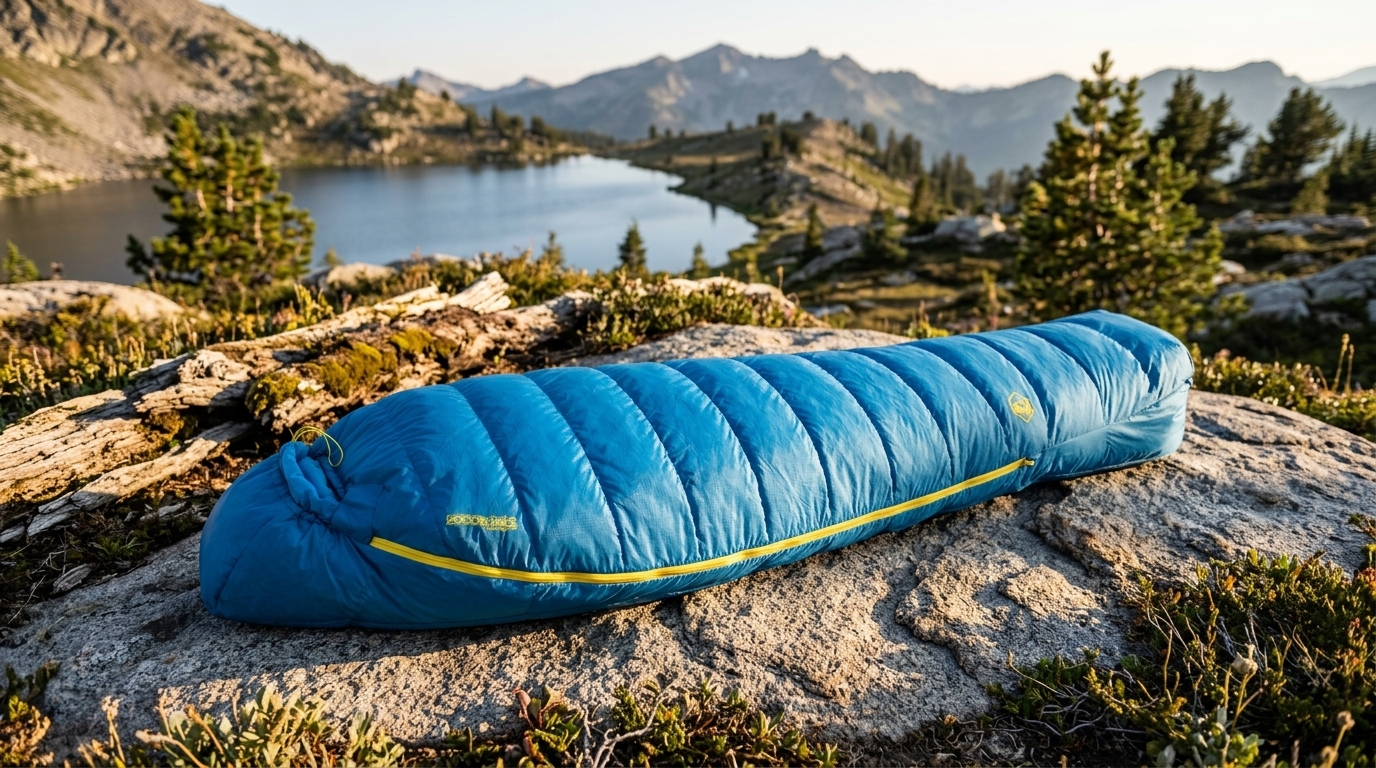
The ZOOOBELIVES AlpliveD1500 delivers 550+ fill power down insulation and a roomy mummy fit at a budget-friendly $99.99, targeting car campers and occasional backpackers who want natural warmth without premium pricing. The 35 oz down fill and 10°F lower-limit rating position this as a three-season-plus bag for moderate cold, though the 550 fill power and unspecified total weight suggest tradeoffs in warmth-to-weight efficiency compared to higher-loft alternatives.
Disclosure: Four Seasons Gear is reader-supported. When you buy through links on our site, we may earn an affiliate commission at no extra cost to you. Prices and availability are accurate as of the time we last checked.
Construction & Materials
The AlpliveD1500 uses a 20D ripstop nylon shell—a lightweight fabric common in value-oriented sleeping bags that balances tear resistance with packability. The 550+ fill power down (35 oz total) provides moderate loft; for context, premium backpacking bags typically use 800–900 fill power down to achieve similar warmth at lower weight. The manufacturer rates this bag to a 10°F lower limit and 32°F comfort limit, with an extreme rating of 0°F. Those figures assume an insulated sleeping pad and appropriate layering, as ground insulation accounts for roughly half of a sleep system's thermal performance.
Flexible core baffles distribute the down fill across the torso and an anatomic 3D foot box adds volume at the toes to reduce compression. An insulated draft tube runs the length of the YKK zipper to block cold air infiltration, and the adjustable hood features separate drawcords for the neck and face opening. An internal stash pocket keeps small items accessible. The bag measures 83" × 31" × 20" when laid flat—roomier than many mummy bags, which some sleepers appreciate for positional freedom and others find less thermally efficient.
Specs
Intended Use & Performance Context
This bag targets car campers, scout groups, and hunters who prioritize natural insulation and a roomy fit over ultralight credentials. The 10°F lower limit makes it suitable for spring shoulder-season trips, cool fall nights, and mild winter camping when paired with a quality insulated pad. The 550 fill power specification means the down clusters are moderately sized—adequate for the price point but less efficient than the 700–850 fill power down found in bags costing $250–$400.
The packed size of 10" × 7" × 15" (approximately 1,050 cubic inches before compression) is manageable for weekend backpacking but bulkier than synthetic bags in the same temperature range, which often compress more aggressively at the cost of long-term loft retention. For reference, a typical 20°F synthetic mummy bag packs to around 800–900 cubic inches, while a premium 15°F down bag with 850 fill power might compress to 600–700 cubic inches. The AlpliveD1500 sits in the middle—more compressible than budget synthetics, less so than high-end down.
Comparison Context
In the sub-$150 down sleeping bag category, buyers typically choose between 550–650 fill power bags like this one and 15–20°F synthetic mummies. The ZOOOBELIVES offers natural insulation's superior warmth-to-weight ratio and compressibility compared to synthetic fill, but down loses insulating ability when wet unless treated with a DWR finish (the manufacturer does not specify hydrophobic down treatment, so assume standard untreated down). Synthetic bags retain more warmth when damp and dry faster, making them better suited to humid climates or paddling trips.
The roomy fit distinguishes this bag from more tapered mummy designs. Side sleepers and restless sleepers often prefer the extra shoulder and hip room, though the additional fabric and air volume reduce thermal efficiency compared to a snug-fitting bag of the same fill weight. The left/right zipper options and compatible zippers allow two bags to mate into a double—a feature appreciated by couples who car-camp together.
Durability Considerations
The 20D ripstop nylon shell is lighter than the 30–40D fabrics used in expedition bags but adequate for car camping and maintained trails. Ripstop weave construction helps arrest small tears, though the thin denier means this bag requires more care around sharp objects, campfire sparks, and abrasive surfaces than heavier-duty shells. The YKK zipper is a reliable component; YKK's anti-snag design reduces the likelihood of fabric catching in the slider, a common failure point in budget bags.
Down longevity depends on storage and care. Storing the bag loosely in a large cotton or mesh sack (rather than compressed in the stuff sack) preserves loft over years of use. Washing requires down-specific detergent and thorough drying with low heat and tennis balls to break up clumps—more involved than synthetic bags, which tolerate standard machine washing. The 550 fill power down will gradually lose loft over 5–10 years of regular use, faster if stored compressed or exposed to moisture repeatedly.
Value Proposition
At $99.99, the AlpliveD1500 undercuts most down sleeping bags by $100–$300. That price reflects the 550 fill power down (less expensive than 700+ fill), the 20D shell (lighter and cheaper than burlier fabrics), and likely less rigorous baffle construction than premium bags. For campers who prioritize cost and plan 5–15 nights per year in moderate cold, this represents a functional entry into down insulation. Backpackers logging 30+ nights annually or facing consistently sub-20°F conditions will likely find the warmth-to-weight and durability tradeoffs limiting over time.
The bag's versatility for car camping, scout trips, and hunting weekends—where weight matters less and the roomy fit adds comfort—makes it a better value than for dedicated thru-hiking or alpine use. The ability to zip two bags together extends utility for families and couples, effectively creating a $200 double bag system.
What we like
Trade-offs
Frequently Asked Questions
+What's the actual weight of this sleeping bag?
The manufacturer does not publish a weight specification. Based on comparable 550 fill power down bags with 35 oz fill and 20D shells, expect approximately 3.0–3.5 lbs (1,360–1,590 g). Verify the weight before purchase if backpacking use is planned, as this significantly impacts carried load.
+Will this bag keep me warm at 10°F?
The 10°F rating is the lower limit, meaning a cold sleeper in minimal clothing may feel chilled at that temperature. The 32°F comfort rating is more realistic for average sleepers. At 10°F, you'll need an insulated sleeping pad (R-value 4.0+), a base layer, and possibly a liner. Cold sleepers or those camping below 15°F should consider a 0°F or colder-rated bag.
+How does 550 fill power down compare to 800 fill power?
Fill power measures down cluster loft: one ounce of 800 fill power down occupies 800 cubic inches, while one ounce of 550 fill power occupies 550 cubic inches. Higher fill power down provides more warmth per ounce, so an 800 fill bag can achieve the same insulation with less weight and bulk. The tradeoff is cost—550 fill power down is significantly cheaper, making this bag more affordable but heavier and bulkier than premium alternatives.
+Can I wash this bag in a standard washing machine?
Down sleeping bags require front-loading washers (top-loaders with agitators can tear baffles) and down-specific detergent. Use a gentle cycle with cold water, then dry on low heat with clean tennis balls to break up clumps. The process takes 2–3 dryer cycles to fully dry the down. Many campers prefer professional cleaning for down bags to avoid damaging the fill or baffles.
+How should I store this bag between trips?
Store the bag loosely in a large cotton or mesh storage sack (often included) rather than compressed in the stuff sack. Compression storage over months or years permanently reduces down loft, degrading warmth. Hang the bag or lay it flat in a dry, cool space away from direct sunlight. Before each trip, air the bag out and fluff it to restore full loft.

Read next
More from this category
REVIEW
Kelty Galactic Down 30 Degree Sleeping Bag Review
REVIEW
NEMO Disco Endless Promise Down Sleeping Bag Review
REVIEW
Therm-a-Rest 20F/-6C Down Sleeping Bag Review: 900-Fill Premium Insulation with Ethical Sourcing
REVIEW
Big Agnes Women's Torchlight Sleeping Bag w/600 DownTek Review
REVIEW
Mountain Hardwear Bishop Pass 15°F Women's Sleeping Bag Review
REVIEW