
Head-to-head
Jetboil Flash vs Primus Lite Plus: Which Integrated Stove System Is Right for You?
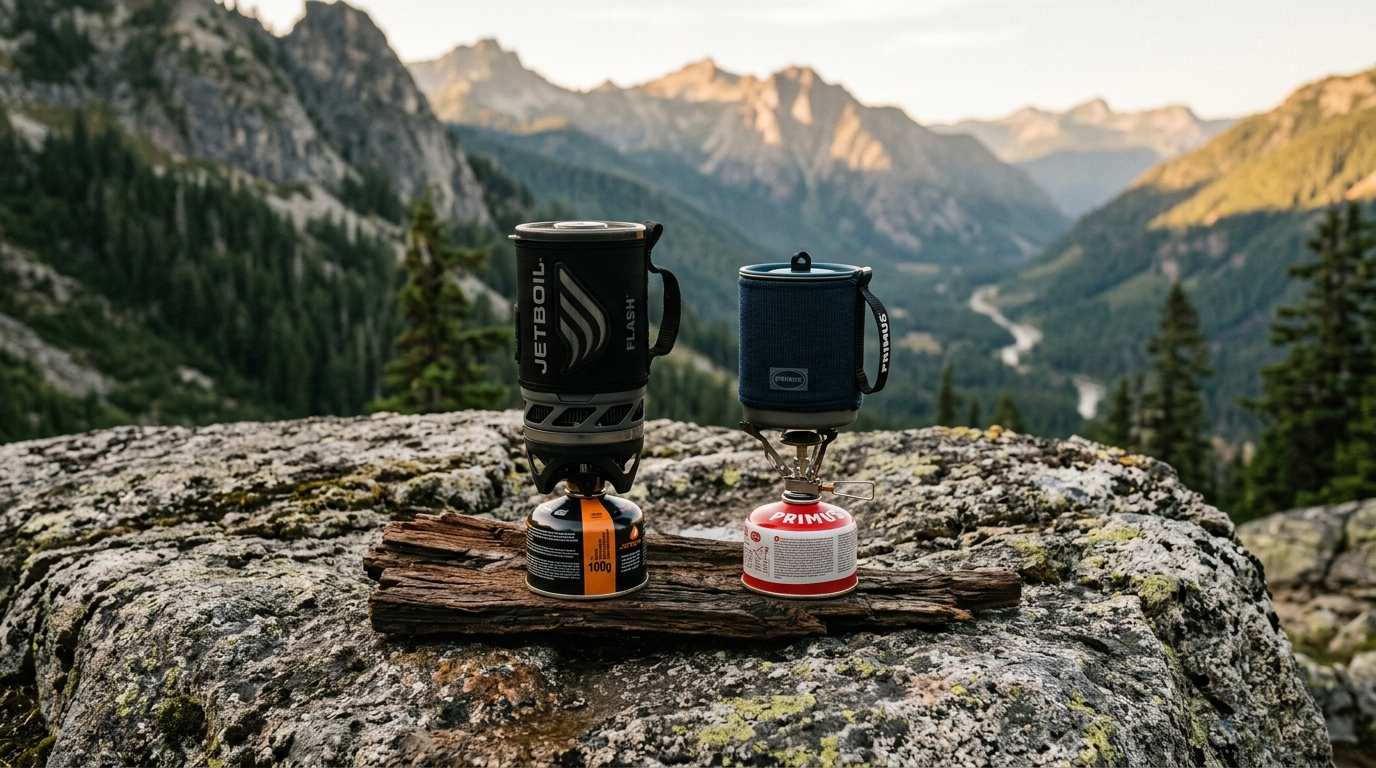
The Jetboil Flash wins for most backpackers seeking the fastest boil times and best fuel efficiency in an integrated canister stove system. However, the Primus Lite Plus is the better choice if you prioritize a lighter pack weight, need a true simmer capability for cooking real meals beyond boiling water, or want a more compact nested storage solution with the pot doubling as your eating bowl.
Disclosure: Four Seasons Gear is reader-supported. When you buy through links on our site, we may earn an affiliate commission at no extra cost to you. Prices and availability are accurate as of the time we last checked.
Integrated canister stove systems have revolutionized backcountry cooking by pairing burner and pot into a single optimized unit. Both the Jetboil Flash and Primus Lite Plus represent mature designs in this category, but they make different trade-offs. The Flash prioritizes raw speed and efficiency with its iconic heat exchanger and push-button ignition, while the Primus Lite Plus focuses on weight savings, versatility, and a more refined cooking experience with better simmer control.
Specifications at a Glance
Specs
Boil Speed and Fuel Efficiency: Flash Dominates
The Jetboil Flash boils 0.5 liters in 100 seconds versus 140 seconds for the Primus Lite Plus — a 40% speed advantage that translates to meaningful time savings on cold mornings and multi-day trips. This performance gap stems from the Flash's 9,000 BTU burner paired with its proprietary FluxRing heat exchanger, which features concentric aluminum fins that maximize surface contact with the flame. The Primus uses a 6,800 BTU burner with a simpler heat exchanger design that prioritizes weight over raw thermal transfer.
Fuel efficiency follows the same pattern. The Flash delivers approximately 12 liters of boiled water per 100g canister, while the Lite Plus manages about 10 liters. Over a week-long trip boiling water twice daily, the Flash requires roughly one fewer 100g canister — a weight and cost savings of 3.5 oz and $5-7. For thru-hikers and alpine climbers where every resupply matters, this efficiency compounds significantly.
Weight and Packed Size: Primus Takes the Edge
The Primus Lite Plus weighs 11.3 oz complete versus the Flash's 13.1 oz — a 1.8 oz difference that ultralight backpackers will notice. More importantly, the Lite Plus packs down to 3.9 × 5.5 inches compared to the Flash's 4.1 × 7.1 inches. The Primus achieves this by using a 0.5L pot versus the Flash's 1.0L capacity, and by nesting the burner inside the pot with a more compact folding design. The smaller footprint fits more easily into side pockets and tight pack configurations.
However, capacity matters. The Flash's 1.0L pot handles two servings of freeze-dried meals or allows you to boil enough water for coffee and oatmeal simultaneously. The Primus 0.5L pot is strictly a one-person, one-task vessel. If you're cooking for two or want operational flexibility, the Flash's extra 3.5 oz of pot weight becomes a feature rather than a penalty. Solo minimalists who only boil water for single-serving meals will prefer the Primus dimensions.
Cooking Versatility: Primus Offers Real Simmer Control
The Primus Lite Plus features a precision valve that allows true simmering — you can cook rice, rehydrate meals slowly, or warm soup without scorching. The Flash's valve offers basic flame adjustment but struggles to maintain low, stable heat; it's optimized for full-blast boiling. This design difference reflects each system's intended use case: the Flash assumes you're adding boiling water to dehydrated food, while the Primus accommodates users who want to actually cook.
The Primus pot also functions as an eating bowl with measurement markings inside, and its wider diameter (3.9 inches) makes it easier to eat from compared to the Flash's taller, narrower profile. The Flash includes a color-change heat indicator on the cozy that tells you when contents are hot, a nice safety feature but not a cooking advantage. For backpackers who carry a separate bowl anyway and only need boiling water, the Flash's limitations don't matter. For those trying to minimize gear by eating directly from the pot, the Primus is more practical.
Ignition and Reliability: Push-Button vs Manual
The Jetboil Flash includes a push-button piezo ignition that works reliably down to approximately 20°F, eliminating the need to carry matches or a lighter. The Primus Lite Plus requires manual ignition. In practice, this means carrying a mini Bic lighter as backup gear. The piezo igniter adds roughly 0.3 oz to the Flash's weight, but the convenience in cold, wet, or windy conditions is substantial — especially when your hands are numb and fumbling with a lighter becomes frustrating.
That said, piezo igniters can fail (usually due to moisture or mechanical wear after hundreds of uses), so experienced users carry backup ignition regardless. The Primus approach is more primitive but also more foolproof: a Bic lighter works in conditions where electronic ignition might fail, and replacing a $2 lighter is simpler than repairing a built-in igniter. This is a personal preference trade-off between convenience and simplicity.
Value and Long-Term Cost
At $79.99, the Jetboil Flash costs $20 less than the $99.99 Primus Lite Plus. Combined with its superior fuel efficiency (saving one canister per week of use), the Flash delivers better value for high-volume users. Over 50 days of backcountry use per year, the Flash's efficiency advantage saves approximately $35-50 in fuel costs annually, recovering its lower purchase price and then some.
The Primus justifies its premium if weight is your primary concern or if you genuinely need simmer capability. But for the majority of backpackers who prioritize speed, efficiency, and upfront cost, the Flash represents better value. Both systems are durable — expect 5+ years of regular use before needing replacement parts like pot cozies or valve assemblies.
Decision Framework: Which System Fits Your Needs?
Buy the Jetboil Flash if:
- You prioritize the fastest possible boil times and maximum fuel efficiency
- You're cooking for two people or want a 1.0L pot for operational flexibility
- You value push-button ignition convenience, especially in cold conditions
- You primarily add boiling water to freeze-dried meals rather than cooking from scratch
- You want the best value per dollar and lower long-term fuel costs
Buy the Primus Lite Plus if:
- You're counting every ounce and need the lightest possible integrated system
- You want precise simmer control for cooking rice, soups, or rehydrating meals slowly
- You're a solo hiker who only needs 0.5L capacity and prefers eating from the pot
- You value compact packed dimensions for tight pack configurations
- You prefer the simplicity of manual ignition without electronic components
Frequently Asked Questions
+Can I use either system with a different pot or pan?
Both systems are designed as integrated units optimized for their included pots. While you can physically attach other cookware to the burners, you'll lose the efficiency advantages that make these systems worthwhile. The proprietary heat exchangers only work with their matched pots. If you need multi-pot versatility, consider a traditional canister stove like the MSR PocketRocket 2 Stove instead.
+How do these perform at high altitude or in cold weather?
Both systems use standard isobutane-propane canisters and will experience reduced performance below 20°F and above 10,000 feet. The Jetboil Flash maintains a slight advantage in cold conditions due to its higher BTU output and better heat retention from the insulated cozy. For winter camping or high-altitude mountaineering, consider using four-season fuel blends and keeping canisters warm in your sleeping bag. Neither system matches liquid-fuel stoves for extreme cold reliability.
+What's the real-world durability like for each system?
Both are well-built and should last 5+ years with proper care. The Jetboil Flash's piezo igniter is the most common failure point (typically after 200-300 uses), but the stove remains functional with manual ignition. The Primus Lite Plus has fewer electronic components to fail but its smaller pot shows dents and wear faster due to thinner aluminum construction. Both pots' non-stick coatings will degrade over time with abrasive cleaning; use soft sponges and avoid metal utensils. Replacement parts are available for both systems.
For backpackers who need even lighter options without integrated systems, the MSR PocketRocket 2 Stove weighs just 2.6 oz and pairs with any pot, though you sacrifice the efficiency and wind protection of integrated designs. The choice between integrated and modular systems ultimately depends on whether you value optimization (integrated) or flexibility (modular).

Read next
More comparisons + reviews
REVIEW
MSR WhisperLite Universal Compact Hybrid Fuel Camping and Backpacking Stove Review
REVIEW
MSR WindBurner Personal Windproof Camping and Backpacking Stove System Review
REVIEW
Jetboil MiniMo Camping and Backpacking Stove Cooking System with Adjustable Heat Control Review
REVIEW
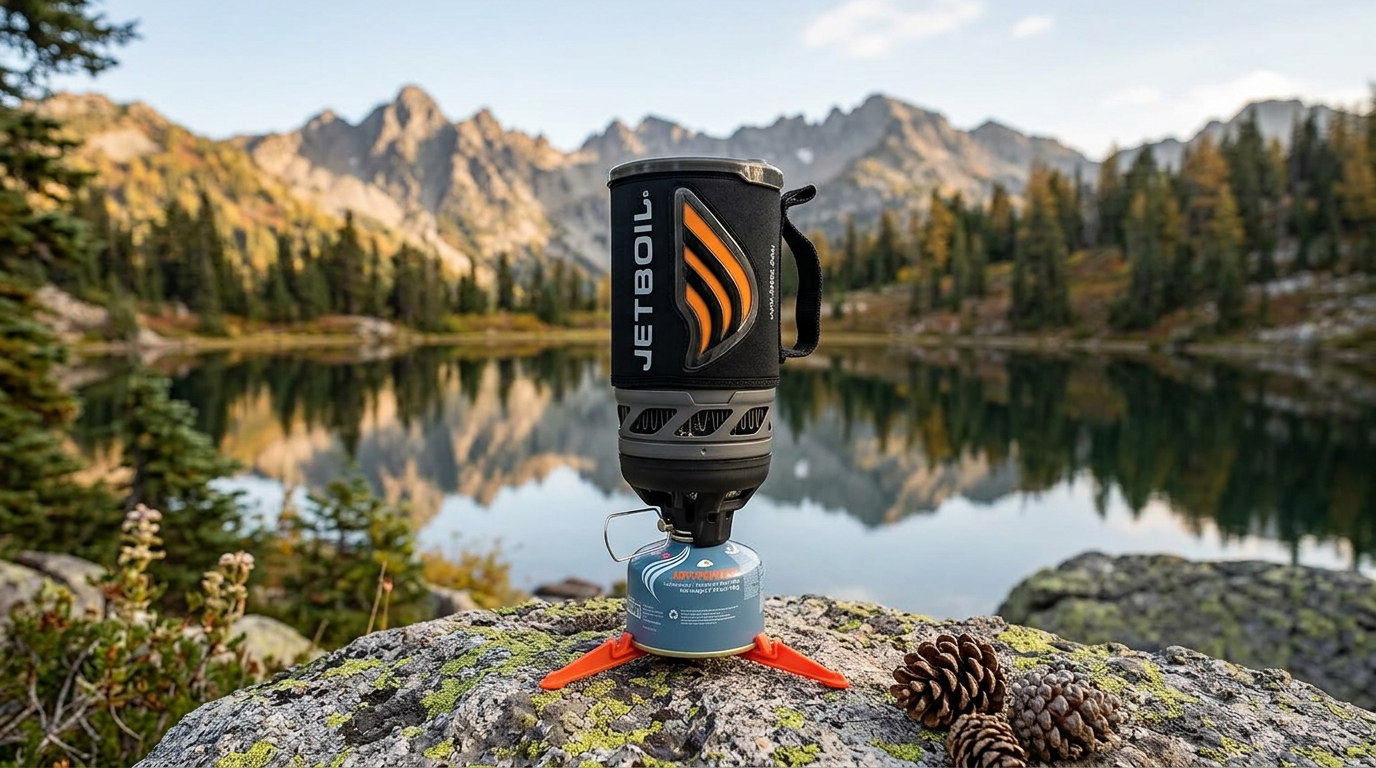
Jetboil Flash Camping and Backpacking Stove System Review
REVIEW
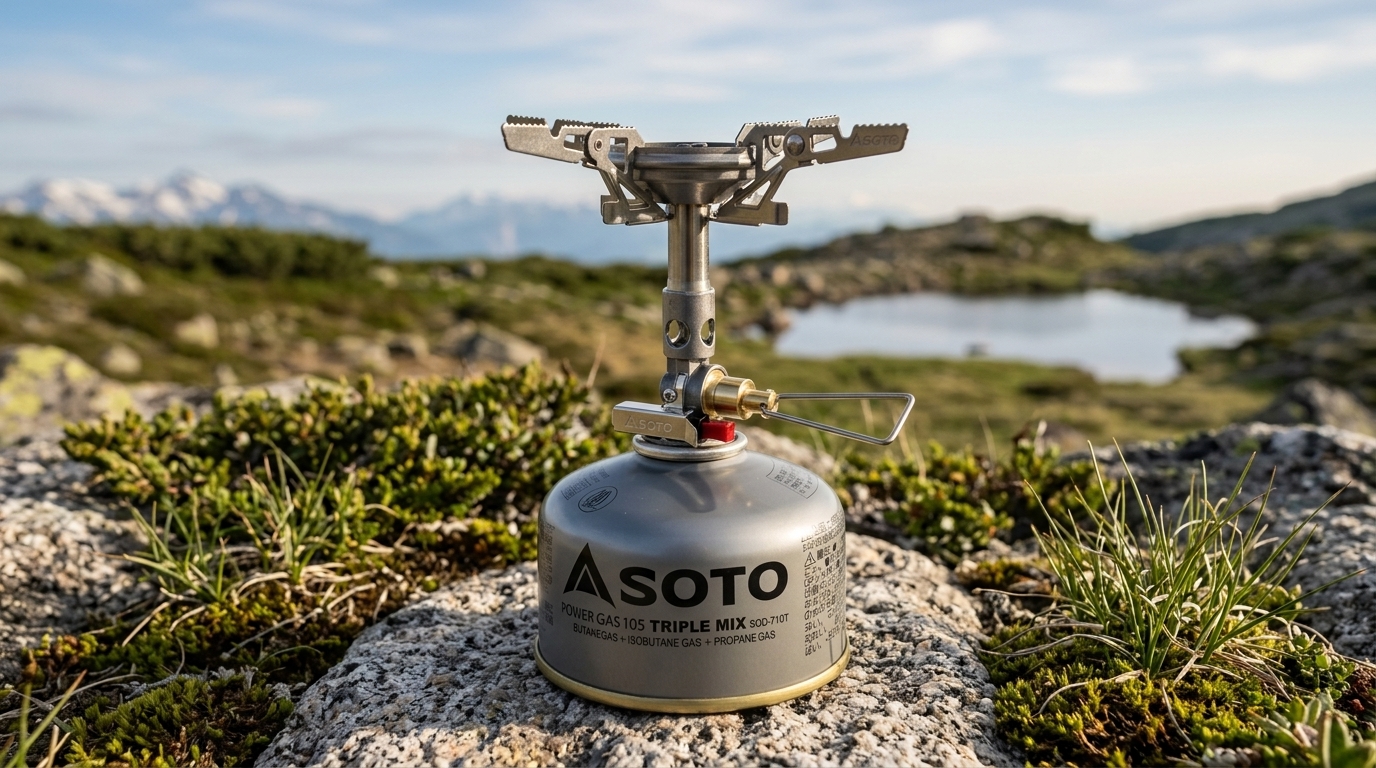
SOTO WindMaster Canister Stove with 4Flex Review
REVIEW