
Review · spring · summer · fall
Jetboil MiniMo Camping and Backpacking Stove Cooking System with Adjustable Heat Control Review
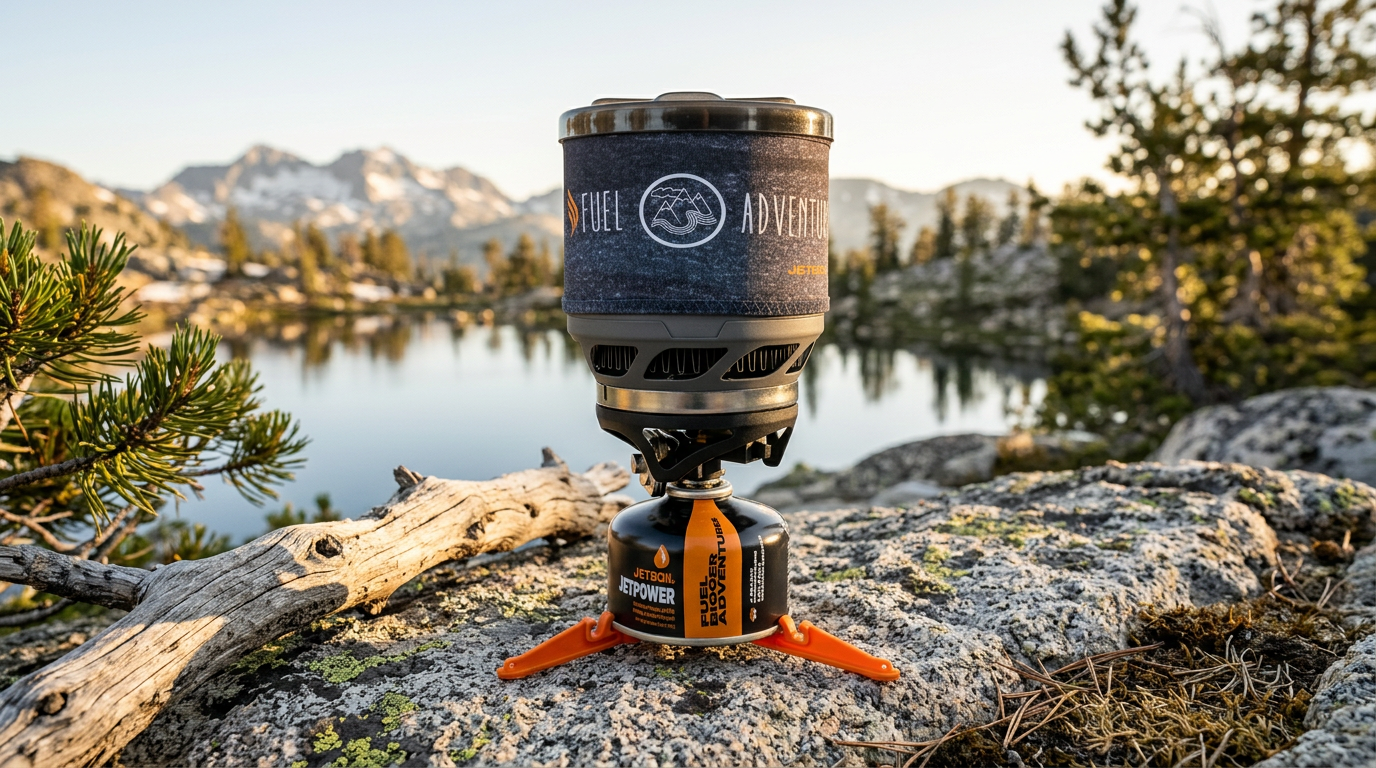
The Jetboil MiniMo targets backpackers and campers who want the convenience of an integrated canister stove system with genuine simmering capability—a rarity in the fast-boil category. At 14.6 oz (414 g) system weight, it trades the sub-3-ounce minimalism of canister-top burners like the MSR PocketRocket 2 Stove for a short, stable cooking platform, integrated pot with heat exchanger, and Jetboil's proprietary regulator valve that delivers incremental flame control from whisper-simmer to rolling boil. The tradeoff: you're carrying a dedicated 1-liter cook pot that doesn't nest other gear, and you're paying a premium for the integrated convenience.
Disclosure: Four Seasons Gear is reader-supported. When you buy through links on our site, we may earn an affiliate commission at no extra cost to you. Prices and availability are accurate as of the time we last checked.
Construction and Heat System
The MiniMo pairs a burner head with Jetboil's FluxRing-equipped 1-liter aluminum cooking cup. The FluxRing—a corrugated metal skirt bonded to the pot bottom—increases surface area contact with the flame, cutting boil times and fuel consumption compared to a bare pot on a standalone burner. Jetboil claims a rolling boil in just over 2 minutes with half the fuel consumption of traditional systems, and field reports from OutdoorGearLab and Treeline Review confirm sub-2:30 boil times in moderate conditions.
The standout feature is the regulator valve. Unlike the on/off or coarse-adjustment valves on most canister stoves, the MiniMo's valve offers fine incremental control across the heat range. This makes it genuinely useful for simmering oatmeal, rehydrating dehydrated meals slowly, or sautéing—tasks that defeat simpler systems. The pushbutton piezo igniter is rated to 20°F (-6°C), though piezo igniters universally lose reliability in deep cold and wet conditions; carry backup matches or a lighter.
Specs
Intended Use and Cooking Experience
The MiniMo is designed for solo or duo backpackers and car campers who prioritize speed, fuel efficiency, and the ability to cook real meals—not just boil water. The 1-liter pot is wide and short (not tall and narrow like the Jetboil Flash), which lowers the spoon angle and makes eating directly from the pot more comfortable. The metal handles stay cool enough to grip with bare hands during cooking, and the insulating cozy keeps contents hot while you eat.
Clever Hiker's comparison review notes that the MiniMo's simmer control and pot geometry make it more versatile than the MSR WindBurner for actual cooking, though the WindBurner edges ahead in high-wind performance due to its fully enclosed burner design. The MiniMo's burner is partially shielded but not enclosed, so moderate wind will slow boil times unless you add a separate windscreen (which Jetboil doesn't include).
Comparison Context: Integrated vs. Modular Systems
The MiniMo sits in the integrated canister stove category, competing directly with the MSR WindBurner and other Jetboil models (Flash, Zip). Compared to modular setups—a lightweight burner like the MSR PocketRocket 2 Stove paired with a separate titanium or aluminum pot—the MiniMo is heavier (414 g vs. ~250 g for a PocketRocket 2 + 750 mL titanium pot) but faster to deploy, more fuel-efficient, and simpler to operate. You don't need to fuss with pot stability or worry about scorching food on a bare aluminum bottom.
The tradeoff is flexibility. The MiniMo's pot doesn't nest other gear, and you can't swap it for a frying pan or larger pot without buying additional Jetboil-compatible cookware. If you're a freeze-dried-meal-only backpacker who never simmers, the lighter, faster-boiling Jetboil Flash may be a better fit. If you want maximum packability and the option to use your own cookware, a canister-top burner offers more versatility.
Durability Considerations
The hard-anodized aluminum pot resists scratching and corrosion better than bare aluminum, and the FluxRing is welded on—not glued—so it won't delaminate with repeated heating cycles. The burner head is brass, which is durable and corrosion-resistant, though the piezo igniter is a known wear item across all stove brands. Expect the igniter to fail eventually (moisture ingress, mechanical fatigue); when it does, you can still light the stove manually with a match or lighter.
The regulator valve is the most complex component and the most likely point of failure over hundreds of cook cycles. Jetboil doesn't publish a service interval, but anecdotal reports from Section Hiker and REI user reviews suggest the valve remains functional for several seasons of regular use. The cozy's fabric will pill and stain over time, but this doesn't affect performance. The pot's non-stick coating (if present on your model year) will eventually wear, especially if you use metal utensils; stick to silicone or wood.
Value and Fuel Economics
At approximately $130 MSRP (verify current price), the MiniMo is priced at the upper end of the integrated stove category—roughly $30 to $50 more than the Jetboil Flash and comparable to the MSR WindBurner. You're paying for the simmer control and improved pot ergonomics. Over time, the fuel efficiency partially offsets the upfront cost: Jetboil claims the FluxRing system uses half the fuel of a traditional stove, which translates to fewer canister purchases on long trips.
For weekend warriors or casual campers who cook once a day, the fuel savings are negligible. For thru-hikers or frequent backpackers who cook twice daily for weeks on end, the efficiency advantage becomes meaningful. If you're comparing against a budget option like the Coleman Classic Propane Camping Stove, note that the Coleman is a car-camping stove using bulk propane bottles—totally different use case and not backpack-portable.
What we like
Trade-offs
Best For and Not For
- Solo or duo backpackers who cook real meals (oatmeal, pasta, sautéed vegetables) and need simmer control
- Weekend backpackers prioritizing convenience and speed over absolute weight savings
- Car campers who want a compact, efficient stove for quick meals at the trailhead or campsite
- Three-season users in moderate climates (spring, summer, fall) where temperatures stay above 20°F
Frequently Asked Questions
+Can I use non-Jetboil fuel canisters with the MiniMo?
Yes. The MiniMo uses standard threaded isobutane-propane canisters (EN417 or Lindal valve). Jetboil recommends their Jetpower fuel for optimal performance, but any threaded canister from MSR, Primus, Coleman, or other brands will physically fit and function. Fuel blend ratios vary by brand, which can slightly affect cold-weather performance.
+How does the MiniMo perform in wind compared to the MSR WindBurner?
The MSR WindBurner has a fully enclosed burner chamber that isolates the flame from wind, making it more efficient in exposed, gusty conditions. The MiniMo's burner is partially shielded but not enclosed, so moderate to strong wind will increase boil times and fuel consumption unless you add a separate windscreen. For alpine or ridge camping, the WindBurner has the edge; for sheltered forest sites, the MiniMo's simmer control is more useful.
+Can I use the MiniMo pot on other stoves or campfires?
The pot is designed exclusively for the MiniMo burner—the FluxRing heat exchanger is optimized for the burner's flame pattern and won't perform efficiently on other heat sources. You can technically place it on a campfire, but you'll lose the efficiency advantage, risk damaging the FluxRing, and void any warranty. If you want multi-stove compatibility, choose a modular setup with a standalone pot.
+What's the difference between the MiniMo and the Jetboil Flash?
The MiniMo has a regulator valve for precise simmer control, a shorter/wider pot for easier eating, and metal handles. The Flash has a simpler on/off valve (no simmering), a taller/narrower pot, and plastic-coated handles. The Flash boils water slightly faster (~2:00 vs. ~2:15) and weighs a bit less, but it's not suitable for cooking meals that require low heat. If you only boil water for freeze-dried meals, the Flash is adequate; if you cook, the MiniMo is worth the extra weight and cost.
+How many boils can I get from one 100g fuel canister?
Jetboil claims approximately 12 to 15 half-liter boils per 100 g canister under ideal conditions (moderate temperature, no wind, efficient technique). Real-world performance varies with altitude, temperature, wind, and whether you're simmering or just boiling. In cold conditions (near 20°F), expect closer to 8 to 10 boils. For a weekend trip with 2 boils per day, a single 100 g canister is usually sufficient; for longer trips, carry a 230 g canister or plan resupply.
Final Recommendation
The Jetboil MiniMo earns its place in the packs of backpackers who value cooking versatility and speed over absolute minimalism. The regulator valve's simmer control genuinely expands your menu beyond instant noodles and freeze-dried meals, and the integrated design means you're cooking within 30 seconds of pulling the system out of your pack. The weight penalty compared to a canister-top burner is real but modest (about 5 oz), and the fuel efficiency helps recoup the cost over dozens of trips. If you're a freeze-dried purist or ultralight obsessive, look elsewhere; if you want to sauté vegetables at 10,000 feet without scorching them, the MiniMo delivers.

Read next
More from this category
REVIEW
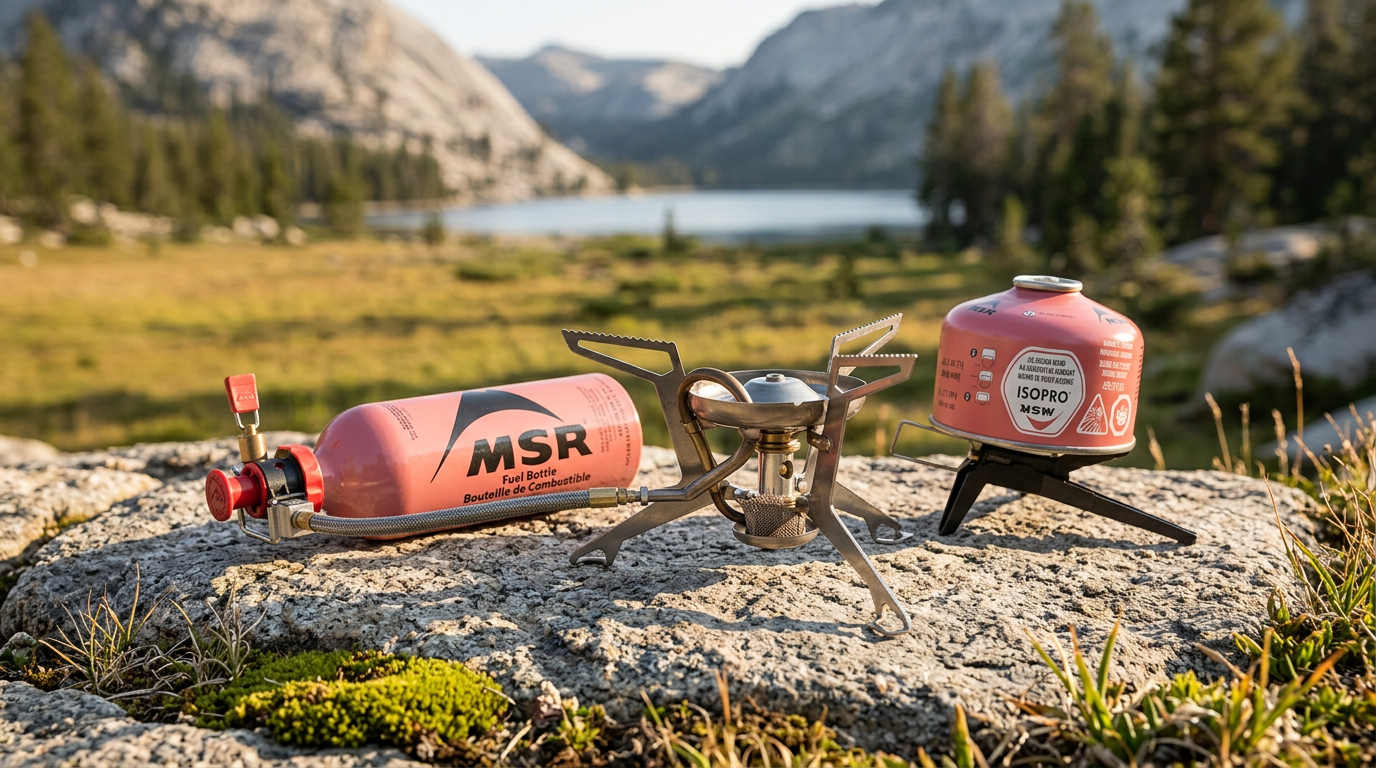
MSR WhisperLite Universal Compact Hybrid Fuel Camping and Backpacking Stove Review
REVIEW
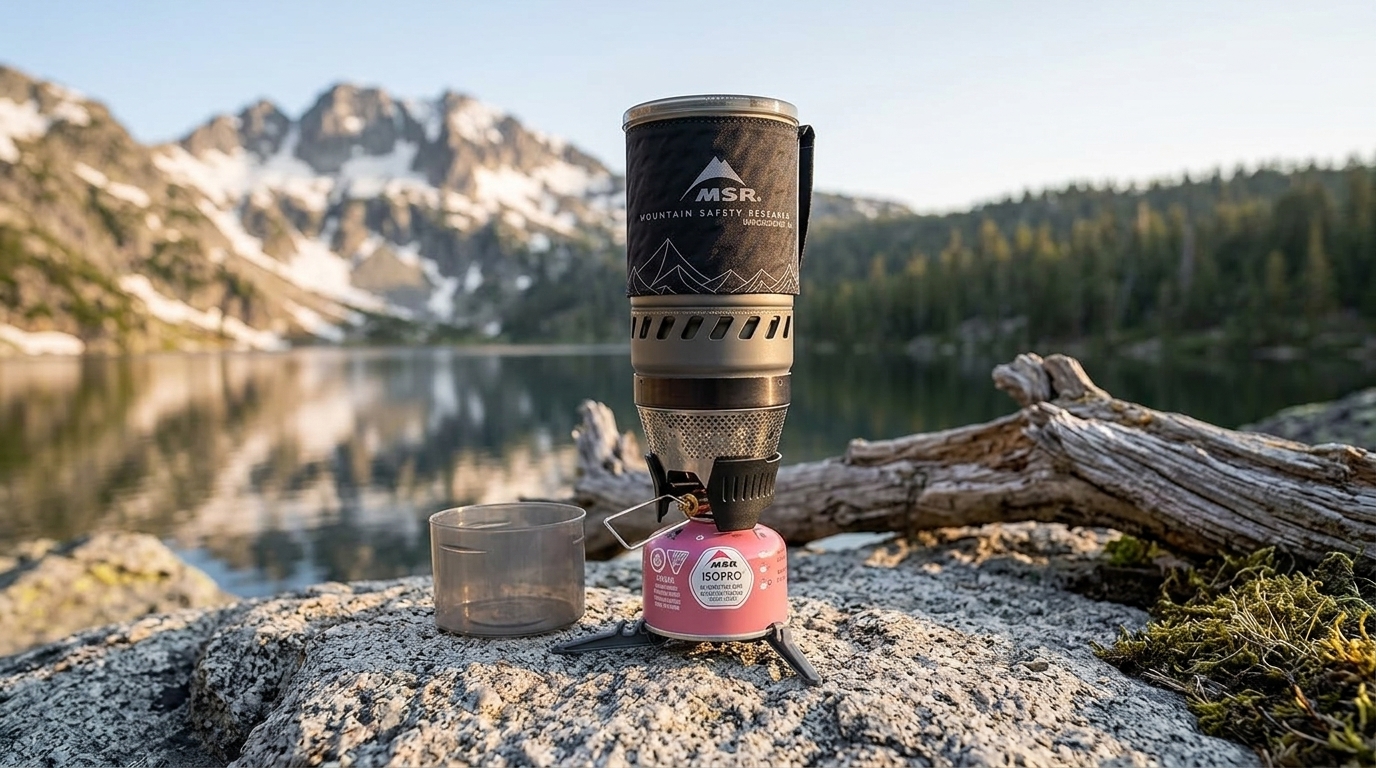
MSR WindBurner Personal Windproof Camping and Backpacking Stove System Review
REVIEW
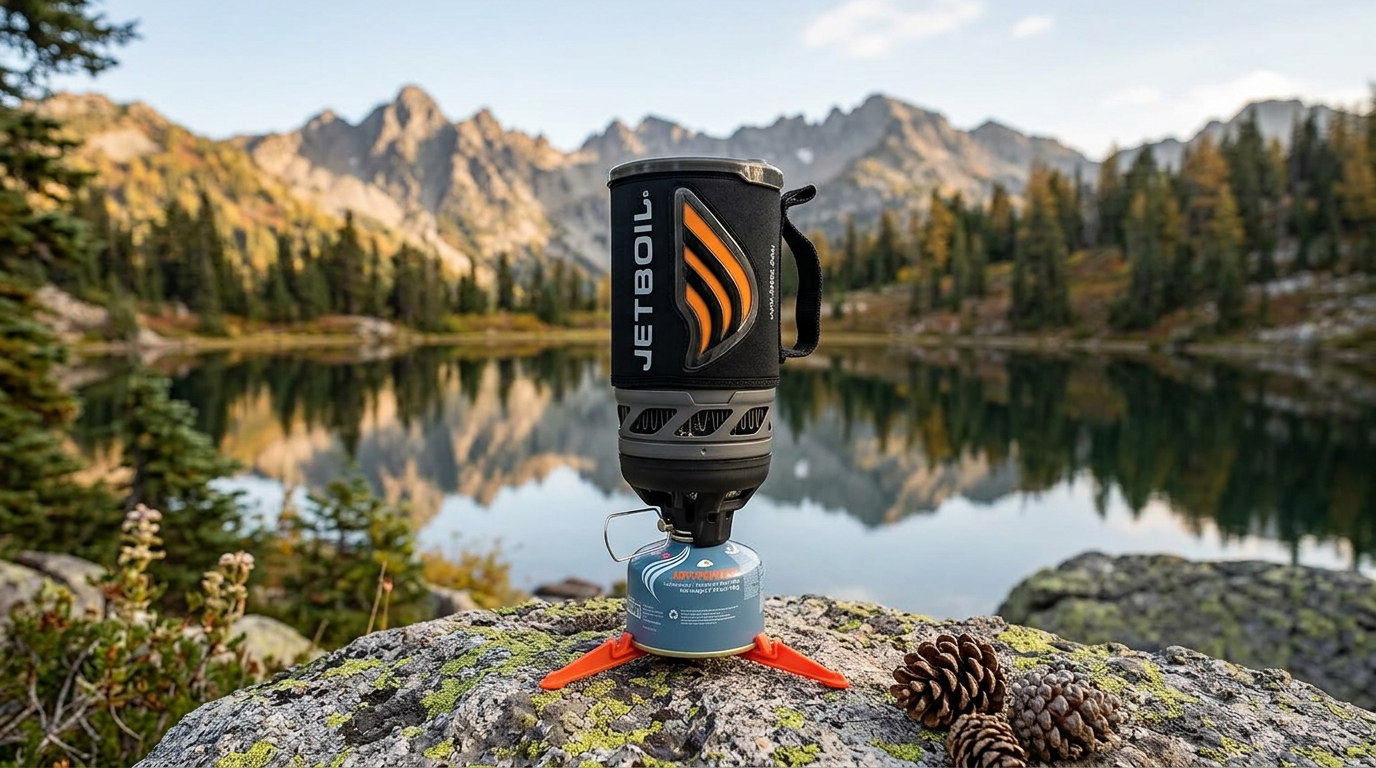
Jetboil Flash Camping and Backpacking Stove System Review
REVIEW
SOTO WindMaster Canister Stove with 4Flex Review
REVIEW
Primus Lite Plus Stove System Review: Integrated Pot-Burner for Fast Solo Meals
REVIEW