
Review · spring · summer · fall
MSR WindBurner Personal Windproof Camping and Backpacking Stove System Review
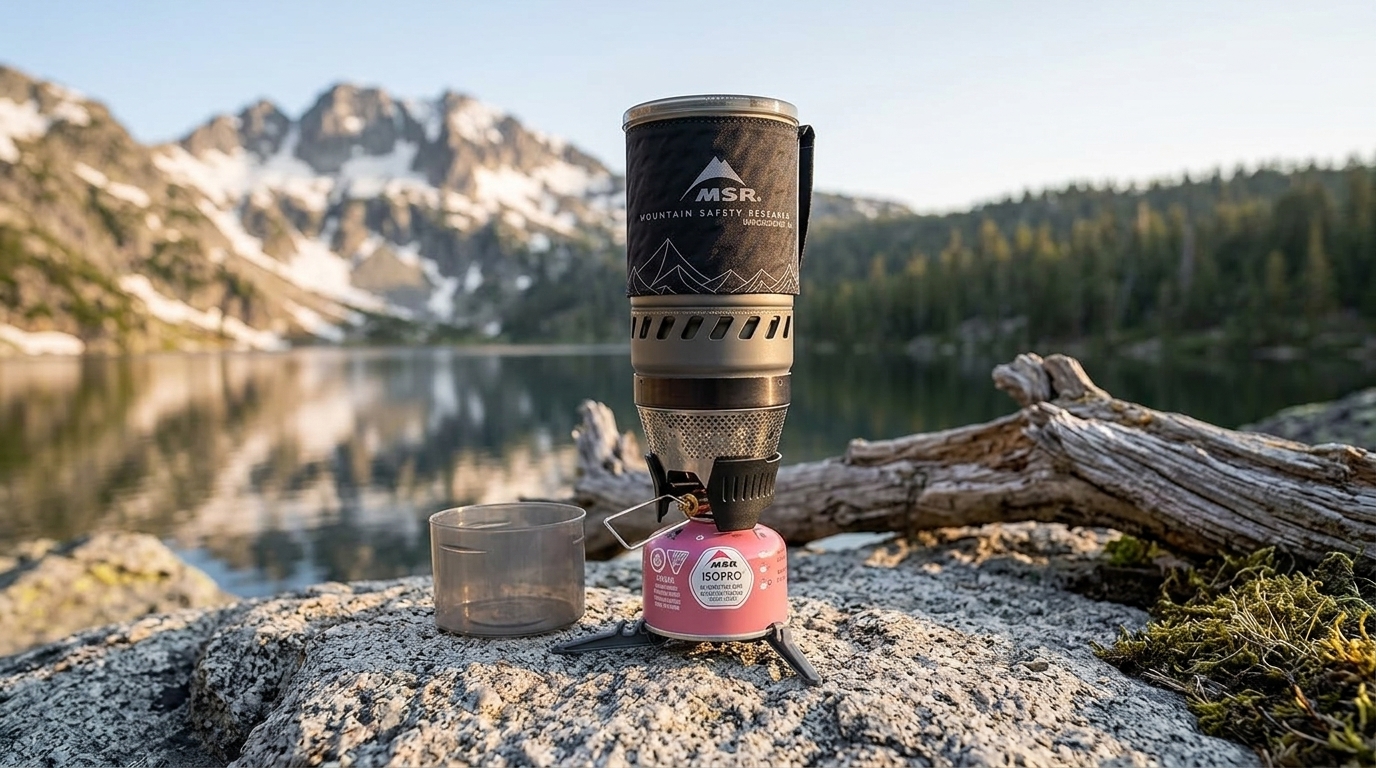
The MSR WindBurner Personal is an integrated canister stove system engineered for fast boiling in wind and cold, trading the packability of ultralight canister stoves like the MSR PocketRocket 2 Stove for superior fuel efficiency and weather resistance. Its radiant burner and pressure regulator maintain consistent output when conventional stoves falter, making it the choice for alpine starts, shoulder-season trips, and exposed ridgeline camps where wind protection matters more than shaving grams.
Disclosure: Four Seasons Gear is reader-supported. When you buy through links on our site, we may earn an affiliate commission at no extra cost to you. Prices and availability are accurate as of the time we last checked.
Specifications
Specs
Windproof Radiant Burner Design
The WindBurner's defining feature is its enclosed radiant burner, which sits inside a heat exchanger cup rather than exposing flame to open air. This design channels heat directly into the pot base through a metal mesh burner surface, eliminating the efficiency losses that plague conventional stoves in wind. The pressure regulator maintains consistent gas flow as canister pressure drops in cold temperatures—a meaningful advantage when you're boiling water at dawn in 35°F conditions or at elevation where canister performance typically degrades.
OutdoorGearLab's testing confirmed the WindBurner maintains boil times in wind that would cripple unshielded stoves, and Section Hiker's review noted the system's ability to function in conditions where they'd previously struggled with conventional canister stoves. The pot locks onto the stove and canister with a twist mechanism, creating a stable platform that reduces tipping risk compared to top-heavy setups.
Integrated System Tradeoffs
As an integrated system, the WindBurner commits you to MSR's proprietary cookware—the 1.0-liter Personal pot, the optional 1.8-liter Duo pot, or other WindBurner-compatible vessels. You cannot use standard cookware, which limits flexibility compared to the MSR PocketRocket 2 Stove or other open-burner designs that accept any pot. The marketing materials explicitly note incompatibility with WindBurner Stock Pot or Sauce Pot models, so verify accessory compatibility before expanding your kit.
The system nests a 4-ounce IsoPro canister inside the 1.0-liter pot with the stove components, and the 0.5-liter bowl snaps onto the pot exterior. This packaging efficiency is clever, but the total system weight of approximately 465 g exceeds what you'd carry with a 73 g ultralight stove plus a separate titanium pot. The tradeoff is deliberate: you're paying the weight penalty for wind performance and fuel efficiency that recovers some of that penalty over multi-day trips.
Construction and Durability Considerations
The 1.0-liter pot uses hard-anodized aluminum, which resists scratching and corrosion better than bare aluminum but remains lighter than stainless steel. The PFAS-free cozie insulates the pot for handling and heat retention, addressing environmental concerns around fluorinated coatings. The BPA-free drinking/straining lid doubles as a sipping lid for hot beverages, though the strainer holes are sized for pasta or dehydrated meals rather than fine-mesh filtering.
The radiant burner's enclosed design protects the mesh element from physical damage during transport, but the heat exchanger cup and pot interface require careful alignment—cross-threading or forcing the connection could damage the locking mechanism over time. The pressure regulator adds a mechanical component that introduces a potential failure point compared to simpler valve-only stoves, though MSR's reputation suggests robust engineering. Store the stove with the canister detached to prevent o-ring compression.
Use Cases and Comparison Context
The WindBurner Personal targets solo backpackers and alpinists who prioritize boil speed and fuel efficiency in exposed environments. Section Hiker's review positioned it as ideal for shoulder-season trips and high-altitude camps where wind and cold are constants. If you're primarily boiling water for freeze-dried meals and morning coffee, the system's speed and reliability justify the weight premium.
For car camping or group cooking, the Coleman Classic Propane Camping Stove offers a different tradeoff—more cooking surface and simmer control at the cost of portability. For ultralight summer backpacking where wind is occasional rather than constant, the MSR PocketRocket 2 Stove saves 200+ grams and offers more cookware flexibility. The WindBurner sits between these extremes: heavier than minimalist canister stoves, more weather-capable than either.
Value Assessment
At $199.95 MSRP, the WindBurner Personal costs 3-4× what you'd pay for a basic canister stove, but the price includes the pot, bowl, and lid—components that would add $40-60 to a separate stove purchase. The fuel efficiency gains matter over extended trips: OutdoorGearLab's comparative testing showed integrated systems like the WindBurner consume roughly 30% less fuel than conventional stoves in windy conditions, which offsets canister costs on week-long treks.
The value proposition strengthens if you frequently camp in wind or cold where conventional stoves underperform. If your typical use is summer backpacking in sheltered forests, the efficiency gains won't justify the weight and cost premium. Consider your environment: the WindBurner is insurance against weather that turns a 4-minute boil into a 12-minute fuel-wasting ordeal.
Pros and Cons
What we like
Trade-offs
Best For
- Solo backpackers camping in exposed, windy terrain
- Shoulder-season and alpine users facing cold temperatures
- Fast-and-light alpinists prioritizing boil speed over simmer control
- Multi-day trekkers where fuel efficiency offsets system weight
- Backpackers who value integrated nesting for pack organization
Not For
- Ultralight summer backpackers where every gram counts
- Cooks who need precise simmer control for sautéing or sauces
- Users who want flexibility to swap cookware or share pots
- Budget-conscious buyers prioritizing low initial cost
- Car campers or group cooking scenarios needing larger capacity
Frequently Asked Questions
+Can I use the WindBurner stove with non-MSR pots?
No. The WindBurner requires proprietary MSR WindBurner cookware (1.0L Personal, 1.8L Duo, or compatible accessories) because the radiant burner design depends on the pot's heat exchanger interface. Standard cookware will not lock onto the stove or achieve the system's efficiency. Note that WindBurner Stock Pot and Sauce Pot models are also incompatible with the Personal stove.
+How much fuel does the WindBurner save compared to a conventional stove?
OutdoorGearLab's testing indicates integrated systems like the WindBurner consume approximately 30% less fuel than conventional canister stoves in windy conditions, primarily because the enclosed burner eliminates heat loss to wind. In calm conditions, the efficiency advantage narrows to roughly 10-15%. Over a week-long trip, this can save one 4 oz canister, offsetting some of the system's weight premium.
+Does the pressure regulator work in freezing temperatures?
The pressure regulator maintains more consistent output than unregulated stoves as canister pressure drops in cold, but it cannot overcome the fundamental physics of canister fuel. In temperatures below 20°F, consider using an IsoPro canister (which contains a propane blend for better cold performance) and keep the canister warm in your sleeping bag overnight. The regulator helps, but it's not a substitute for proper cold-weather fuel management.
+How does the WindBurner Personal compare to the Duo system?
The Personal system includes a 1.0-liter pot and weighs approximately 465 g, optimized for solo use. The Duo system (reviewed separately by TreeLine Review and Section Hiker) uses a 1.8-liter pot, weighs around 590 g, and serves 2-3 people. Both use the same radiant burner technology. Choose Personal if you're solo or want minimal weight; choose Duo if you're regularly cooking for two or want capacity for melting snow.
+Can I simmer or cook complex meals with the WindBurner?
The radiant burner design prioritizes boil efficiency over simmer control. You can reduce flame output, but precise low-temperature cooking (sautéing vegetables, simmering sauces) is challenging compared to stoves with fine-tune valves. The WindBurner excels at boiling water for freeze-dried meals, coffee, and tea—if you need simmer capability, consider a conventional stove with better flame modulation.
Final Verdict
The MSR WindBurner Personal delivers on its core promise: fast, fuel-efficient boiling in conditions where conventional stoves struggle. The 465 g system weight and $200 price point position it as a specialized tool rather than a universal solution, but for alpine backpackers, shoulder-season campers, and anyone who's watched a canister stove sputter in wind, the engineering tradeoffs make sense. You're buying reliability in the environments where stove performance matters most.

Read next
More from this category
REVIEW
MSR WhisperLite Universal Compact Hybrid Fuel Camping and Backpacking Stove Review
REVIEW
Jetboil MiniMo Camping and Backpacking Stove Cooking System with Adjustable Heat Control Review
REVIEW
Jetboil Flash Camping and Backpacking Stove System Review
REVIEW
SOTO WindMaster Canister Stove with 4Flex Review
REVIEW
Primus Lite Plus Stove System Review: Integrated Pot-Burner for Fast Solo Meals
REVIEW