
Review · spring · summer · fall
Platypus Quickdraw Microfilter Review: Fast Flow, Versatile Threads, Ultralight Compromise
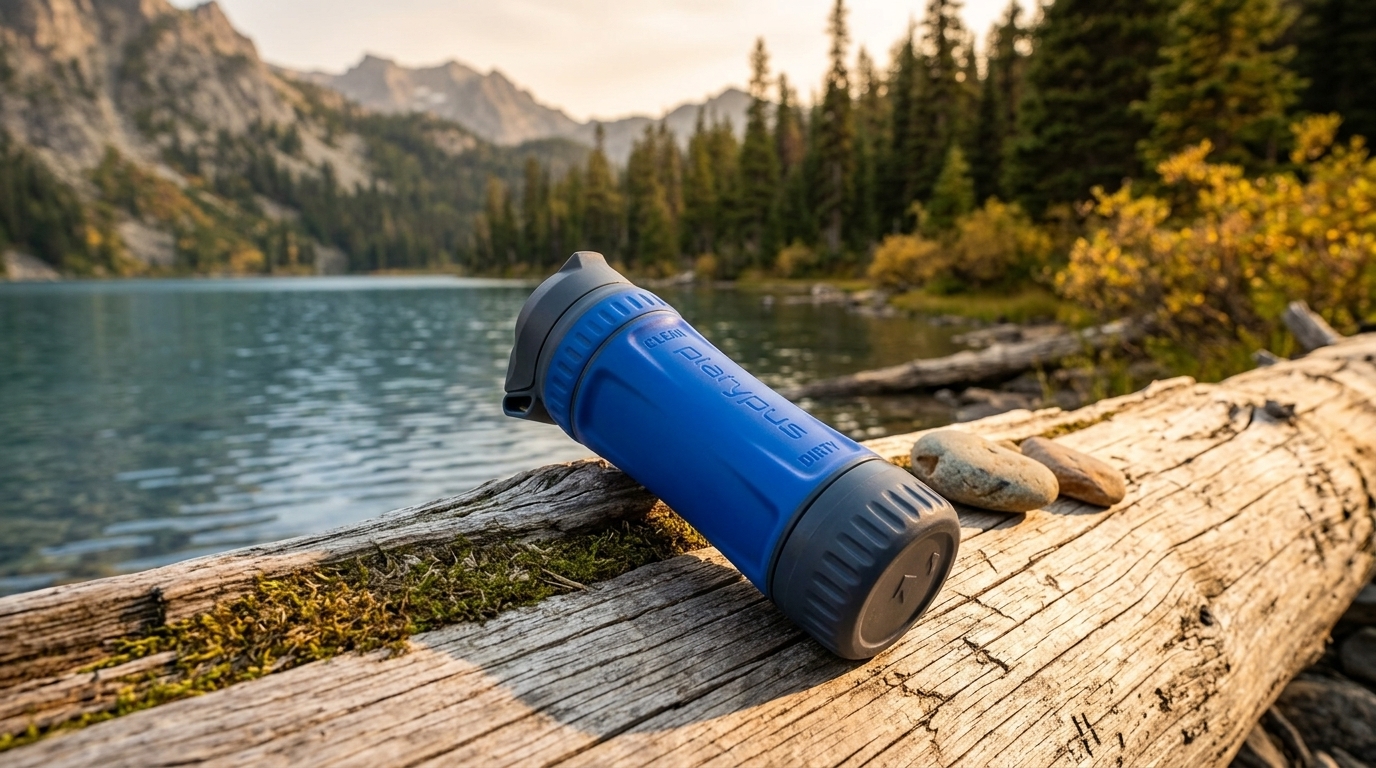
The Platypus Quickdraw Microfilter is a 62 g (2.2 oz) hollow-fiber filter optimized for fast-and-light backpackers who value flow rate (3 L/min) and broad bottle compatibility over absolute longevity. Its dual-thread I/O design mates with SmartWater bottles, Platypus reservoirs, and common 28 mm soda bottles, making it one of the most adaptable squeeze filters on the market. The tradeoff: a 1,000-liter cartridge life—half that of the Sawyer Squeeze Water Filter System—and a price point around $40 that reflects premium materials and USA manufacturing. Best for gram-counters who filter frequently on short-to-medium trips and want tool-free backflushing without carrying a syringe.
Disclosure: Four Seasons Gear is reader-supported. When you buy through links on our site, we may earn an affiliate commission at no extra cost to you. Prices and availability are accurate as of the time we last checked.
Construction and Materials
The Quickdraw uses a hollow-fiber membrane with a 0.2-micron pore size, meeting NSF P231 protocol for removal of bacteria (E. coli, Salmonella) and protozoa (Giardia, Cryptosporidium). It does not remove viruses, dissolved chemicals, or heavy metals—standard for mechanical microfilters in this weight class. The filter cartridge measures 5.0 × 1.8 inches and weighs 62 g including both threaded caps (clean side and dirty side). The housing is BPA-free plastic with a translucent body that lets you inspect the fiber bundle for debris or damage.
The dual-thread I/O design is the standout feature: the dirty-water inlet accepts 28 mm threads (standard on most disposable water bottles and Platypus soft bottles), while the clean-water outlet uses 28 mm threads as well, allowing inline use or direct attachment to hydration reservoirs. This versatility eliminates the need for proprietary coupling bags—you can screw the filter directly onto a SmartWater bottle, squeeze, and drink from the clean side or fill a second container. Platypus includes two snap-on caps to protect both ends when the filter is stowed.
Specs
Flow Rate and Field Performance
Platypus claims a 3 L/min flow rate, which translates to filling a 1-liter bottle in roughly 20 seconds with moderate squeeze pressure. Trail reports from Section Hiker and Backpacker confirm this is achievable with a new cartridge and clean water sources. OutdoorGearLab's testing noted the Quickdraw outpaces the Sawyer Squeeze Water Filter System in initial flow rate, though both filters slow as particulate clogs the fibers. The shake-to-clean feature—vigorously shaking the filter with caps on to dislodge sediment—restores some flow mid-trip, but backflushing (forcing clean water backward through the outlet) is more effective for sustained performance.
The tool-free backflush system is a practical advantage over the Sawyer Mini Water Filter, which requires a syringe. You simply fill a clean bottle, attach it to the clean-water side, and squeeze backward. Clever Hiker's review flagged this as a time-saver on multi-day trips in silty conditions. However, the 1,000-liter cartridge life is a limiting factor: at 3 liters per day, a solo hiker exhausts the filter in roughly 330 days of use. For thru-hikers or those splitting a filter among a group, this lifespan is notably shorter than the Sawyer Squeeze's 378,541-liter rating (effectively unlimited for most users).
Versatility and Bottle Compatibility
The dual 28 mm threads make the Quickdraw compatible with a wide range of containers: disposable SmartWater bottles (the ultralight hiker's favorite), Platypus Hoser reservoirs, most Platypus soft bottles, and common soda bottles. This flexibility is useful when resupplying in trail towns—you can buy a liter of water, drink it, and repurpose the bottle as your dirty-water reservoir. The clean-side threads also allow inline use with hydration bladders, though Platypus does not include a hose adapter in the base package.
Compared to the LifeStraw Personal Water Filter, which requires drinking directly from the source or through a straw, the Quickdraw's squeeze-and-store workflow is more practical for camp cooking and group water needs. It does not, however, offer the gravity-feed option of larger systems like the Platypus GravityWorks—you're limited to manual squeeze pressure, which can fatigue hands on high-mileage days.
Durability Considerations
Hollow-fiber filters are inherently vulnerable to freezing: ice expansion can rupture the membrane, rendering the filter unsafe. Platypus recommends storing the Quickdraw dry or inside a sleeping bag in freezing conditions. The translucent housing allows visual inspection of the fiber bundle, which should appear white and uniform; discoloration or visible gaps indicate damage. The plastic threads are durable enough for hundreds of attach/detach cycles, but cross-threading or over-tightening can strip them—common with any threaded filter system.
The 1,000-liter cartridge life is a known consumable limit. Platypus does not offer replacement cartridges; the entire filter is disposable. At approximately $40 per unit, this works out to $0.04 per liter—economical for weekend trips, but a recurring cost for high-volume users. The shake-to-clean and backflush features extend effective life in turbid water, but the manufacturer does not publish guidance on flow-rate degradation thresholds.
Value and Category Context
At around $40, the Quickdraw sits in the mid-to-premium range for squeeze filters. The Sawyer Squeeze Water Filter System costs roughly $35 with a vastly longer cartridge life, making it the better value for thru-hikers or those who filter large volumes. The Sawyer Mini Water Filter undercuts both at around $25 but sacrifices flow rate and requires syringe backflushing. The Quickdraw's value proposition hinges on the dual-thread convenience and tool-free maintenance—features that matter most to fast-and-light hikers who prioritize simplicity and weight over long-term cost efficiency.
Halfway Anywhere's Pacific Crest Trail survey data shows the Sawyer Squeeze as the most popular filter among thru-hikers, but the Quickdraw has gained traction among weekend backpackers and those who rotate filters seasonally. For trips under 100 days of cumulative use, the 1,000-liter limit is unlikely to be a constraint. For longer commitments, budget for replacement cartridges or consider a higher-capacity system.
What we like
Trade-offs
Best For and Not For
- Ultralight backpackers prioritizing sub-70 g filter weight
- Weekend and section hikers filtering under 1,000 liters per season
- Users who value fast flow rate and tool-free backflushing
- Hikers who resupply with disposable water bottles and want thread compatibility
- Solo or duo teams filtering 2-4 liters per day
- Spring, summer, and fall trips in bacteria/protozoa-risk areas
**Not for:**
- Thru-hikers or high-volume users needing multi-year cartridge life
- International travelers requiring virus protection (use chemical treatment or UV)
- Winter or shoulder-season trips with freeze risk
- Groups filtering large volumes daily (consider gravity systems)
- Budget-conscious buyers prioritizing lowest cost per liter
- Users seeking gravity-feed or inline hydration-bladder setup without adapters
Frequently Asked Questions
+How does the Quickdraw compare to the Sawyer Squeeze?
The Quickdraw offers a faster initial flow rate (3 L/min vs. approximately 1.7 L/min for the Sawyer Squeeze Water Filter System) and tool-free backflushing, but its 1,000-liter cartridge life is significantly shorter than the Sawyer's 378,541-liter rating. The Quickdraw's dual 28 mm threads provide broader bottle compatibility, while the Sawyer uses proprietary threads requiring adapters for some containers. For weekend hikers, the Quickdraw's convenience features justify the tradeoff; for thru-hikers, the Sawyer's longevity is more cost-effective.
+Can I use the Quickdraw with a hydration bladder?
Yes, the clean-water outlet uses 28 mm threads compatible with many hydration reservoir caps, including Platypus Hoser systems. However, Platypus does not include a hose adapter in the base package. You can purchase a separate inline adapter or use the filter to fill the reservoir via the cap opening. Direct inline filtering while drinking is possible with aftermarket adapters, but most users find the squeeze-and-fill workflow simpler for bladder use.
+How often should I backflush the Quickdraw?
Platypus recommends backflushing when flow rate noticeably decreases—typically after filtering 20-40 liters in silty or turbid water. For clear alpine sources, you may go 100+ liters between backflushes. The shake-to-clean method (vigorously shaking the capped filter for 10-15 seconds) can restore flow mid-trip, but backflushing with clean water is more thorough. On multi-day trips in sediment-heavy areas, plan to backflush daily. Unlike the Sawyer Mini Water Filter, the Quickdraw does not require a syringe—simply attach a clean bottle to the outlet and squeeze backward.
+Does the Quickdraw remove viruses?
No. The 0.2-micron pore size removes bacteria and protozoa (meeting NSF P231 protocol) but does not filter viruses, which are smaller than 0.1 microns. For international travel or areas with known viral contamination (untreated sewage, agricultural runoff), pair the Quickdraw with chemical treatment (chlorine dioxide tablets, iodine) or a UV purifier. In North American backcountry, viral risk from natural water sources is generally low, and the Quickdraw's bacteria/protozoa protection is sufficient for most hikers.
+What happens if the filter freezes?
Freezing can rupture the hollow-fiber membrane, creating microscopic gaps that allow bacteria and protozoa to pass through. There is no field test to confirm integrity after a freeze event—if you suspect freezing has occurred, discard the filter and replace it. To prevent freezing, store the Quickdraw inside your sleeping bag at night or drain it completely and keep it in an insulated pocket. Platypus recommends the Quickdraw for spring, summer, and fall use; for winter trips, consider a chemical or UV purification system that tolerates freezing.

Read next
More from this category
REVIEW
MSR Guardian Water Purifier Annual Maintenance Kit Review
REVIEW
GRAYL GeoPress 24 oz Water Purifier Bottle Review: Press-Filter Speed for Backcountry and Travel
REVIEW
Platypus GravityWorks Group Camping Water Filter System Review
REVIEW
KATADYN Steripen Classic 3 UV Water Purifier Review: Battery-Powered Pathogen Control for Clear Water
REVIEW
Katadyn Hiker Microfilter Review: Pump-Action Reliability for Group Trips
REVIEW