Buying guide
Hiking Boot vs Trail Runner: Which Is Right for Your Hike
Disclosure: Four Seasons Gear is reader-supported. When you buy through links on our site, we may earn an affiliate commission at no extra cost to you. Prices and availability are accurate as of the time we last checked.
What You're Really Deciding
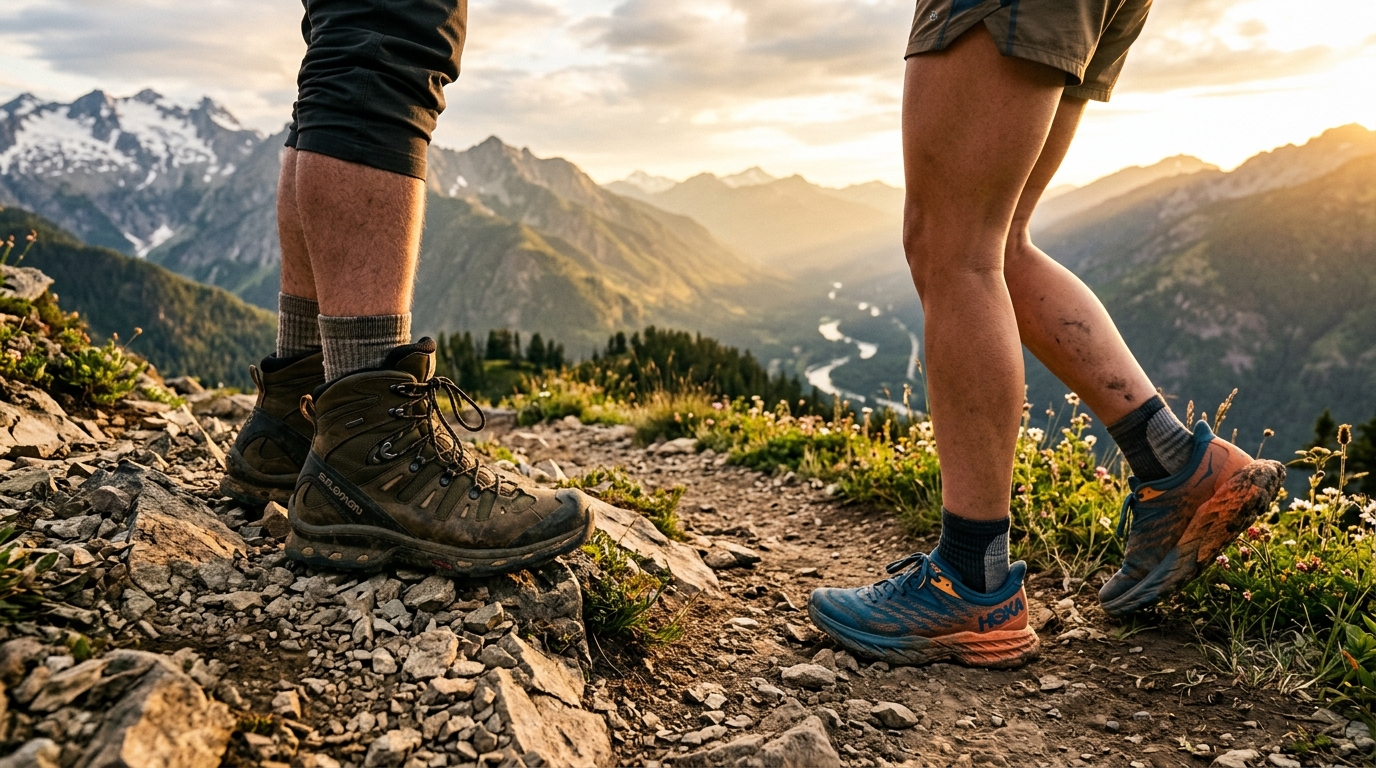
The boot-versus-runner debate boils down to three axes: ankle support versus mobility, durability versus weight, and break-in time versus immediate comfort. A mid-height hiking boot provides structured ankle support and a stiffer sole that excels on uneven terrain with a heavy pack, but you'll carry an extra 1–2 pounds per pair and spend days breaking in stiff leather. A trail runner offers immediate comfort, cuts 8–16 ounces per foot, and lets your ankle articulate naturally, but provides minimal protection on talus fields and wears out faster on abrasive surfaces.
Neither choice is universally superior. Thru-hikers on the Pacific Crest Trail overwhelmingly choose trail runners for their 2,650-mile trek, while mountaineers approaching technical peaks default to boots. Your ideal footwear matches your specific load, terrain, and biomechanics.
The Specs That Matter
Weight
Footwear weight directly impacts energy expenditure—studies estimate that one pound on your feet equals five pounds on your back in terms of metabolic cost. Trail runners typically weigh 18–26 ounces per pair (men's size 9), while hiking boots range from 2–4 pounds per pair. Lightweight hiking shoes split the difference at 1.5–2.5 pounds.
When weight matters most: On long days with high mileage (12+ miles), on well-maintained trails, or when carrying a light pack (under 25 pounds base weight). When it matters least: On short approaches where you prioritize protection over efficiency, or when your pack exceeds 35 pounds and the proportional weight difference shrinks.
Ankle Support and Cut Height
Boots come in three cuts: low (below the ankle), mid (covering the ankle bone), and high (3–4 inches above the ankle). Trail runners are universally low-cut. The conventional wisdom holds that higher cuts prevent ankle rolls, but research shows mixed results—ankle strength and proprioception matter more than external structure for most hikers.
Mid-height boots do provide meaningful support in two scenarios: when you're carrying 40+ pounds and your stabilizer muscles fatigue quickly, and when traversing steep off-trail terrain where every step lands on irregular surfaces. For maintained trails with moderate grades, the restriction in ankle mobility often outweighs the support benefit.
Sole Stiffness and Shank Material
The midsole shank—a semi-rigid plate between the insole and outsole—determines how much your shoe flexes. Trail runners use EVA foam with minimal or no shank, flexing easily at the ball of the foot. Hiking boots incorporate nylon, TPU, or steel shanks rated on a flex scale from 1 (very flexible) to 5 (mountaineering-stiff).
Specs
Stiffer soles excel on rocky terrain where you're stepping on edges and points—they distribute pressure across the entire foot rather than concentrating it at contact points. They also reduce foot fatigue when carrying heavy loads by preventing arch collapse. The trade-off is reduced ground feel and a less natural gait on smooth trails.
Upper Material and Durability
Trail runner uppers use lightweight mesh (often with synthetic overlays) that prioritizes breathability and dries quickly but abrades easily against rock and brush. Expect 300–500 miles before the mesh develops holes on rough trails. Hiking boots use full-grain leather, nubuck, or synthetic leather that resists abrasion and lasts 800–1,200+ miles, but takes longer to dry and requires more break-in.
Split-leather boots (leather lower, fabric upper) compromise at 500–700 miles and moderate break-in. If you hike primarily on dirt singletrack, mesh durability is adequate. If you regularly bushwhack, scramble over talus, or hike in the desert Southwest where granite and sandstone are abrasive, leather pays off.
Waterproofing: Membrane vs. Non-Waterproof
Waterproof membranes (Gore-Tex, eVent, proprietary alternatives) block external water while theoretically allowing sweat vapor to escape. In practice, membranes reduce breathability by 20–40% compared to non-waterproof versions of the same shoe. Once water enters over the top or through wear points, waterproof footwear takes 2–3 times longer to dry than mesh.
Waterproof boots make sense for cold-weather hiking (below 40°F) where wet feet risk hypothermia, for short day hikes in wet conditions, or for hikers with circulation issues. Non-waterproof excels in warm weather, multi-day trips where stream crossings are inevitable, and for hikers who prioritize breathability.
Traction Pattern and Rubber Compound
Outsole rubber comes in two families: harder compounds (durometer 60–70) that last longer but sacrifice grip, and softer compounds (durometer 50–60) that grip better but wear faster. Vibram Megagrip is the benchmark soft compound; Vibram XS Trek represents the harder end. Lug depth ranges from 3.5mm (trail runners) to 5–6mm (hiking boots).
Deeper lugs and softer rubber matter most on steep, loose terrain (scree, mud, wet rock). Shallower, harder rubber performs adequately on hardpack trails and lasts significantly longer—a worthwhile trade for hikers who log most miles on maintained paths.
Match the Footwear to Your Trip
Use this decision tree to narrow your options:
- **Pack weight under 20 pounds, maintained trails, distances over 10 miles**: Trail runners. Prioritize weight savings and natural gait. Consider models with rock plates if your route includes rocky sections.
- **Pack weight 20–35 pounds, mixed terrain, moderate distances (5–12 miles)**: Light hiking shoes or low-cut boots. You gain some protection and durability without the weight penalty of mid-height boots.
- **Pack weight over 35 pounds, rough or off-trail terrain, any distance**: Mid-height hiking boots. The structured support reduces fatigue under load, and the stiffer sole distributes pressure on uneven ground.
- **Technical approaches, scrambling, or snow travel**: Stiff hiking boots (flex rating 4+). You need edge support and potentially crampon compatibility.
- **Desert hiking in summer, multiple stream crossings, or thru-hiking**: Non-waterproof trail runners. Fast drying trumps waterproofing in these conditions.
- **Cold-weather hiking (below 40°F), short day hikes in wet climates**: Waterproof mid-height boots. Insulation and waterproofing prevent heat loss from wet feet.
The Hybrid Option: Approach Shoes
Approach shoes occupy the middle ground—sticky rubber (climbing-shoe compound) for scrambling, moderate stiffness (flex rating 2–3), and low-cut design. They weigh 24–32 ounces per pair and excel on trails that transition to Class 3 scrambling. If your hiking regularly involves rock movement beyond simple walking, approach shoes may suit you better than either pure category.
Break-In Reality and Fit Considerations
Trail runners require minimal break-in—typically 10–20 miles before the midsole compresses to its working state. Full-grain leather boots demand 40–80 miles of gradually increasing use to soften stiff points and mold to your foot shape. Rushing boot break-in causes blisters and pressure points that can take weeks to heal.
Fit tolerances differ between categories. Trail runners should fit like running shoes—snug in the heel, thumb's width of space at the toe, minimal internal volume. Hiking boots need more room: a full finger's width at the toe when standing on a downhill grade, enough volume for thicker socks, and a heel pocket that prevents lift during descent.
When to Replace Your Footwear
Replace based on midsole compression, not just visible wear. When you can press your thumb into the midsole and feel minimal resistance, or when you notice increased foot fatigue on familiar trails, the cushioning has failed. Outsole wear is secondary—you can often resole boots (cost: $80–120) if the upper remains intact, but midsole foam degradation is irreversible.
Trail runners typically reach end-of-life at 300–500 miles. Hiking boots last 800–1,200 miles for the midsole, though leather uppers can continue for years with resoling. Track your mileage—most hikers underestimate how quickly they accumulate wear.
The Gear System Context
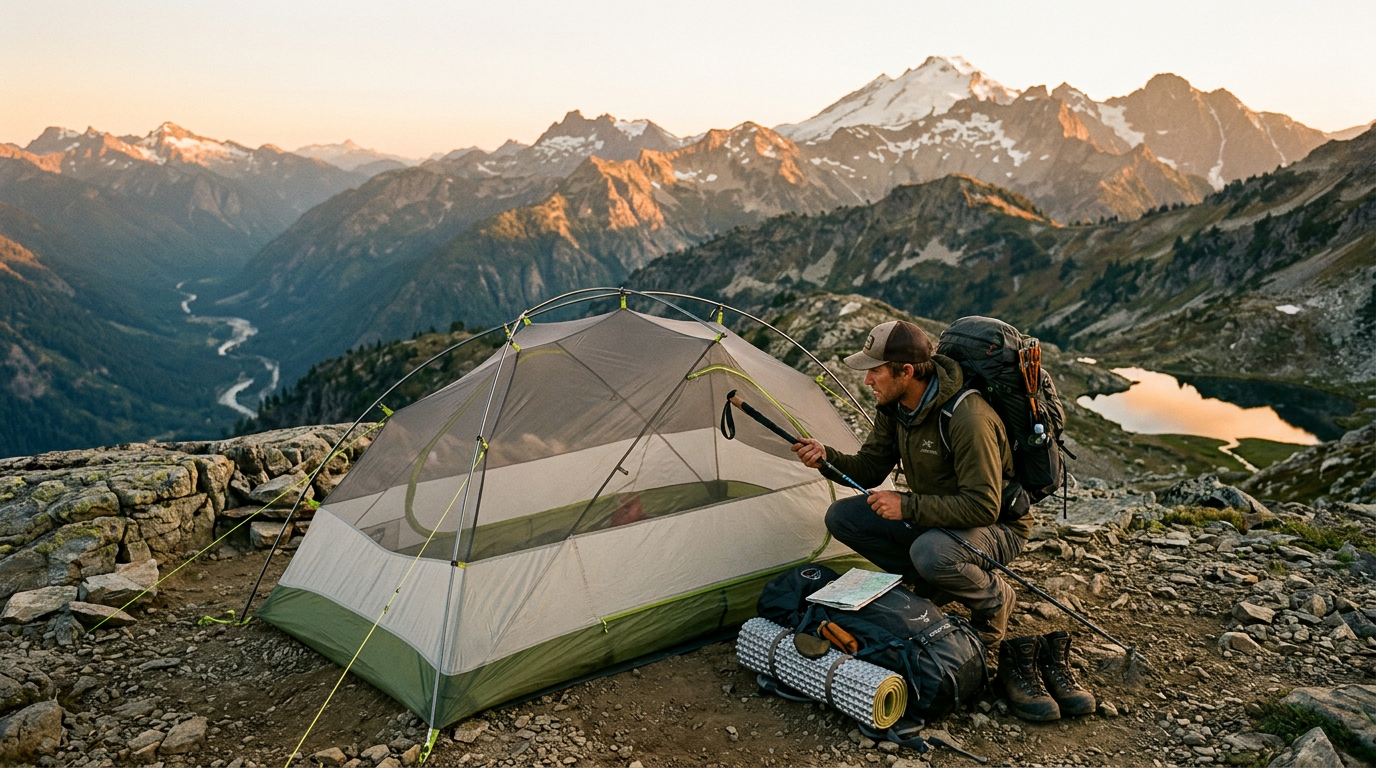
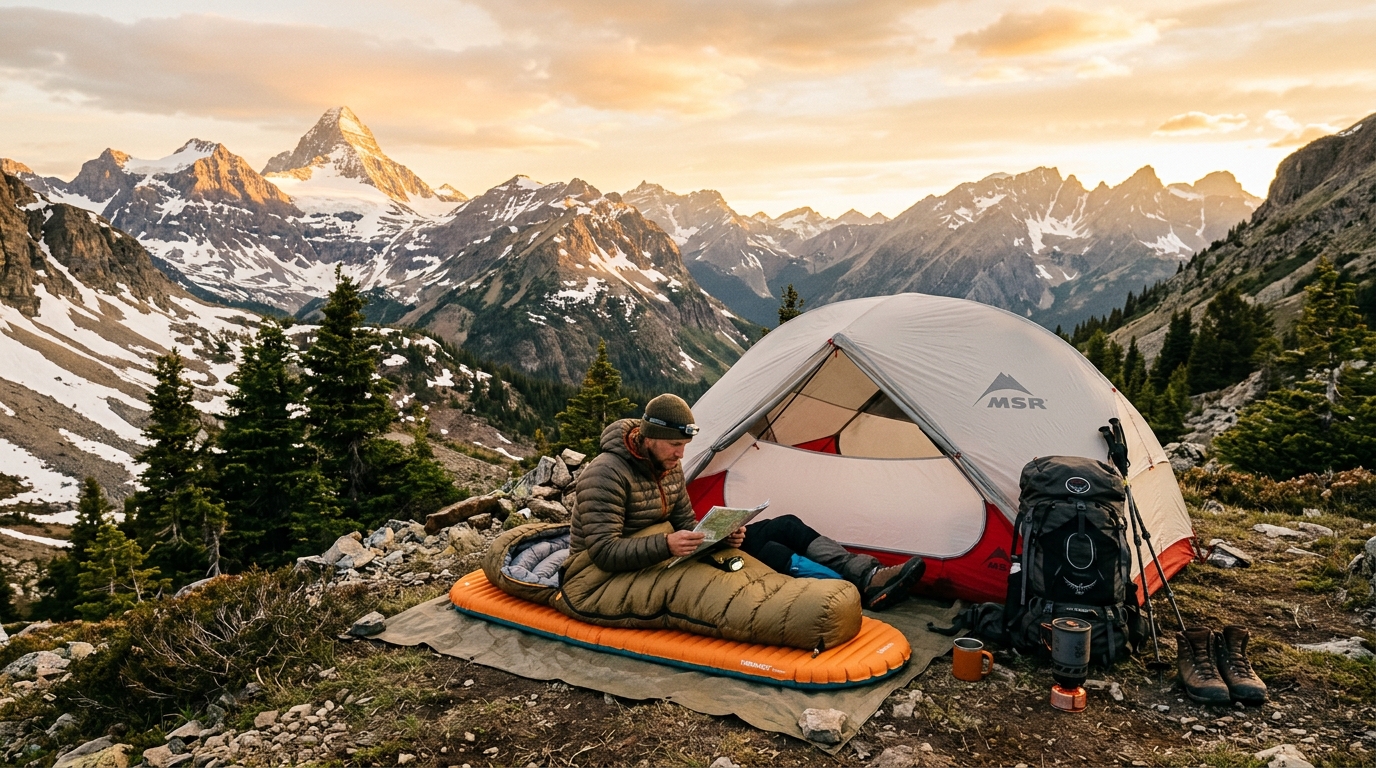
Your footwear choice cascades through your entire system. Trail runners pair naturally with ultralight packs like the TETON Sports Scout 3400 Backpack that keep your load under 25 pounds, while boots accommodate heavier traditional packs. If you're carrying a robust shelter like the ALPS Mountaineering Lynx 2-Person Tent and a full cook system such as the Jetboil Flash Cooking System, your pack weight will push you toward boots. Conversely, if you've invested in lightweight sleep systems like the Therm-a-Rest NeoAir XLite NXT Sleeping Pad Regular, trail runners become more viable.
Navigation tools also factor in. If you're venturing into remote terrain where you rely on devices like the Garmin inReach Mini 2 Satellite Communicator or the Garmin GPSMAP 67 Handheld GPS, you're likely on rougher trails where boot protection matters. Day hikers on popular routes who carry minimal gear can optimize for trail runner efficiency.
Common Mistakes to Avoid
- **Buying boots for ankle support without strengthening ankles**: External support doesn't replace muscle conditioning. If you're prone to rolls, focus on balance exercises and gradual strength building rather than relying solely on boot height.
- **Choosing waterproof in all conditions**: Waterproof membranes are a tool for specific conditions, not a universal upgrade. Evaluate your actual hiking climate and typical trip length.
- **Ignoring sock compatibility**: Your sock system (liner plus hiking sock, or single thick sock) changes fit dramatically. Always fit footwear with your actual hiking socks.
- **Skipping the downhill fit test**: In-store, find an incline (or ask staff for a ramp) and walk downhill. Your toes should not jam forward. This is where most fit failures occur.
- **Assuming heavier equals more durable**: Modern trail runners from reputable brands often outlast cheap heavy boots. Construction quality matters more than weight class.
Frequently Asked Questions
+Will trail runners give me ankle injuries on rough terrain?
Research shows no significant difference in ankle injury rates between boot and trail runner users on the same terrain. Ankle strength, proprioception, and fatigue management matter more than external support for most hikers. Boots do reduce the severity of ankle rolls under heavy loads (40+ pounds) by limiting range of motion, but they don't prevent the initial instability. If you have a history of ankle injuries, focus on strengthening exercises and consider boots for heavy-load trips, but don't assume boots alone will protect you.
+How do I know if my boots are broken in enough for a long hike?
A properly broken-in boot should have no stiff spots that create pressure points, the leather should crease naturally at your flex points, and you should be able to hike 8–10 miles without hot spots. Test with a fully loaded pack on terrain similar to your planned trip. If you develop any blisters or persistent discomfort during break-in hikes, address the fit issue before your long trip—break-in softens leather but doesn't fix fundamental fit problems.
+Can I use trail runners for backpacking, or are they only for day hiking?
Trail runners work well for backpacking if you keep your base weight under 25 pounds and avoid extremely rough terrain. Thousands of thru-hikers complete 2,000+ mile trails in trail runners. The key is matching your footwear to your total system weight and terrain. If you're carrying a lightweight sleep system like the Klymit Static V2 Sleeping Pad and a minimalist shelter, trail runners are viable. If your pack approaches 40 pounds, boots provide better support.
+Do I need to size up for hiking boots compared to my regular shoe size?
Sizing varies by brand, but most hikers need a half to full size larger than their athletic shoe size in hiking boots. The critical measurement is internal volume, not just length—you need room for foot swelling and thicker socks. Always fit boots in the afternoon wearing your hiking socks, and use the downhill test: stand on an incline and verify your toes don't touch the front. If you're between sizes, go larger for boots (you can adjust with insoles or thicker socks) but more precise for trail runners.
+How much should I expect to spend on quality hiking footwear?
Quality trail runners range from $110–180, while hiking boots span $140–280 for models that will last. The price difference reflects materials (full-grain leather costs more than mesh), construction methods (stitched-and-glued vs. cemented), and brand reputation. Budget options exist in both categories, but expect shorter lifespans and less refined fit. For footwear, the cost-per-mile calculation favors mid-range quality—a $160 boot that lasts 1,000 miles costs $0.16 per mile, while a $90 boot that fails at 400 miles costs $0.225 per mile.
+What's the best way to dry wet boots or trail runners on a multi-day trip?
Never put footwear directly next to a fire or heat source—rapid drying damages midsole foam and can delaminate boots. For trail runners, remove insoles and stuff with dry material (spare clothing, newspaper if available) to wick moisture, then air dry. For boots, use the same technique but expect 12–24 hours for leather to dry fully. Some hikers carry lightweight camp shoes and accept that their hiking footwear will be damp for consecutive days—wet footwear is manageable with proper sock systems and foot care. Prevention matters more: use gaiters in wet conditions, and consider non-waterproof footwear that dries faster if you'll encounter sustained wet conditions.