Best of
Best Ultralight Headlamps for Backpacking
best ultralight headlamps for backpacking
At a glance
| # | Product | |||||
|---|---|---|---|---|---|---|
| 1 |  ★ Best Overall★ Best Value★ Most Durable★ Most Comfortable | 8.0 | Check price ↗ | |||
| 2 | 8.0 | Check price ↗ | ||||
| 3 | 7.5 | Check price ↗ |


- 8.0★ Best Overall★ Best Value★ Most Durable★ Most Comfortable
Disclosure: Four Seasons Gear is reader-supported. When you buy through links on our site, we may earn an affiliate commission at no extra cost to you. Prices and availability are accurate as of the time we last checked.
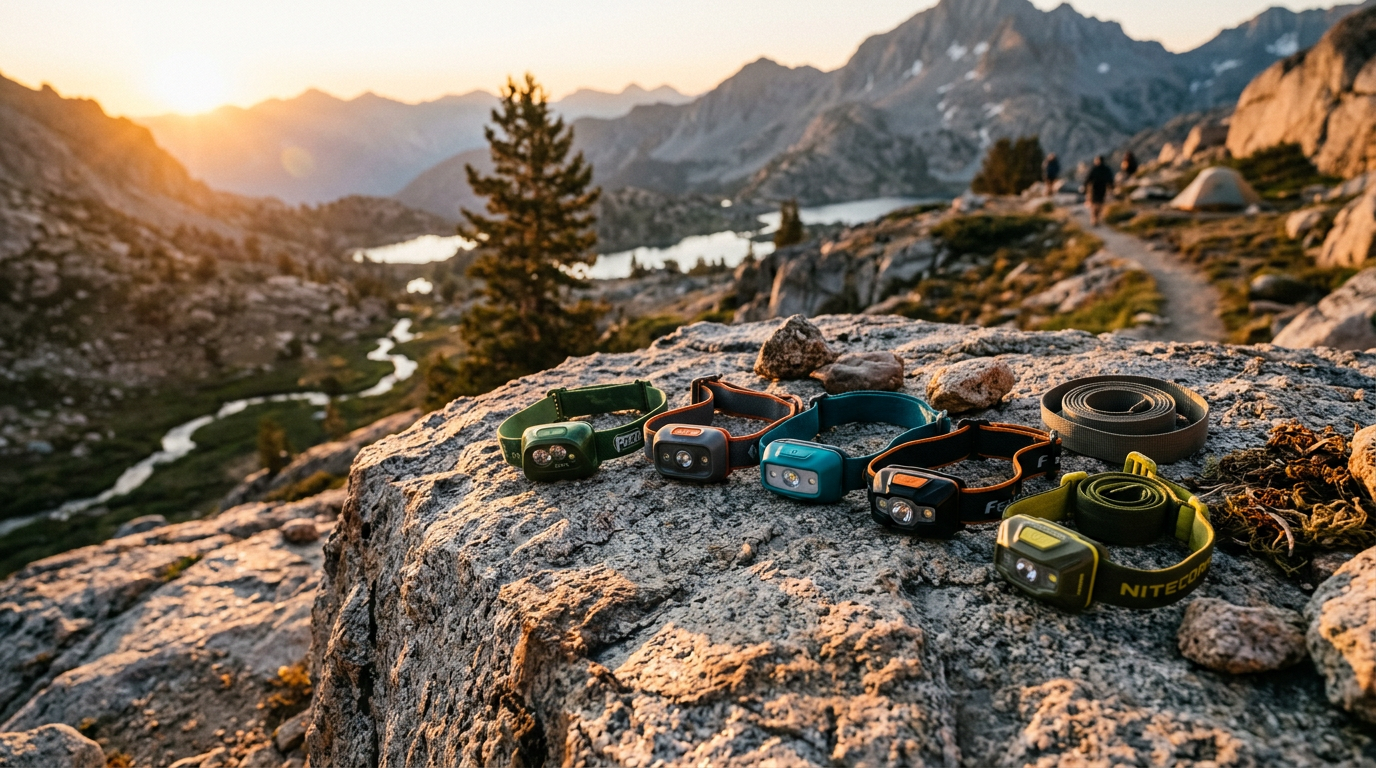
When you're counting ounces on a multi-day trek, your headlamp needs to earn its place in your pack. We tested these three ultralight models across alpine starts, camp chores, and after-dark navigation to find which ones deliver the best balance of output, runtime, and packability. Each offers USB rechargeability—a must for modern backpackers who can top up from a power bank rather than carrying spare batteries.
Best Overall: Nitecore NU25 400 USB-C Rechargeable Lightweight Dual Beam Headlamp
The Nitecore NU25 wins our top spot by threading the needle between performance and weight. Its 400-lumen max output is sufficient for technical trail navigation, while the dual-beam design gives you both a white spotlight and red/white flood options—critical for preserving night vision in camp without fumbling through menus. The USB-C charging port is a practical upgrade over older micro-USB standards, meaning faster recharge times and compatibility with the same cable that powers your phone or GPS. At this price point, you're getting a feature set that typically costs $15-20 more from legacy brands.
What we like
Trade-offs
Best for Alpine Starts: PETZL Swift LT Headlamp
Petzl's Swift LT earns its premium price tag with a 380-lumen output that's optimized for reactive lighting—the headlamp automatically adjusts brightness based on ambient conditions and your head movements. This is invaluable during predawn approaches when you're alternating between reading a map and scanning distant ridgelines. The rechargeable lithium-ion cell is integrated into the headband rather than housed in a separate battery pack, creating a balanced front-to-back weight distribution that stays put during scrambling. If you're logging serious vertical and need a headlamp that won't bounce or require constant readjustment, this is the one.
What we like
Trade-offs
Best High-Output Option: BLACK DIAMOND Storm 500-R Rechargeable Headlamp
The Black Diamond Storm 500-R is the powerhouse of this group, delivering a full 500 lumens when you need maximum throw for route-finding in complex terrain. Its waterproof rating (IPX67) means it can handle full submersion up to one meter—overkill for most backpackers, but reassuring if you're crossing streams at night or caught in a downpour. The micro-USB charging is a generation behind the Nitecore's USB-C, but the Storm compensates with a battery level indicator and multiple brightness memories. This is the pick if you prioritize raw output and bombproof construction over shaving the last few grams.
What we like
Trade-offs
What to Consider When Choosing an Ultralight Headlamp
Lumen count matters, but it's not everything. A 400-lumen headlamp with a well-designed reflector and even beam pattern will outperform a 600-lumen model with a narrow hotspot and dark peripheral zones. For backpacking, we recommend a minimum of 300 lumens for confident night hiking, though 200 lumens is adequate if you're only using your headlamp for camp tasks and short walks to the privy. Runtime is equally critical—most manufacturers quote max-output runtime, but you'll spend 90% of your time at medium or low settings where runtime can stretch to 20-40 hours.
Red light modes preserve your night-adjusted vision and won't blind your tent mates when you're digging through your pack at 3 a.m. The Nitecore's dual-beam design excels here, while the Petzl and Black Diamond require you to cycle through white modes to reach red. Charging standards matter more than you'd think—USB-C charges roughly 30% faster than micro-USB and uses the same cable as most modern phones and GPS units like the Garmin inReach Mini 2 Satellite Communicator. If you're already carrying a USB-C power bank for your electronics, a USB-C headlamp eliminates one more cable from your kit.
Beam Pattern and Adjustability
A good backpacking headlamp offers both spot and flood modes. Spot beams concentrate light into a narrow, long-reaching column—ideal for scanning the trail ahead or locating trail markers 50+ feet away. Flood beams spread light wide and close, which is better for reading maps, cooking, or any task within arm's reach. The Nitecore's dual-beam system gives you both simultaneously, while the Black Diamond and Petzl require you to switch between modes. Tilt adjustability is non-negotiable—you should be able to angle the lamp downward for reading without craning your neck.
- Spot mode: Narrow, long-distance beam for trail navigation and route-finding
- Flood mode: Wide, short-range beam for camp tasks and close-up work
- Red light: Preserves night vision and won't disturb other campers
- Lockout mode: Prevents accidental activation inside your pack
Battery Life and Charging Strategy
All three of these headlamps use integrated rechargeable lithium-ion batteries, which means you can't swap in fresh cells mid-trip. For weekend backpackers, a single charge will easily cover 2-3 nights of typical use (1-2 hours per evening at medium brightness). On longer expeditions, you'll need to budget power bank capacity accordingly—figure roughly 1000mAh to fully recharge a headlamp battery. A 10,000mAh power bank can recharge your headlamp 8-10 times, which is overkill unless you're doing serious night miles. If you're carrying a power bank for your phone or a GPS watch like the Garmin Instinct 2 Solar GPS Watch, adding headlamp recharges costs almost nothing in terms of weight or bulk.
Frequently Asked Questions
+How many lumens do I really need for backpacking?
For general backpacking, 200-300 lumens is sufficient for camp tasks and moderate night hiking on well-marked trails. If you're doing technical terrain, alpine starts, or trail running, aim for 350-500 lumens. Remember that higher output drains batteries faster—most backpackers spend 90% of their time at low or medium settings where 50-150 lumens is plenty.
+Are rechargeable headlamps better than battery-powered models for backpacking?
Rechargeable headlamps eliminate the weight and bulk of spare batteries, making them ideal for trips where you're already carrying a USB power bank. However, battery-powered models (using AAA or AA cells) offer the security of swappable power sources if you're going off-grid for extended periods without solar or wall charging access. For most weekend and week-long backpacking trips, rechargeable models are more convenient and cost-effective.
+What's the difference between IPX4 and IPX7 waterproof ratings?
IPX4 means the headlamp can handle splashing water from any direction—adequate for rain and accidental drops in puddles. IPX7 means it can survive submersion up to one meter for 30 minutes. For backpacking, IPX4 is usually sufficient unless you're doing serious water crossings or packrafting. The Black Diamond Storm 500-R's IPX7 rating is overkill for most users but provides extra peace of mind in extreme conditions.