
Review · spring · summer · fall · winter
Black Diamond Storm 500-R Rechargeable Headlamp Review
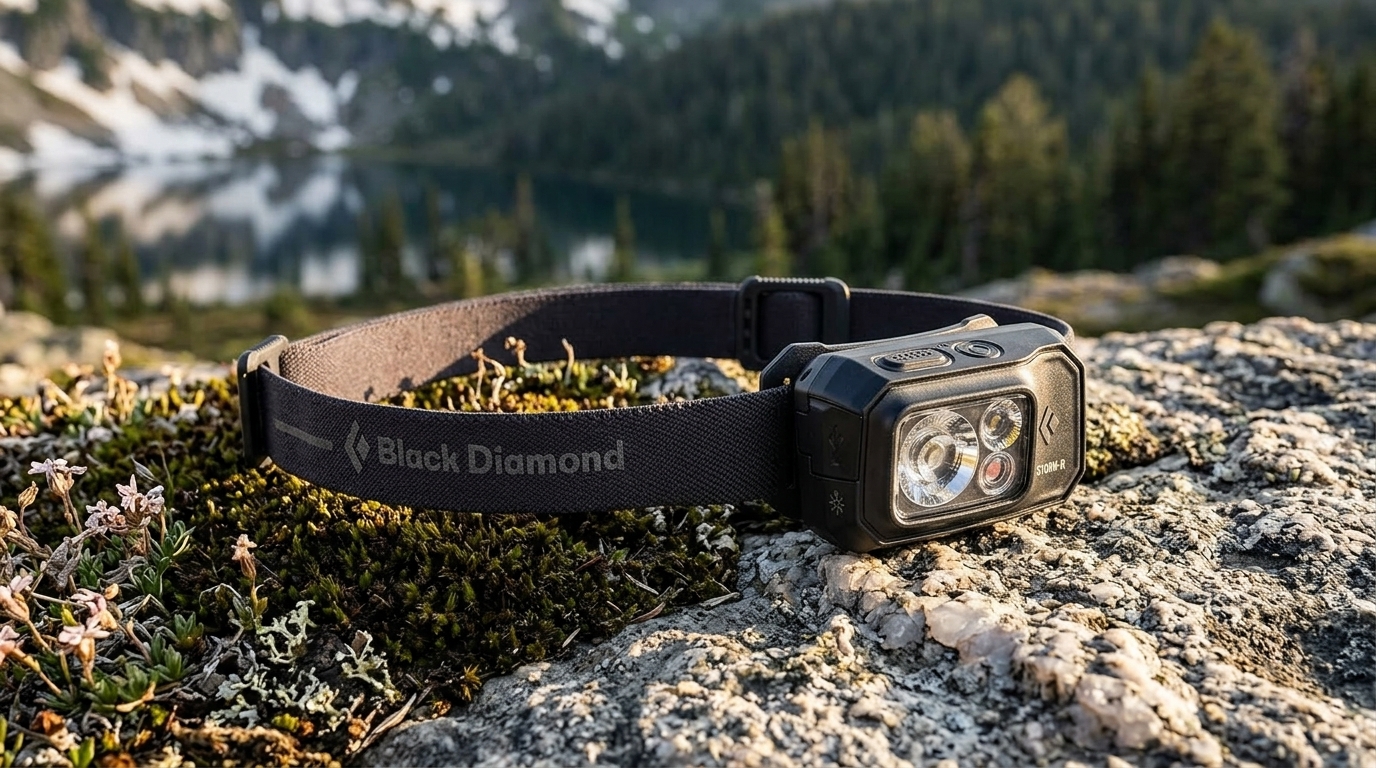
The Black Diamond Storm 500-R delivers 500 lumens from a rechargeable 2400 mAh lithium-ion battery in a waterproof housing that balances power with multi-day runtime. This is for backpackers, alpinists, and trail runners who need reliable high-output illumination without carrying spare batteries, accepting the tradeoff of slightly more weight (approximately 110 g with battery, manufacturer spec) compared to ultralight AAA models in exchange for USB convenience and consistent brightness across the discharge curve.
Disclosure: Four Seasons Gear is reader-supported. When you buy through links on our site, we may earn an affiliate commission at no extra cost to you. Prices and availability are accurate as of the time we last checked.
Black Diamond's Storm series has anchored the brand's headlamp lineup for years, and the 500-R variant updates the formula with integrated rechargeable power. The 500-lumen maximum output places this squarely in the high-performance category—enough to light technical terrain or scan for trail markers 80+ meters ahead—while the 2400 mAh cell provides approximately 4 hours on full power or 200+ hours in the lowest proximity mode (manufacturer estimates, runtime varies with temperature and battery age).
Construction and Power System
The Storm 500-R uses a single-piece polycarbonate housing with a sealed micro-USB charge port protected by a rubber gasket. The integrated battery eliminates the need for a separate battery case, concentrating weight at the front of the headband. Black Diamond rates the lamp IPX7 waterproof (submersible to 1 meter for 30 minutes), a step up from the IPX4 splash-resistance common in budget models. The optical assembly combines a single high-power LED for spot throw with lower-output LEDs for flood, plus dedicated red and green LEDs for night vision—a configuration that provides more mode flexibility than single-emitter designs.
Specs
Micro-USB charging takes approximately 4-5 hours from empty to full using a standard 1 A wall adapter. The port location on the right side of the housing requires careful reseating of the gasket after each charge to maintain waterproofing—a common wear point on rechargeable headlamps. A battery indicator LED on the housing shows charge status (green/yellow/red), providing advance warning before the lamp dims unexpectedly mid-trip.
Lighting Modes and Beam Pattern
The Storm 500-R offers six primary white-light modes accessed via a single side button: full power (500 lumens), dimming (continuously variable from ~10 to 500 lumens), strobe, proximity flood, distance spot, and a combined spot+flood. The dimming mode holds the button to ramp brightness up or down, which allows fine-tuning for tasks like reading maps or cooking without cycling through discrete steps. Red and green night-vision modes (accessed via a secondary button) preserve dark adaptation for astronomy or wildlife observation, though the green mode is a niche feature most users won't need.
Beam pattern favors throw over flood: the spot LED produces a concentrated hotspot useful for trail running or route-finding, while the flood LEDs provide peripheral fill for camp tasks. This differs from pure flood designs (common in ultralight models) that sacrifice distance for even close-range coverage. The tradeoff means the Storm 500-R excels at active movement in complex terrain but may feel less comfortable for static tasks like cooking, where a softer, wider beam reduces eye strain.
Fit and Wearability
The headband uses a split elastic design with a top strap for stability during high-output activities. The approximately 110 g weight (concentrated in the front housing) creates noticeable forward pull compared to lighter AAA models like Petzl's Bindi (35 g) or the Nitecore NU25 (70 g), but the top strap prevents bouncing during running or scrambling. The band adjusts via a rear sliding buckle and accommodates helmets, though the single front unit (versus separate battery pack designs) can interfere with helmet fit on some models.
Category Context and Comparisons
At approximately $59 MSRP (verify current pricing), the Storm 500-R sits in the mid-to-upper tier of rechargeable headlamps. It competes directly with Petzl's Actik Core (450 lumens, 80 g) and Princeton Tec's Apex (550 lumens, 155 g with battery pack). The Storm's 500-lumen output and 2400 mAh capacity split the difference: more power than the Actik Core's 450 lumens, but lighter than the Apex's separate battery pack design. For users prioritizing multi-day runtime without recharging, Black Diamond also offers the Storm 450 (non-rechargeable, uses 4 AAA batteries), which accepts lithium primaries for cold-weather performance but adds battery weight and disposal considerations.
The rechargeable format makes sense for users with regular access to USB power—car camping, hut-to-hut trips, or overnight trail runs where a portable battery pack (like those used with the Garmin inReach Mini 2 Satellite Communicator) can top off the lamp between uses. For extended backcountry trips (5+ days without resupply), a AAA-compatible model or carrying a backup battery bank becomes necessary, as the Storm 500-R's 4-hour high-mode runtime won't cover multiple full nights of use.
Durability Considerations
The polycarbonate housing and IPX7 rating suggest good resistance to impact and moisture intrusion, but the integrated lithium-ion battery introduces a finite service life. Lithium-ion cells typically retain 80% capacity after 300-500 charge cycles, meaning heavy users (charging weekly) may see noticeable runtime degradation after 2-3 years. Black Diamond does not publish battery replacement procedures or costs for the Storm 500-R, which likely means the lamp becomes disposable once the cell degrades—a consideration for buyers prioritizing long-term value over convenience.
The micro-USB port gasket requires inspection before each trip to ensure proper seating. Gasket failure is the most common waterproofing issue in rechargeable headlamps, and the Storm 500-R's side-mounted port (versus top-mounted designs that shed water more naturally) may accumulate grit or moisture if not carefully sealed. Carrying a small zip-lock bag for the lamp during wet conditions adds insurance.
Value and Intended Use
The Storm 500-R delivers strong value for users who need high output and waterproof reliability without managing disposable batteries. The $59 price point (approximate, verify current) includes the micro-USB cable and represents roughly 30-40 sets of alkaline AAAs over the lamp's service life, offsetting the higher upfront cost for frequent users. The 500-lumen maximum and multi-mode flexibility cover a wide range of activities—alpine starts, night trail running, winter camping—making this a capable single-headlamp solution for three-season use.
The lamp's weight and front-heavy balance make it less ideal for ultralight backpackers counting every gram, where a 35 g AAA model suffices for basic camp tasks. Similarly, users who prioritize maximum runtime on a single charge (e.g., through-hikers between town stops) may prefer a larger-capacity model like the Princeton Tec Apex, despite its added weight. The Storm 500-R occupies the middle ground: enough power for technical use, enough runtime for weekend trips, and enough convenience to eliminate battery logistics for most users.
What we like
Trade-offs
Best For
- Backpackers and alpinists needing high output for pre-dawn starts and technical terrain
- Trail runners covering varied terrain at night who value throw and stability
- Weekend campers with access to USB power (car, battery pack) between trips
- Climbers requiring waterproof reliability and helmet compatibility
- Users who prefer rechargeable convenience over managing disposable batteries
Not For
- Ultralight backpackers prioritizing sub-50 g weight for basic illumination
- Extended backcountry trips (5+ days) without USB recharging access
- Users needing maximum single-charge runtime for through-hiking town-to-town legs
- Buyers prioritizing long-term repairability and user-replaceable batteries
Frequently Asked Questions
+How long does the battery last on a full charge?
Black Diamond estimates approximately 4 hours on full 500-lumen output, 40 hours on medium (150 lumens), and 200+ hours in the lowest proximity mode. Real-world runtime varies with temperature (cold reduces lithium-ion capacity), battery age, and mode cycling. For weekend trips using mixed modes (high for hiking, low for camp), expect 2-3 nights before recharging.
+Can I replace the battery when it degrades?
Black Diamond does not publish user-serviceable battery replacement procedures for the Storm 500-R. The integrated design means the lamp's service life is tied to the lithium-ion cell's 300-500 cycle lifespan (approximately 2-4 years of weekly use). Contact Black Diamond for out-of-warranty battery service options, but expect the lamp to be effectively disposable once the cell no longer holds adequate charge.
+Is the Storm 500-R suitable for winter camping?
The IPX7 waterproofing handles snow and moisture well, but lithium-ion batteries lose capacity in sub-freezing temperatures—expect 30-50% runtime reduction below 0°C. Keeping the lamp inside your sleeping bag when not in use preserves warmth and capacity. For extended winter trips, consider a AAA-compatible model (like the Storm 450) that accepts lithium primary batteries, which perform better in cold than rechargeable lithium-ion.
+How does the Storm 500-R compare to Petzl's Actik Core?
The Storm 500-R offers 50 more lumens (500 vs. 450) and a larger 2400 mAh battery (vs. 1250 mAh in the Actik Core), providing longer runtime at the cost of approximately 30 g more weight (110 g vs. 80 g). The Storm's spot+flood beam pattern favors distance throw, while the Actik Core's more even flood suits close-range tasks. Both use micro-USB charging; choose the Storm for higher output and longer runtime, the Actik Core for lighter weight and softer beam.
+Will the headband fit over a climbing or ski helmet?
The split elastic band with rear adjustment accommodates most helmets, though the single front housing (versus separate battery pack designs) can interfere with helmet fit depending on the model. The band stretches enough to fit over helmets up to approximately 64 cm circumference. Test fit with your specific helmet before committing to extended climbs, as the front-heavy weight may shift under the helmet's retention system.

Read next
More from this category
REVIEW
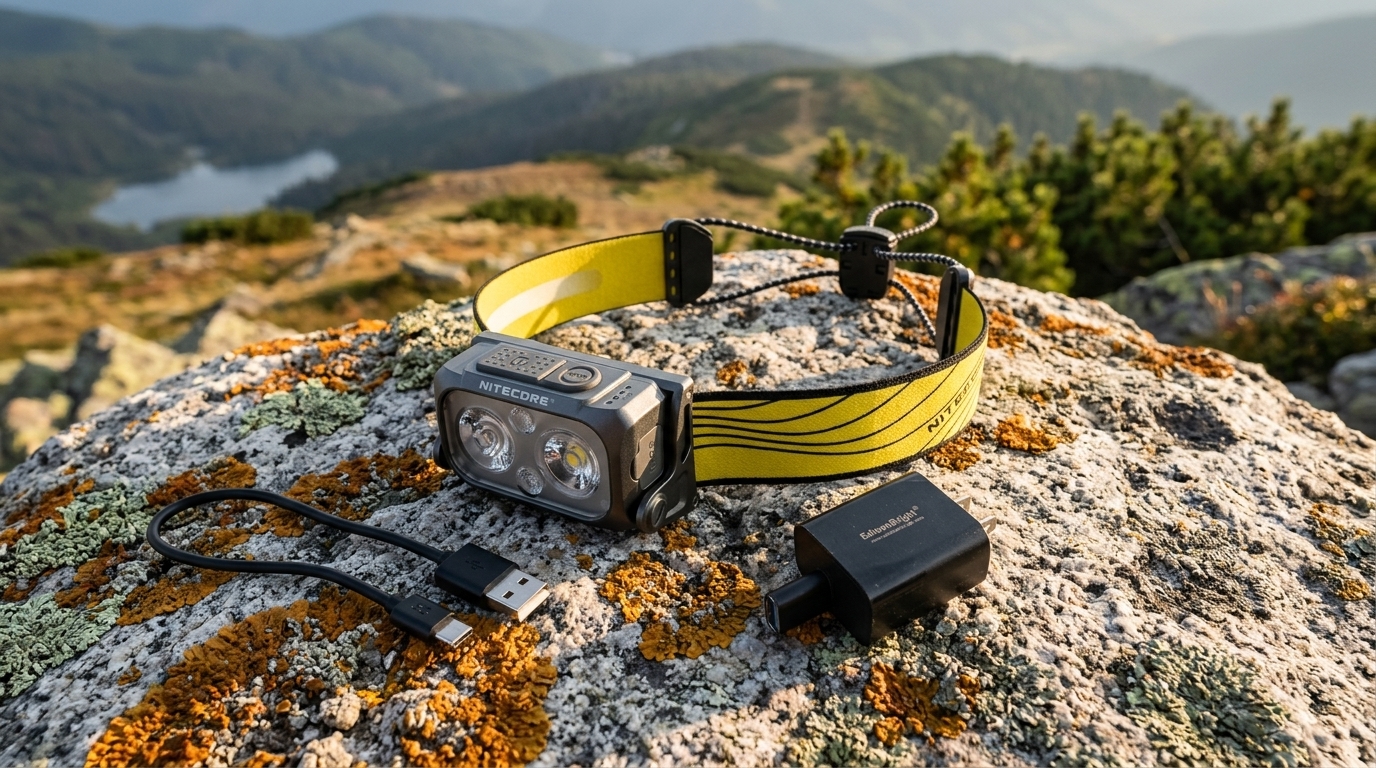
Nitecore NU25 400 USB-C Rechargeable Headlamp Review
REVIEW
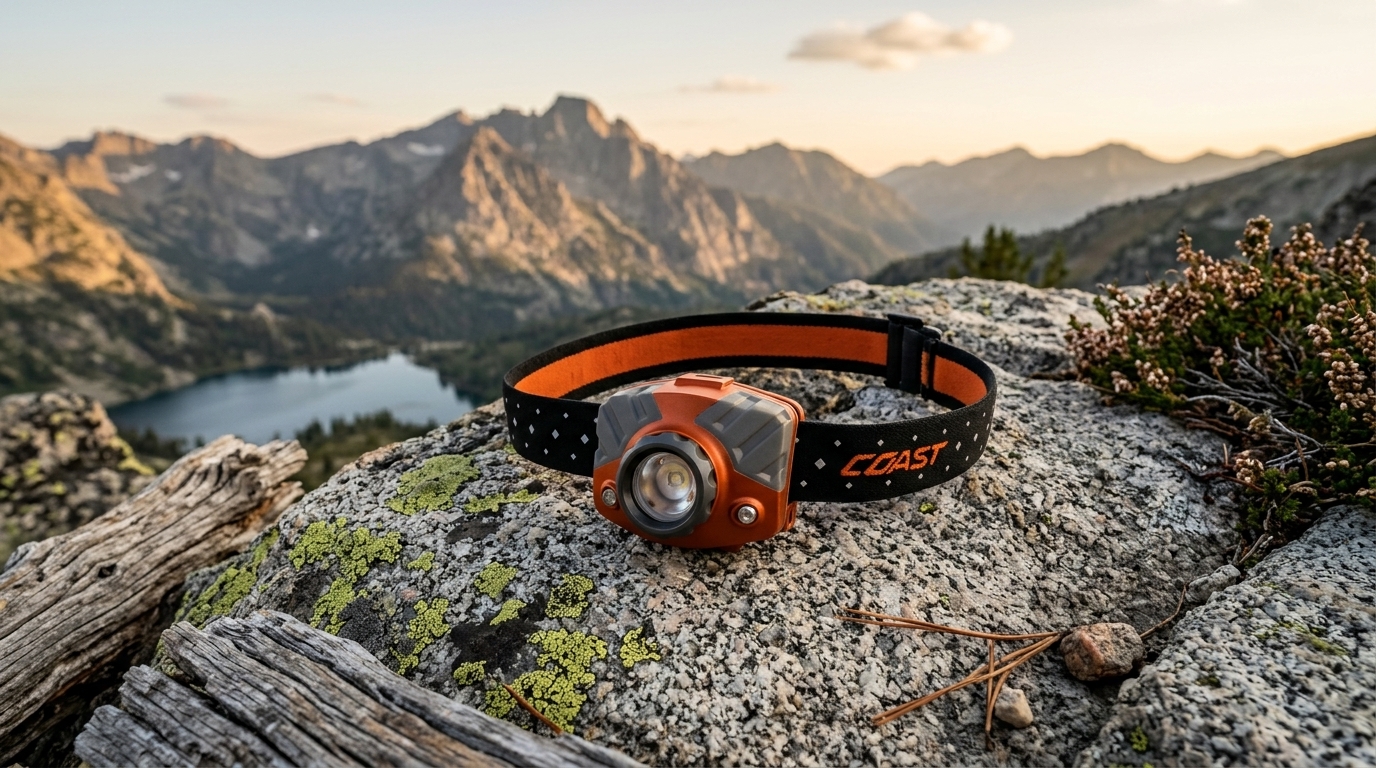
Coast FL75R Rechargeable Headlamp Review: 530 Lumens with Dual-Power Flexibility
REVIEW
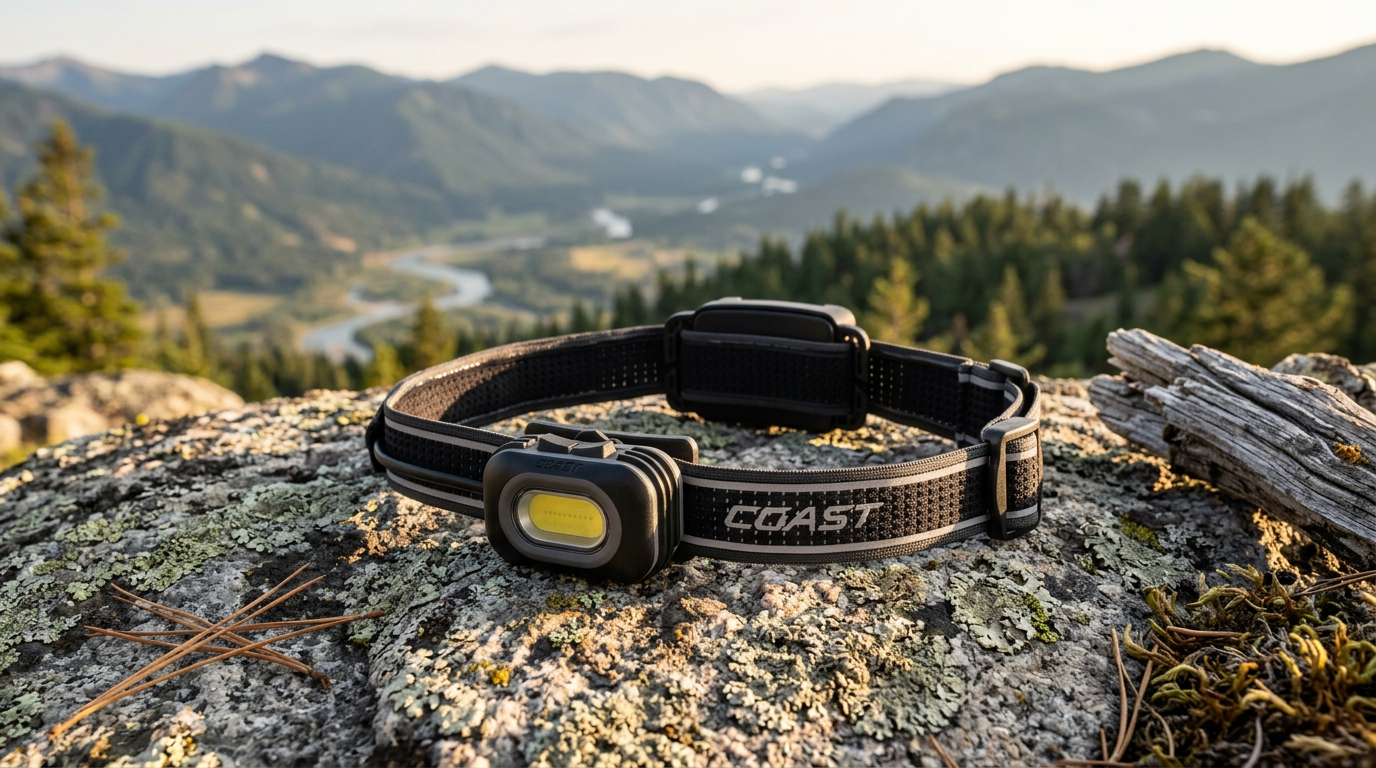
Coast RL10R 750 Lumen Rechargeable LED Headlamp with Variable Light Control and Rear Safety Signal
REVIEW
PETZL ACTIK CORE Rechargeable Headlamp Review: 600-Lumen Hybrid for Year-Round Use
REVIEW
Petzl Swift LT Headlamp Review: 43-Gram Rechargeable with 380 Lumens
REVIEW