
Review · spring · summer · fall · winter
Garmin Instinct 2 Solar GPS Watch Review: Unlimited Battery Life for Multi-Season Backcountry Use
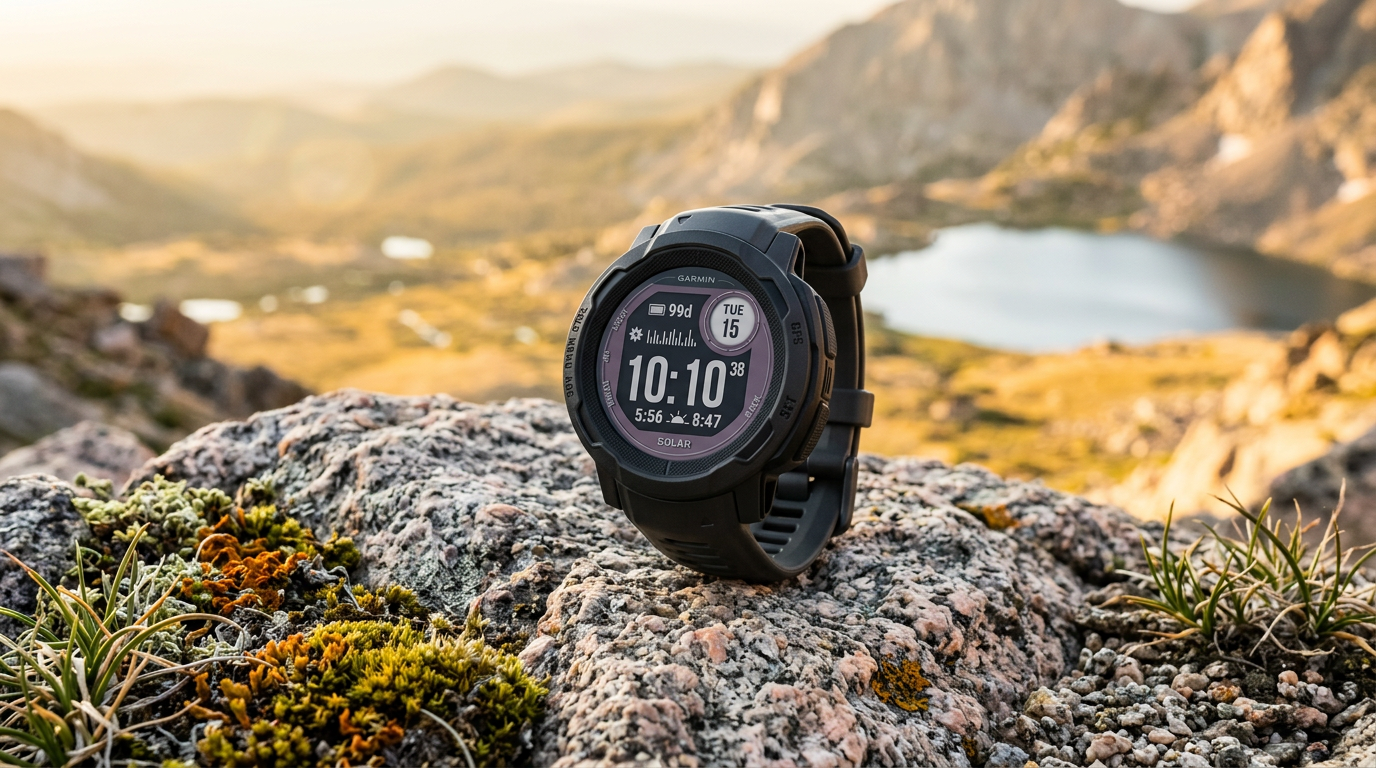
The Garmin Instinct 2 Solar is a ruggedized GPS watch built for users who prioritize battery longevity and multi-sport tracking over touchscreen convenience and advanced smartwatch features. Its solar charging capability delivers effectively unlimited battery life in smartwatch mode with adequate sun exposure, while the fiber-reinforced polymer case and 100-meter water rating provide durability for year-round backcountry use. The tradeoff: a lower-resolution monochrome display and button-only navigation that feels dated compared to AMOLED competitors, but eliminates the daily charging ritual that plagues most outdoor watches.
Disclosure: Four Seasons Gear is reader-supported. When you buy through links on our site, we may earn an affiliate commission at no extra cost to you. Prices and availability are accurate as of the time we last checked.
Specifications
Specs
Construction and Solar Charging System
The Instinct 2 Solar uses a fiber-reinforced polymer case and bezel rather than metal, keeping weight at 52 grams—approximately 20-30% lighter than stainless steel GPS watches in the 45mm size class. The Power Glass lens integrates photovoltaic cells around the display perimeter, converting sunlight to charge the internal lithium-ion battery. Garmin rates this system for unlimited battery life in smartwatch mode with 3 hours of daily outdoor exposure at 50,000 lux (roughly the brightness of full daylight under clouds). In GPS tracking mode, solar extends runtime from 30 to 48 hours under continuous sunlight exposure.
The monochrome Memory-in-Pixel (MIP) display measures 176 x 176 pixels across a 0.9-inch diagonal—lower resolution than the 260 x 260 or 390 x 390 AMOLED screens found on Garmin's Fenix or Epix lines. This transflective technology remains readable in direct sunlight without backlight, a functional advantage on exposed ridgelines or snowfields where OLED screens wash out. The tradeoff is reduced color mapping capability and coarser topographic rendering compared to higher-resolution competitors.
Button-only navigation uses five physical buttons (two left-side, three right-side) following Garmin's traditional layout. The lack of touchscreen eliminates accidental inputs during wet or gloved use, but requires more button presses to navigate menus compared to swipe-based interfaces. The 10 ATM water rating permits swimming and showering but does not meet ISO 6425 dive computer standards.
Multi-Sport Tracking and Navigation Features
The Instinct 2 Solar supports 30+ activity profiles including hiking, trail running, mountain biking, skiing, climbing, and open-water swimming. Multi-band GNSS (GPS, GLONASS, Galileo) provides positioning accuracy, though the watch does not include the dual-frequency GPS found in Garmin's SatIQ-equipped models. The TracBack routing feature records your path and generates a reverse course to the starting point, useful for out-and-back hikes in unfamiliar terrain.
Onboard navigation relies on breadcrumb trails and waypoint markers rather than full-color topographic maps. The monochrome display shows your track as a line with directional cues, but does not render contour lines, trail names, or terrain shading like Garmin's Fenix 7 or COROS Vertix 2. This simplified approach reduces file size and processing demands, contributing to the extended battery performance, but requires pre-trip familiarity with the route or supplemental paper maps for complex navigation.
The barometric altimeter and 3-axis compass provide elevation gain/loss tracking and bearing information without GPS signal, useful in deep canyons or dense forest. The watch includes storm alerts based on rapid barometric pressure changes, though the manufacturer does not publish the specific pressure drop threshold that triggers the notification.
Health Monitoring and Training Metrics
Wrist-based heart rate monitoring uses Garmin's Elevate V4 optical sensor, which samples at 1-second intervals during activities. Pulse oximetry (SpO2) measures blood oxygen saturation on-demand or continuously during sleep, though continuous monitoring reduces battery life by approximately 10-15% in smartwatch mode. The watch calculates VO2 max estimates for running and cycling based on heart rate and pace data, providing a fitness benchmark that updates as training volume changes.
Sleep tracking records total sleep time, REM/light/deep stage breakdown, and respiration rate. The Body Battery metric aggregates stress, activity, and sleep data into a 0-100 energy reserve score, updated throughout the day. These recovery-focused features target multi-day backpackers and endurance athletes managing fatigue across extended efforts, though the algorithms rely on population averages rather than individualized metabolic testing.
Category Positioning and Competitive Context
The Instinct 2 Solar occupies the entry-to-mid tier of Garmin's outdoor watch lineup, positioned below the Fenix 7 Solar (full-color maps, sapphire lens, titanium options) and above the basic Instinct 2 non-solar. At typical retail pricing, it competes with the COROS Pace 3 (lighter weight, dual-frequency GPS, no solar), Suunto 9 Peak Pro (sapphire crystal, smaller case, shorter battery), and Amazfit T-Rex Ultra (AMOLED display, dual-band GPS, less refined software ecosystem).
The solar charging capability differentiates this watch from most competitors in its price range. Achieving unlimited battery life requires consistent sun exposure—users in heavily forested environments, northern latitudes during winter, or primarily indoor training contexts will see reduced solar benefit and revert closer to the 28-day non-solar runtime. The watch includes a solar intensity widget that displays current charging rate in percentage terms, allowing users to assess real-world solar contribution in their specific use environment.
Durability Considerations
The fiber-reinforced polymer construction provides impact resistance comparable to G-Shock watches, but lacks the scratch resistance of sapphire or ceramic materials. The Power Glass lens uses chemically strengthened glass similar to Corning Gorilla Glass, rated for surface hardness around 6-7 on the Mohs scale—adequate for general outdoor use but vulnerable to abrasion from granite, quartzite, or coarse sandstone during scrambling. Garmin does not offer a sapphire lens upgrade for the Instinct 2 line, unlike the Fenix series.
The silicone strap uses a standard 22mm quick-release mechanism, allowing replacement with aftermarket bands. The case back houses the optical heart rate sensor and charging contacts, which require periodic cleaning to maintain conductivity—sweat residue and sunscreen can interfere with both heart rate accuracy and charging efficiency. The manufacturer recommends rinsing the watch and strap after saltwater exposure or heavily sweaty activities.
Value Analysis
The Instinct 2 Solar delivers strong value for users whose priorities align with its feature set: maximum battery life, multi-season durability, and comprehensive activity tracking without premium materials or advanced mapping. The solar charging system provides measurable utility in high-sun environments—thru-hikers on the PCT or CDT, desert backpackers, and alpine climbers can realistically eliminate charging infrastructure from their gear list.
The watch does not compete well on display quality, navigation detail, or smartwatch refinement against similarly priced AMOLED competitors. Users who prioritize turn-by-turn navigation with full topo maps, music storage, contactless payment, or high-resolution displays will find better options in Garmin's Fenix 7 or Epix lines, or in Suunto's Race model. The Instinct 2 Solar makes a clear tradeoff: it sacrifices screen technology and premium materials to maximize battery endurance and functional simplicity.
Pros and Cons
What we like
Trade-offs
Best For
- Thru-hikers and long-distance backpackers who need multi-week battery life without resupply charging
- Alpine climbers and mountaineers operating in high-sun, high-altitude environments where solar charging is most effective
- Trail runners and ultrarunners requiring 24+ hour GPS tracking for hundred-mile events
- Multi-sport athletes who prioritize training metrics and activity tracking over smartwatch features
- Users in wet or cold climates who prefer button navigation over touchscreen interfaces
- Backcountry users who need reliable breadcrumb navigation and barometric storm alerts without cellular connectivity
Not For
- Users who require full-color topographic maps with contour lines and trail names for navigation
- Buyers prioritizing high-resolution AMOLED displays for detailed data visualization
- Urban users with limited sun exposure who won't benefit from solar charging
- Those seeking premium materials like titanium, sapphire, or ceramic construction
- Users who want music storage, contactless payment, or advanced smartwatch integration
- Buyers who prefer touchscreen navigation over button-based menu systems
Frequently Asked Questions
+How much sun exposure is required to achieve unlimited battery life?
Garmin rates the Instinct 2 Solar for unlimited battery life in smartwatch mode with 3 hours of daily outdoor exposure at 50,000 lux, roughly equivalent to full daylight under clouds. The watch includes a solar intensity widget showing real-time charging rate as a percentage. Users in heavily forested environments, northern latitudes during winter, or primarily indoor contexts will see reduced solar contribution and should expect battery life closer to the 28-day non-solar baseline. The solar benefit is most pronounced for desert backpackers, alpine climbers, and those in high-sun environments.
+Can this watch display full topographic maps like the Fenix series?
No. The Instinct 2 Solar uses breadcrumb trail navigation with waypoint markers rather than full-color topographic maps. The monochrome 176 x 176 display shows your GPS track as a line with directional cues, but does not render contour lines, trail names, terrain shading, or other cartographic details found on Garmin's Fenix 7 or Epix models. This simplified approach reduces processing demands and contributes to extended battery life, but requires users to have pre-trip route familiarity or carry supplemental paper maps for complex navigation.
+Is the optical heart rate sensor accurate enough for training zones?
The Instinct 2 Solar uses Garmin's Elevate V4 optical sensor, which samples at 1-second intervals during activities. Optical wrist-based sensors generally provide adequate accuracy for steady-state aerobic activities like hiking, trail running, and cycling, but can lag during rapid heart rate changes or high-intensity intervals. For users requiring maximum heart rate accuracy for structured training, pairing the watch with a chest strap heart rate monitor (ANT+ or Bluetooth compatible) eliminates the limitations of optical sensing. The watch supports external sensor pairing for heart rate, cadence, and power meters.
+Does the solar charging work through a jacket sleeve or shirt?
No. The Power Glass solar lens requires direct exposure to sunlight or bright artificial light to generate charging current. Fabric covering the watch face blocks the photovoltaic cells and eliminates solar contribution. For maximum solar benefit, wear the watch outside your jacket sleeve or shirt cuff during daylight hours. The watch stores excess solar energy in its internal battery, so intermittent exposure (removing layers during breaks, wearing short sleeves during warmer parts of the day) still provides cumulative charging benefit.
+How does battery life compare between GPS modes?
The Instinct 2 Solar offers three GPS tracking modes with different battery tradeoffs. Standard GPS mode (1-second recording) provides 30 hours non-solar or 48 hours with continuous solar exposure. UltraTrac mode (less frequent GPS sampling) extends runtime to 70 hours non-solar or 370 hours solar, but reduces track accuracy. Expedition GPS mode (periodic GPS pings with sensors-only tracking between) delivers 32 days non-solar or unlimited solar, designed for multi-week expeditions where daily GPS breadcrumb recording is sufficient. Most weekend backpackers and trail runners will use standard GPS mode, which provides adequate runtime for 1-2 day trips without charging.
Final Recommendation
The Garmin Instinct 2 Solar succeeds as a purpose-built tool for backcountry users who value battery endurance and functional simplicity over screen technology and premium materials. Its solar charging system delivers genuine utility in high-sun environments, effectively eliminating the charging ritual for thru-hikers, alpine climbers, and desert backpackers. The monochrome display and button-only interface feel dated compared to AMOLED competitors, but provide tangible advantages in sunlight readability and gloved operation. This watch rewards users who understand its tradeoffs and align their expectations with its strengths: maximum battery life, comprehensive activity tracking, and year-round durability at a mid-tier price point.

Read next
More from this category
REVIEW
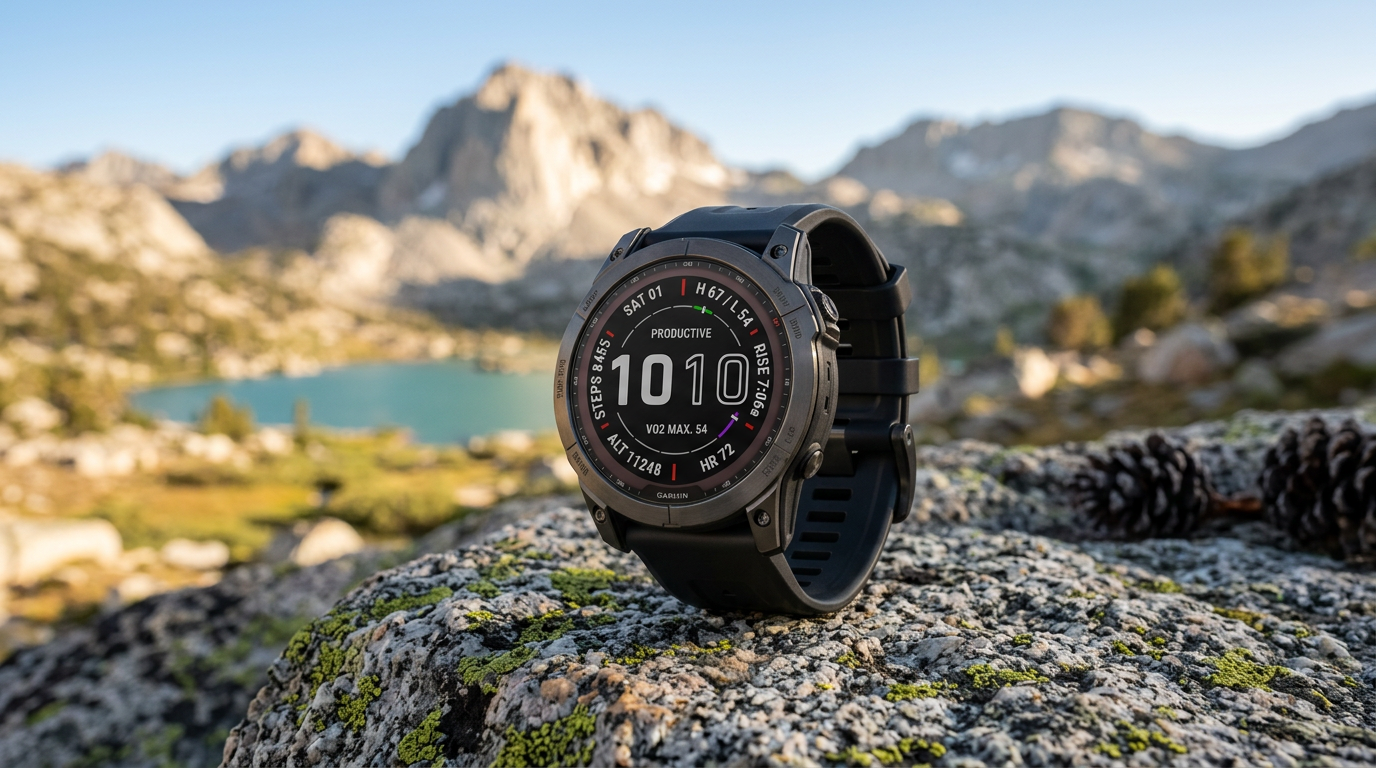
Garmin Fenix 7X Sapphire Solar Smartwatch Review: Flagship Navigation for Multi-Day Backcountry Trips
REVIEW
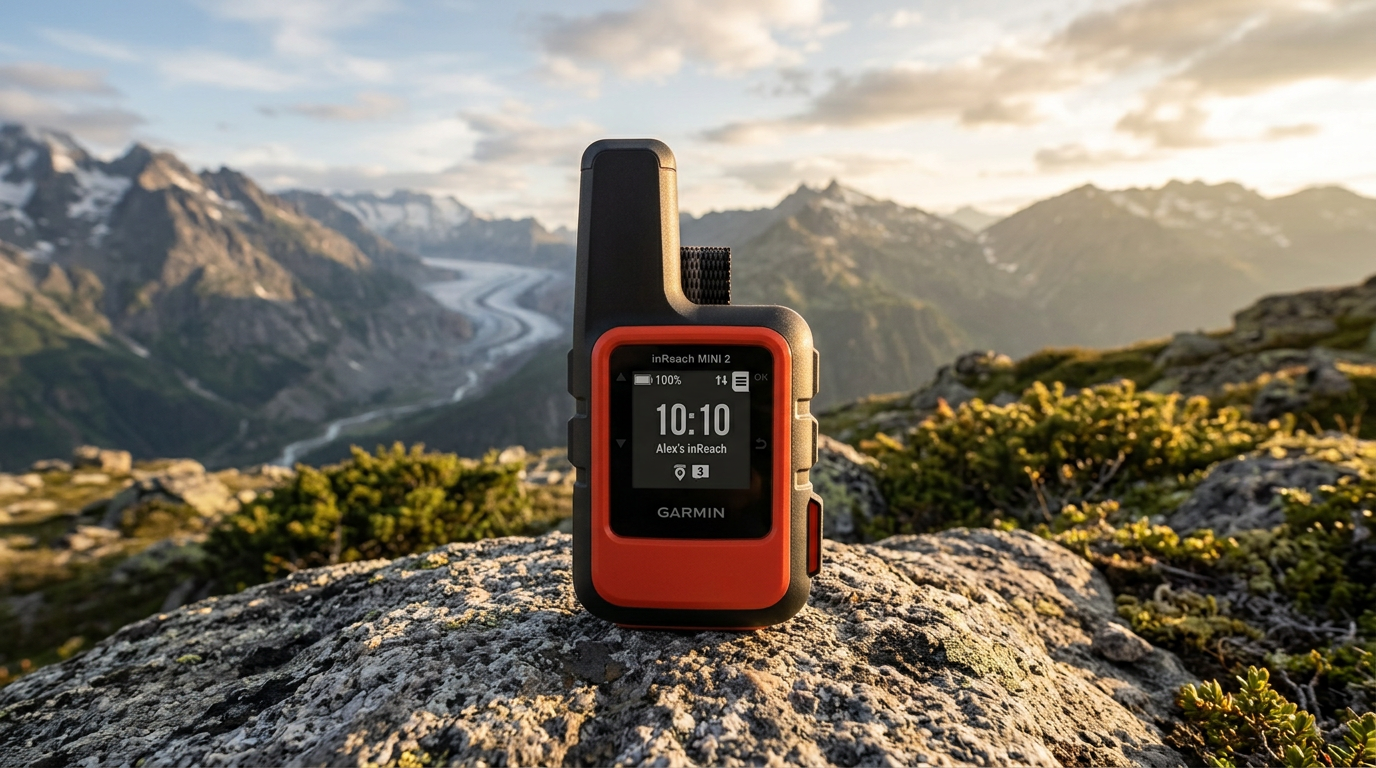
Garmin inReach Mini 2 Satellite Communicator Review: Two-Way Messaging Beyond Cell Coverage
REVIEW
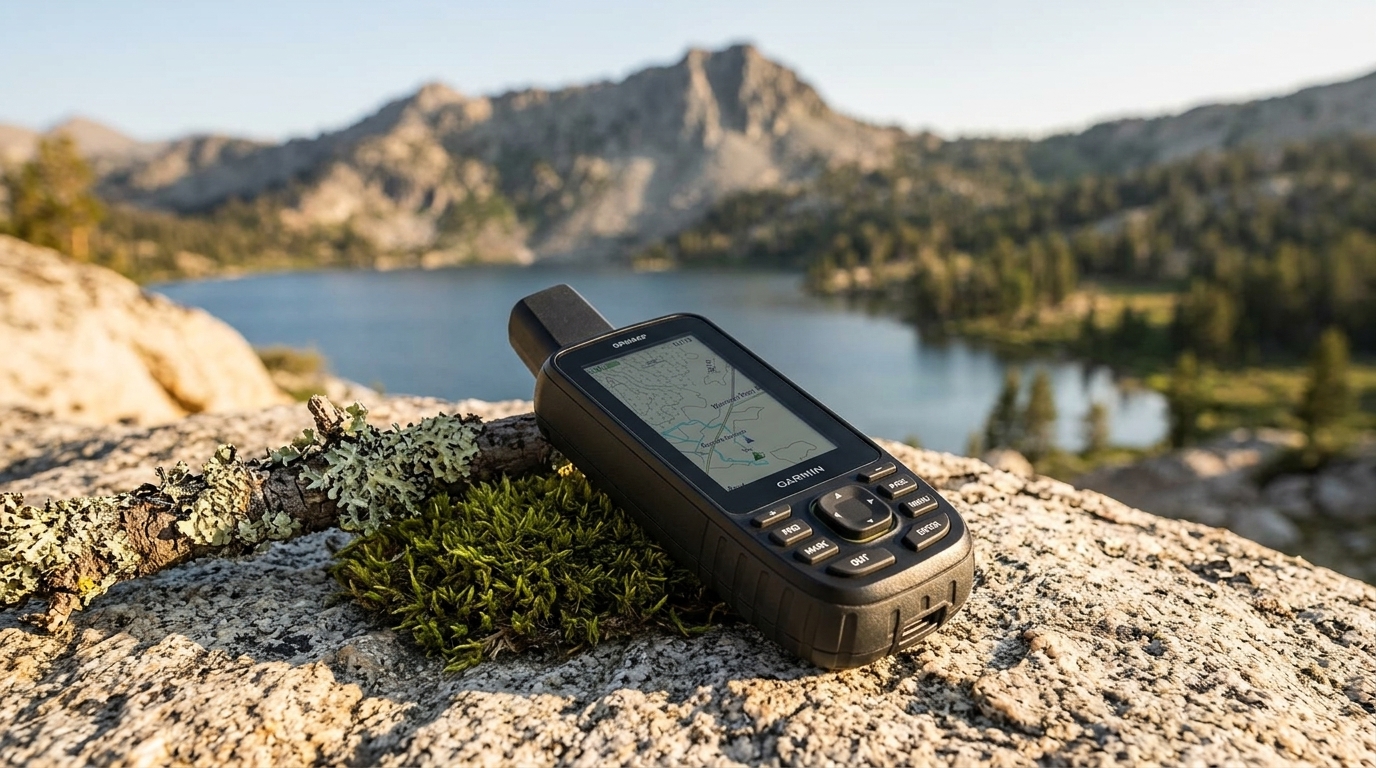
Garmin GPSMAP 67 Handheld GPS Review: Multi-Band GNSS Meets Backcountry Durability

BEST OF
Best Rechargeable Headlamps for Backpacking

BEST OF
Best Beginner Binoculars for Hiking and Bird Watching

GUIDE