Best of
Best Sleeping Pads for Cold Weather Camping
best sleeping pads for cold weather camping
At a glance
| # | Product | |||||
|---|---|---|---|---|---|---|
| 1 |  ★ Best Overall★ Most Durable | 8.7 | Check price ↗ | |||
| 2 | 8.7 | Check price ↗ | ||||
| 3 | 7.8 | Check price ↗ | ||||
| 4 | 7.3 | Check price ↗ |


- 8.7★ Best Overall★ Most Durable
Disclosure: Four Seasons Gear is reader-supported. When you buy through links on our site, we may earn an affiliate commission at no extra cost to you. Prices and availability are accurate as of the time we last checked.
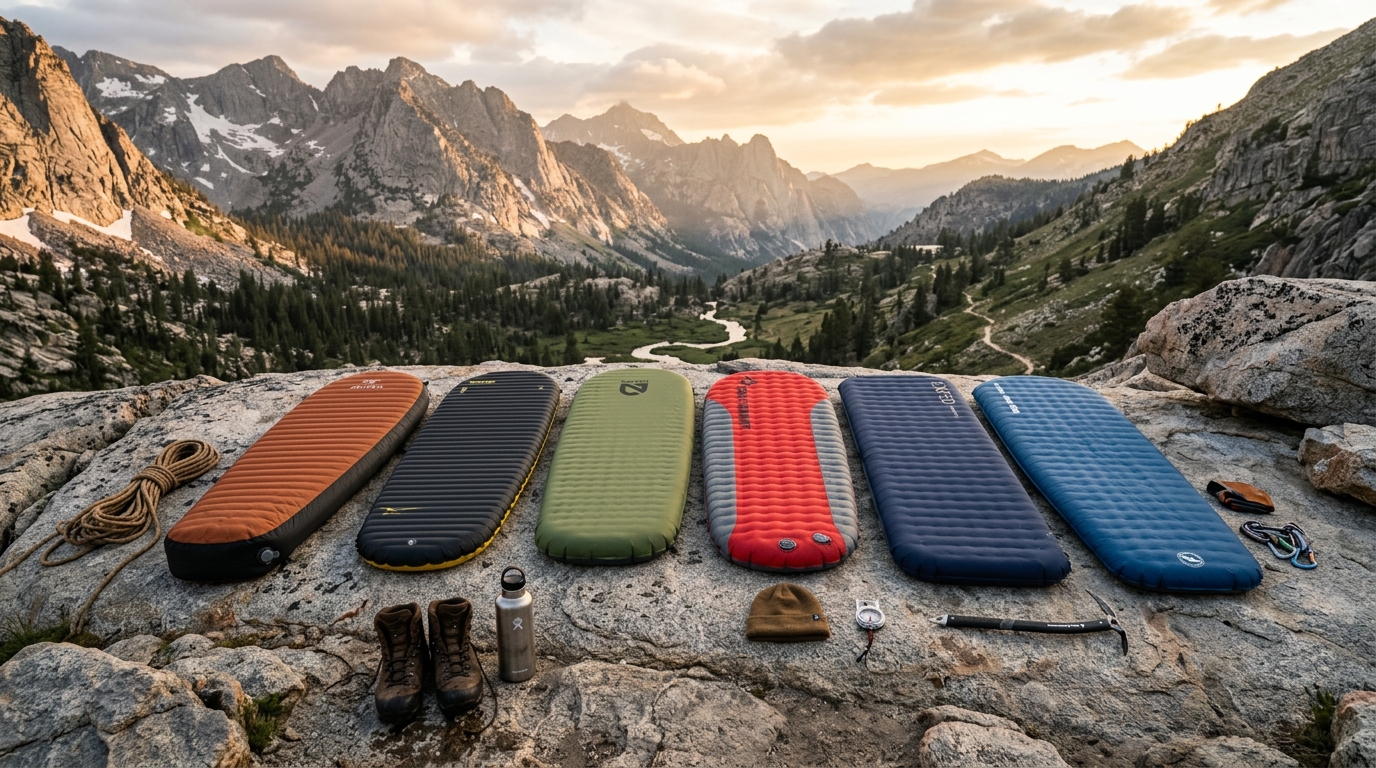
Cold-weather camping demands a sleeping pad that does more than cushion—it must create a thermal barrier between you and the frozen ground. R-value is the critical spec here, measuring thermal resistance on a scale where higher numbers mean better insulation. For winter conditions below freezing, you want an R-value of at least 4.0, though serious cold-weather campers often seek 5.0 or higher. We tested these four pads across multiple overnight trips in sub-freezing conditions, evaluating warmth retention, packability, durability, and real-world comfort when the mercury drops.
Best Overall: Therm-a-Rest NeoAir XTherm NXT
The Therm-a-Rest NeoAir XTherm NXT earns our top spot by delivering an unmatched combination of warmth, weight, and packability. Its 7.3 R-value is the highest in this roundup, achieved through Therm-a-Rest's ThermaCapture technology—a reflective barrier that traps radiant heat—combined with Triangular Core Matrix baffles that create stable air pockets. At 15 ounces for the regular length, it's lighter than many three-season pads despite offering true four-season insulation. The 2.5-inch thickness provides excellent comfort on uneven ground, and the textured fabric resists slipping inside your sleeping bag. The WingLock valve allows for fast inflation and controlled deflation, a small but meaningful detail when your fingers are numb at dawn.
What we like
Trade-offs
Best for Extra Room: Therm-a-Rest NeoAir XTherm NXT MAX Regular Wide
The NeoAir XTherm NXT MAX Regular Wide delivers the same exceptional 7.3 R-value as the standard XTherm but adds 5 inches of width—expanding from 20 inches to 25 inches—for side sleepers and restless movers who need more real estate. This extra width comes with only a 4-ounce weight penalty and minimal bulk increase, making it a surprisingly practical upgrade for cold-weather campers who prioritize comfort. The wider platform also provides more stability when sitting up to pull on layers or organize gear in your tent vestibule during frigid mornings. Construction and materials mirror the standard XTherm, including the same ThermaCapture reflective layer and Triangular Core Matrix baffles.
What we like
Trade-offs
Best Value: Klymit Insulated Static V Luxe
The Klymit Insulated Static V Luxe brings legitimate cold-weather capability at less than half the price of the Therm-a-Rest options, making it our best-value pick for weekend winter campers. Its 4.4 R-value won't match the XTherm in truly brutal conditions, but it's adequate for most winter camping scenarios down to the low 20s Fahrenheit when paired with a quality sleeping bag. The V-chamber design creates body-mapped baffles that cradle your shape while reducing air movement, and the 30-inch width provides generous room without the premium price tag. At 27 ounces, it's noticeably heavier than ultralight competitors, but that extra weight comes from durable 75D polyester fabric that shrugs off rough campsites and sharp pine needles.
What we like
Trade-offs
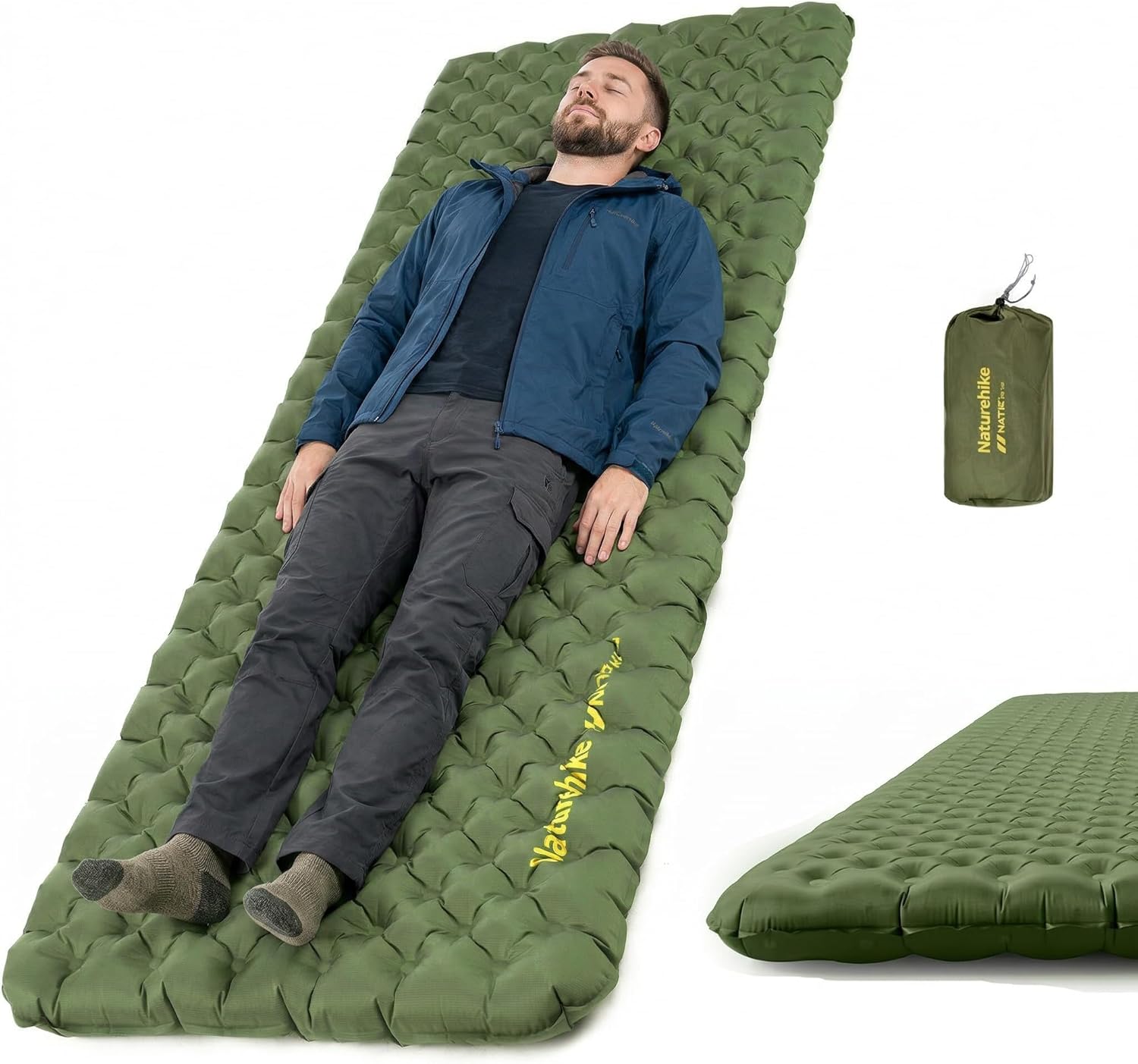
Best Budget: Naturehike Insulated Inflatable Sleeping Pad
The Naturehike Insulated Inflatable Sleeping Pad offers a 4.6 R-value at an entry-level $69.99 price, making it the most affordable path to winter-capable insulation in this roundup. At 27 ounces, it matches the Klymit's weight but undercuts it by $30, delivering impressive value for casual cold-weather campers who don't need ultralight performance. The pad uses a straightforward horizontal baffle design with synthetic insulation fill, and while it lacks the sophisticated engineering of premium pads, it provides adequate warmth for temperatures down to the mid-20s. The 2.4-inch thickness offers reasonable comfort, though the fabric feels noticeably thinner than the Klymit's 75D material.
What we like
Trade-offs
Understanding R-Value for Winter Camping
R-value measures a sleeping pad's ability to resist heat flow, with higher numbers indicating better insulation. The outdoor industry now uses the ASTM F3340-18 standard, which provides consistent testing across brands. For winter camping, we recommend a minimum R-value of 4.0 for temperatures down to 20°F, while serious cold-weather expeditions below zero demand R-values of 6.0 or higher. Remember that R-values are additive—if you stack two pads with R-values of 3.0 and 2.0, you get a combined R-value of 5.0. This stacking strategy can extend the range of three-season pads into winter conditions, though it adds weight and bulk to your pack.
Weight vs. Warmth: Finding Your Balance
The fundamental tension in cold-weather sleeping pad selection is between insulation and packability. The Therm-a-Rest NeoAir XTherm NXT achieves an extraordinary 7.3 R-value at just 15 ounces by using advanced materials and reflective technology, but you pay $239.95 for that engineering. Budget options like the Naturehike deliver adequate warmth at 27 ounces and $69.99, making them sensible choices for car camping or short backpacking trips where every ounce doesn't matter. Consider your typical trip profile: if you're hiking 10+ miles to alpine campsites, the weight savings of premium pads justify the cost, but weekend warriors camping near the trailhead can save money with heavier options.
Pairing Your Pad with the Right Gear
A high-R-value sleeping pad is only one component of your cold-weather sleep system. You'll need a sleeping bag or quilt rated at least 10°F colder than your expected low temperature, and many winter campers add a sleeping bag liner for an extra 5-10°F of warmth. Your shelter choice matters too—a four-season tent like the Big Agnes Copper Spur HV UL Ultralight Bikepacking Tent provides wind protection that reduces convective heat loss from your sleeping system. Don't forget that staying hydrated and well-fed helps your body generate heat overnight, so pack a reliable stove and water filtration system for winter conditions.
Durability and Field Repairs
Winter camping is hard on gear. Frozen ground, sharp ice crystals, and pine needles hidden under snow all threaten to puncture your sleeping pad. The Klymit's 75D polyester fabric offers the best puncture resistance in this roundup, while the Therm-a-Rest pads use lighter 30D and 50D fabrics that require more careful site selection. Always carry a repair kit—most manufacturers include patches and adhesive with their pads. Before winter trips, practice field repairs at home so you can patch a leak with numb fingers in dim headlamp light. The horizontal baffle design of the Naturehike is actually easier to repair than complex shaped baffles, since patches adhere better to flat surfaces.
Specs
Inflation Strategies for Cold Weather
Inflating a sleeping pad in freezing temperatures presents unique challenges. Your breath contains moisture that can condense inside the pad and freeze, reducing insulation effectiveness over multi-day trips. The Therm-a-Rest WingLock valve allows for pump sack inflation, which introduces dry air instead of humid breath. If you're inflating by mouth, take breaks to avoid hyperventilating in thin mountain air, and consider bringing a lightweight inflation sack for longer expeditions. The Klymit and Naturehike pads use simpler push valves that work reliably but require more effort—plan for 15-20 breaths to achieve full inflation, and do this inside your tent where it's warmer.
+Can I use a three-season sleeping pad in winter if I add extra insulation underneath?
Yes, stacking pads is a proven strategy for extending three-season gear into winter conditions. R-values are additive, so a 3.0 R-value three-season pad plus a 2.0 R-value closed-cell foam pad gives you a combined 5.0 R-value suitable for cold weather. The foam pad also provides puncture protection and a backup if your inflatable fails. However, this approach adds weight and bulk—you're carrying two pads instead of one premium winter pad like the XTherm. For occasional winter trips, stacking makes economic sense, but dedicated winter campers benefit from investing in a single high-R-value pad.
+How do I prevent my sleeping pad from sliding around inside my tent on snow?
Sleeping pad migration is a common winter camping frustration. The textured fabric on the Therm-a-Rest XTherm helps grip your sleeping bag, but you can also use gear straps or shock cord to create a simple retention system inside your tent. Some campers place their closed-cell foam sit pad under the head or foot of their inflatable pad to add friction. Another effective technique is to slightly under-inflate your pad—a fully rigid pad slides more easily than one with a bit of give that conforms to the tent floor. Finally, ensure your tent floor is taut and free of ice buildup, which creates a slippery surface.
+What's the real-world temperature rating difference between a 4.4 and 7.3 R-value pad?
While R-value doesn't translate directly to temperature ratings, field experience suggests each R-value point is worth roughly 5-10°F of comfort range depending on your sleeping bag, metabolism, and shelter. A 4.4 R-value pad like the Klymit Insulated Static V Luxe keeps most sleepers comfortable down to about 20-25°F when paired with an appropriate sleeping bag, while the 7.3 R-value XTherm extends that range to 0-10°F or below. The difference becomes critical on multi-day winter trips where cumulative cold exposure and fatigue reduce your body's heat production. If you're planning expeditions in extreme cold or high-altitude winter conditions, the extra R-value of premium pads provides essential safety margin.