Best of
Best Integrated Canister Stove Systems for Backpacking in 2024
best integrated canister stove systems
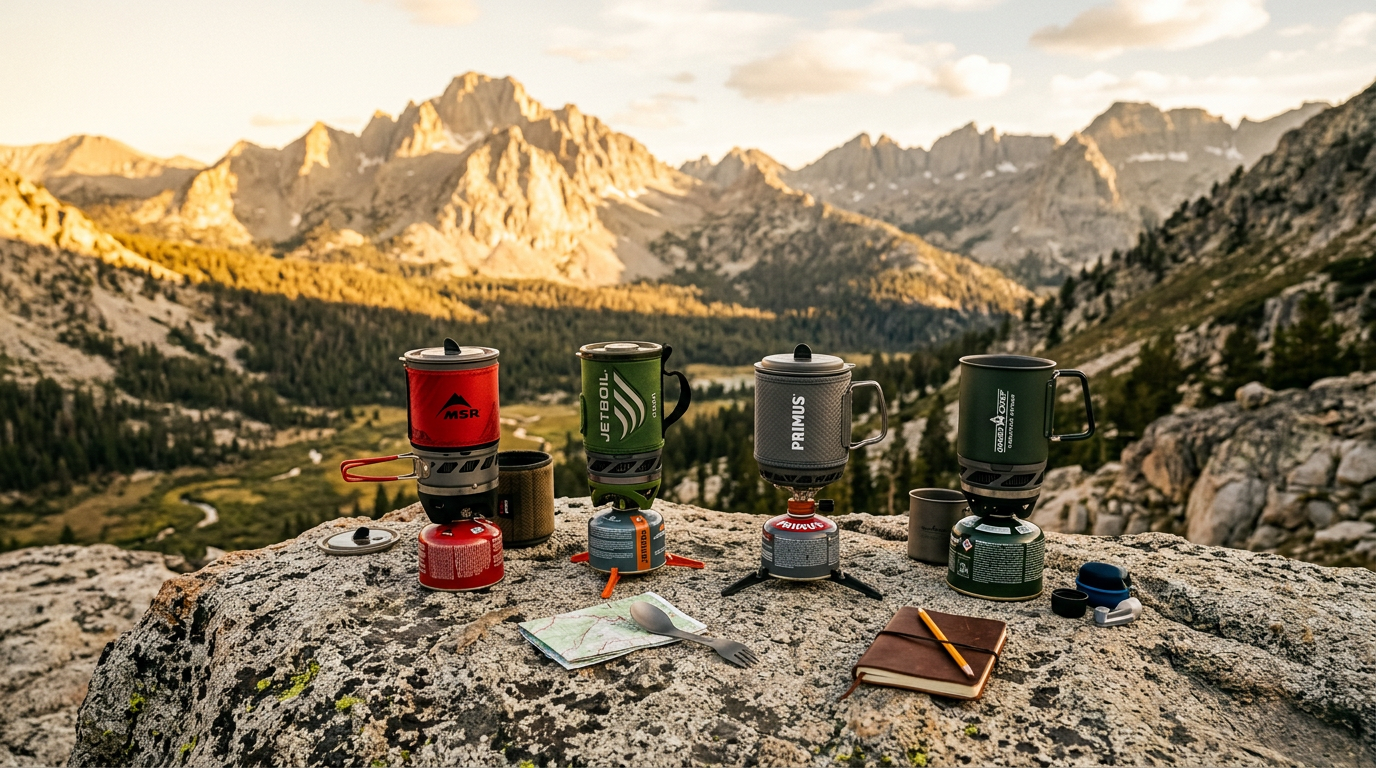
At a glance
| # | Product | |||||
|---|---|---|---|---|---|---|
| 1 |  ★ Best Overall★ Best Value★ Most Comfortable | 8.5 | Check price ↗ | |||
| 2 | 8.5 | Check price ↗ | ||||
| 3 | 8.2 | Check price ↗ | ||||
| 4 | 8.2 | Check price ↗ | ||||
| 5 | 7.8 | Check price ↗ |


- 8.5★ Best Overall★ Best Value★ Most Comfortable
Disclosure: Four Seasons Gear is reader-supported. When you buy through links on our site, we may earn an affiliate commission at no extra cost to you. Prices and availability are accurate as of the time we last checked.
Best Overall: Jetboil Flash Camping and Backpacking Stove System
The Jetboil Flash earns its place as the best overall integrated canister stove by nailing the fundamentals: it boils half a liter of water in roughly 100 seconds, the push-button igniter fires reliably even after hundreds of uses, and the insulated cozy keeps your hands safe while doubling as a color-changing heat indicator. The FluxRing heat exchanger wraps around the pot bottom to capture radiant heat that would otherwise escape, making this system significantly more fuel-efficient than a traditional canister stove and pot combination. At just under $80, it offers the core Jetboil experience without the premium features that most weekend warriors don't need.
What we like
Trade-offs
Best for Simmering: Jetboil MiniMo Camping and Backpacking Stove Cooking System
The MiniMo addresses the biggest weakness of integrated canister systems by adding a regulator valve that allows genuine flame control from rolling boil down to a true simmer. The wider, shorter pot design (compared to the tall Flash) makes it easier to eat directly from the vessel and stir ingredients without spilling. The metal handles fold down for packing but provide a secure grip when deployed, and the push-button igniter is positioned for easy access even with gloves on. At $129, you're paying a 60% premium over the Flash, but if you plan to cook dehydrated meals that require careful rehydration or want to warm up leftovers without scorching them, the MiniMo's adjustable heat control justifies the cost.
What we like
Trade-offs
Best Windproof Performance: MSR WindBurner Personal Windproof Camping and Backpacking Stove System
The MSR WindBurner takes wind protection to another level with its fully enclosed burner design that creates a sealed combustion chamber between the pot and heat source. In side-by-side tests on exposed ridges, the WindBurner maintains consistent boil times even in 20+ mph gusts where traditional stoves struggle or fail entirely. The radiant burner spreads heat evenly across the pot bottom, eliminating hot spots that plague some integrated systems. The hard-anodized aluminum pot with internal ceramic coating resists scratching and cleans easily after repeated use. At $200, this is the most expensive option in the roundup, but for alpine climbers, winter campers, or anyone who regularly operates above treeline, the WindBurner's unmatched wind performance is worth the investment.
What we like
Trade-offs
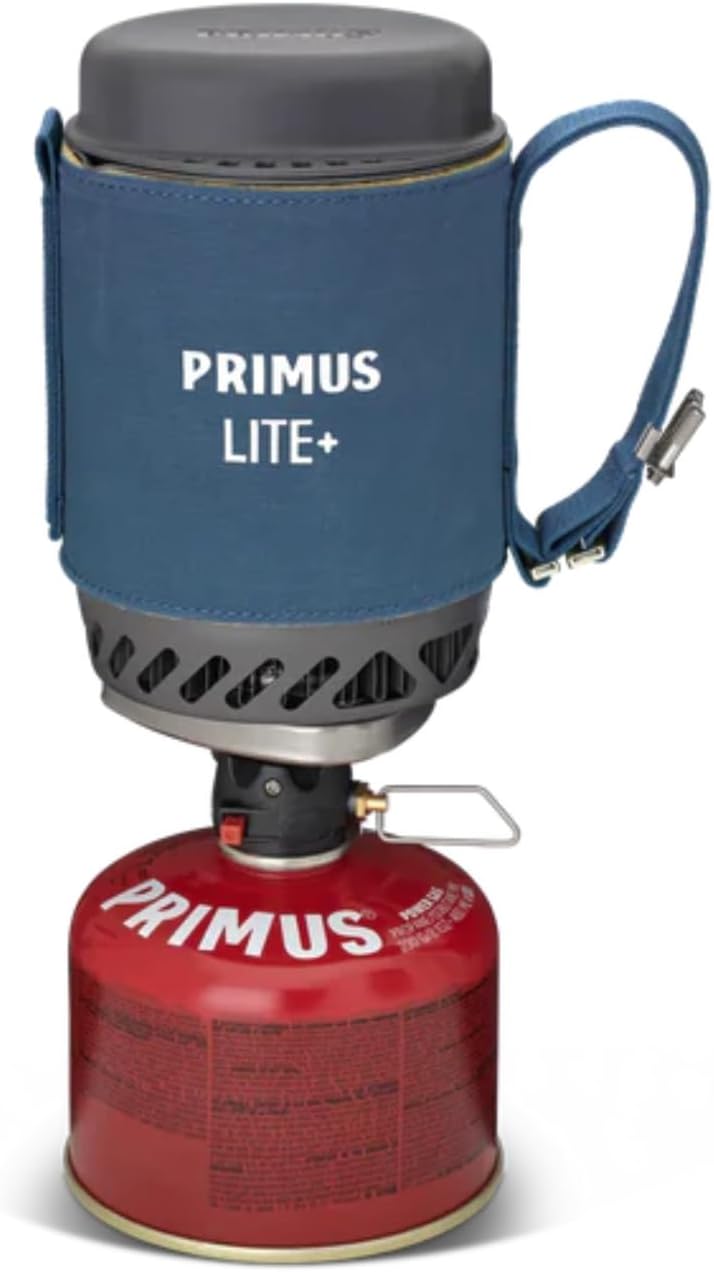
Best Lightweight Option: Primus Lite Plus Stove System
The Primus Lite Plus shaves weight by using a thin-walled aluminum pot with an integrated heat exchanger that still delivers respectable boil times around 2 minutes and 15 seconds for 500ml. The Laminar Flow burner technology creates a compact flame pattern that concentrates heat on the pot bottom rather than wasting energy heating the surrounding air. The included pot lid doubles as a strainer and has measurement markings molded into the interior for precise water rationing. At $100, it splits the difference between the budget Flash and premium WindBurner while keeping the complete system weight competitive with ultralight setups. The piezo igniter is less robust than Jetboil's push-button design, but carrying a backup lighter is standard practice anyway.
What we like
Trade-offs
Best for Extreme Conditions: MSR Reactor Windproof Camping and Backpacking Stove System
The MSR Reactor represents the pinnacle of integrated canister stove engineering, designed specifically for mountaineering expeditions and winter camping where failure isn't an option. The fully enclosed radiant burner generates intense heat that melts snow efficiently and maintains performance even when canister pressure drops in freezing temperatures. The 1.7-liter pot capacity is larger than most personal systems, making it suitable for melting snow for drinking water or cooking for two people. The pressure regulator maintains consistent output across varying fuel levels and ambient temperatures. At $199, this is tied with the WindBurner as the most expensive option, but the Reactor's larger capacity and extreme-condition reliability make it the better choice for serious alpine objectives or extended winter trips.
What we like
Trade-offs
What Makes Integrated Systems Different
Integrated canister stove systems differ fundamentally from traditional canister stoves in that the pot and burner are designed as a matched pair. The pot features a heat exchanger (usually fins or a ring welded to the bottom) that captures radiant heat, while the burner creates a windproof seal with the pot. This integration delivers two major advantages: dramatically faster boil times and significantly better fuel efficiency, often using 30-40% less fuel than a traditional stove and pot combination for the same task.
The tradeoff is versatility. With a traditional canister stove like the MSR PocketRocket 2 Stove, you can use any pot, pan, or kettle you want. Integrated systems lock you into the manufacturer's proprietary cookware, though most brands offer accessory pots in various sizes. If your primary goal is boiling water for freeze-dried meals, coffee, and tea, an integrated system is almost always the better choice. If you want to cook fresh food with multiple pots or need a frying pan, stick with a traditional stove.
Understanding Heat Exchanger Designs
The heat exchanger is the key technology that makes integrated systems more efficient than traditional stoves. Jetboil's FluxRing uses aluminum fins welded in a circular pattern around the pot bottom, creating turbulence that forces hot gases to linger and transfer more heat before escaping. MSR's radiant burner approach uses a metal mesh that glows red-hot, radiating heat upward into the pot while the enclosed design prevents wind from disrupting the flame.
Primus uses a different strategy with its Laminar Flow burner, which creates a compact, focused flame that concentrates heat on a smaller area of the pot bottom. Each design has strengths: FluxRing systems are lighter and simpler, radiant burners excel in wind, and Laminar Flow offers a good balance. In practical terms, all three designs boil water significantly faster than a traditional stove, with differences of 15-30 seconds between the fastest and slowest integrated systems mattering less than the 2-3 minute advantage they all hold over conventional setups.
Fuel Efficiency and Canister Life
Integrated systems typically consume 60-70% of the fuel that traditional canister stoves require for the same boiling task, thanks to their heat exchangers and windproof designs. A standard 110g isobutane canister will boil approximately 10-12 liters of water with an integrated system versus 6-8 liters with a traditional stove and pot. This efficiency advantage compounds on longer trips: a weekend warrior might not notice the difference, but a thru-hiker or expedition climber can carry significantly less fuel weight over a multi-week trip.
- Standard 110g canister: 10-12 liters boiled with integrated system, 6-8 liters with traditional stove
- Standard 230g canister: 22-25 liters boiled with integrated system, 14-18 liters with traditional stove
- Cold weather performance: Integrated systems maintain efficiency better when canister pressure drops
- Wind conditions: Fuel consumption increases 50-100% with traditional stoves in wind, only 10-20% with integrated systems
Simmering Capability and Cooking Real Food
Most integrated canister systems struggle with simmering because their burners are optimized for maximum heat output, not precise flame control. The Jetboil Flash and MSR WindBurner operate essentially as on/off switches with minimal throttle range. If you only boil water for freeze-dried meals and instant coffee, this limitation doesn't matter. But if you want to cook rice, warm up soup without scorching it, or prepare fresh food, the lack of simmer control becomes frustrating quickly.
The Jetboil MiniMo addresses this weakness with a regulator valve that allows genuine flame modulation from rolling boil down to a gentle simmer. The MSR Reactor also offers better simmer control than the WindBurner, though it's still not as precise as a traditional stove. If cooking versatility matters to you, either pay the premium for the MiniMo or consider whether you actually need an integrated system at all.
+Can I use regular isobutane canisters with these integrated systems?
Yes, all the integrated systems in this roundup use standard threaded isobutane/propane canisters with Lindal valve connections, the same canisters that work with traditional backpacking stoves. You're not locked into a proprietary fuel source, just the proprietary pot. MSR, Jetboil, Primus, and other major brands all use the same canister standard, so you can buy fuel from any manufacturer.
+How do integrated systems perform in cold weather compared to traditional stoves?
Integrated systems generally perform better in cold weather than traditional canister stoves because their windproof designs and efficient heat exchangers maintain performance even when canister pressure drops. The MSR Reactor and WindBurner are specifically engineered for winter use with pressure regulators that compensate for cold temperatures. However, all canister stoves struggle below 20°F, and for serious winter camping, you'll want to use techniques like sleeping with your canister or switching to a liquid-fuel stove.
+Are integrated systems worth it for car camping or base camping?
Probably not. Integrated systems shine when you're counting ounces and need fast, efficient boiling in exposed conditions. For car camping or base camping where weight doesn't matter, a traditional two-burner stove like the Coleman Classic Propane Camping Stove offers much better cooking versatility, simmer control, and the ability to use multiple pots simultaneously. Save the integrated system for backpacking trips where its advantages actually matter.