
Head-to-head
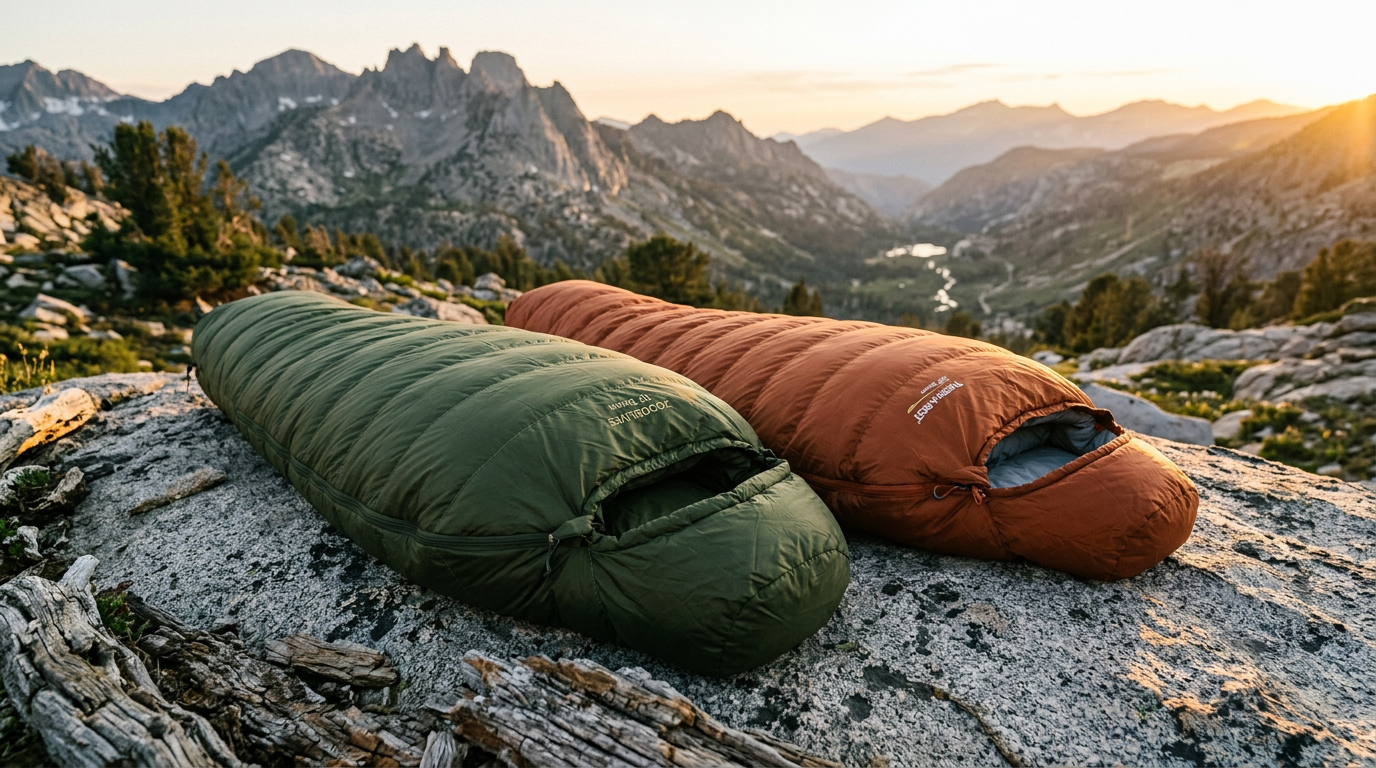
ZOOOBELIVES 10 Degree Down Sleeping Bag vs Therm-a-Rest 20F Down Sleeping Bag
The Therm-a-Rest 20F Down Sleeping Bag wins for serious backpackers and alpine users who need proven performance, premium materials, and reliable warmth-to-weight ratios in technical environments. The ZOOOBELIVES 10 Degree bag is the better pick for car campers, casual weekend warriors, and budget-conscious buyers who prioritize roomy comfort and value over packed size and don't need ultralight construction.
Disclosure: Four Seasons Gear is reader-supported. When you buy through links on our site, we may earn an affiliate commission at no extra cost to you. Prices and availability are accurate as of the time we last checked.
These two down sleeping bags occupy completely different positions in the market despite both using natural insulation. The Therm-a-Rest 20F bag commands a $469.95 price point and represents a technical alpine tool built for weight-conscious backpackers. The ZOOOBELIVES 10 Degree bag retails at $99.99 and targets recreational campers who want down warmth without the premium price tag. The 10-degree temperature rating difference tells only part of the story—construction quality, fill power, materials, and intended use separate these bags more than their comfort ratings suggest.
Spec Comparison
Specs
Fill Power and Warmth Efficiency
The ZOOOBELIVES bag uses 550+ fill power down, which sits at the entry level of the down insulation spectrum. This means each ounce of down creates 550 cubic inches of loft—adequate for warmth but requiring more total fill weight to achieve the 10°F rating. The Therm-a-Rest bag, while not listing specific fill power in the provided specs, uses premium down typical of technical alpine bags (usually 650-850 fill power based on Therm-a-Rest's product line). Higher fill power translates directly to better warmth-per-ounce ratios, meaning the Therm-a-Rest achieves its 20°F rating with less down weight and bulk.
In practical terms, the ZOOOBELIVES bag's lower fill power means it packs larger and weighs more for equivalent warmth. The 10-degree warmer rating partially compensates—you're getting more absolute insulation—but the efficiency gap remains. For car camping where packed size doesn't matter, the ZOOOBELIVES approach works fine. For backpacking where every cubic inch of pack space counts, the Therm-a-Rest's premium down justifies its cost through superior compressibility.
Shell Materials and Durability
The ZOOOBELIVES bag uses standard polyester taffeta for its shell fabric—durable enough for recreational use but heavier and less packable than technical alternatives. This material resists abrasion well in car camping scenarios where the bag gets tossed in vehicle beds or dragged across tent floors. The Therm-a-Rest employs technical ripstop nylon, a material engineered to prevent tear propagation while maintaining minimal weight. Ripstop construction uses reinforcing threads in a crosshatch pattern, creating a fabric that's simultaneously lighter and more tear-resistant than standard weaves.
The shell material choice cascades into performance differences. Technical ripstop nylon typically features DWR (durable water repellent) coatings that shed condensation and light moisture better than budget polyester. In alpine environments where tent condensation is common, this matters significantly. The ZOOOBELIVES polyester shell will absorb moisture more readily, potentially compromising loft in multi-day trips. For single-night car camping in dry conditions, the durability advantage of heavier polyester outweighs the moisture management benefits of technical nylon.
Fit Philosophy and Comfort
ZOOOBELIVES markets their bag as 'roomy fit,' which translates to extra shoulder and hip width compared to performance mummy bags. This design prioritizes comfort for side sleepers and restless movers who feel claustrophobic in tight mummy cuts. The additional interior volume means you can wear thicker base layers inside or shift positions without fabric tension. The tradeoff is thermal efficiency—every cubic inch of dead air space your body must heat reduces overall warmth and increases the weight of insulation needed.
The Therm-a-Rest uses a performance mummy cut that minimizes dead air space while still allowing reasonable movement. Technical mummy bags follow body contours closely, placing insulation exactly where needed without excess material. This cut maximizes warmth-to-weight ratios but demands that users sleep primarily on their backs or learn to roll with the bag. For backpackers counting ounces and prioritizing thermal efficiency, the snugger fit is non-negotiable. For car campers who value sleeping comfort over pack weight, the ZOOOBELIVES roomier design makes more sense.
Packed Size and Portability
The ZOOOBELIVES bag's combination of 550-fill down and heavier shell materials results in a packed size appropriate for vehicle-based camping but impractical for backpacking. While marketed as 'compressible,' the actual compression ratio falls short of technical bags. Expect a stuff sack roughly the size of a basketball—manageable in a car trunk but consuming 15-20 liters of pack volume when backpacking. The Therm-a-Rest bag compresses to approximately 8-10 liters thanks to higher-loft down and thinner shell fabrics, fitting easily in the bottom compartment of a 50-60L backpack.
This packed size difference becomes critical on multi-day trips where you're balancing sleeping bag volume against food, water, and safety gear. The ZOOOBELIVES bag works for short overnight hikes where you can afford the extra bulk, but extended backpacking trips demand the space efficiency of technical bags like the Therm-a-Rest. Car campers and hunters who drive to their sites won't notice the size penalty and benefit from the $370 savings.
Value Proposition and Use Case Alignment
At $99.99, the ZOOOBELIVES bag delivers remarkable value for casual users who camp 5-10 nights per year. You're getting genuine down insulation and a legitimate 10°F rating for less than many synthetic bags cost. The compromises in fill quality, materials, and packed size don't matter when you're pulling the bag from your vehicle and sleeping in established campgrounds. For families introducing kids to camping or hunters who need affordable cold-weather gear, this bag represents a smart entry point into down sleeping bags.
The Therm-a-Rest bag at $469.95 targets serious backpackers who log 30+ nights per year in variable conditions. The price buys premium down, technical fabrics, refined construction, and the reliability needed when you're miles from your vehicle in alpine environments. Buyers comparing these bags should also consider the Big Agnes Copper Spur HV UL Ultralight Bikepacking Tent if they're building a complete lightweight backpacking system—the weight and space savings compound across all gear categories. The Therm-a-Rest investment makes sense when packed size and weight directly impact your ability to cover distance and access remote terrain.
Construction Quality and Longevity
The ZOOOBELIVES bag uses box-wall baffle construction, which creates vertical walls between the shell and liner to hold down in place. This construction method is simpler and less expensive than the trapezoidal baffles found in premium bags, but it creates cold spots where the vertical seams compress insulation. The stitching quality appears adequate for recreational use, though the thread and seam sealing don't match technical standards. Expect 3-5 years of regular use before seam failures or down migration become issues.
Therm-a-Rest employs advanced baffle architecture that eliminates cold spots and prevents down migration over thousands of compression cycles. The brand's reputation for durability means properly maintained bags routinely deliver 10-15 years of hard use. Technical construction includes features like draft collars, insulated zipper baffles, and differential cut (where the outer shell is slightly larger than the inner to prevent compression). These details add cost but dramatically improve real-world performance and longevity.
What we like
Trade-offs
Decision Framework
Buy the ZOOOBELIVES 10 Degree bag if you primarily car camp, hunt from vehicle-accessible locations, or camp fewer than 15 nights per year. The roomy fit suits side sleepers and restless movers, while the 10°F rating handles cold nights without requiring a premium investment. This bag makes sense for families outfitting multiple people, casual weekend campers, and anyone who prioritizes comfort and value over technical performance. The packed size and weight penalties don't matter when you're not carrying the bag on your back.
Buy the Therm-a-Rest 20F bag if you backpack regularly, pursue alpine objectives, or need reliable performance in variable conditions. The premium down and technical construction justify the cost through superior compressibility, moisture management, and longevity. This bag belongs in packs of serious backpackers logging 30+ nights per year, ultralight enthusiasts counting every ounce, and mountaineers who depend on their gear in exposed environments. The investment pays dividends through years of reliable service and the ability to access terrain that demands lightweight, compact gear.
+Is 550-fill down warm enough for winter camping?
Yes, 550-fill down provides adequate warmth for winter camping—the fill power number describes loft efficiency, not absolute warmth. The ZOOOBELIVES bag achieves its 10°F rating by using more total down than a higher-fill bag would need. The tradeoff is increased weight and packed size. For car camping where these factors don't matter, 550-fill down works fine. Backpackers should opt for 650+ fill power to minimize pack volume.
+Why does the Therm-a-Rest cost nearly 5x more than the ZOOOBELIVES?
The price difference reflects premium down (likely 650-850 fill power versus 550), technical ripstop shell fabrics with DWR coatings, advanced baffle construction that eliminates cold spots, refined fit that maximizes thermal efficiency, and Therm-a-Rest's reputation for durability and warranty support. You're paying for materials and construction that deliver superior warmth-to-weight ratios, better compressibility, improved moisture management, and longer lifespan—critical factors for serious backpackers but less important for casual car campers.
+Can I use the ZOOOBELIVES bag for backpacking?
You can, but the large packed size and heavier weight make it impractical for trips longer than one night or routes requiring significant mileage. The bag will consume 15-20 liters of pack space—manageable in a 65L+ pack for short trips but problematic for lightweight setups or extended journeys. If you're committed to backpacking regularly, invest in a technical bag with higher fill power and compressible shell materials. The ZOOOBELIVES works best for car camping, hunting, and vehicle-based adventures where packed size doesn't constrain your gear choices.

Read next
More comparisons + reviews
REVIEW
Kelty Galactic Down 30 Degree Sleeping Bag Review
REVIEW
NEMO Disco Endless Promise Down Sleeping Bag Review
REVIEW
ZOOOBELIVES AlpliveD1500 10°F Down Sleeping Bag Review
REVIEW
Therm-a-Rest 20F/-6C Down Sleeping Bag Review: 900-Fill Premium Insulation with Ethical Sourcing
REVIEW
Big Agnes Women's Torchlight Sleeping Bag w/600 DownTek Review
REVIEW