
Head-to-head
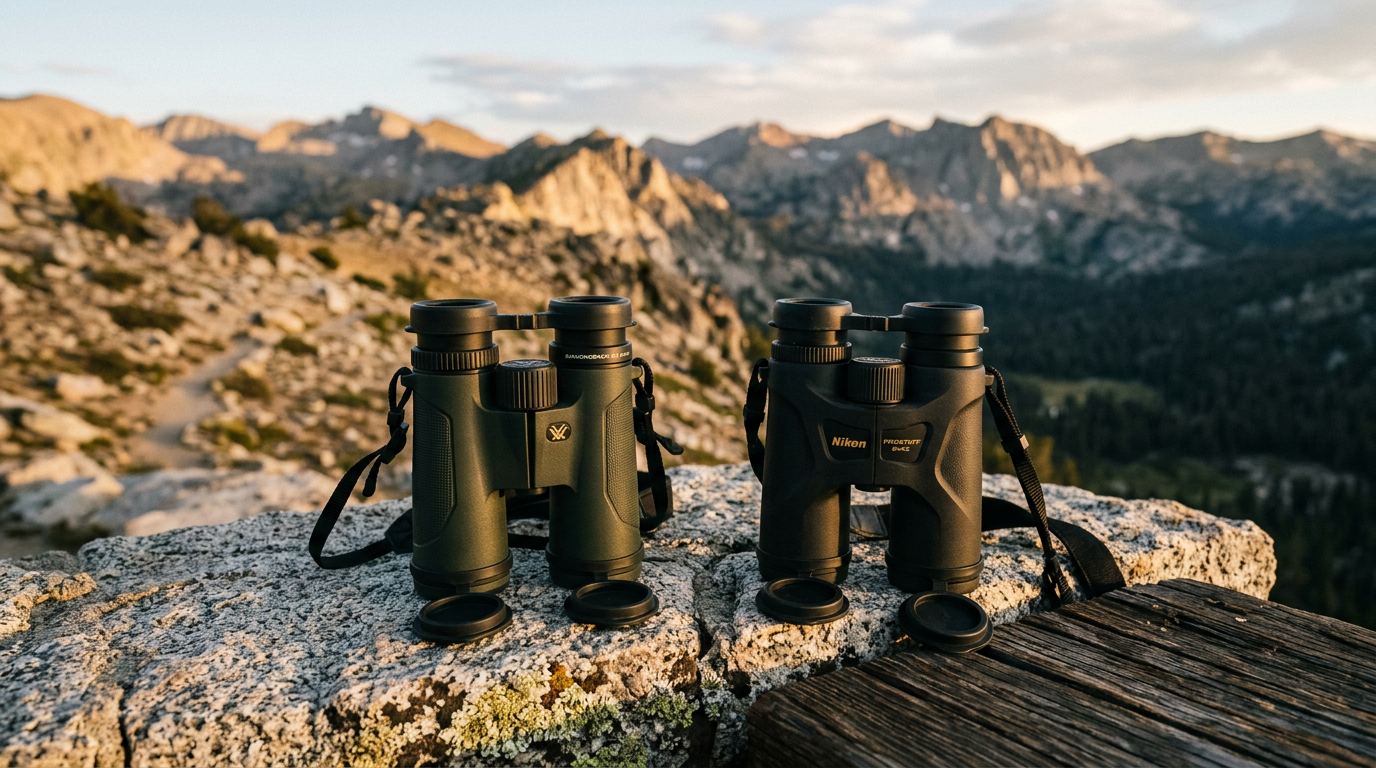
Vortex Diamondback HD 10x42 vs Nikon Prostaff P3 8x42 Binoculars
The Vortex Diamondback HD 10x42 wins for birders and wildlife observers who prioritize reach and optical clarity, delivering superior glass quality and 25% more magnification for identifying distant subjects. However, the Nikon Prostaff P3 8x42 is the better choice for hikers, hunters, and general outdoor use where a wider field of view, steadier handheld image, and lighter weight matter more than maximum magnification.
Disclosure: Four Seasons Gear is reader-supported. When you buy through links on our site, we may earn an affiliate commission at no extra cost to you. Prices and availability are accurate as of the time we last checked.
Choosing between 8x and 10x magnification represents one of the most consequential decisions in binocular selection, and the Vortex Diamondback HD 10x42 versus Nikon Prostaff P3 8x42 comparison perfectly illustrates this trade-off. Both are 42mm roof prism binoculars positioned in the $200-300 mid-tier segment, but they serve distinctly different use cases based on their magnification profiles and optical engineering.
Specifications Comparison
Specs
Magnification and Field of View: The Core Trade-off
The Vortex's 10x magnification delivers 25% more reach than the Nikon's 8x, making distant subjects appear significantly larger and enabling identification at greater distances. For birders trying to distinguish field marks on a warbler 80 yards away or wildlife watchers observing elk behavior across a valley, this magnification advantage is decisive. However, this comes at the cost of a 315-foot field of view versus the Nikon's expansive 420-foot FOV at 1000 yards—a 33% reduction in visible area.
That narrower field makes tracking moving subjects more difficult with the Vortex. The Nikon's wider view excels for scanning landscapes, following birds in flight, or maintaining situational awareness while hiking. The 8x magnification also produces a steadier handheld image; at 10x, every hand tremor is magnified, making extended glassing sessions more fatiguing without a tripod. For most general outdoor use, the Nikon's 8x configuration proves more practical and comfortable.
Optical Quality: HD Glass Versus Standard Coatings
The Vortex Diamondback HD incorporates extra-low dispersion (HD) glass elements and dielectric prism coatings—optical technologies typically reserved for premium binoculars. The HD glass measurably reduces chromatic aberration (color fringing), particularly noticeable when viewing high-contrast subjects like dark branches against bright sky. The dielectric coatings deliver 99%+ light transmission through the prism assembly, producing brighter, higher-contrast images with more accurate color rendition.
The Nikon Prostaff P3 uses standard multi-coated optics with phase-correction prism coatings—competent but not exceptional. In direct comparison, the Vortex renders sharper edge-to-edge clarity and noticeably better color fidelity. This optical superiority becomes most apparent in challenging conditions: dawn/dusk observation, dense forest canopy, or long-distance viewing where atmospheric haze degrades image quality. The Nikon performs adequately in good light but cannot match the Vortex's resolving power.
Low-Light Performance: Exit Pupil Considerations
The Nikon's 5.3mm exit pupil (calculated as 42mm objective ÷ 8x magnification) versus the Vortex's 4.2mm exit pupil creates a meaningful difference in low-light situations. Human pupils dilate to approximately 5-7mm in darkness, so the Nikon can deliver its full light-gathering potential to your eye in dawn/dusk conditions, while the Vortex's smaller exit pupil becomes the limiting factor before your pupil does.
For hunters glassing during legal shooting hours (often the first and last 30 minutes of daylight) or wildlife observers tracking nocturnal species at dusk, the Nikon's brightness advantage is tangible. The Vortex's superior glass partially compensates through better light transmission, but physics favors the larger exit pupil in genuinely dim conditions. In full daylight, this difference disappears entirely—both binoculars provide more light than your constricted pupils can accept.
Build Quality and Durability
Both binoculars feature rubber-armored, nitrogen-purged bodies with O-ring seals rated for full waterproof/fogproof performance. The Vortex weighs 24.7 ounces versus the Nikon's 22.9 ounces—a 1.8-ounce difference that's perceptible during all-day carry but not prohibitive. The Vortex's slightly heavier construction reflects its more robust internal components and higher-grade glass elements.
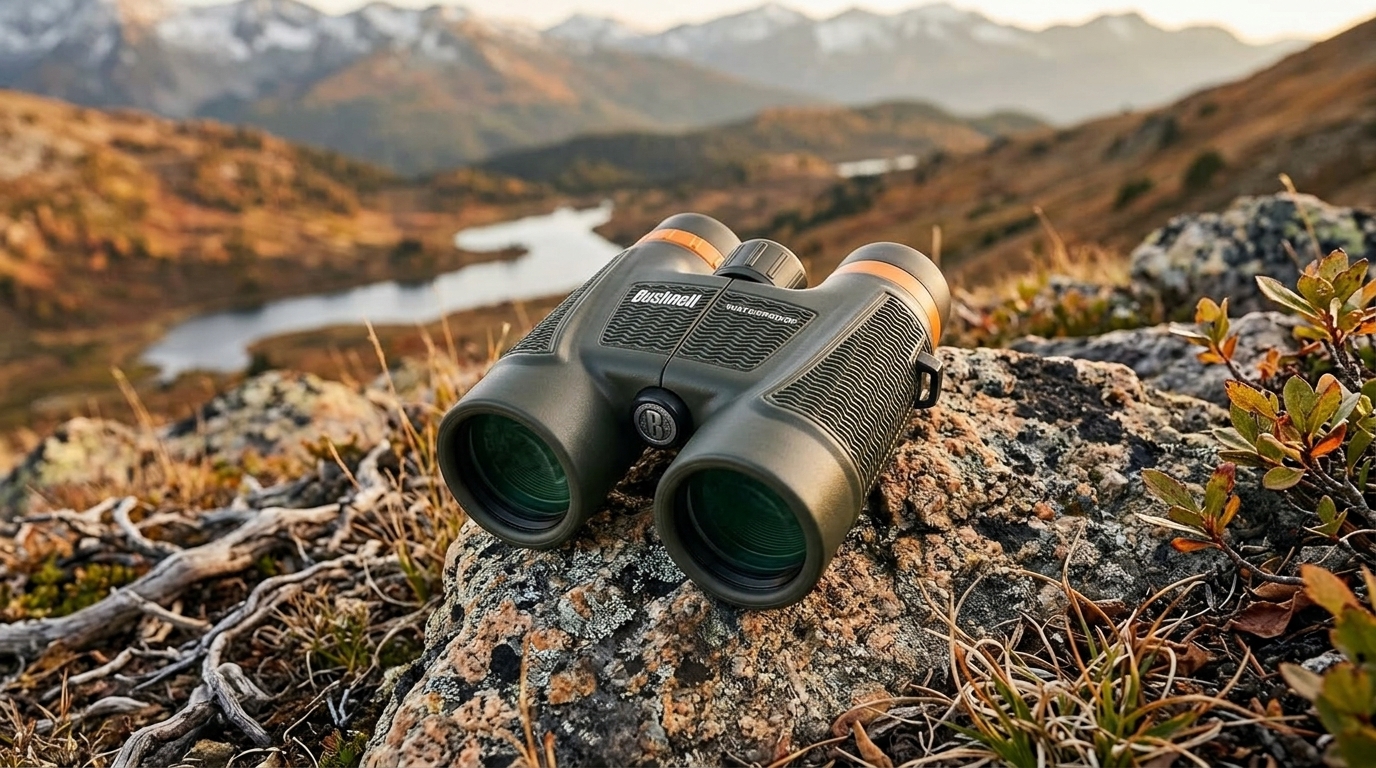
Vortex's unconditional lifetime VIP warranty covers any damage or defect regardless of cause, with no receipt required—an industry-leading policy that adds significant long-term value. Nikon provides a 25-year limited warranty covering manufacturing defects but not accidental damage. For users who subject gear to hard backcountry use, the Vortex warranty represents meaningful insurance. Those comparing these binoculars should also consider the Bushnell H2O Waterproof 10x42 Binoculars as a budget alternative in the 10x42 category.
Close Focus and Versatility
The Vortex focuses down to 7 feet versus the Nikon's 8.2-foot minimum focus distance. While this 1.2-foot difference seems minor, it expands versatility for butterfly watching, wildflower identification, or examining nearby subjects without switching to a separate close-focus optic. The Vortex's closer focus, combined with higher magnification, makes it more capable for nature observation across varying distances.
Value and Price Positioning
Street pricing typically positions the Vortex Diamondback HD 10x42 $50-80 higher than the Nikon Prostaff P3 8x42. That premium buys you HD glass, dielectric coatings, higher magnification, and a superior warranty. The Nikon represents better value for casual users who don't need maximum optical performance, while the Vortex justifies its cost for serious birders and wildlife observers who will exploit its optical advantages regularly.
Decision Framework
Buy the Vortex Diamondback HD 10x42 if:
- You're a birder or wildlife observer who prioritizes identifying distant subjects and needs maximum magnification
- Optical quality matters more than field of view—you value sharp, color-accurate images with minimal chromatic aberration
- You primarily glass from stationary positions or use a tripod adapter, minimizing the steadiness disadvantage of 10x
- You want the security of an unconditional lifetime warranty for backcountry use
- Close-focus capability for butterflies, wildflowers, or near subjects is important
Buy the Nikon Prostaff P3 8x42 if:
- You need a wider field of view for scanning landscapes, tracking moving subjects, or maintaining situational awareness while hiking
- You'll be glassing handheld for extended periods and want the steadier image that 8x magnification provides
- Low-light performance during dawn/dusk hours is a priority for hunting or wildlife observation
- You want to save $50-80 and don't need premium HD glass for your use case
- Lighter weight (1.8 oz savings) matters for ultralight backpacking or all-day carry
Frequently Asked Questions
+Can I use either binocular with eyeglasses?
Both binoculars accommodate eyeglass wearers, but the Vortex's 16mm eye relief provides more comfortable clearance than the Nikon's 15.1mm. If you wear glasses, the Vortex offers a more forgiving eyecup adjustment range. Both feature twist-up eyecups with multiple intermediate stops for customizing eye relief.
+Is 10x magnification too much for handheld use?
10x magnification is at the practical limit for steady handheld viewing—it amplifies hand tremor noticeably compared to 8x. Most users can handhold 10x binoculars effectively for short glassing sessions, but extended observation becomes fatiguing. If you have unsteady hands, consume caffeine before glassing, or plan multi-hour observation sessions, 8x is more comfortable. For tripod-mounted use or brief handheld glassing, 10x works well.
+Do these binoculars work well for astronomy?
The Nikon Prostaff P3 8x42 is the better astronomy choice due to its wider field of view (420 ft vs 315 ft at 1000 yards) and larger 5.3mm exit pupil, which delivers more light to your dark-adapted pupils. The Vortex's 10x magnification helps resolve lunar craters and planetary detail but requires more stable mounting. For handheld stargazing and scanning the Milky Way, the Nikon's 8x configuration and wider FOV prove more practical.

Read next
More comparisons + reviews
REVIEW
Bushnell H2O Waterproof 10x42 Binoculars Review
REVIEW
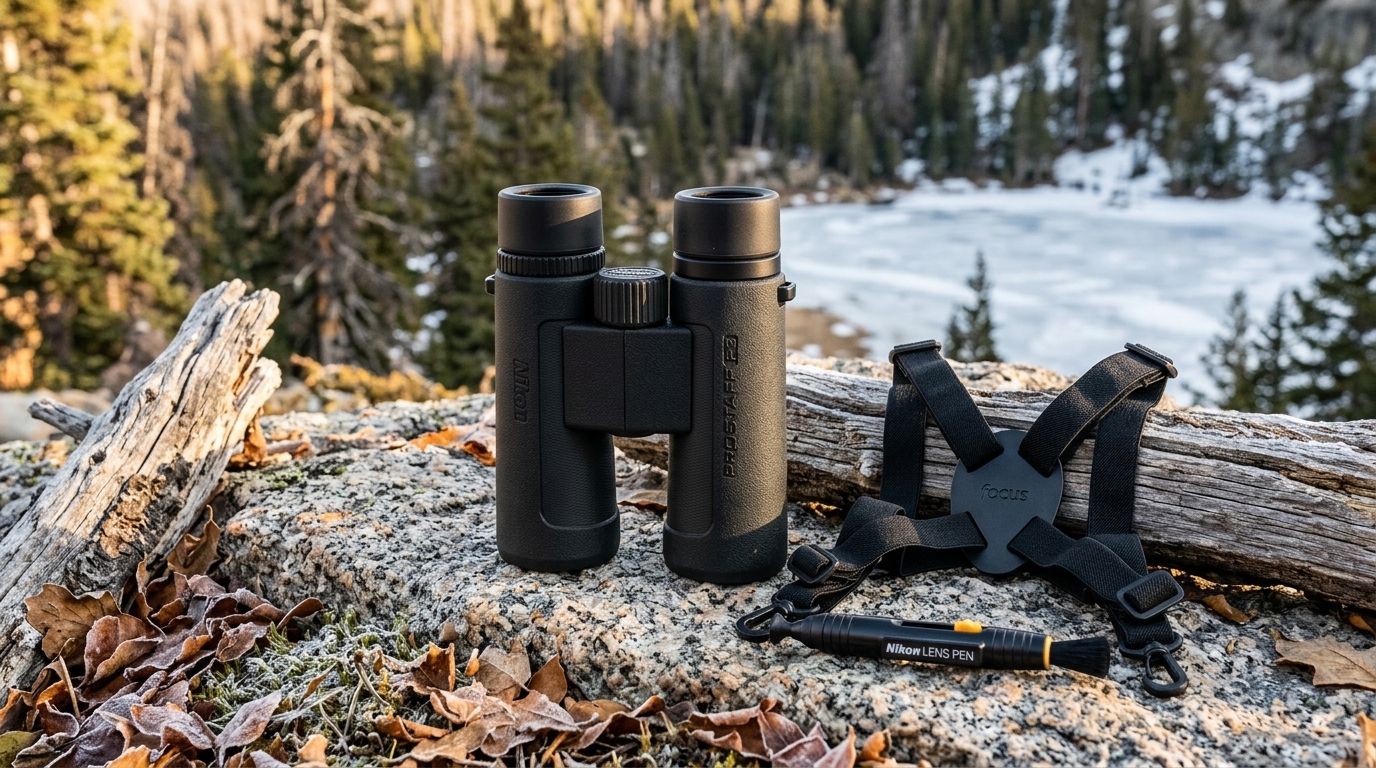
Nikon Prostaff P3 8x42 Binoculars Review: Mid-Tier Glass for Hunters on a Budget
REVIEW
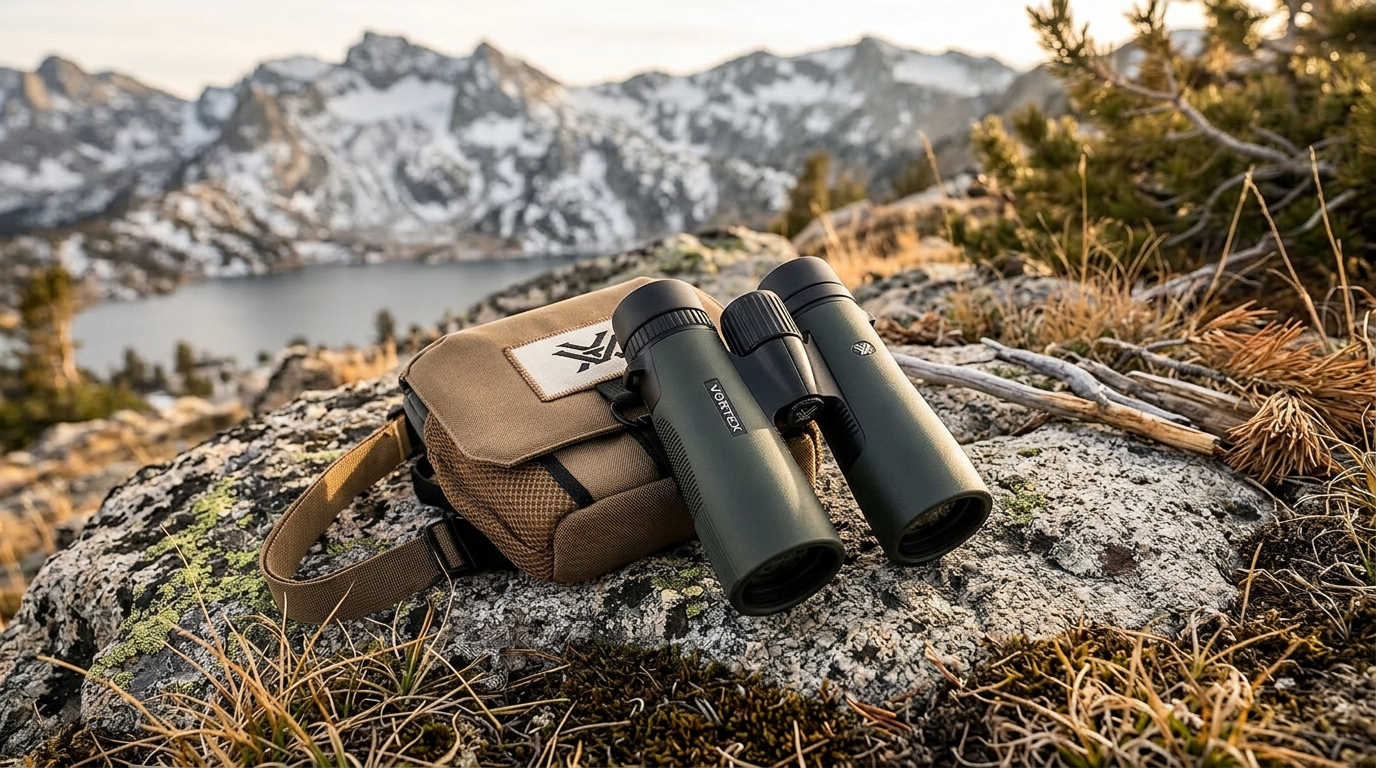
Vortex Optics Diamondback HD 10x42 Binoculars Review: Mid-Tier Glass for Hunters and Birders

BEST OF
Best Rechargeable Headlamps for Backpacking

BEST OF
Best Beginner Binoculars for Hiking and Bird Watching

GUIDE