
Head-to-head
Kelty Cosmic 20 vs Kelty Galactic Down 30: Which Kelty Down Bag Wins?
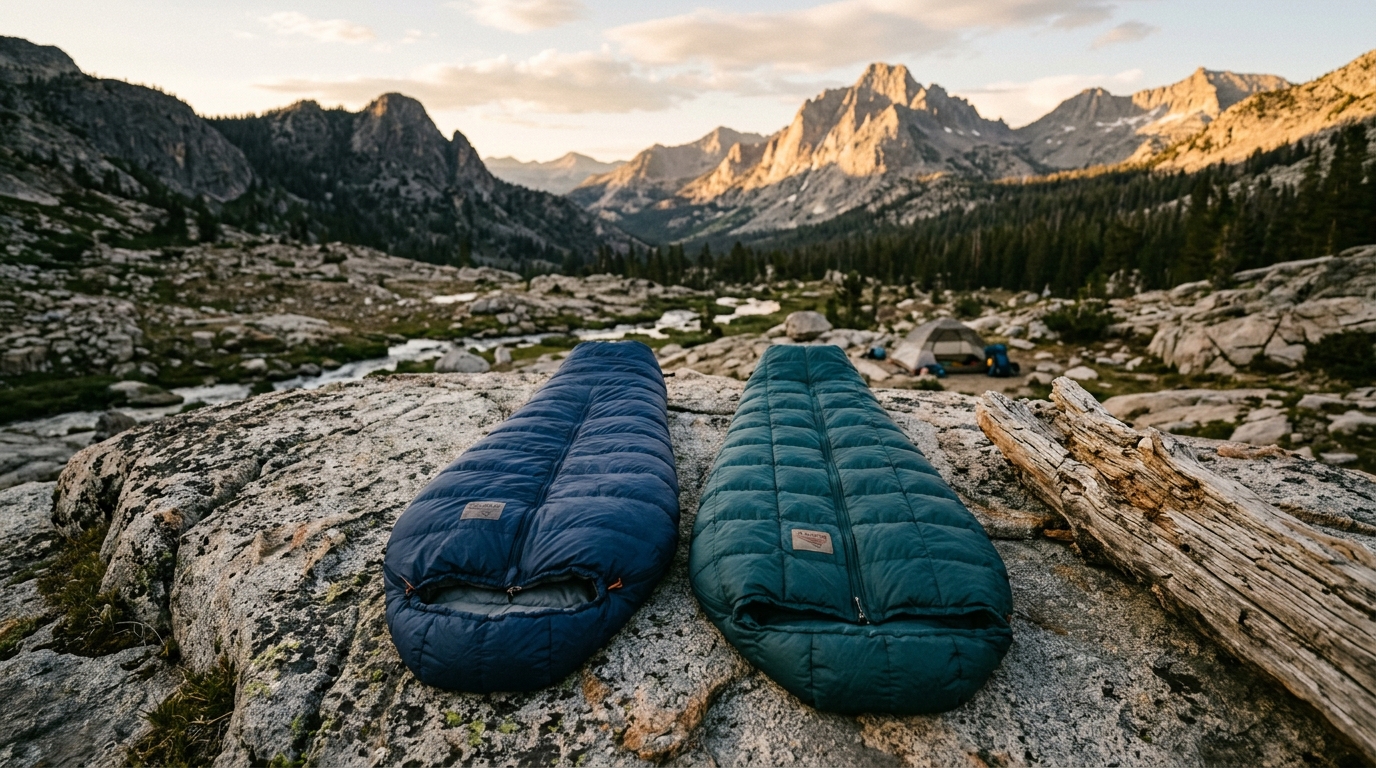
The Kelty Cosmic 20 wins for three-season backpackers who need genuine cold-weather protection, delivering 10°F more warmth in a mummy cut that sheds weight and packs smaller. The Galactic Down 30 is the better pick for car campers, summer backpackers, and couples who want the zip-together capability and roomier semi-rectangular shape, accepting the bulk trade-off for comfort in milder conditions.
Disclosure: Four Seasons Gear is reader-supported. When you buy through links on our site, we may earn an affiliate commission at no extra cost to you. Prices and availability are accurate as of the time we last checked.
Kelty offers two down sleeping bags at the same $189.95 price point, but they target fundamentally different users. The Cosmic 20 is a traditional mummy bag engineered for weight-conscious backpackers tackling shoulder-season trips, while the Galactic Down 30 prioritizes comfort and versatility with a roomier cut and couple-friendly zipper system. Both use responsibly sourced down, but the similarities end there—the 10-degree temperature rating gap and dramatically different shapes make this a choice between performance and comfort rather than splitting hairs over minor spec differences.
Spec Comparison
Specs
Temperature Rating: 10°F Separates Spring from Summer
The Cosmic 20's 20°F rating versus the Galactic's 30°F rating represents the core decision point. That 10-degree gap determines whether you're equipped for April in the Rockies or limited to July in the Cascades. The Cosmic 20 uses 600-fill power down with a tighter mummy taper to trap heat efficiently—the hood cinches snugly around your face, and the differential cut (warmer on top, less underneath where your pad provides insulation) maximizes warmth-to-weight ratio. The Galactic Down 30 uses 550-fill power down in a looser semi-rectangular shape that prioritizes freedom of movement over thermal efficiency.
In practical terms, the Cosmic 20 handles condensation on tent walls during cold spring nights, while the Galactic Down 30 excels when you're camping in 50-60°F conditions and want to sprawl without feeling constricted. Neither bag should be pushed to its limit rating—add 10-15°F to the stated rating for comfortable sleep, meaning the Cosmic 20 works down to 30-35°F for most sleepers, and the Galactic Down 30 is genuinely comfortable to about 40-45°F.
Shape and Packed Size: Mummy Efficiency vs Semi-Rectangular Comfort
The Cosmic 20's mummy shape tapers from 62 inches at the shoulder to 42 inches at the foot, eliminating dead air space that your body would otherwise need to heat. This design philosophy directly reduces packed volume—mummy bags consistently compress 20-30% smaller than semi-rectangular bags with equivalent insulation. The Galactic Down 30's semi-rectangular cut provides 8-10 inches more shoulder room and allows side sleepers to shift position without the fabric pulling tight across their body.
For backpackers counting ounces and liters, the Cosmic 20's tighter cut translates to meaningful pack space savings. Car campers and those using the Galactic Down 30's zip-together feature to create a double bag won't care about an extra two liters of stuff sack volume. The Galactic's shape also accommodates restless sleepers and those who feel claustrophobic in traditional mummy bags—comfort matters more than compression when you're not carrying it on your back.
Fill Power and Loft: 600 vs 550 Down Quality
The Cosmic 20's 600-fill power down clusters are larger and trap more air per ounce than the Galactic Down 30's 550-fill down. Fill power measures how many cubic inches one ounce of down expands to fill—600-fill down lofts to 600 cubic inches, while 550-fill reaches 550 cubic inches. This 50-point difference means the Cosmic 20 achieves its 20°F rating with less total down weight, contributing to better compressibility and a superior warmth-to-weight ratio.
Both bags use RDS-certified down, ensuring the feathers come from humanely treated birds with full supply chain traceability. The quality difference isn't about ethics—it's about performance density. The Cosmic 20's higher-loft down rebounds faster after compression and maintains loft through more stuff-sack cycles before showing degradation. The Galactic Down 30's 550-fill down is perfectly adequate for its intended use case, but it won't deliver the same long-term resilience under hard backpacking use.
Versatility: Zip-Together Capability vs Solo Optimization
The Galactic Down 30's defining feature is its zip-together compatibility—buy two bags (one left-zip, one right-zip) and you create a 30°F-rated double sleeping bag. The semi-rectangular shape makes this practical rather than theoretical; two people actually fit comfortably inside the combined system. This capability appeals to couples who camp together and want to share warmth, though you're paying for versatility you'll only use if you buy the matching bag.
The Cosmic 20 focuses entirely on solo performance. The mummy cut can't accommodate two sleepers, and the zipper design doesn't support mating with another bag. This single-minded optimization makes sense for backpackers who prioritize weight and warmth over flexibility. If you're building a sleep system for solo trips into variable conditions, the Cosmic 20's specialization is an advantage. If you camp with a partner and value the option to zip together, the Galactic Down 30's design justifies the thermal efficiency trade-off.
Value Proposition: Identical Price, Different Priorities
At $189.95 each, these bags force a clear decision about what you value. The Cosmic 20 delivers more warmth per dollar—600-fill down and a 20°F rating represent better thermal performance than 550-fill down at 30°F. You're paying for technical capability that extends your camping season by 4-6 weeks on either end of summer. The Galactic Down 30 delivers more comfort per dollar—the roomier cut and zip-together option provide tangible quality-of-life benefits that matter more to casual campers than an extra 10 degrees of rating.
Neither bag competes with premium options like the Big Agnes Copper Spur HV UL Ultralight Bikepacking Tent in terms of weight optimization or with budget synthetic bags on pure cost. They occupy the sweet spot where down insulation becomes affordable for recreational users. The Cosmic 20 skews toward serious backpackers entering the down sleeping bag category, while the Galactic Down 30 targets families and couples upgrading from rectangular car-camping bags.
Pros and Cons
What we like
Trade-offs
Decision Framework
Buy the Cosmic 20 if you're a solo backpacker planning spring or fall trips where nighttime temperatures drop into the 30s, you prioritize packed size and weight over sleeping comfort, or you want the best warmth-to-weight ratio at this price point. The mummy shape and 600-fill down make this the technical choice for three-season backcountry use.
Buy the Galactic Down 30 if you're a car camper or summer backpacker who won't encounter temperatures below 40°F, you sleep on your side or feel constricted in mummy bags, you camp with a partner and want the option to zip two bags together, or you value sleeping comfort over thermal efficiency. The semi-rectangular shape and couple-friendly design make this the comfort choice for mild-weather camping.
+Can I use the Galactic Down 30 for spring backpacking trips?
Only in low-elevation areas with predictable weather. The 30°F rating means comfortable sleep down to about 40-45°F for most users. Spring conditions in mountain environments regularly drop into the 20s at night, putting you outside the Galactic's comfort range. The Cosmic 20's extra 10 degrees of rating provides the safety margin you need when weather turns unexpectedly cold. If your spring trips stay below 6,000 feet elevation in temperate climates, the Galactic Down 30 works; for alpine spring camping, the Cosmic 20 is essential.
+How much smaller does the Cosmic 20 pack compared to the Galactic Down 30?
Without published packed dimensions from Kelty, we estimate the Cosmic 20 compresses 20-25% smaller based on the mummy shape and higher-loft 600-fill down. Mummy bags eliminate 8-10 inches of width at the shoulders and feet compared to semi-rectangular bags, directly reducing stuff sack volume. The 600-fill down also compresses more efficiently than 550-fill down. In practical terms, expect the Cosmic 20 to fit in a 12-14 liter stuff sack versus 15-17 liters for the Galactic Down 30—meaningful for backpackers with 50-60 liter packs, negligible for car campers.
+Is the Cosmic 20's mummy shape too restrictive for side sleepers?
Depends on your build and sleep style. The mummy taper works for back sleepers and those who stay relatively still through the night. Side sleepers who shift positions frequently will feel the fabric pulling tight across their shoulders and hips when they roll over. If you're a dedicated side sleeper or have broad shoulders (over 48 inches chest circumference), the Galactic Down 30's semi-rectangular cut provides the extra room you need to move comfortably. Test the Cosmic 20 in-store if possible—mummy bags are polarizing, and personal fit matters more than specs.

Read next
More comparisons + reviews

REVIEW
Kelty Galactic Down 30 Degree Sleeping Bag Review
REVIEW
NEMO Disco Endless Promise Down Sleeping Bag Review
REVIEW
ZOOOBELIVES AlpliveD1500 10°F Down Sleeping Bag Review
REVIEW
Therm-a-Rest 20F/-6C Down Sleeping Bag Review: 900-Fill Premium Insulation with Ethical Sourcing
REVIEW
Big Agnes Women's Torchlight Sleeping Bag w/600 DownTek Review
REVIEW