
Review · fall · winter
Outdoor Research Women's Helium Insulated Hoodie, Plus – Lightweight Jacket Review
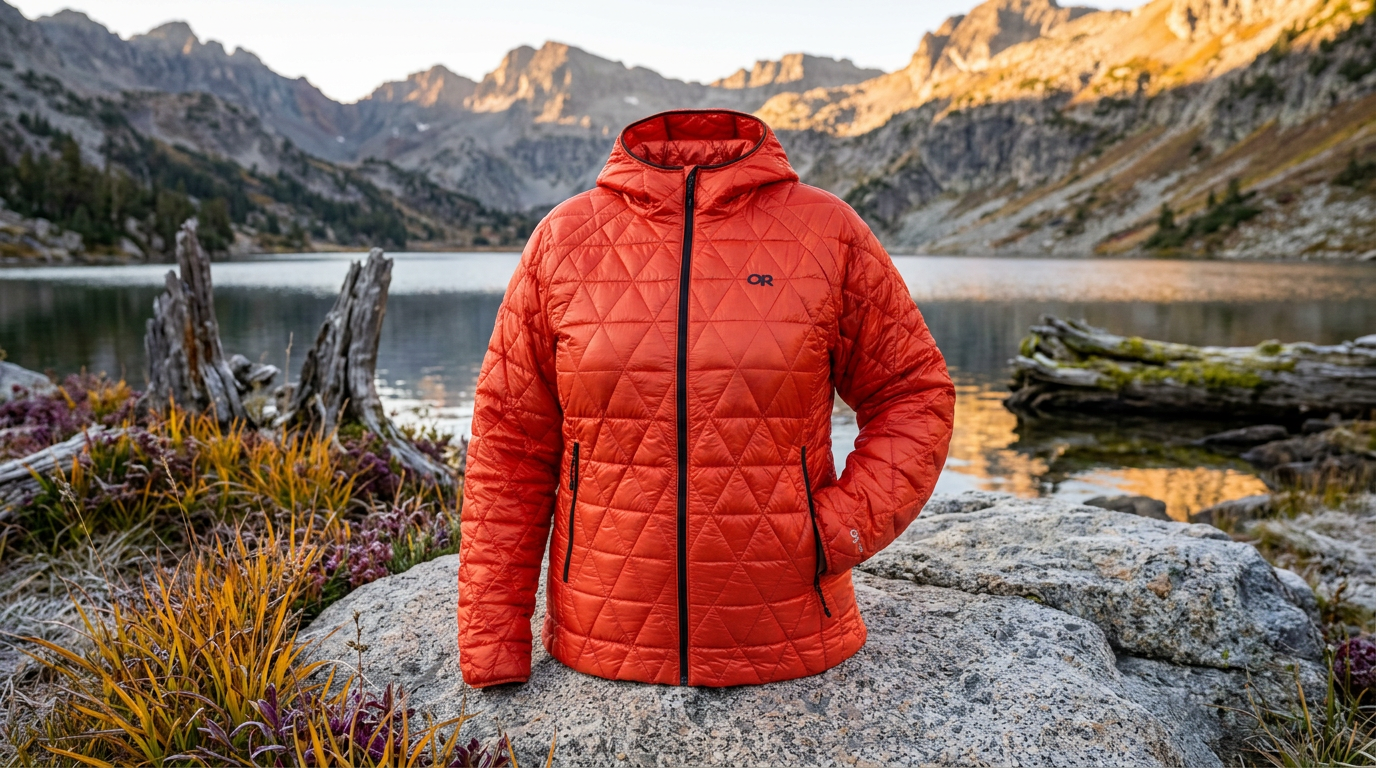
The Outdoor Research Women's Helium Insulated Hoodie, Plus is a hip-length synthetic insulated jacket built for three-season shoulder conditions where packability and breathability matter more than maximum warmth. With Pertex Quantum Fuse face fabric and Vertical X ECO SR synthetic insulation (55% recycled content), it targets fast-moving activities—alpine starts, trail running transitions, ski touring—where a down jacket would overheat or lose loft in damp conditions. At $209 MSRP, it's a mid-tier investment for active users who need reliable warmth without the moisture sensitivity of down.
Disclosure: Four Seasons Gear is reader-supported. When you buy through links on our site, we may earn an affiliate commission at no extra cost to you. Prices and availability are accurate as of the time we last checked.
Construction and Materials
The Helium Insulated Hoodie uses a Pertex Quantum Fuse shell (41% recycled nylon, 59% virgin nylon), a fabric known for wind resistance and light weight in the 20–30 denier range. The 20D ripstop nylon lining reduces interior friction and adds modest tear resistance. Vertical X ECO SR insulation—a blend of 55% Repreve recycled polyester, 35% Sorona (a bio-based polymer), and 10% conventional polyester—provides approximately 60 g/m² of synthetic loft. This insulation architecture uses vertical baffles to reduce cold spots and maintain breathability during high-output efforts.
Both the face fabric and lining carry bluesign APPROVED certification, indicating restricted chemical inputs and reduced environmental impact in manufacturing. The regular fit and hip length offer coverage without excess fabric, a design choice that prioritizes packability over extended torso warmth. The manufacturer does not publish a packed size or total weight, but similar Pertex Quantum synthetic jackets in this category typically compress to approximately 1.5–2 liters and weigh 280–340 g in women's medium.
Specs
Intended Use Cases
This jacket occupies the active-insulation niche: scenarios where you're moving hard enough to generate heat but need a thermal buffer against wind or temperature drops. Alpine climbing approaches, pre-dawn trail starts, ski touring ascents, and fall backpacking in variable weather are all core applications. The synthetic insulation retains approximately 70–80% of its warmth when damp, a meaningful advantage over down in Pacific Northwest drizzle or high-humidity mountain environments.
The hip length and regular fit mean this jacket layers well under a shell but won't provide the extended coverage of a parka-length piece. It's not designed for static belaying or camp wear in sub-freezing temperatures—users seeking maximum warmth per ounce should consider a higher-fill down jacket. The Helium Insulated Hoodie instead prioritizes breathability and recovery time: synthetic insulation dries faster than down and continues insulating during the drying process.
Comparison Context
In the synthetic insulated jacket category, the Helium Insulated Hoodie competes with pieces like the Patagonia Nano Puff and Arc'teryx Atom LT. The Pertex Quantum Fuse shell is lighter and more packable than the Nano Puff's ripstop polyester but offers less abrasion resistance. The Vertical X ECO SR insulation provides similar warmth-to-weight as PrimaLoft Gold but with higher recycled content. Compared to the Atom LT's Coreloft Compact insulation, the Helium's vertical baffle construction reduces weight but may create slightly more noticeable cold spots in static conditions.
At $209, the Helium Insulated Hoodie sits in the middle of the synthetic insulated market—more accessible than the Atom LT ($299) but pricier than budget synthetics like the REI Co-op 650 Down Jacket 2.0 ($139). The bluesign certification and recycled content justify part of the premium for environmentally-conscious buyers. Users prioritizing absolute durability over packability might consider a heavier-faced jacket; those chasing the lowest pack weight should evaluate whether a 60 g/m² synthetic provides enough warmth for their typical conditions.
Durability Considerations
The Pertex Quantum Fuse shell, while wind-resistant and lightweight, is not a high-denier fabric. Expect vulnerability to abrasion from pack straps, rock contact, and bushwhacking. The 20D ripstop lining provides some tear resistance, but this is fundamentally a packability-first design. Users who regularly brush against granite or scramble through dense vegetation should anticipate snags over multiple seasons. The vertical baffle construction reduces insulation migration compared to horizontal baffles, which helps maintain consistent warmth distribution over time.
Synthetic insulation degrades more slowly than down when exposed to repeated compression cycles, a meaningful advantage for jackets stored in pack lids or stuffed frequently. The Vertical X ECO SR blend should retain approximately 80–85% of its original loft after 50–100 compression cycles, though the manufacturer does not publish specific durability testing data. The bluesign-approved DWR (durable water repellent) coating will require reapplication after 20–40 wears in wet conditions to maintain bead-up performance.
Value Proposition
At $209, the Helium Insulated Hoodie delivers mid-tier value for users who specifically need synthetic insulation's moisture tolerance and active breathability. The recycled content and bluesign certification add non-performance value for buyers prioritizing supply chain transparency. The regular fit and hip length reduce fabric waste but also limit versatility—this jacket won't double as a casual town layer or provide extended coverage for cold belays.
The lack of published weight and packed size data is a notable omission at this price point; competitors routinely provide these specs. Users should verify current pricing, as synthetic insulated jackets in this category frequently see 20–30% discounts during seasonal sales. For buyers who live in consistently dry climates, a down jacket at similar weight will provide more warmth per dollar. For those facing Pacific Northwest drizzle, Sierra spring snow, or high-humidity alpine environments, the synthetic insulation justifies the investment.
What we like
Trade-offs
Best For
- Alpine climbers needing breathable insulation for approaches and descents
- Trail runners and fastpackers requiring packable warmth for dawn starts
- Ski tourers who overheat in down during ascents but need wind protection
- Fall and spring backpackers in humid or drizzly climates
- Environmentally-conscious buyers prioritizing recycled content and bluesign certification
- Active users who frequently compress and repack insulation layers
Not For
- Users needing maximum warmth per ounce (down is more efficient in dry conditions)
- Static activities like belaying, ice fishing, or camp wear in sub-freezing temps
- Buyers requiring extended torso and hip coverage
- Bushwhackers and scramblers prioritizing abrasion resistance over packability
- Budget-conscious shoppers who can find similar synthetic warmth under $150
Frequently Asked Questions
+How does synthetic insulation compare to down for wet-weather performance?
Synthetic insulation like Vertical X ECO SR retains approximately 70–80% of its warmth when damp, while down loses most of its loft and insulating ability when wet. Synthetic also dries 2–3 times faster than down. However, down provides more warmth per ounce in dry conditions and compresses smaller. Choose synthetic for Pacific Northwest drizzle, spring snow, or high-humidity environments; choose down for cold, dry climates where weight and packability are priorities.
+What temperature range is this jacket rated for?
The manufacturer does not publish a temperature rating, but 60 g/m² synthetic insulation typically provides comfort in the 35–50°F range during active use, or 45–60°F when stationary. Layering with a base layer and shell extends the range down to approximately 25–30°F for high-output activities. This is not a winter parka—it's designed for shoulder-season conditions and active movement.
+Can I wear this jacket under a hardshell for winter layering?
Yes, the regular fit and hip length are designed to layer under a shell. The Pertex Quantum Fuse face fabric has low friction and won't bunch excessively. However, the hip length means less overlap with shell jackets, which can create a gap at the waist during dynamic movement. Users needing extended coverage should consider a longer insulated jacket or add an insulated vest.
+How packable is the Helium Insulated Hoodie?
The manufacturer does not publish a packed size, but Pertex Quantum synthetic jackets in this weight class typically compress to approximately 1.5–2 liters (roughly the size of a 1-liter Nalgene). This is larger than a comparable down jacket but still packable enough for a backpack side pocket or pack lid. The vertical baffle construction compresses more efficiently than horizontal baffles.
+Is the Plus sizing true to size?
Outdoor Research's Plus sizing typically runs true to standard plus-size charts, with a regular fit that allows for base layers without excess fabric. The manufacturer does not provide detailed fit notes for this specific model, so users between sizes should consider ordering both and returning one. The regular fit is less forgiving than a relaxed fit, which may matter for layering over bulky mid-layers.

Read next
More from this category
REVIEW
Marmot Echo Featherless Jacket Review: Synthetic Insulation for Wet-Climate Hiking
REVIEW
Columbia Men's Powder Lite II Insulated Puffer Jacket Review

BEST OF
Best Rechargeable Headlamps for Backpacking
BEST OF
Best Beginner Binoculars for Hiking and Bird Watching

GUIDE
How to Choose a Backpacking Tent: The 5 Specs That Matter

GUIDE