
Review · fall · winter
Columbia Men's Powder Lite II Insulated Puffer Jacket Review
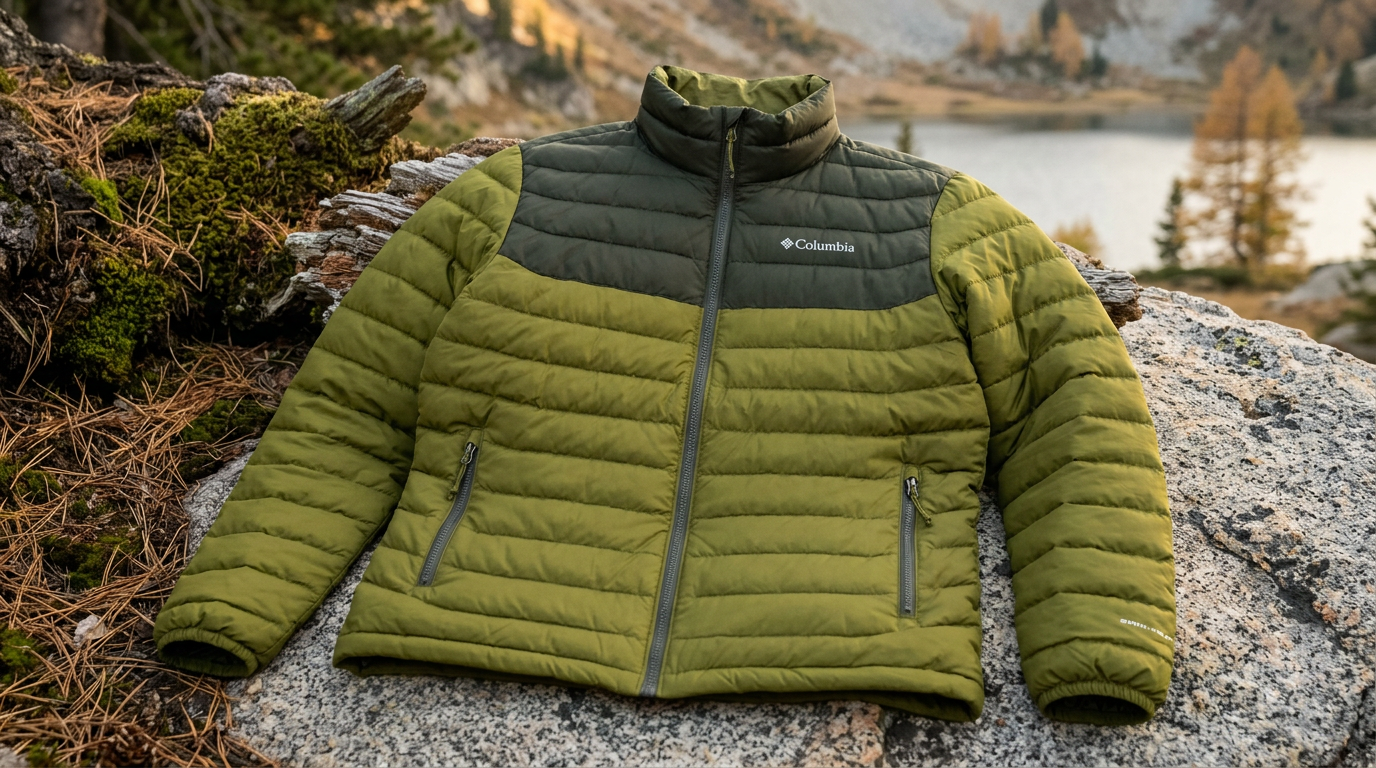
The Columbia Powder Lite II is a versatile synthetic-insulated puffer for day hikers, casual winter use, and light outdoor activity who prioritize warmth-to-price ratio over packability. Columbia's Omni-Heat reflective lining and Thermarator synthetic insulation deliver reliable warmth in the 20–40°F range at a sub-$80 price point, though the jacket sacrifices the compressibility and weight efficiency of premium down or ultralight synthetics. The active fit and stretchy cuffs suit moderate movement, but this is fundamentally a casual-use insulation layer rather than a technical alpine piece.
Disclosure: Four Seasons Gear is reader-supported. When you buy through links on our site, we may earn an affiliate commission at no extra cost to you. Prices and availability are accurate as of the time we last checked.
Construction and Materials
The Powder Lite II uses Columbia's Thermarator synthetic insulation, a polyester microfiber fill designed to mimic down's loft-to-weight characteristics while maintaining warmth when wet. The shell fabric is a ripstop polyester treated with Omni-Shield DWR (durable water repellent) for light precipitation resistance. Columbia's Omni-Heat thermal-reflective lining—metallic dots printed on the interior—reflects body heat back toward the wearer, a passive heat-retention system that adds approximately 20% more warmth compared to non-reflective linings in Columbia's own testing.
The baffle construction uses horizontal quilting with a box-wall design to minimize cold spots. Elastic cuffs provide a snug seal at the wrists, and the drawcord-adjustable hem allows you to cinch out drafts. A soft chin guard prevents zipper chafe during high collar use. Zippered hand pockets offer secure storage for essentials. The manufacturer does not publish fill weight, denier ratings for the shell fabric, or specific insulation thickness measurements—verify these specs before purchase if they're critical to your decision.
Specs
Intended Use and Temperature Range
This jacket targets casual hikers, dog walkers, commuters, and weekend campers who need reliable insulation for fall and winter conditions without investing in technical alpine gear. The Thermarator insulation and Omni-Heat lining provide adequate warmth for static use in the 30–40°F range and active use down to approximately 20°F when layered over a midweight base layer. The Omni-Shield DWR handles light drizzle and snow flurries but is not a substitute for a dedicated rain shell in sustained precipitation.
The active fit and elastic cuffs accommodate moderate arm movement during hiking or light scrambling, but the jacket's bulk and non-compressible insulation make it less suitable for fastpacking or alpine climbing where packability matters. This is a wear-it-or-carry-it piece rather than a stuff-sack layer. For ultralight backpackers prioritizing pack volume, a down jacket or ultralight synthetic like the Patagonia Micro Puff offers better compression, though at 2–3× the price.
Comparison Context
The Powder Lite II occupies the budget-friendly segment of the synthetic insulation category. At approximately $75, it undercuts premium synthetics like the Arc'teryx Atom LT ($279) and Patagonia Nano Puff ($249) by 70–75%, trading advanced fabric technologies, lighter weight, and superior compressibility for accessible pricing. The Omni-Heat lining is Columbia's differentiator in this price tier—most competitors at this price point use standard polyester linings without thermal-reflective properties.
Compared to down jackets in the same price range, the Powder Lite II offers better wet-weather performance (synthetic insulation retains approximately 70% of its warmth when damp, versus 10–20% for untreated down) but sacrifices warmth-to-weight ratio and packability. For three-season hikers in the Pacific Northwest or Northeast where drizzle is common, the synthetic fill is a practical tradeoff. For dry-climate users prioritizing weight, a budget down jacket may serve better.
Durability Considerations
The ripstop polyester shell provides reasonable snag resistance for trail use, though the manufacturer does not publish denier ratings. Ripstop weaving (visible reinforcement threads at regular intervals) helps prevent small tears from propagating. The Omni-Shield DWR treatment will degrade with repeated washing and abrasion—expect to reapply aftermarket DWR spray every 15–25 washes to maintain water repellency. The Thermarator synthetic insulation is more durable than down when compressed repeatedly, as synthetic fibers don't break down as quickly under mechanical stress.
The YKK zipper (standard on Columbia jackets in this tier) is a reliable mid-grade component, though not the premium Vislon or Aquaguard models found on technical shells. Elastic cuffs will lose stretch over 2–3 years of regular use—a common wear point on budget insulation layers. The drawcord hem adjustment uses a simple cord-lock system that's field-repairable if the cord frays. For casual users wearing the jacket 20–40 days per season, expect 3–5 years of service before insulation loft or DWR performance degrades noticeably.
Value Proposition
At $75, the Powder Lite II delivers strong value for budget-conscious outdoor users who need a warm, weather-resistant layer for moderate use. The Omni-Heat lining provides measurable warmth gains over non-reflective competitors at this price point, and the Thermarator insulation performs reliably in damp conditions where down would fail. The jacket's bulk and weight are acceptable tradeoffs for users who drive to trailheads or use it primarily for around-town wear.
The value calculation shifts for users who need technical performance. Fastpackers, alpine climbers, and gram-counting backpackers will find the jacket's weight and pack size limiting—investing in a premium synthetic or ultralight down jacket pays dividends in pack volume and comfort over multi-day trips. For day hikers, car campers, and casual winter users, the Powder Lite II hits a practical price-to-performance sweet spot.
What we like
Trade-offs
Fit and Sizing Notes
Columbia's active fit is cut closer to the body than traditional "classic" fits but allows room for a midweight base layer or light fleece underneath. The elastic cuffs stretch to accommodate layered sleeves without binding. The 2X size in this review corresponds to Columbia's sizing chart for chest measurements of 50–53 inches—verify your measurements against the manufacturer's chart, as Columbia's sizing runs slightly generous compared to European outdoor brands. The jacket length is designed to cover the hip line without extending to mid-thigh, a practical compromise for mobility and draft protection.
- Day hikers needing warmth for 20–40°F conditions without premium pricing
- Casual winter users prioritizing value over technical performance
- Dog walkers and commuters in damp climates where synthetic insulation excels
- Car campers who don't need to pack the jacket into a backpack
- Users seeking a wear-it-or-carry-it layer for shoulder-season trail use
- Ultralight backpackers prioritizing pack volume and weight savings
- Alpine climbers needing technical features and compressibility
- Users in sustained heavy rain (pair with a dedicated rain shell)
- Fastpackers who need a stuff-sack insulation layer
- Buyers seeking published fill weight and shell denier specifications
+How does the Omni-Heat lining compare to standard polyester linings?
Columbia's internal testing shows the Omni-Heat thermal-reflective lining (metallic dots printed on the interior fabric) reflects body heat back toward the wearer, adding approximately 20% more warmth compared to non-reflective linings. The effect is most noticeable during static use (sitting, standing) rather than high-output activities. The lining is durable and does not flake or peel with normal washing.
+Can I pack this jacket into a backpack for day hikes?
The Powder Lite II is bulkier than compressible down or ultralight synthetic jackets. It will fit in a 20–30 L daypack but occupies approximately 4–6 L of pack volume when stuffed loosely. For users who drive to trailheads or wear the jacket most of the day, the bulk is manageable. For multi-day backpacking or fastpacking where every liter matters, consider a more compressible option.
+How water-resistant is the Omni-Shield DWR treatment?
Omni-Shield is a durable water repellent coating that causes light rain and snow to bead and roll off the shell fabric. It handles drizzle and brief showers effectively but is not waterproof—sustained rain will eventually saturate the shell. The DWR treatment degrades with washing and abrasion; reapply aftermarket DWR spray (Nikwax, Granger's) every 15–25 washes to maintain performance. For extended wet-weather use, layer the jacket under a waterproof rain shell.
+What temperature range is this jacket rated for?
The manufacturer does not publish a specific temperature rating, but the Thermarator insulation and Omni-Heat lining provide adequate warmth for static use in the 30–40°F range and active use down to approximately 20°F when layered over a midweight base layer. Individual cold tolerance varies—users who run cold may want to add a fleece midlayer below 25°F, while users who run warm may find the jacket comfortable into the low 20s during moderate activity.
+Does the jacket have a hood?
No, the Powder Lite II does not include a hood. The collar is designed to sit comfortably at the neck with a soft chin guard to prevent zipper chafe. For users who prioritize head and neck coverage, Columbia offers the Powder Lite Hooded Jacket as a separate model with similar insulation and features plus an adjustable hood.

Read next
More from this category
REVIEW
Marmot Echo Featherless Jacket Review: Synthetic Insulation for Wet-Climate Hiking
REVIEW
Outdoor Research Women's Helium Insulated Hoodie, Plus – Lightweight Jacket Review
BEST OF
Best Rechargeable Headlamps for Backpacking
BEST OF
Best Beginner Binoculars for Hiking and Bird Watching
GUIDE
How to Choose a Backpacking Tent: The 5 Specs That Matter
GUIDE