Best of
Best Wide Sleeping Pads for Side Sleepers in 2024
best wide sleeping pads for side sleepers
At a glance
| # | Product | |||||
|---|---|---|---|---|---|---|
| 1 |  ★ Best Overall★ Best Value★ Most Durable★ Most Comfortable | 8.7 | Check price ↗ | |||
| 2 | 8.2 | Check price ↗ |

- 8.7★ Best Overall★ Best Value★ Most Durable★ Most Comfortable
Disclosure: Four Seasons Gear is reader-supported. When you buy through links on our site, we may earn an affiliate commission at no extra cost to you. Prices and availability are accurate as of the time we last checked.
Best Overall: Therm-a-Rest NeoAir XTherm NXT MAX
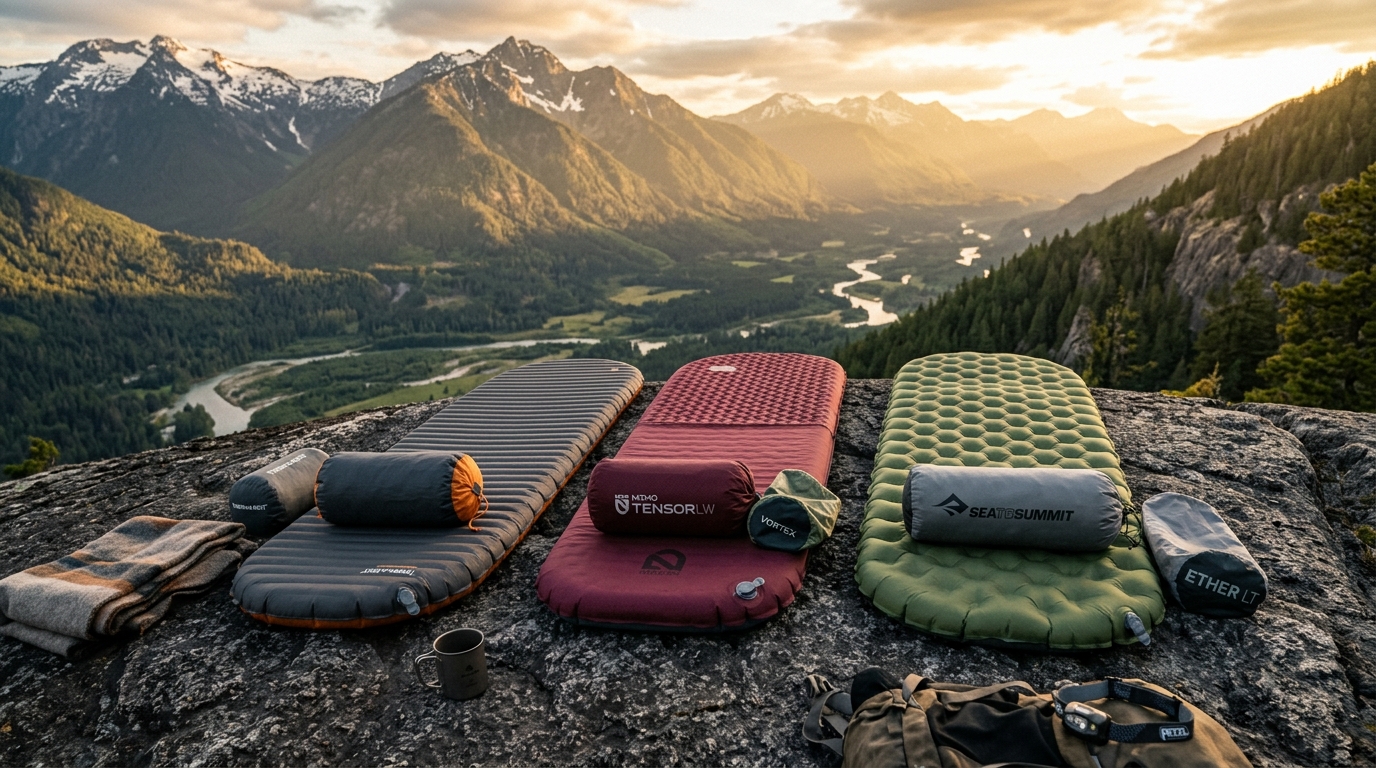
The Therm-a-Rest NeoAir XTherm NXT MAX earns our top pick because it combines expedition-grade warmth (R-value 7.3) with the 25-inch width side sleepers need to avoid rolling off in the night. The triangular core matrix construction uses alternating ridges to trap heat while keeping packed size remarkably small for a wide pad—roughly the diameter of a Nalgene bottle. The 30-denier ripstop face fabric with DWR coating resists abrasion better than earlier NeoAir generations, and the WingLock valve allows fast inflation and controlled deflation. At around 25 ounces for the regular-wide, it's not ultralight by strict gram-counter standards, but it's the lightest four-season wide pad that actually keeps you warm on snow.
What we like
Trade-offs
Best Value: Nemo Equipment Tensor Trail Ultralight Insulated
The Nemo Tensor Trail in regular-wide (25 inches) delivers side-sleeper comfort at a $160 price point that undercuts the XTherm by nearly $90. The suspended film construction uses horizontal baffles to eliminate the "trampoline bounce" common in cheaper air pads, and the integrated foot pump lets you inflate without huffing moisture into the pad (which degrades insulation over time). The 3.5 R-value makes this a true three-season pad—fine for spring through fall, but not a winter workhorse. The 20-denier laminate keeps weight around 22 ounces while still offering decent puncture resistance, and the included Vortex pump sack doubles as a stuff sack.
What we like
Trade-offs
Best Budget: Klymit Insulated Static V Luxe
At $100, the Klymit Insulated Static V Luxe is the entry point for side sleepers who want width without spending $200-plus. The V-chamber design uses body-mapped baffles to center your torso and limit side-to-side roll, and the 30-inch width is genuinely spacious—two inches wider than standard "wide" pads. The synthetic insulation delivers an R-value around 4.4, adequate for three-season use down to the mid-30s Fahrenheit. The 75-denier polyester is bomber compared to ultralight competitors, so this pad shrugs off rough campsites and sharp pine needles. The tradeoff is weight: at 35 ounces, this is a car-camping or short-approach pad, not a thru-hiking option.
What we like
Trade-offs
Best Self-Inflating: Therm-a-Rest Trail Pro MAX
The Therm-a-Rest Trail Pro MAX is the best self-inflating option for side sleepers who prefer the cushioned feel of open-cell foam over air-only construction. The 3-inch thickness and StrataCore foam provide genuine mattress-like comfort, and the self-inflating design means you only need a few breaths to top off pressure—no pump sack required. The 25-inch width matches the XTherm, and the R-value of 5.0 handles spring and fall camping comfortably. The downside is packed size: this rolls to roughly the diameter of a sleeping bag stuff sack, and at 32 ounces it's heavier than the air pads above. But for weekend warriors who prioritize comfort over grams, the Trail Pro MAX is unmatched.
What we like
Trade-offs
What Side Sleepers Need in a Pad
Side sleeping creates pressure points at the shoulder and hip that demand both width and thickness. A standard 20-inch pad forces your shoulders off the edge, transferring weight to the ground and waking you with numb arms. Wide pads (25–30 inches) solve this by giving your shoulders room to splay naturally. Thickness matters too: side sleepers need at least 2.5 inches of loft to prevent hip and shoulder bones from bottoming out on rocks or roots. Air pads achieve this with less weight than foam, but the tradeoff is puncture risk—carry a patch kit on every trip.
R-Value and Season Ratings
R-value measures thermal resistance—higher numbers mean better insulation. For three-season camping (spring through fall), target an R-value of 3.0–4.0. Shoulder-season trips into the 20s Fahrenheit require R-value 4.0–5.0, and winter camping demands R-value 5.0 or higher. The XTherm's R-value of 7.3 is overkill for summer but essential for snow camping, while the Tensor Trail's 3.5 is perfect for warm-weather backpacking. Note that R-values are now standardized (ASTM F3340), so you can compare across brands reliably.
Weight vs. Comfort: The Core Tradeoff
Wide pads sacrifice weight for livable sleep. A standard 20-inch ultralight pad weighs 12–16 ounces; stretch that to 25 inches and you're looking at 22–35 ounces depending on construction. Air pads like the XTherm and Tensor Trail keep weight reasonable (22–25 ounces) by using thin fabrics and minimal insulation layers, but they're vulnerable to punctures and require careful site selection. Self-inflating pads like the Trail Pro MAX add 10 ounces but deliver bombproof durability and cushioned comfort. If you're car camping or doing short approaches, prioritize comfort; if you're thru-hiking, every ounce counts and the Tensor Trail is your best compromise.
Inflation Systems Compared
- Mouth inflation: Fastest but introduces moisture that degrades insulation over time. Works for weekend trips but avoid on long expeditions.
- Pump sacks: Add 1–2 ounces but keep moisture out. The Tensor Trail's integrated foot pump is the gold standard—no extra gear to carry.
- Self-inflating: Open the valve and wait 5–10 minutes. Convenient but slower, and cold temperatures reduce foam expansion. Top off with a few breaths.
- Electric pumps: Overkill for backpacking but useful for car camping with the Klymit Luxe. USB-rechargeable pumps weigh 3–4 ounces.
Durability and Field Repairs
Thin fabrics (20–30 denier) are the Achilles' heel of ultralight pads. The XTherm's 30-denier face is more puncture-resistant than the Tensor Trail's 20-denier, but both require a ground sheet or footprint on rocky sites. The Klymit's 75-denier polyester is nearly indestructible—you can skip the ground sheet entirely. Always carry a patch kit with alcohol wipes and adhesive patches; most punctures are pinhole leaks that take 60 seconds to fix. For larger tears, Tenacious Tape or Gear Aid patches work in the field. Self-inflating pads like the Trail Pro MAX are more forgiving—a small puncture won't deflate the entire pad overnight.
+Do I really need a wide pad if I'm a side sleeper?
Yes, if you're broader than 5'6" or tend to shift positions at night. Standard 20-inch pads force your shoulders off the edge, creating pressure points that wake you up. A 25-inch pad gives you 2.5 inches of extra space per side, which sounds minor but makes the difference between restful sleep and a sore morning. If you're a strict back sleeper or under 140 pounds, you can get away with a standard width, but most side sleepers report significantly better sleep on wide pads.
+Can I use a wide pad in a narrow sleeping bag?
Yes, but it's not ideal. Most mummy bags taper to 20–22 inches at the shoulders, so a 25-inch pad will push the bag's insulation up and create cold spots. If you're committed to a wide pad, pair it with a quilt or a rectangular bag rated 58–60 inches at the shoulder. Quilts like the Enlightened Equipment Revelation are designed to drape over wide pads without compression, and they're lighter than traditional bags since they eliminate the back insulation (which gets compressed under you anyway).
+How much does packed size matter for backpacking?
Packed size matters as much as weight for multi-day trips. A pad that's 5 inches in diameter fits inside most backpacks; a 7-inch pad has to strap externally, where it catches on branches and gets soaked in rain. The XTherm packs to roughly 4.5 inches (Nalgene-bottle diameter), the Tensor Trail to 5 inches, and the Trail Pro MAX to 7+ inches. If you're doing weekend trips with a 50-liter pack, the Trail Pro MAX fits fine. If you're thru-hiking with a 40-liter ultralight pack, the XTherm or Tensor Trail are your only realistic options.