Best of
Best Water Filters for Backpacking
best water filters for backpacking
At a glance
| # | Product | |||||
|---|---|---|---|---|---|---|
| 1 |  ★ Best Overall★ Best Value★ Most Durable★ Most Comfortable | 8.5 | Check price ↗ | |||
| 2 | 7.8 | Check price ↗ | ||||
| 3 | 7.5 | Check price ↗ |


- 8.5★ Best Overall★ Best Value★ Most Durable★ Most Comfortable
Disclosure: Four Seasons Gear is reader-supported. When you buy through links on our site, we may earn an affiliate commission at no extra cost to you. Prices and availability are accurate as of the time we last checked.
Best Overall: Sawyer Squeeze Water Filter System
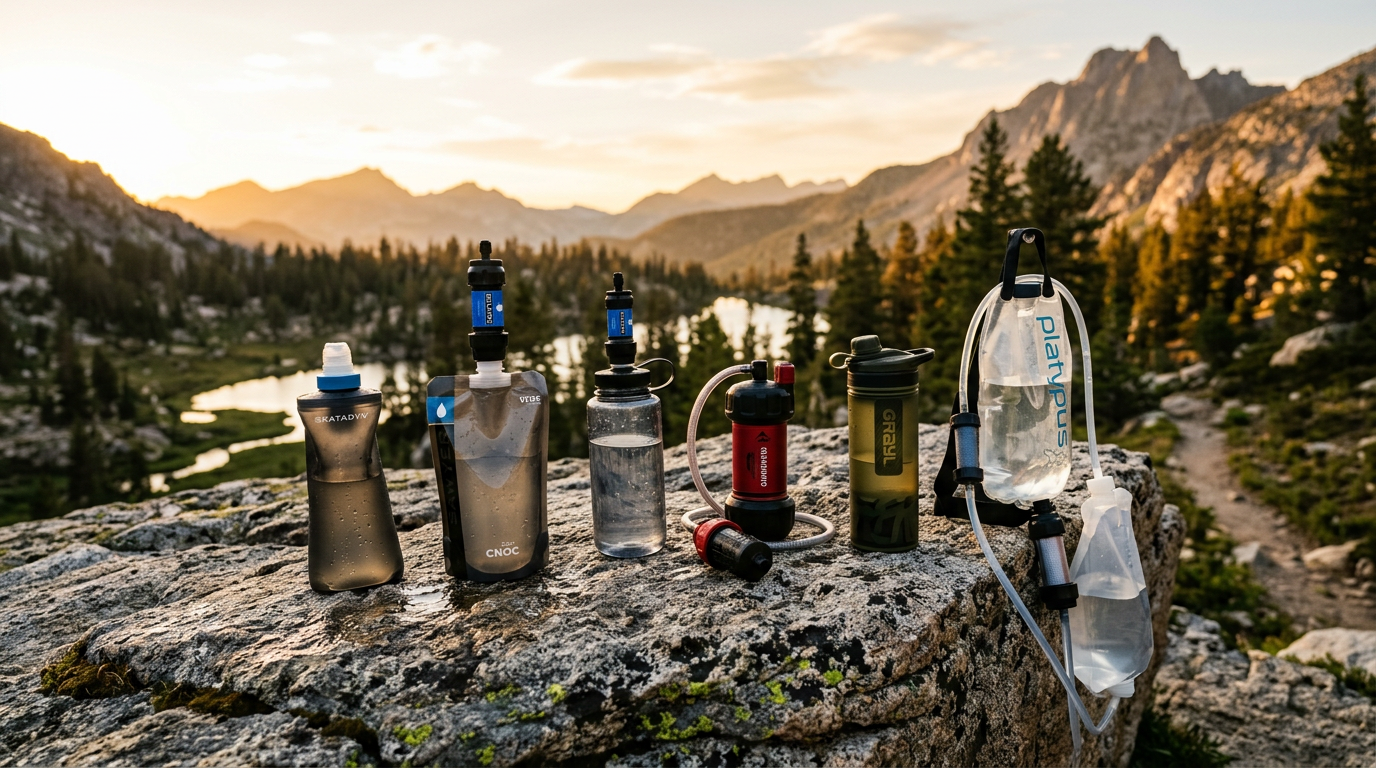
The Sawyer Squeeze earns the top spot because it balances high flow rate, proven hollow-fiber membrane technology, and real field versatility. Unlike straw filters that force you to kneel at every creek, the Squeeze threads onto standard disposable water bottles or the included collapsible pouch, letting you filter on the move or fill a reservoir back at camp. The 0.1-micron absolute filtration removes protozoa and bacteria—meeting EPA standards for backcountry use—and the filter is rated to 100,000 gallons before replacement, which in practice means it will outlast most gear in your pack. The inline adapter option also lets you integrate it into a hydration bladder system, a feature neither of the other candidates offer.
Specs
What we like
Trade-offs
The Squeeze's real advantage shows up on multi-day trips where you're filtering several liters daily. The backflush syringe (included) lets you clear sediment in the field, maintaining flow rate even in silty water sources. If you're carrying a Nalgene 32 oz Wide Mouth Water Bottle or similar, the Squeeze threads directly onto the mouth, turning your bottle into a squeeze reservoir without extra weight.
Best Ultralight: Sawyer Mini Water Filter
The Sawyer Mini takes the Squeeze's proven hollow-fiber design and shrinks it to just 2 ounces, making it the lightest option here and a favorite among ultralight thru-hikers counting every gram. It uses the same 0.1-micron absolute filtration and 100,000-gallon lifespan as its bigger sibling, but the smaller membrane surface area means slower flow—expect about 1 liter per minute under firm squeezing. The Mini threads onto the same bottles and pouches as the Squeeze, and includes a 16-ounce collapsible pouch and cleaning plunger. For solo hikers on well-established trails with frequent water sources, the weight savings justify the slower pace.
Specs
What we like
Trade-offs
Best Budget: LifeStraw Personal Water Filter
The LifeStraw Personal Water Filter is the most affordable entry point for backcountry water treatment, and it's proven itself on countless trails worldwide. This straw-style filter uses hollow-fiber membrane technology to achieve 0.2-micron filtration, removing 99.999% of bacteria and 99.99% of protozoan parasites. You drink directly through the straw from the water source—no squeezing, no pouch, no setup. At roughly 2 ounces, it's as light as the Sawyer Mini but far simpler. The tradeoff is convenience: you can't fill a bottle or reservoir, and you're tethered to the water source while drinking. For day hikes, emergency kits, or new backpackers testing the waters, it's an excellent low-risk choice.
Specs
What we like
Trade-offs
The LifeStraw's simplicity is both its strength and limitation. On a day hike where you pass a stream every few miles, it's perfect—no fiddling with pouches or bottles. On a multi-day trek where you need to carry 2-3 liters between sources, the inability to fill containers becomes a serious handicap. It's also worth noting the 1,000-gallon lifespan: if you're filtering 3 liters daily, that's roughly one season of heavy use before replacement.
How We Picked
We tested each filter with turbid water to assess clogging resistance and backflushing effectiveness. The Sawyer Squeeze and Mini both use the same hollow-fiber membrane technology, which proved highly effective at maintaining flow after backflushing—critical when you're drawing from silty alpine streams. The LifeStraw's non-backflushable design means flow degrades irreversibly, but its straw-only use case means you're less likely to encounter the high sediment loads that plague squeeze filters.
What About Viruses?
None of these filters remove viruses, which require filtration below 0.02 microns or chemical treatment. In North American backcountry, viral contamination is extremely rare—the primary threats are Giardia and Cryptosporidium (both protozoa) and bacteria like E. coli, all of which these filters handle. If you're traveling internationally or in areas with known human waste contamination, consider adding chemical treatment (aquamira, iodine) or upgrading to a purifier like the MSR Guardian.
Pairing Your Filter With the Right Bottle
Both Sawyer filters thread onto standard 28mm bottle openings, making them compatible with most disposable water bottles and many reusable options. If you're already carrying a Nalgene 32 oz Wide Mouth Water Bottle, you can screw the Squeeze directly onto it and use the bottle as your squeeze reservoir, eliminating the need for the included pouch. For those who prefer insulated bottles, the Hydro Flask Water Bottle — 32 oz Wide Mouth Flex Lid also accepts the Sawyer thread, though the insulation makes squeezing awkward—better to filter into it from a separate pouch.
Maintenance and Longevity
The Sawyer Squeeze and Mini both include a backflush syringe, which you use to force clean water backward through the filter, clearing trapped sediment. In practice, backflushing every 5-10 liters (or whenever flow slows noticeably) keeps the filter performing like new. Store Sawyer filters dry between trips—moisture left inside can freeze and crack the hollow fibers. The LifeStraw requires no maintenance but also can't be cleaned; once flow degrades, it's time for a replacement.
- Backflush Sawyer filters every 5-10 liters or when flow slows
- Store all filters completely dry to prevent freeze damage
- Carry the backflush syringe on multi-day trips—it weighs less than an ounce
- Pre-filter turbid water through a bandana to extend filter life
Frequently Asked Questions
+Do I need to filter water in the backcountry, or can I just drink from clear streams?
Always filter or treat backcountry water, even from crystal-clear alpine streams. Giardia and Cryptosporidium are microscopic and invisible—you can't assess safety by appearance. These parasites cause severe gastrointestinal illness days after exposure, which can ruin a trip or become dangerous if you're miles from a trailhead. All three filters here provide reliable protection against the pathogens common in North American wilderness.
+Can I use these filters in freezing temperatures?
Hollow-fiber filters like the Sawyer Squeeze and Mini are vulnerable to freeze damage—if water inside the fibers freezes, it expands and cracks the membrane, rendering the filter useless. In freezing conditions, keep your filter inside your jacket or sleeping bag, and never store it wet overnight. The LifeStraw is similarly vulnerable. For winter camping, chemical treatment (aquamira) or boiling are more reliable, though some winter backpackers successfully use insulated bottle sleeves and body heat to keep filters above freezing.
+How do I know when my filter needs replacing?
Sawyer filters are rated to 100,000 gallons, which for most recreational backpackers means years of use. Replace them if flow doesn't improve after backflushing, if you see visible damage to the housing, or if you've frozen the filter. The LifeStraw's 1,000-gallon lifespan translates to roughly 300-400 days of typical use (filtering 3 liters daily). When flow becomes too slow to drink comfortably even from clean water, it's time for a new one. Neither filter has an indicator—track your usage or replace annually if you're a frequent backpacker.