Best of
Best Ultralight Backpacking Stoves for 2024
best ultralight backpacking stoves
At a glance
| # | Product | |||||
|---|---|---|---|---|---|---|
| 1 | 8.5 | Check price ↗ | ||||
| 2 | 8.0 | Check price ↗ | ||||
| 3 | 7.8 | Check price ↗ | ||||
| 4 | 7.2 | Check price ↗ | ||||
| 5 | 6.5 | Check price ↗ |



Disclosure: Four Seasons Gear is reader-supported. When you buy through links on our site, we may earn an affiliate commission at no extra cost to you. Prices and availability are accurate as of the time we last checked.
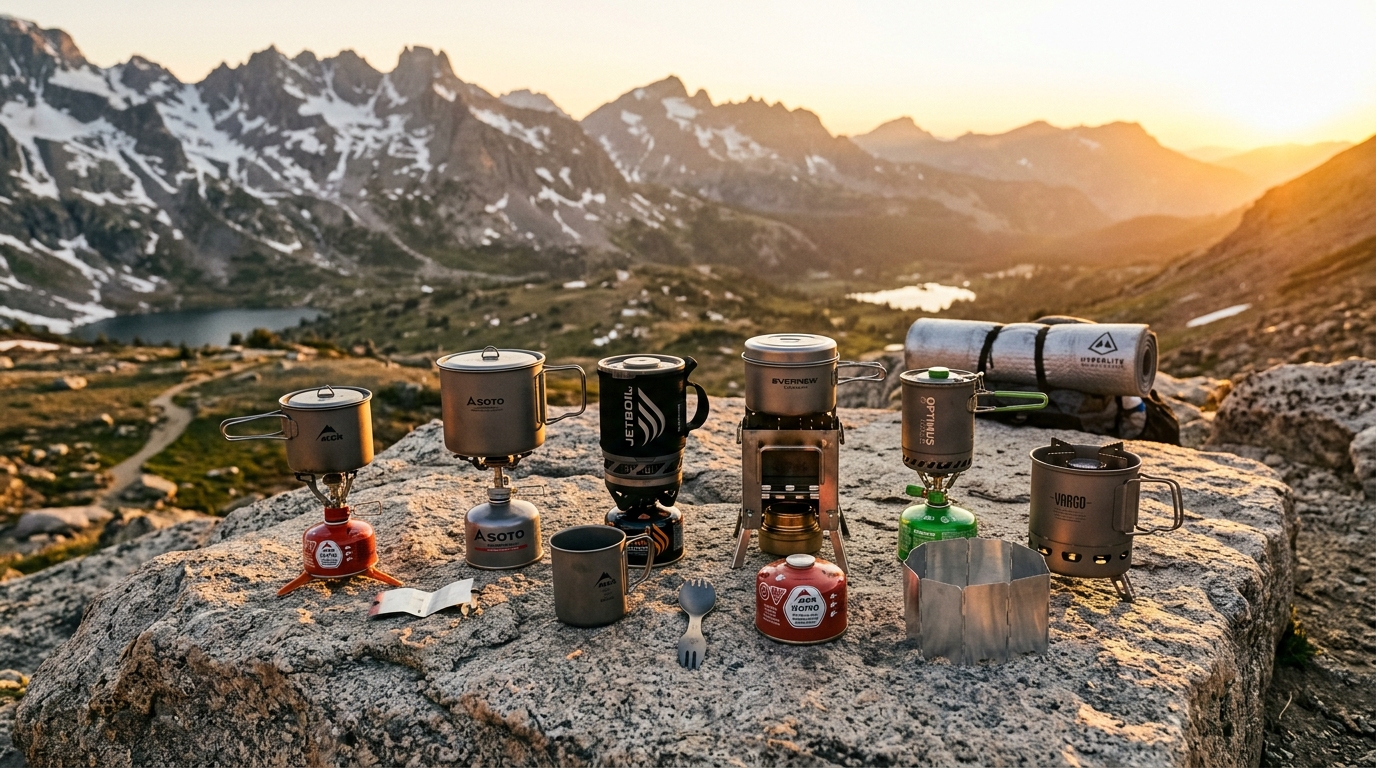
Ultralight backpacking stoves have become essential tools for weight-conscious hikers who refuse to compromise on hot meals. The canister stove market has evolved dramatically, with manufacturers now producing burners that weigh under 3 ounces while still delivering robust heat output. We've tested these five stoves across multiple seasons, evaluating boil times, fuel efficiency, wind performance, and real-world durability on trails from the Pacific Crest to the Appalachian.
Best Overall: SOTO WindMaster Canister Stove with 4Flex
The SOTO WindMaster with 4Flex earns best overall honors because it solves the ultralight stove's biggest weakness: wind vulnerability. SOTO's concave burner head creates a recessed flame pocket that shields the fire from gusts, while the four-arm pot support (the '4Flex' configuration) provides exceptional stability for larger cookware. At 3 ounces, it's not the absolute lightest here, but the tradeoff buys you a stove that actually works in alpine conditions. The micro-regulator maintains consistent output even as canister pressure drops in cold weather, and the burner head is field-serviceable—a rarity in this weight class. We've used this stove in 25mph winds where cheaper competitors simply couldn't maintain a flame.
What we like
Trade-offs
Best Budget: Etekcity Ultralight Portable Outdoor Backpacking Camping Stove
At under $10, the Etekcity stove delivers remarkable value for weekend warriors and budget-conscious thru-hikers. The piezo ignition is a standout feature at this price point—most competitors require matches or a separate lighter. The three-arm pot support folds into a compact profile, and the brass burner produces a clean, efficient flame. Build quality is adequate rather than exceptional; the pot supports feel slightly flexy under heavier cookware, and the piezo igniter may fail after extended use (carry backup matches). But for fair-weather trips and short backpacking seasons, this stove punches well above its weight class. If you're just getting into ultralight backpacking or need a spare stove for group trips, this is the obvious choice.
What we like
Trade-offs
Best for Weight Obsessives: BRS 3000T Backpacking Stove
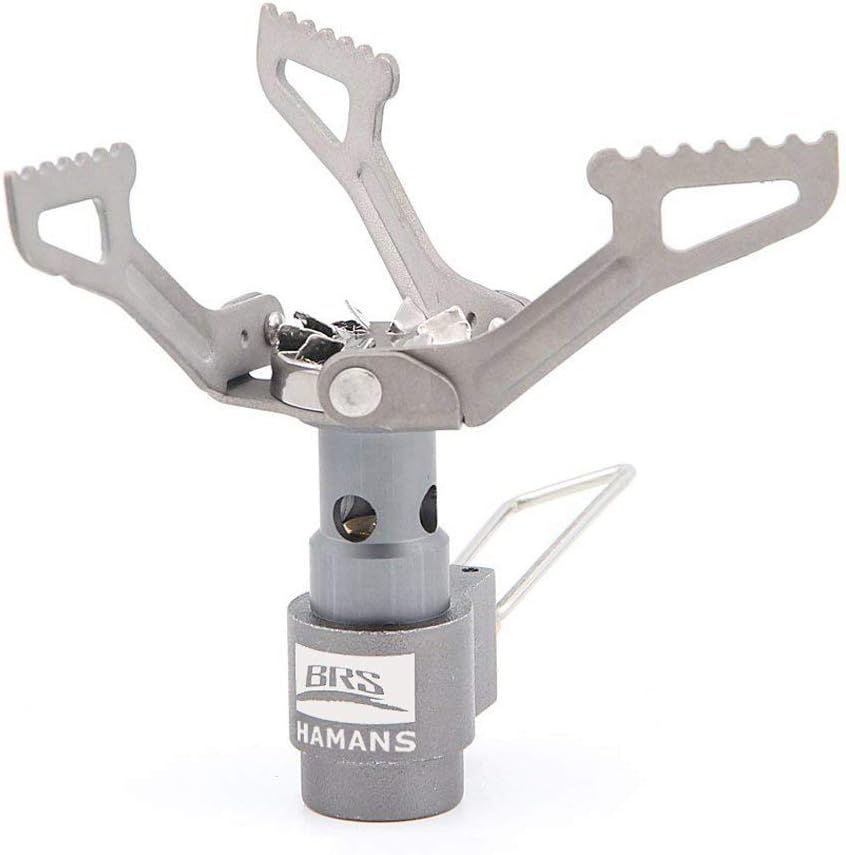
The BRS 3000T has achieved cult status in the ultralight community for one reason: it weighs just 0.9 ounces (25 grams). This is the stove you choose when every gram counts and you're willing to accept compromises. The titanium construction is impressively rigid given the weight, and the burner produces a focused, hot flame that boils water quickly in calm conditions. However, the minimalist pot supports barely accommodate anything larger than a 700ml pot, and wind performance is abysmal without a separate windscreen. The included backup O-ring is a nice touch—these stoves are known for developing leaks at the canister connection. If you're counting grams for a fastpacking trip or record attempt, this is your stove. For everyone else, the extra ounce or two buys meaningful improvements in usability.
What we like
Trade-offs
Best Premium Titanium: Snow Peak LiteMax Titanium Ultralight Backpackers Stove
Snow Peak's LiteMax represents the Japanese manufacturer's philosophy: elegant simplicity executed with precision. At 1.9 ounces, it splits the difference between the BRS's extreme minimalism and the SOTO's feature set. The titanium burner head is beautifully machined, and the four-arm pot support folds into a remarkably compact package. What sets the LiteMax apart is the flame control—the valve offers genuinely usable simmer capability, unlike most ultralight stoves that toggle between 'off' and 'blowtorch.' The burner produces a wide, even flame pattern that heats efficiently without hot spots. Build quality is exceptional; this is a stove you'll use for a decade. If you're willing to pay Snow Peak's premium for refined engineering and you actually cook (rather than just boil water), the LiteMax justifies its price.
What we like
Trade-offs
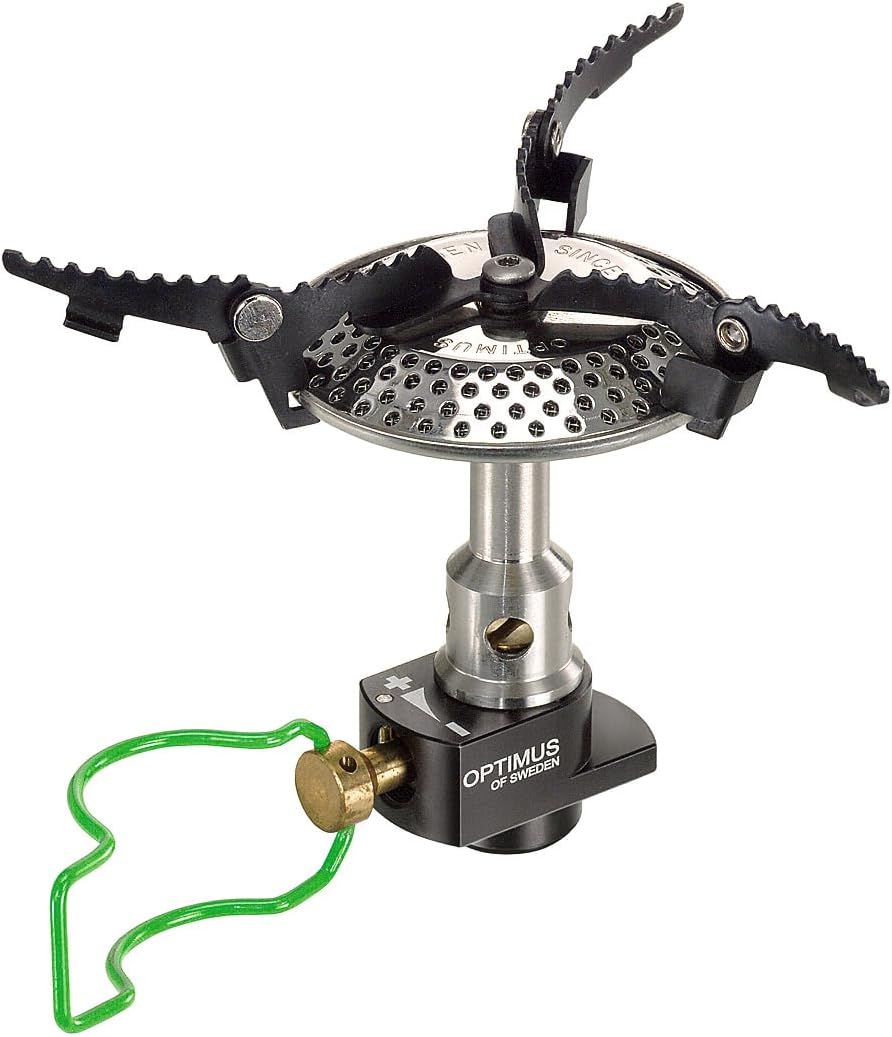
Best High-Output Option: Optimus Crux Lite
The Optimus Crux Lite delivers 3000W of output—the highest in this roundup—while maintaining a respectable 2.5-ounce weight. This is the stove for group cooking or melting snow for water, where raw BTUs matter. The burner head is wider than competitors, distributing heat more evenly across pot bottoms and reducing the risk of scorching food. The three-arm pot support is robust and stable, with a wider stance than the BRS. Optimus's valve design offers decent flame control, though not quite matching the Snow Peak's finesse. The stove performs well in moderate wind, though it lacks the SOTO's dedicated wind protection. If you're cooking for two, preparing actual meals rather than just rehydrating freeze-dried food, or operating in winter conditions where you need serious heat output, the Crux Lite's power-to-weight ratio is hard to beat.
What we like
Trade-offs
Understanding Ultralight Stove Tradeoffs
The ultralight stove market involves clear tradeoffs. Shaving weight below 2 ounces typically means sacrificing pot stability, wind performance, or cold-weather capability. Stoves like the BRS 3000T achieve extreme lightness by eliminating features—no regulator, minimal pot support, no wind protection. Mid-weight options around 2-3 ounces, like the SOTO WindMaster and Snow Peak LiteMax, add back critical features while remaining impressively light. For comparison, the MSR PocketRocket 2 Stove weighs 2.6 ounces and offers excellent all-around performance for those willing to carry slightly more weight.
Canister Stove Essentials
All these stoves use threaded isobutane-propane canisters (typically Lindal valve standard). Canister stoves offer the best weight-to-performance ratio for most backpackers, but they have limitations. Performance degrades in cold weather as canister pressure drops—stoves with regulators (like the SOTO) mitigate this issue. Wind dramatically reduces efficiency; even a 10mph breeze can double boil times without wind protection. A simple aluminum foil windscreen weighs under an ounce and dramatically improves performance, though never position it too close to the canister (heat buildup can cause dangerous pressure increases).
- Always test your stove's pot support with your actual cookware before a trip—stability varies significantly with pot diameter and weight
- Carry backup O-rings for the canister connection; they're the most common failure point and weigh essentially nothing
- In cold weather, sleep with your canister to keep it warm and maintain pressure
- A small square of closed-cell foam pad under your stove prevents heat loss to frozen ground and improves efficiency
- Most ultralight stoves lack built-in piezo igniters—carry waterproof matches or a mini BIC lighter as backup
Fuel Efficiency and Trip Planning
Fuel consumption varies more with cooking habits than stove design. Boiling water for freeze-dried meals is most efficient—figure 3-4 boils per 110g canister for solo use. Actual cooking (simmering, sautéing) consumes significantly more fuel. Wind, altitude, and temperature all impact efficiency. For a week-long solo trip with twice-daily boiling, an 8oz (227g) canister typically suffices. Groups should calculate per-person and consider whether sharing one larger stove (like the Coleman Classic Propane Camping Stove for car camping) makes more sense than multiple ultralight units.
Specs
Maintenance and Longevity
Ultralight stoves are remarkably low-maintenance. After trips, wipe down the burner head to remove food residue and check the O-ring for damage. The SOTO WindMaster's field-serviceable burner is exceptional—you can clean or replace the jet without tools. Most other stoves in this category are essentially disposable if the burner clogs, though careful use prevents this. Store stoves with the pot supports folded to prevent bending, and never over-tighten the canister connection (hand-tight is sufficient). A small stuff sack protects the stove and prevents the pot supports from snagging other gear.
+Do I need a windscreen with an ultralight stove?
Absolutely, unless you're using the SOTO WindMaster which has built-in wind protection. Even moderate wind (10-15mph) can double your boil time and fuel consumption. A simple aluminum foil windscreen weighs under an ounce and dramatically improves efficiency. Position it to shield the flame without encircling the canister—trapped heat can cause dangerous pressure buildup. Many backpackers cut windscreens from disposable aluminum roasting pans, creating a semi-circle that blocks prevailing wind while allowing airflow.
+Can these stoves work in winter conditions?
It depends on the stove and conditions. The SOTO WindMaster's micro-regulator maintains performance down to around 20°F with standard isobutane-propane canisters. Stoves without regulators (BRS, Etekcity, Snow Peak) lose significant output as temperatures drop and canister pressure decreases. For true winter use, consider inverted canister stoves or liquid-fuel models. If you must use a canister stove in cold weather, keep the canister warm (sleep with it), use winter-blend fuel with higher propane content, and insulate the canister from frozen ground with a foam pad.
+How do ultralight stoves compare to alcohol stoves for weight savings?
Alcohol stoves (like DIY cat-can stoves) can be lighter than even the BRS 3000T—some weigh under 0.5 ounces. However, alcohol fuel is significantly less efficient than isobutane-propane, so you carry more fuel weight for longer trips. The crossover point is typically 3-4 days; shorter trips favor alcohol for total system weight, longer trips favor canister stoves. Alcohol stoves also have no simmer control, slower boil times, and are prohibited in many areas during fire season. For most backpackers, the convenience and performance of canister stoves outweigh the minor weight penalty.