Best of
Best Mummy Sleeping Bags for Cold Weather
best mummy sleeping bags for cold weather
At a glance
| # | Product | |||||
|---|---|---|---|---|---|---|
| 1 |  ★ Best Overall★ Most Durable★ Most Comfortable | 8.2 | Check price ↗ | |||
| 2 | 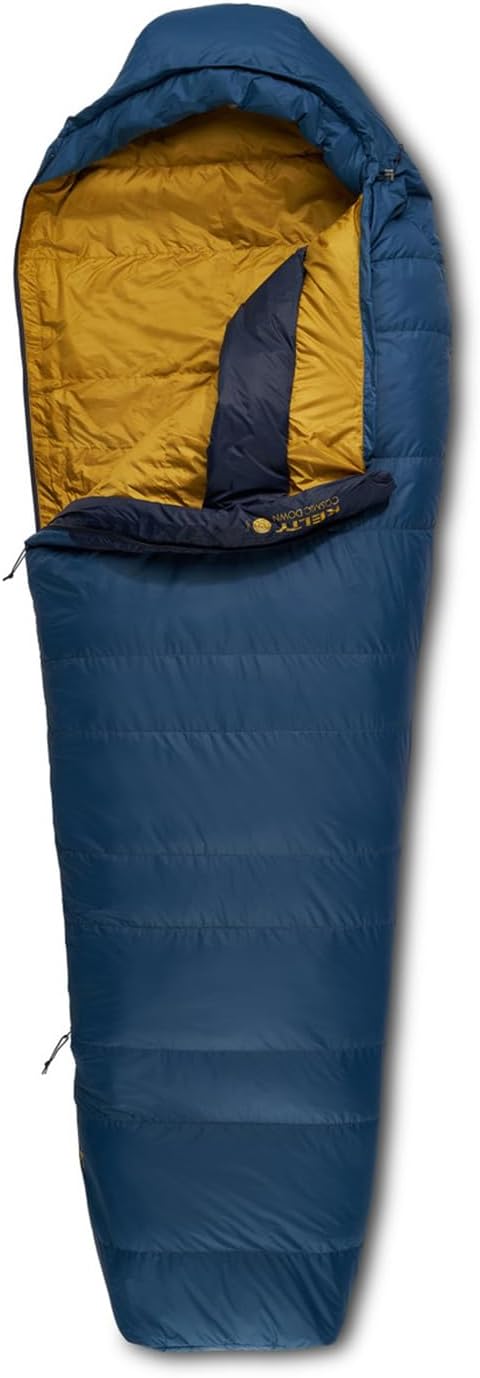 ★ Best Value | 7.8 | Check price ↗ | |||
| 3 | 7.8 | Check price ↗ | ||||
| 4 | 7.5 | Check price ↗ | ||||
| 5 | 7.2 | Check price ↗ |


- 8.2★ Best Overall★ Most Durable★ Most Comfortable
Disclosure: Four Seasons Gear is reader-supported. When you buy through links on our site, we may earn an affiliate commission at no extra cost to you. Prices and availability are accurate as of the time we last checked.
Best Overall: Therm-a-Rest 20F/-6C Down Sleeping Bag
The Therm-a-Rest 20F/-6C earns top honors for its exceptional warmth-to-weight ratio and field-proven construction. This bag uses 900-fill-power down—the highest quality insulation in this lineup—which means it packs smaller and lofts higher than competitors while delivering reliable warmth at its 20°F EN Lower Limit rating. The box-baffle construction prevents down migration, and the draft collar with a cinch cord creates a thermal seal around your shoulders that eliminates cold spots during frigid nights. At $469.95, it's a significant investment, but the combination of premium materials, thoughtful design details like the internal stash pocket, and Therm-a-Rest's reputation for durability make this the gold standard for serious cold-weather adventurers who need a bag that performs season after season.
Best Value: Kelty Cosmic 20 Down Mummy Sleeping Bag
The Kelty Cosmic 20 (ASIN B0CSPKCJZK) delivers legitimate cold-weather protection at $189.95, making it the best value pick for campers who need a 20°F-rated bag without premium pricing. This version uses 550-fill-power down—a step down from the Therm-a-Rest's 900-fill, meaning it's bulkier and heavier for the same warmth—but the tradeoff is acceptable for car camping or base-camp use where pack volume matters less. The mummy cut tapers efficiently to minimize dead air space, and the draft tube along the zipper prevents heat loss through the closure. Kelty's thermal comfort hood cinches snugly around your face, and the footbox is generously sized to accommodate thicker socks without compression. For weekend warriors and casual backpackers who don't need ultralight performance, this bag offers excellent bang-for-buck cold-weather capability.
Best for Women: Mountain Hardwear Bishop Pass 15F Down - Women's
The Mountain Hardwear Bishop Pass 15F Women's model is purpose-built for female adventurers, with a cut that's narrower at the shoulders and wider at the hips to match typical body geometry while eliminating excess fabric that creates cold spots. Rated to 15°F, it runs 5 degrees warmer than most picks here—a smart design choice since women generally sleep colder than men. The 650-fill-power down strikes a middle ground between the budget Kelty and premium Therm-a-Rest options, offering good compressibility without the sticker shock. The bag features extra insulation in the footbox and torso zones where women typically need more warmth, and the contoured hood prevents heat loss around the head without feeling constricting. At $334.99, it's priced competitively against unisex bags while delivering targeted performance improvements that matter on cold nights.
Best Eco-Conscious: Kelty Cosmic 20 Down Mummy (Recycled Fabrics)
The updated Kelty Cosmic 20 (ASIN B0DT237S1R) uses recycled shell and lining fabrics with PFAS-free DWR treatment, making it the most environmentally responsible option in this roundup without sacrificing performance. The 550-fill-power down and 20°F rating match the standard Cosmic 20, but the recycled materials and chemical-free water repellency address growing concerns about forever chemicals in outdoor gear. At $329.95, it commands a $140 premium over the standard version—a price hike that reflects the cost of sustainable materials sourcing and PFAS-free treatments. The bag's construction quality is identical to the standard Cosmic, with the same draft tube, thermal hood, and roomy footbox. For environmentally conscious campers who want to minimize their gear's ecological footprint, this bag delivers cold-weather capability with a cleaner conscience.
Best Budget: ZOOOBELIVES 10 Degree Down Sleeping Bag
At $99.99, the ZOOOBELIVES AlpliveD1500 is the most affordable true down bag in this lineup, rated to an aggressive 10°F with 550+ fill power insulation. The "roomy fit" designation means it's cut more generously than traditional mummy bags—a plus for side sleepers or those who feel claustrophobic in tight tapers, but a thermal efficiency penalty since extra space requires more body heat to warm. The bag's construction is straightforward with sewn-through baffles rather than box baffles, which creates potential cold spots at the stitch lines in extreme conditions. However, for three-season camping or mild winter use where temperatures hover in the 20s and 30s, this bag delivers adequate warmth at an entry-level price point. The compression stuff sack is included, and the bag is marketed as suitable for car camping, backpacking, and hunting—versatility that makes sense given the price. Just don't expect the longevity or temperature performance of bags costing 3-5 times more.
Understanding Fill Power and Temperature Ratings
Fill power measures down insulation quality—specifically, how many cubic inches one ounce of down occupies when fully lofted. Higher fill power (700-900+) means the down clusters are larger and trap more air per ounce, resulting in better warmth-to-weight ratios and superior compressibility. The Therm-a-Rest's 900-fill down is objectively superior to the 550-fill down in the Kelty and ZOOOBELIVES bags, but that quality gap comes with a steep price increase. For cold-weather use, prioritize bags with at least 550-fill power and temperature ratings that match your coldest expected conditions, then add a 10-15 degree safety buffer.
Mummy Cut vs. Roomy Fit: The Thermal Tradeoff
Traditional mummy bags taper aggressively from shoulders to feet, minimizing interior volume so your body heats less air. This design maximizes thermal efficiency but can feel restrictive, especially for side sleepers. The ZOOOBELIVES bag's "roomy fit" offers more freedom of movement but requires your body to warm extra space, effectively lowering the real-world temperature rating by 5-10 degrees compared to a snug mummy cut. If you're claustrophobic or toss and turn at night, a roomier bag paired with warmer base layers is a better solution than fighting a restrictive mummy bag all night.
Essential Gear Packing Considerations
When planning cold-weather trips, your sleeping bag is just one piece of the warmth puzzle. Pair your bag with an insulated sleeping pad rated for winter use—ground cold is the primary cause of heat loss, and even a premium 900-fill bag won't keep you warm on a summer-weight pad. A sleeping bag liner adds 5-15 degrees of warmth and keeps the bag's interior cleaner. For navigation and safety on winter adventures, consider bringing a reliable GPS device like the Garmin inReach Mini 2 Satellite Communicator for emergency communication in areas where cell service is unreliable. If you're car camping and need to boil water for hot drinks or rehydrate meals, the MSR PocketRocket 2 Stove is a lightweight, reliable option that performs well in cold conditions.
Care and Storage for Down Sleeping Bags
Down insulation loses loft when stored compressed, so never leave your bag in its stuff sack between trips. Store it loosely in a large mesh or cotton storage sack, or hang it in a closet to maintain maximum loft. Wash your bag sparingly—only when body oils and dirt visibly accumulate—using down-specific detergent in a front-loading machine on gentle cycle. Dry thoroughly on low heat with tennis balls or dryer balls to break up clumps and restore loft. A well-maintained down bag can deliver 10-15 years of reliable service, making the upfront investment in quality bags like the Therm-a-Rest more justifiable over time.
- Match your bag's temperature rating to your coldest expected conditions, then subtract 10-15°F for a safety margin
- Higher fill power (700-900) means lighter weight and better compression for the same warmth
- Women-specific bags like the Mountain Hardwear Bishop Pass feature extra insulation in key zones and anatomically appropriate cuts
- Draft tubes, draft collars, and box-baffle construction are essential features for preventing heat loss in sub-freezing conditions
- Store down bags uncompressed in a large sack or hanging to maintain loft and extend lifespan
+What's the real difference between 550-fill and 900-fill down?
Fill power measures down quality—900-fill down lofts higher and traps more air per ounce than 550-fill, meaning a 900-fill bag will be lighter and pack smaller while delivering the same warmth. For cold-weather bags, this translates to significant weight and volume savings: a 900-fill 20°F bag might weigh 2 pounds and compress to the size of a football, while a 550-fill bag at the same rating could weigh 3+ pounds and pack to basketball size. The tradeoff is cost—900-fill down commands premium pricing due to its rarity and performance advantages.
+Should I trust a bag's temperature rating?
Temperature ratings are guidelines, not guarantees, and individual cold tolerance varies widely based on metabolism, body composition, fatigue, and hydration. EN/ISO testing standards (Lower Limit, Comfort, Extreme) provide more reliable benchmarks than simple manufacturer claims. As a rule, plan for the bag's Lower Limit rating to be the coldest temperature where an average cold sleeper will stay comfortable. Warm sleepers can push 10 degrees colder; cold sleepers should add 10-15 degrees of buffer. Women generally sleep colder than men and should consider women-specific bags or bags rated 10 degrees warmer than expected conditions.
+Can I use a 20°F bag in summer, or do I need multiple bags?
A 20°F mummy bag will be too warm for summer camping in most climates—you'll overheat and sweat, which dampens the insulation and reduces its effectiveness. Most serious campers own at least two bags: a cold-weather bag (0-20°F) for winter and shoulder seasons, and a lightweight summer bag (40-50°F) for warm weather. If you can only afford one bag, choose based on your coldest expected trips and manage warmer nights by opening the zipper fully, draping the bag over you like a quilt, or sleeping on top of it. It's easier to cool down an overly warm bag than to add warmth to an inadequate one.