
Head-to-head
MSR TrailShot vs Katadyn Hiker Pro: Which Backpacking Water Filter is Right for You?
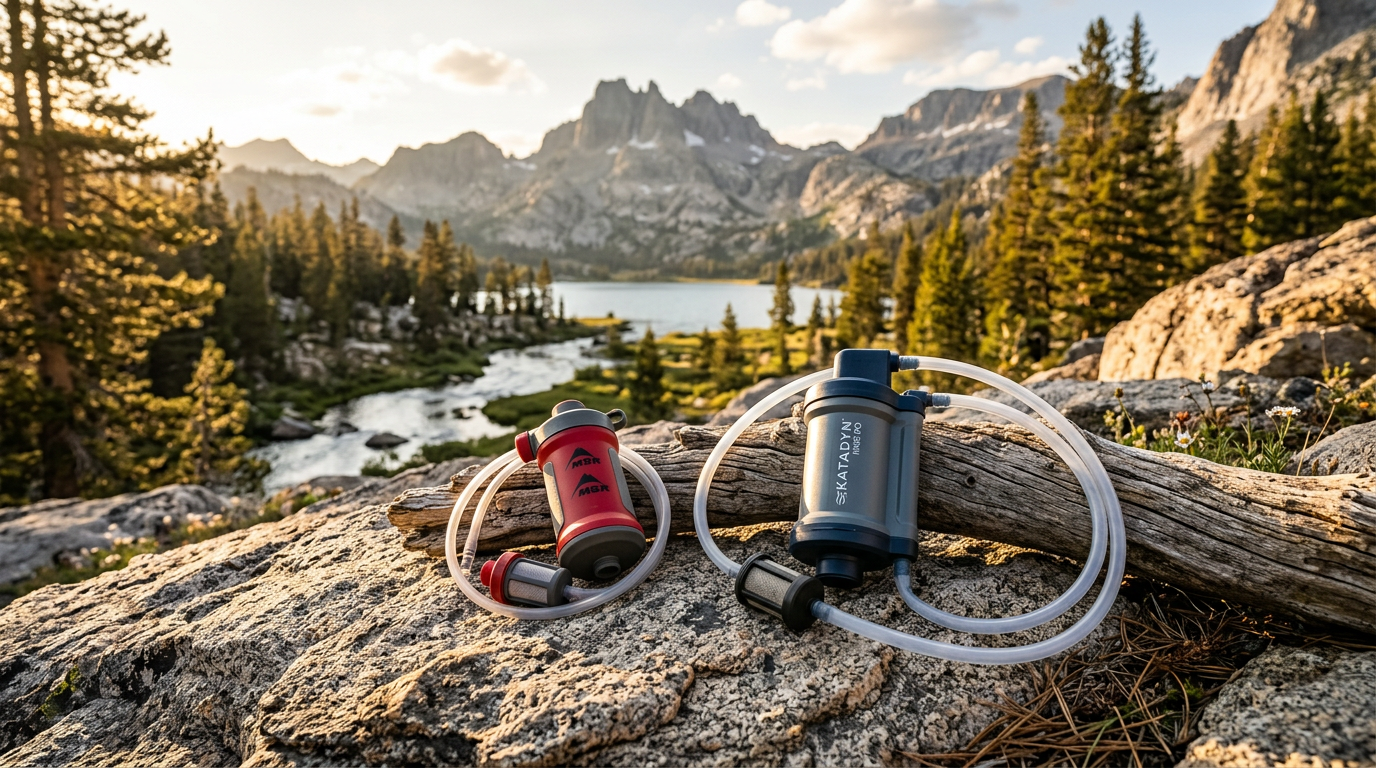
The MSR TrailShot wins for ultralight backpackers and solo hikers who prioritize weight savings and simplicity—it's a squeeze filter that weighs just 5.5 oz and costs $62.99. The Katadyn Hiker Pro is the better choice for group camping, base camps, or situations requiring high-volume filtration without hand fatigue, thanks to its pump mechanism that delivers 1 liter per minute and costs $99.95.
Disclosure: Four Seasons Gear is reader-supported. When you buy through links on our site, we may earn an affiliate commission at no extra cost to you. Prices and availability are accurate as of the time we last checked.
The MSR TrailShot and Katadyn Hiker Pro represent two fundamentally different approaches to backcountry water treatment. The TrailShot is a palm-sized squeeze filter designed for minimalist fast-packers, while the Hiker Pro is a full-featured pump system built for reliability and volume. Both use hollow-fiber membrane technology rated to 0.2 microns, removing bacteria and protozoa, but neither treats viruses—a limitation shared across most physical filters in this category.
Specifications at a Glance
Specs
Weight and Packability: The TrailShot's Decisive Advantage
At 5.5 oz, the MSR TrailShot weighs exactly half what the Katadyn Hiker Pro does (11 oz). For thru-hikers counting every gram, that 5.5 oz difference is significant—equivalent to carrying an extra energy bar versus a full pump housing. The TrailShot's compact form factor (roughly the size of a water bottle cap with attached hose) disappears into a side pocket, while the Hiker Pro's 8-inch pump body and dual hoses demand dedicated pack space. If you're moving fast and light on multi-day trips where every ounce matters, the TrailShot's weight advantage compounds over hundreds of miles.
Filtration Mechanism: Squeeze Simplicity vs Pump Efficiency
The TrailShot operates by submerging its intake hose, then squeezing a palm-sized bulb to push water through the hollow-fiber filter. This design eliminates moving parts but requires continuous hand pressure—filtering 2 liters for a group means 100+ squeezes. The Hiker Pro's pump handle delivers consistent 1 liter per minute flow with a rhythmic pumping motion that distributes effort across your arm and shoulder. In practice, the pump mechanism reduces hand fatigue dramatically when filtering more than 1-2 liters at a time. The TrailShot excels for solo hikers filling a single bottle at each water source; the Hiker Pro shines when you're filtering 4-6 liters for dinner, coffee, and next-day hydration at a base camp.
Filter Lifespan and Maintenance: Long-Term Value Calculation
The TrailShot's 2,000-liter cartridge life is nearly triple the Hiker Pro's 750-liter rating—a substantial difference that affects long-term cost. At $62.99, the TrailShot delivers 31.7 liters per dollar over its lifetime, while the Hiker Pro at $99.95 provides 7.5 liters per dollar. Replacement cartridges cost approximately $45 for the TrailShot and $65 for the Hiker Pro, maintaining that cost-per-liter gap. Both filters support field cleaning via backflushing (forcing clean water backward through the membrane to dislodge debris), but the Hiker Pro's cartridge is user-replaceable without tools, while the TrailShot requires sending the entire unit to MSR for cartridge replacement when it reaches end-of-life.
Cold Weather Performance and Durability
Both filters use hollow-fiber membranes that permanently fail if frozen while wet—a critical consideration for shoulder-season backpackers. The TrailShot's smaller internal volume (approximately 30 ml) dries faster when you blow out residual water before overnight freezing temperatures. The Hiker Pro's larger pump chamber and dual hoses retain more water, requiring more thorough drying. In terms of mechanical durability, the TrailShot's fewer moving parts (just the squeeze bulb) mean less to break, though the bulb material can degrade with UV exposure over multiple seasons. The Hiker Pro's pump handle and check valves introduce more failure points, but Katadyn's design has proven reliable across 20+ years of field use, and all wearing parts are replaceable.
Use Case Versatility: Where Each Filter Excels
The TrailShot's 5-foot intake hose allows you to reach down into shallow streams or filter directly from a water bottle, making it ideal for on-the-move hydration on trail. Its inline design means you can drink while filtering—no need to stop and set up equipment. The Hiker Pro's separate intake and output hoses let you position the pump on stable ground while reaching into a water source, then direct filtered water into any container (bottles, hydration reservoirs, cook pots). This separation is invaluable when filtering from muddy or shallow sources where you need precise hose placement. For comparison, the Sawyer Squeeze Water Filter System offers similar squeeze functionality to the TrailShot but with a screw-on bag system rather than a hose.
Decision Framework: Which Filter Matches Your Needs?
Buy the MSR TrailShot if you're a solo backpacker or trail runner prioritizing weight savings, you typically filter 1-2 liters at a time, you want the simplicity of no moving parts, and you're willing to accept hand fatigue on high-volume days. Its $62.99 price point and 2,000-liter lifespan deliver exceptional value for lightweight enthusiasts.
Buy the Katadyn Hiker Pro if you're filtering for groups, you regularly need 3+ liters at camp, you want ergonomic high-volume filtration without hand cramping, or you need field-replaceable components for extended expeditions. The $99.95 investment buys you a workhorse pump that handles demanding filtration tasks the TrailShot simply wasn't designed for.
Pros and Cons Summary
What we like
Trade-offs
Frequently Asked Questions
+Can I use either filter with a hydration bladder?
The MSR TrailShot can filter directly into a hydration bladder's fill port, but you'll need to squeeze for each liter—tedious for a 3L reservoir. The Katadyn Hiker Pro's output hose fits standard bladder openings and pumps hands-free once positioned, making it far more practical for filling large reservoirs. Neither filter is designed for inline use with a hydration system during hiking.
+How do these compare to the Sawyer Squeeze for weight and cost?
The Sawyer Squeeze Water Filter System weighs just 3 oz (lighter than both) and costs around $40, but requires squeezing a separate bag rather than using a hose-and-bulb system. The TrailShot's integrated design is more convenient for on-trail filtering, while the Sawyer offers the absolute lightest option if you're comfortable with the bag-squeeze method. The Hiker Pro serves a different use case entirely—its pump mechanism isn't directly comparable to squeeze filters.
+What happens if I accidentally freeze either filter?
Both filters will suffer permanent damage if frozen while wet, as ice crystals rupture the hollow-fiber membranes. The TrailShot's smaller internal volume makes it easier to fully dry by blowing out water and storing it inside your sleeping bag on cold nights. The Hiker Pro requires more thorough drying of its pump chamber and hoses. If you suspect freezing has occurred, discard the filter—there's no way to verify membrane integrity, and using a compromised filter risks waterborne illness.

Read next
More comparisons + reviews
REVIEW
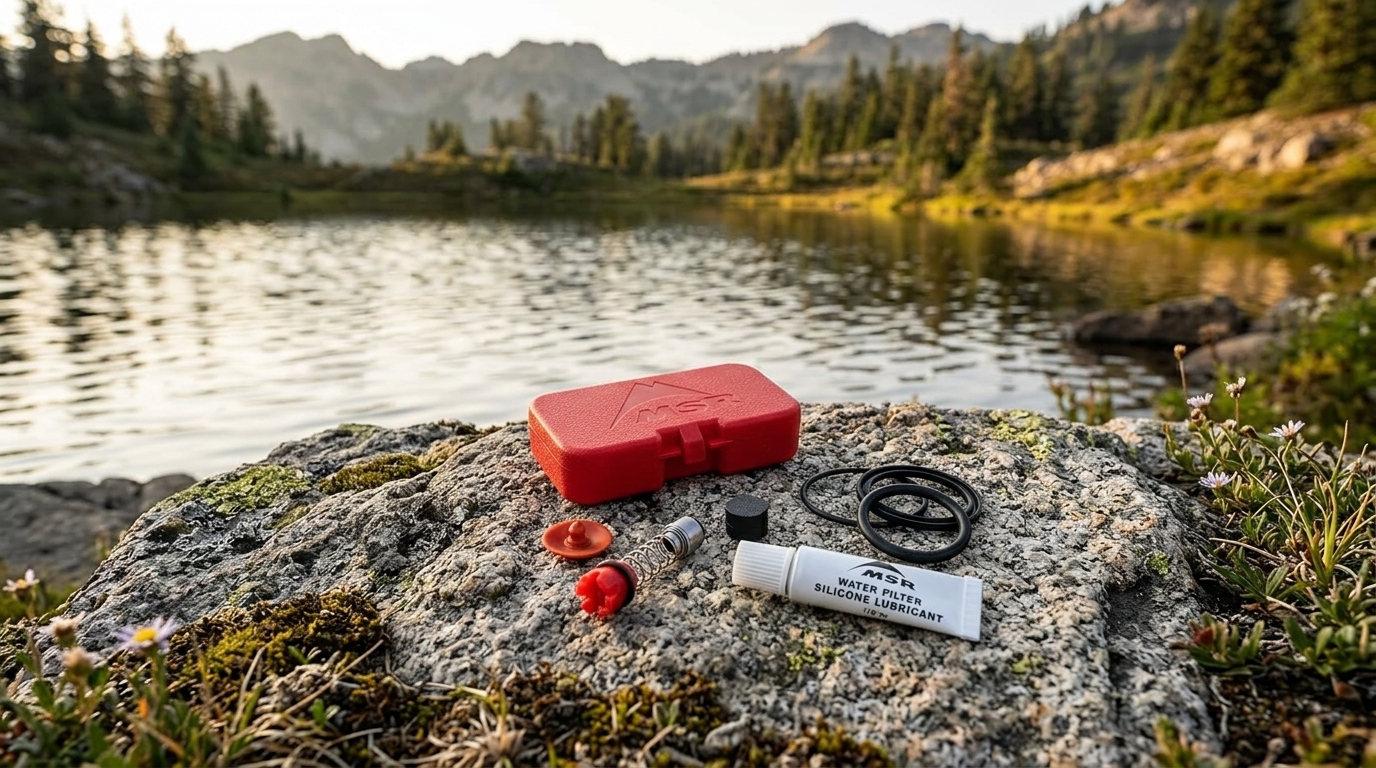
MSR Guardian Water Purifier Annual Maintenance Kit Review
REVIEW
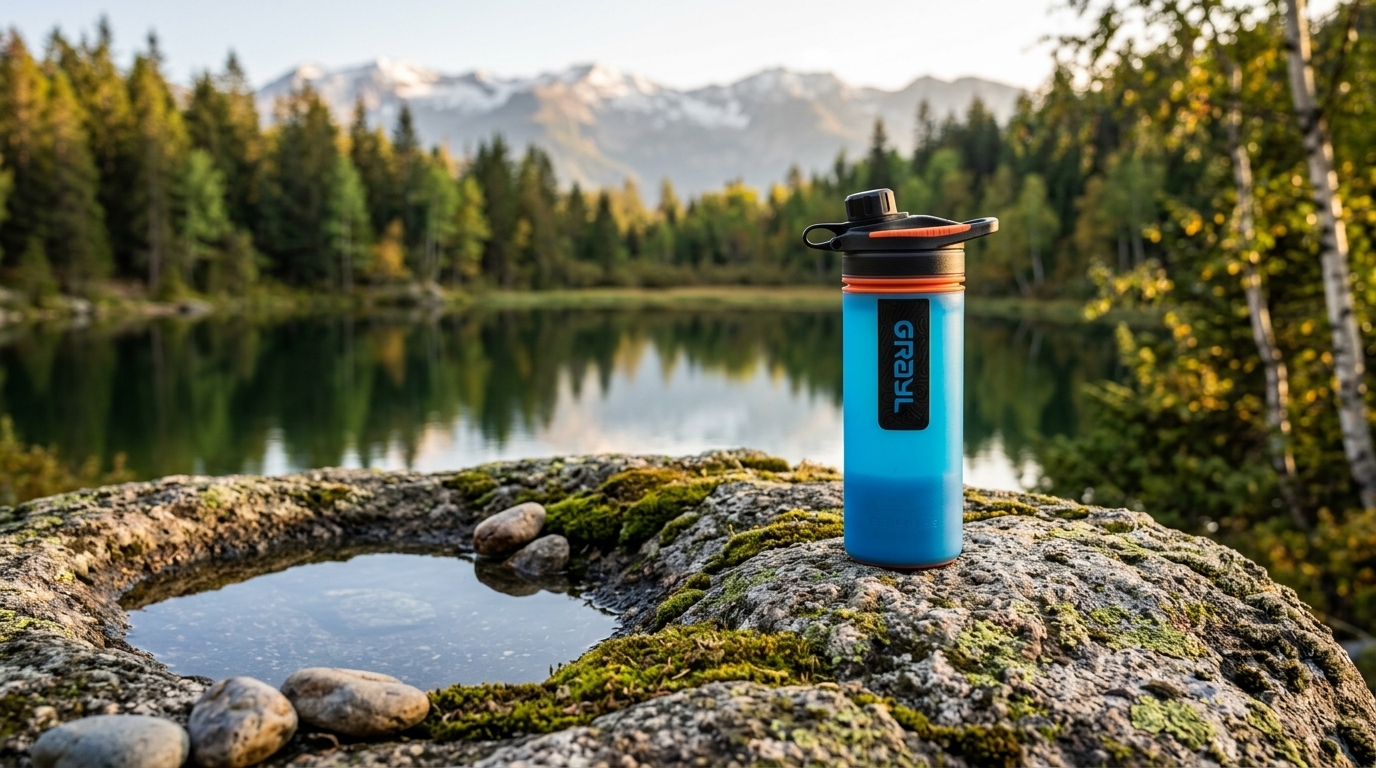
GRAYL GeoPress 24 oz Water Purifier Bottle Review: Press-Filter Speed for Backcountry and Travel
REVIEW
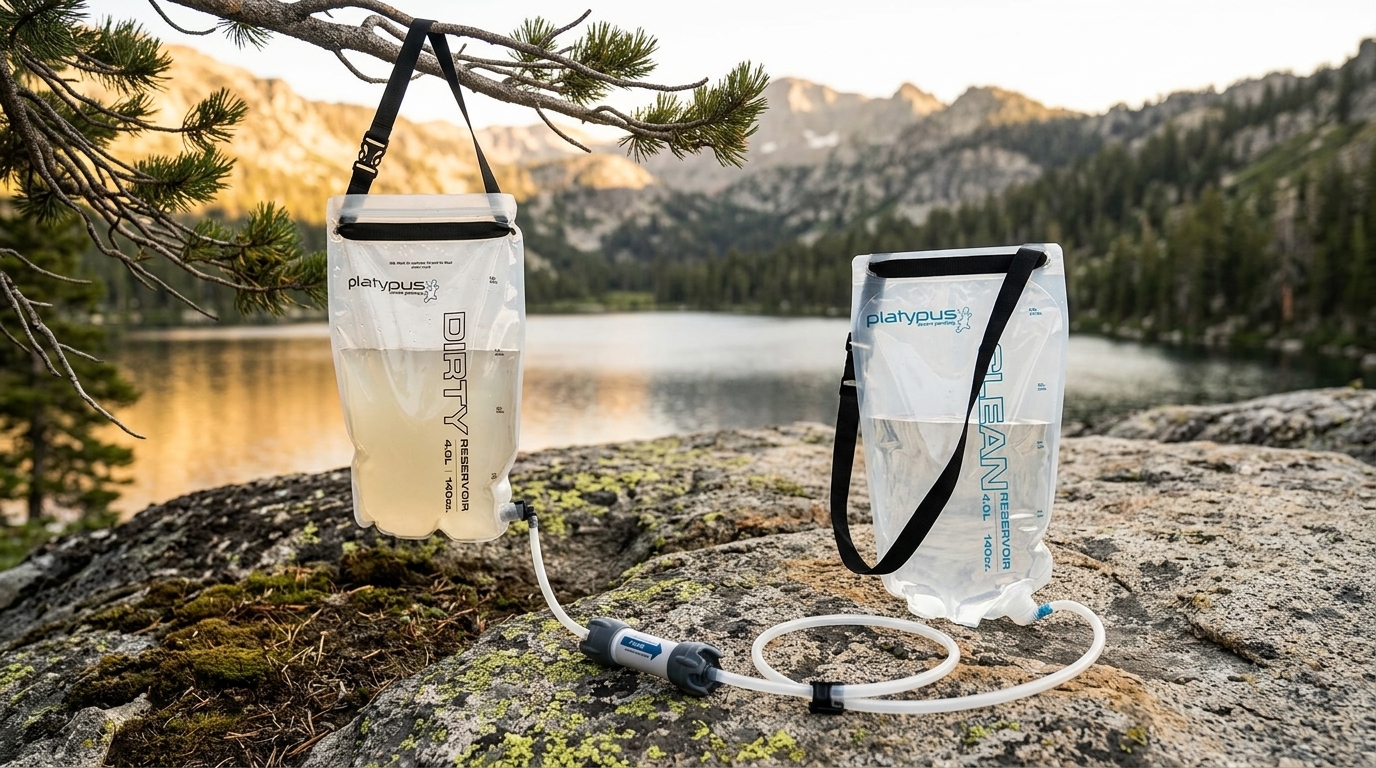
Platypus GravityWorks Group Camping Water Filter System Review
REVIEW
KATADYN Steripen Classic 3 UV Water Purifier Review: Battery-Powered Pathogen Control for Clear Water
REVIEW
Katadyn Hiker Microfilter Review: Pump-Action Reliability for Group Trips
REVIEW