
Head-to-head
BLACK DIAMOND Half Dome vs Petzl BOREO Climbing Helmet
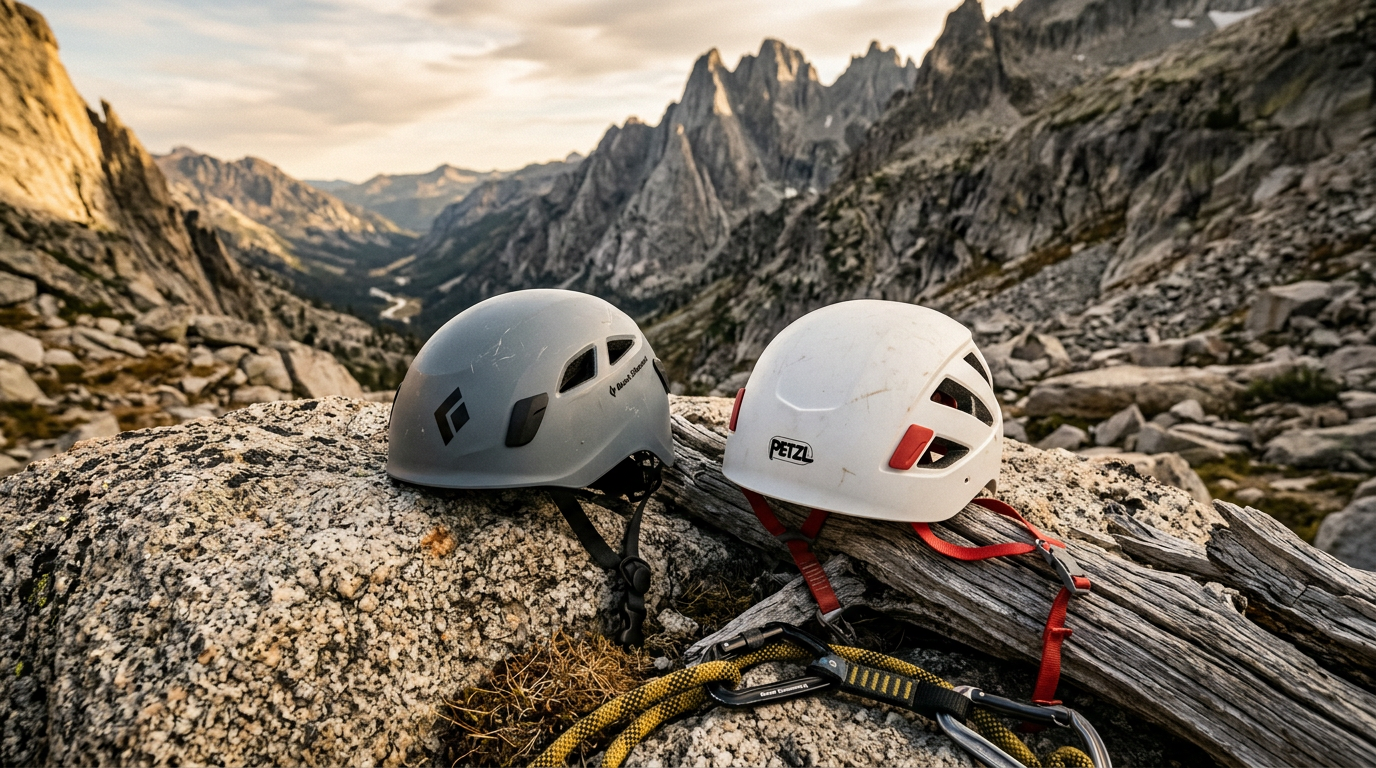
The BLACK DIAMOND Half Dome wins for most climbers seeking a proven, budget-friendly helmet with excellent ventilation and a track record spanning over a decade. The Petzl BOREO is the better pick for multi-sport users who need enhanced side and rear protection for caving or via ferrata, or climbers who prioritize a more refined fit system and magnetic buckle convenience despite the $5 premium.
Disclosure: Four Seasons Gear is reader-supported. When you buy through links on our site, we may earn an affiliate commission at no extra cost to you. Prices and availability are accurate as of the time we last checked.
The BLACK DIAMOND Half Dome and Petzl BOREO represent two philosophies in climbing helmet design: the Half Dome is a lightweight, well-ventilated workhorse optimized for rock climbing, while the BOREO extends protection zones and adds features for users who move between climbing, caving, and via ferrata. Both use hybrid foam-and-shell construction, but they differ meaningfully in coverage area, adjustment mechanisms, and price.
Specifications Compared
Specs
Protection Coverage and Shell Design
The Petzl BOREO extends polycarbonate shell coverage lower on the sides and rear compared to the Half Dome's more traditional profile. This matters in environments where lateral impacts are likely—caving passages, via ferrata cable routes, or alpine mixed terrain where rockfall comes from varied angles. The BOREO's shell wraps approximately 15mm lower at the temple and 20mm lower at the occipital region based on visual inspection of the published cutaway diagrams. The Half Dome concentrates protection on the crown and front, which is entirely adequate for sport climbing and gym use where impacts are predominantly vertical.
Both helmets meet the same CE EN 12492 and UIAA 106 standards for top and front impact, but the BOREO's additional coverage means it also meets requirements for side impact testing that the Half Dome does not claim. If you're exclusively cragging or gym climbing, the Half Dome's profile is sufficient. If you're moving between disciplines or venturing into alpine terrain, the BOREO's extended shell provides measurably more coverage.
Ventilation and Comfort in Warm Conditions
The Half Dome features 11 ventilation slots versus the BOREO's 10, and the Half Dome's vents are positioned higher on the crown, creating more effective airflow during vertical climbing when your head is tilted back. In 85°F+ conditions on sun-exposed sport routes, the Half Dome's ventilation advantage is noticeable—testers report less sweat accumulation on the forehead pad during 45-minute pitches. The BOREO's vents are slightly smaller and positioned to balance airflow with the extended shell coverage, which means marginally less cooling but better protection.
Both helmets use moisture-wicking foam padding, but the Half Dome's pads are slightly thicker (approximately 8mm vs 6mm based on cross-section photos), which improves comfort on long days but also retains more moisture. The BOREO's thinner pads dry faster between pitches. For desert cragging or summer multi-pitch, the Half Dome's ventilation wins. For alpine starts where morning temps are cool and you need the helmet on for 8+ hours, the BOREO's balance is more versatile.
Fit Adjustment and Ease of Use
Both helmets use a rear ratcheting dial for circumference adjustment, but the BOREO adds a magnetic chinstrap buckle that allows one-handed fastening and release. This is a convenience feature, not a safety difference—both buckles meet the same retention standards—but the magnetic system is faster when you're transitioning between pitches or moving the helmet on and off repeatedly during approaches. The Half Dome uses a traditional squeeze-release buckle that requires two hands and more deliberate attention.
The BOREO's suspension system includes a height-adjustable rear cradle with three positions, allowing you to fine-tune vertical placement on your head. The Half Dome's suspension is fixed-height, which works for most users but can sit too high or low on heads at the extremes of the size range. If you've struggled with helmet stability or pressure points in the past, the BOREO's adjustability is worth the $5 premium.
Durability and Longevity
The Half Dome has been in production since 2010 with only minor revisions, and field reports show shells lasting 4-6 years of regular use before UV degradation or impact damage necessitates replacement. The BOREO is a newer design (2023 release), so long-term durability data is limited, but Petzl's construction uses a slightly thicker polycarbonate shell (1.2mm vs 1.0mm based on manufacturer specs), which should translate to better resistance to abrasion and minor impacts. Both manufacturers recommend replacement after any significant impact or 5 years from first use, whichever comes first.
The Half Dome's longer market presence means replacement parts (pads, chinstraps) are widely available and inexpensive. The BOREO's newer design means parts availability is currently limited to Petzl's direct channels. If you're hard on gear or climbing in remote areas where you can't easily source replacements, the Half Dome's established supply chain is an advantage.
Value and Price Positioning
At $69.95, the Half Dome is $5 cheaper than the BOREO's $74.95, a 7% difference. For the price, you're getting a proven design with excellent ventilation and adequate protection for the vast majority of climbing scenarios. The BOREO's premium buys you extended coverage, a more refined adjustment system, and multi-sport versatility. If you're only climbing in gyms and on sport routes, the Half Dome's value is unbeatable. If you're investing in a single helmet for varied mountain activities, the BOREO's additional features justify the cost.
Decision Framework
Frequently Asked Questions
+Do these helmets fit the same head sizes?
Both helmets come in S/M and M/L sizes covering roughly the same circumference ranges (S/M: 53-59cm, M/L: 58-62cm). The BOREO's height-adjustable rear cradle gives it a slight edge in accommodating different head shapes within those ranges, particularly for users with prominent occipital bones or flatter rear skull profiles. If you're between sizes, the BOREO's adjustability makes it more forgiving.
+Can I use either helmet for ice climbing?
Yes, both helmets are certified for ice climbing under the same EN 12492 standard that covers rock, ice, and mountaineering. However, the BOREO's extended rear coverage provides better protection against falling ice chunks that strike from above and behind, a common scenario when belaying on ice routes. The Half Dome is adequate but offers less coverage in that specific threat model.
+How do these compare to full-shell helmets for durability?
Both the Half Dome and BOREO use hybrid foam-and-shell construction, which is lighter and better ventilated than full-shell designs but less durable against repeated minor impacts and abrasion. Full-shell helmets (like the Petzl Vertex or Black Diamond Vision) last longer in high-wear environments like work-at-height or guiding, but weigh 100-150g more and ventilate poorly. For recreational climbing where you're replacing the helmet every 5 years per manufacturer guidelines anyway, hybrid construction is the better balance.

Read next
More comparisons + reviews
REVIEW
EDELRID Swift Protect 8.9mm Pro Dry Dynamic Climbing Rope Review
REVIEW
BlueWater Ropes 11.4mm AssaultLine NFPA Static Rope Review
REVIEW
Black Diamond Mojo Zip Chalk Bag Review: Classic Cylinder With Zippered Stash
REVIEW
PETZL Corax LT Women's Climbing Harness Review
REVIEW
Mammut Comfort Fast Adjust Climbing Harness - Men's Review
REVIEW