
Review · spring · summer · fall · winter
Petzl Swift RL Headlamp Review: Reactive Lighting for Fast-Moving Pursuits
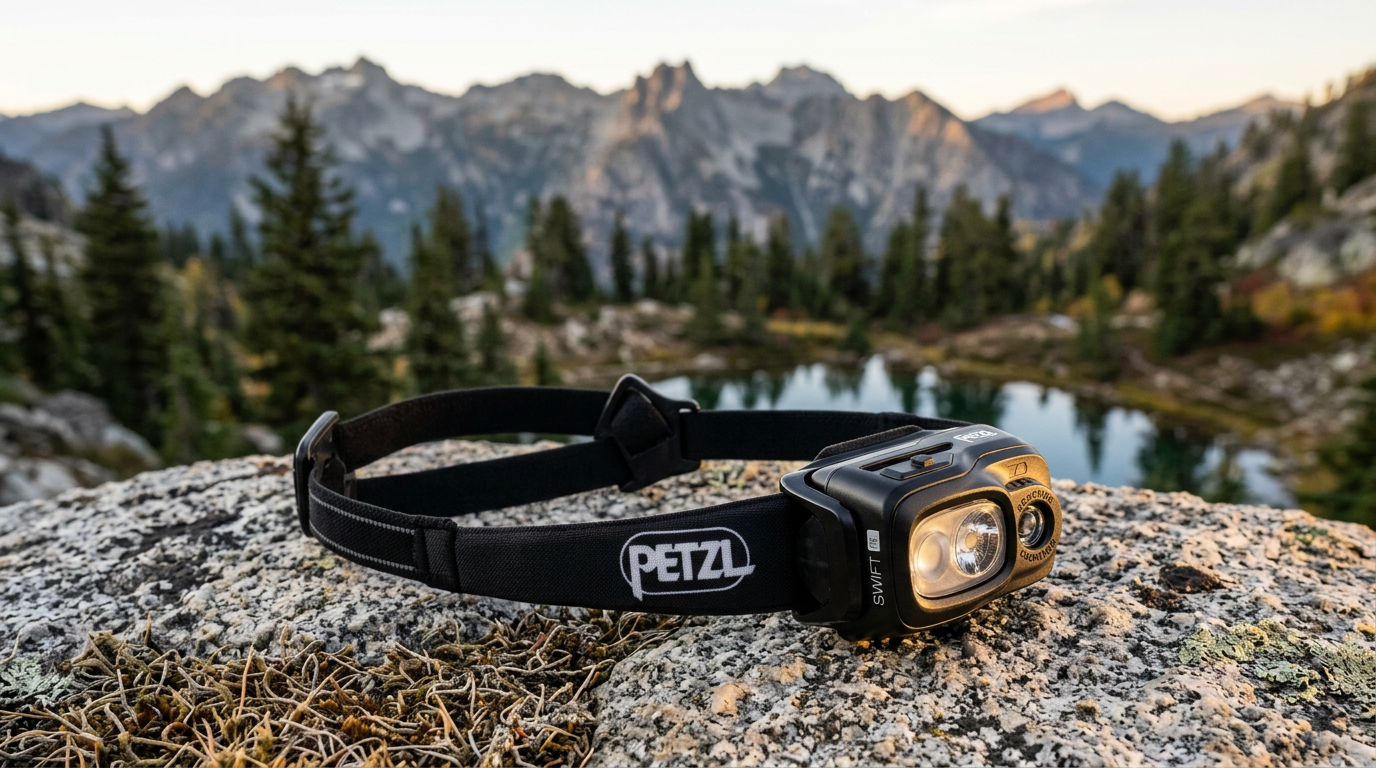
The Petzl Swift RL is a 100 g, 1100-lumen headlamp built for trail runners, alpinists, and ski tourers who need automatic brightness adjustment during dynamic movement. Its reactive lighting sensor eliminates manual fiddling while the split headband design keeps the lamp stable during high-output activities. At $86.90, it sits in the premium tier where you're paying for the automation, the low weight-to-output ratio, and Petzl's reputation for durable electronics—though you'll sacrifice some burn time compared to heavier multi-battery models.
Disclosure: Four Seasons Gear is reader-supported. When you buy through links on our site, we may earn an affiliate commission at no extra cost to you. Prices and availability are accurate as of the time we last checked.
Specifications
Specs
Reactive Lighting and Burn Time Tradeoffs
The Swift RL's defining feature is its reactive lighting sensor, which continuously monitors ambient light and adjusts both brightness and beam pattern without manual input. When you glance at a map or enter a lit shelter, the lamp dims automatically; when you look back at the trail, it ramps up to the necessary output. This extends burn time by avoiding constant full-power operation—Petzl claims up to 100 hours in reactive mode at lower outputs, though max-lumen runtime will be significantly shorter (approximately 2 hours at 1100 lumens, though Petzl doesn't publish this exact figure). The automation is particularly useful during trail running or ski touring when you're moving through varied terrain and don't want to stop to toggle modes.
The 2350 mAh single-cell battery keeps the Swift RL at 100 g, but it means you're carrying one power source rather than swappable AAAs. USB-C charging is faster than older micro-USB standards, and the 5-level battery indicator gives you advance warning before a full drain. For multi-day trips without charging access, you'll need a backup battery bank or a second headlamp—unlike AA/AAA models where you can carry spare cells at minimal weight.
Split Headband Stability and Fit
Petzl's patented split headband routes the rear strap into two separate bands that wrap around the back of your head, distributing tension more evenly than a single rear strap. This design reduces bounce during running or skiing—the lamp stays centered on your forehead rather than sliding down or rotating. The reflective detailing on the headband improves visibility to other trail users at night, a useful safety feature for shared-use trails or road crossings.
At 100 g, the Swift RL is light enough to wear comfortably for extended periods without a top strap (which Petzl doesn't include). The battery pack sits at the rear of the headband rather than on the forehead, balancing the weight front-to-back. Users with larger head circumferences should verify the headband's maximum adjustment range, as Petzl doesn't publish specific measurements.
Red Light and Signaling Modes
The Swift RL includes continuous red lighting to preserve night vision during tasks like reading maps or setting up camp, plus a red strobe mode for emergency signaling. The red mode doesn't auto-adjust with the reactive sensor—it's a fixed output you toggle manually. This is standard for headlamps in this category; red light is typically used in static situations (camp chores, astronomy) where the reactive feature would be less useful.
Durability Considerations
The Swift RL's sealed electronics housing and USB-C port cover are designed to resist moisture, though Petzl doesn't specify an IPX rating on the product page (verify current specs before purchase). The lithium-ion battery will degrade over charge cycles—typical li-ion cells retain 80% capacity after 300-500 cycles, meaning heavy users may see reduced burn time after 1-2 years. Petzl's electronics have a strong reputation for longevity in alpine environments, but the non-replaceable battery means the lamp's lifespan is ultimately tied to battery health.
The split headband uses elastic webbing that will stretch over time with repeated use and exposure to sweat or sunlight. Petzl sells replacement headbands separately, which extends the lamp's usable life beyond the elastic's fatigue point. The lens is likely polycarbonate (standard for this category), which resists impact but will scratch with abrasion—store the lamp in a dedicated pouch rather than loose in a pack.
Comparison Context: Where It Sits in the Headlamp Category
At 100 g and 1100 lumens, the Swift RL competes with other premium reactive headlamps like the Black Diamond Spot 400-R (which offers lower max output but longer burn time with a larger battery) and the Petzl Iko Core (which is lighter at 79 g but caps at 500 lumens). The Swift RL's niche is high-output activities where you need both brightness and automation—trail running at pace, pre-dawn alpine starts, or ski touring where you're frequently transitioning between uphill skinning and downhill descents.
For comparison, a basic 3-AAA headlamp might weigh 85 g with batteries and offer 300-400 lumens, but you'll manually toggle through modes and carry spare cells. The Swift RL's premium is the reactive sensor and the higher output ceiling, which matters most when you're moving fast enough that manual adjustments become a nuisance.
Value and Intended Use
At $86.90, the Swift RL is priced for users who will leverage the reactive lighting feature regularly. If you're primarily doing stationary camp tasks or slow-paced hiking where you can easily toggle modes, a $30-$50 manual headlamp will serve you equally well. The Swift RL's value proposition is strongest for trail runners, alpinists on pre-dawn starts, and ski tourers who need hands-free lighting adjustments while moving through varied terrain.
The included 2350 mAh battery and USB-C charging mean you're not buying disposable cells, which offsets some of the upfront cost over time. However, the non-replaceable battery limits the lamp's lifespan compared to models with user-swappable cells.
Pros and Cons
What we like
Trade-offs
Best For
- Trail runners who need automatic brightness adjustment without breaking stride
- Alpinists making pre-dawn starts with frequent transitions between camp and technical terrain
- Ski tourers moving through varied lighting conditions (forest, open slopes, descents)
- Backpackers who prioritize low weight and high output for night hiking
- Users willing to pay a premium for reactive lighting automation
Not For
- Budget-conscious buyers who can manually toggle modes without issue
- Multi-day expeditions without charging access (unless carrying backup power)
- Users who prefer swappable AA/AAA cells for extended trips
- Stationary camp use where reactive lighting provides minimal benefit
- Anyone needing a published IPX rating for submersion resistance
Frequently Asked Questions
+How long does the battery last at maximum brightness?
Petzl doesn't publish exact burn time at 1100 lumens, but typical lithium-ion headlamps in this output range run approximately 2-3 hours at max brightness. The reactive lighting mode extends total burn time to up to 100 hours by automatically reducing output when full brightness isn't needed. For multi-hour night runs or alpine starts, expect to start with a full charge or carry a backup battery bank.
+Can I replace the battery when it degrades?
No, the 2350 mAh lithium-ion battery is integrated into the headlamp and not user-replaceable. Typical li-ion cells retain 80% capacity after 300-500 charge cycles, so heavy users may see reduced burn time after 1-2 years. Petzl may offer battery replacement services through their repair program—contact them directly for current options and pricing.
+Is the Swift RL waterproof?
Petzl doesn't specify an IPX waterproof rating on the product page. The sealed electronics housing and USB-C port cover are designed to resist moisture from rain or snow, but without a published rating, you should verify current specs before relying on it for submersion or heavy downpours. For wet environments, consider storing the lamp in a waterproof bag when not in use.
+How does the reactive lighting sensor work in practice?
The sensor continuously monitors ambient light and adjusts brightness and beam pattern automatically. When you look at a map or enter a lit area, the lamp dims; when you look back at the trail, it ramps up. This is most useful during trail running or skiing where you're moving through varied terrain and don't want to stop to toggle modes. You can override the sensor and lock the lamp to manual mode if you prefer fixed output.
+Does the split headband fit over a helmet?
The split headband is designed for bare-head use during trail running and ski touring. For helmet mounting, Petzl sells separate helmet clips compatible with the Swift RL. The split design provides stability on bare heads but may not route cleanly over some helmet shapes—test fit before committing if helmet use is your primary application.

Read next
More from this category
REVIEW
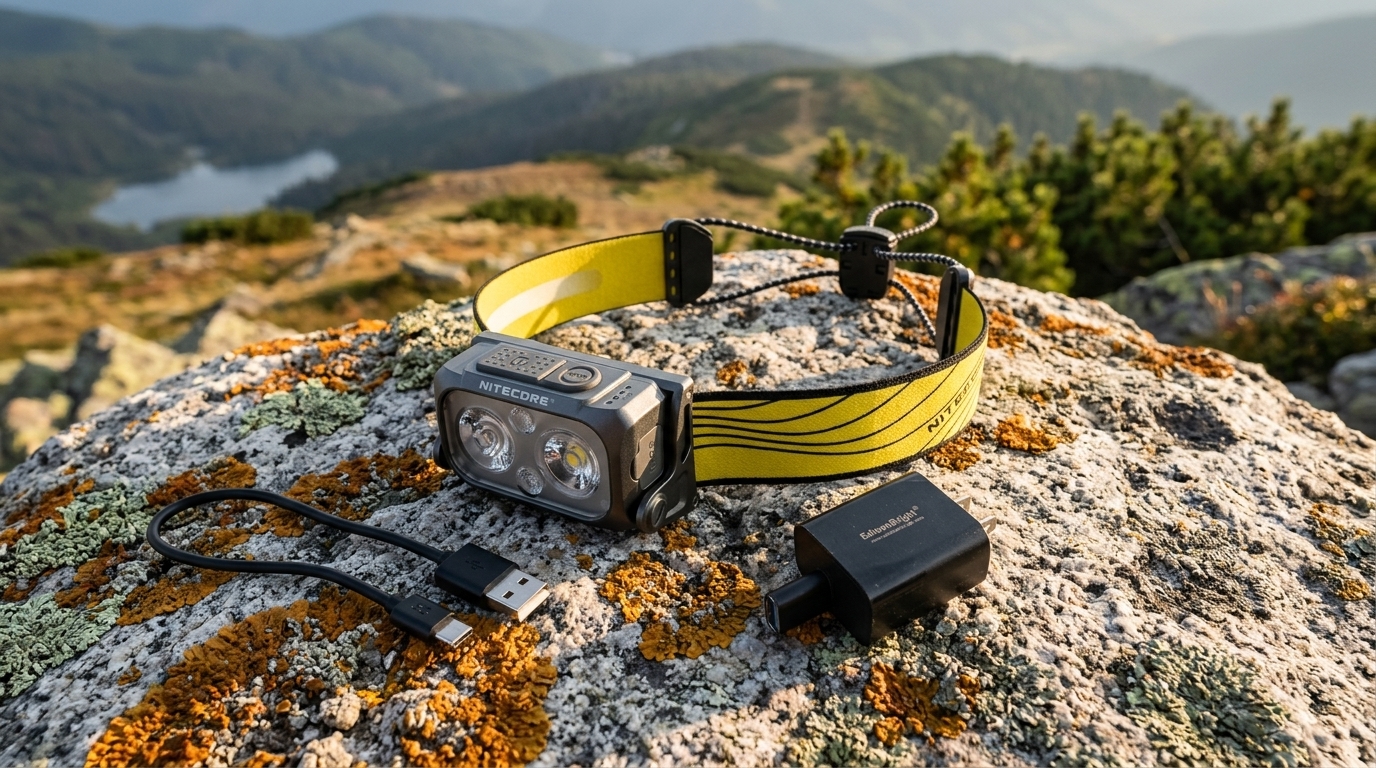
Nitecore NU25 400 USB-C Rechargeable Headlamp Review
REVIEW
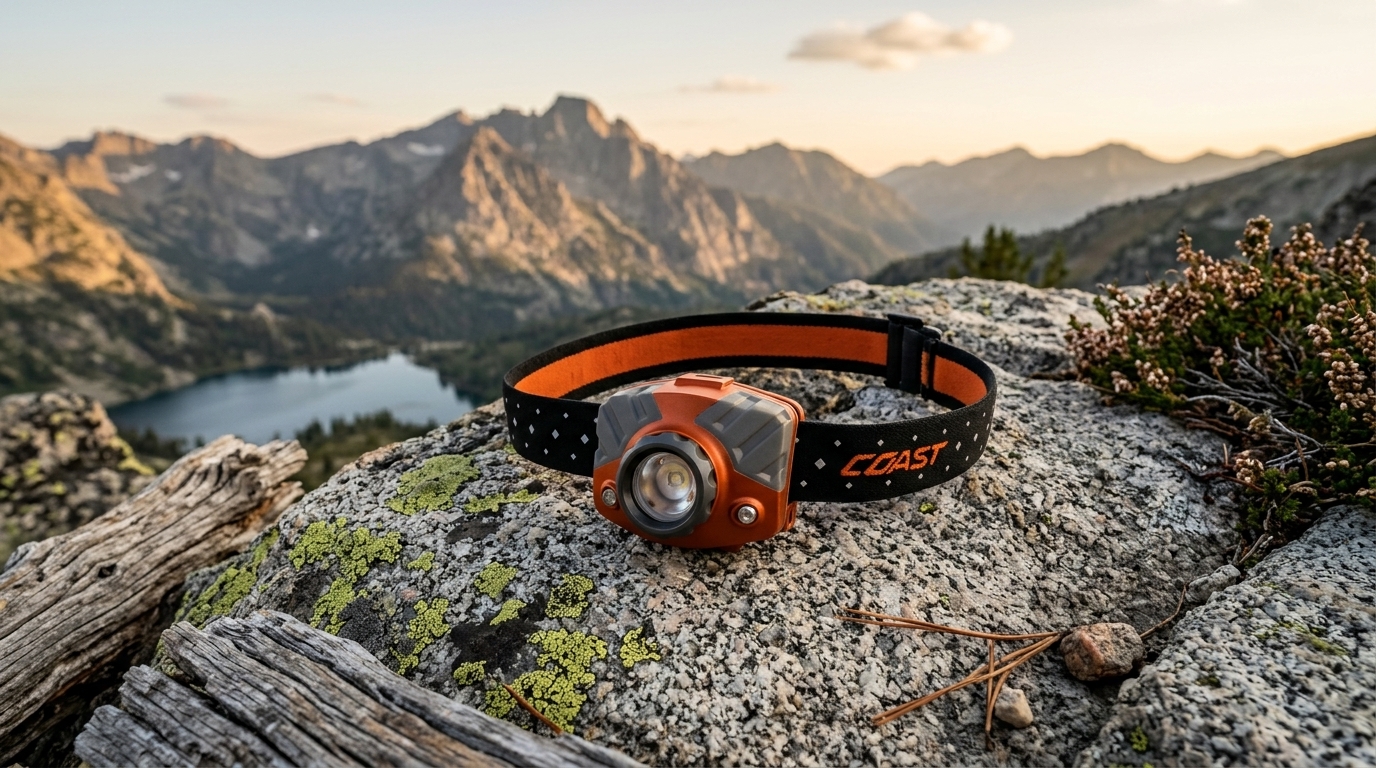
Coast FL75R Rechargeable Headlamp Review: 530 Lumens with Dual-Power Flexibility
REVIEW
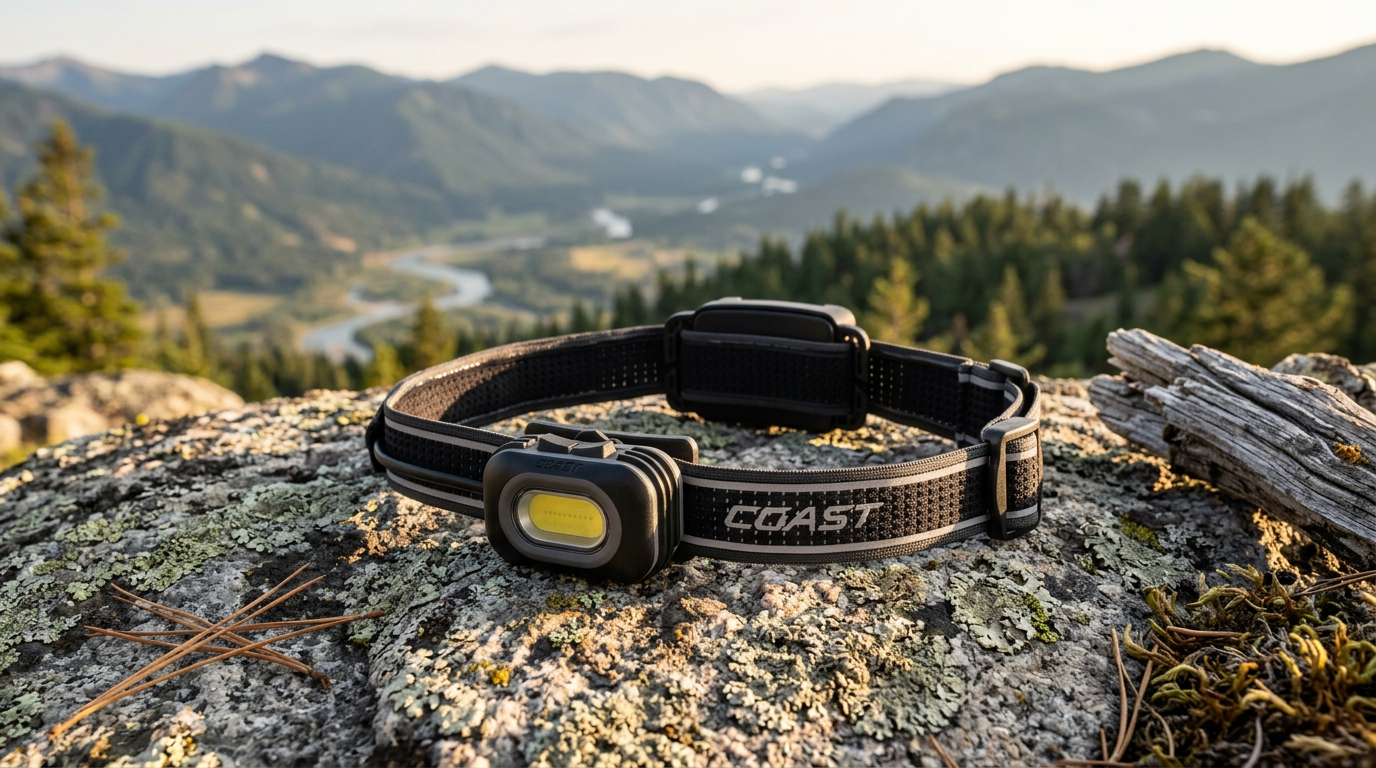
Coast RL10R 750 Lumen Rechargeable LED Headlamp with Variable Light Control and Rear Safety Signal
REVIEW
PETZL ACTIK CORE Rechargeable Headlamp Review: 600-Lumen Hybrid for Year-Round Use
REVIEW
Petzl Swift LT Headlamp Review: 43-Gram Rechargeable with 380 Lumens
REVIEW