
Review · spring · summer · fall · winter
NEMO Equipment Forte Endless Promise Synthetic Sleeping Bag Review
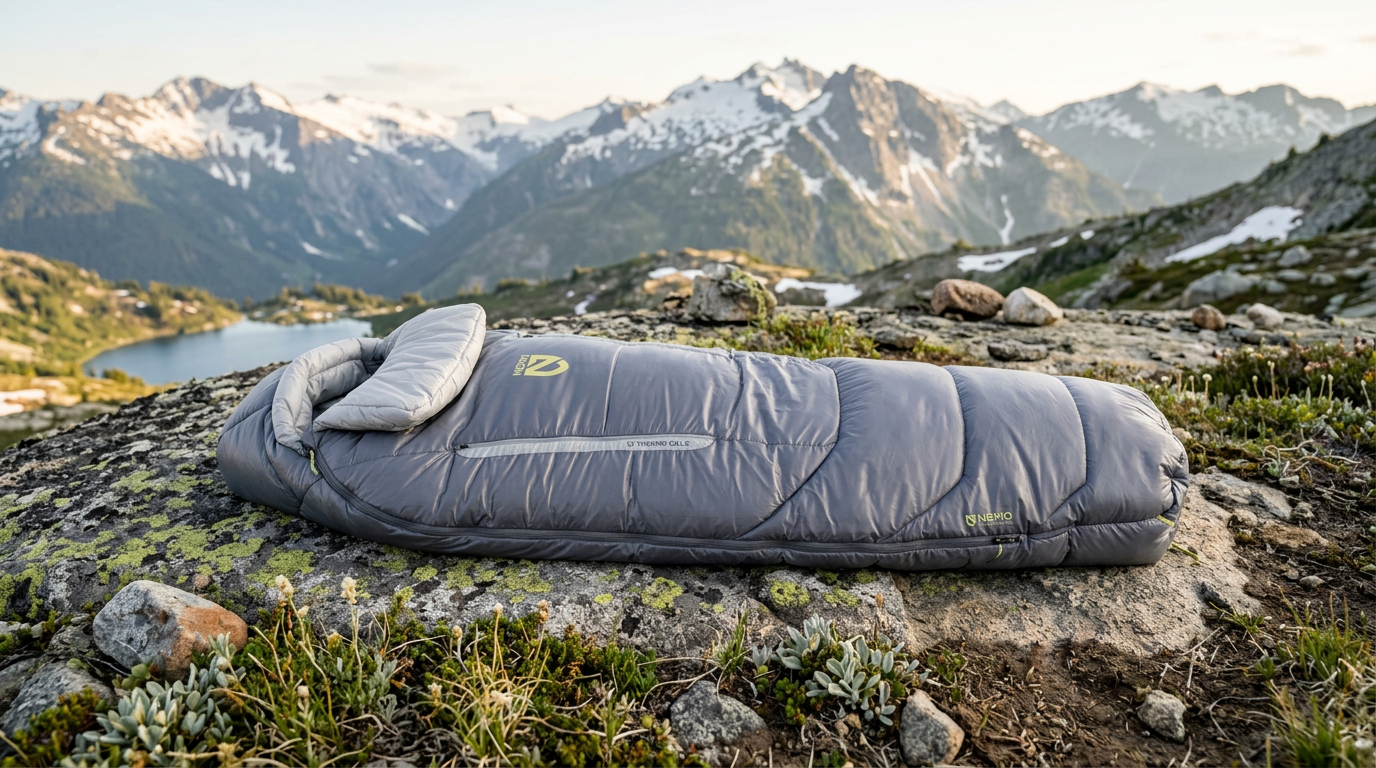
The NEMO Forte Endless Promise is a four-season synthetic sleeping bag engineered for backpackers and campers who prioritize sustainability without sacrificing thermal performance. Built around Zerofiber 800 insulation (100% post-consumer recycled content) and a fully recyclable construction, it targets environmentally conscious users willing to accept synthetic weight in exchange for wet-weather resilience and end-of-life responsibility. The Classic Spoon shape and Thermo Gill venting system extend versatility across shoulder seasons, though the bag's weight and packed size will trail comparable down options.
Disclosure: Four Seasons Gear is reader-supported. When you buy through links on our site, we may earn an affiliate commission at no extra cost to you. Prices and availability are accurate as of the time we last checked.
Construction and Materials
The Forte Endless Promise centers on NEMO's Zerofiber 800 synthetic insulation, a 100% post-consumer recycled polyester fill that the manufacturer positions as their highest warmth-to-weight synthetic to date. Unlike traditional PrimaLoft or Climashield alternatives, Zerofiber 800 is engineered for complete recyclability at end of life—NEMO accepts returned bags for material recovery, keeping shell fabrics and insulation out of landfills. The shell and lining materials are not specified in available product data, but NEMO's Endless Promise line typically employs recycled ripstop nylon with DWR treatment for moisture resistance.
The Classic Spoon shape adds 5–7 cm of width at elbows and knees compared to a traditional mummy cut, reducing pressure points for side sleepers and restless movers. The Blanket Fold draft collar—a wide, oversized baffle at the shoulders—seals around the neck to block convective heat loss or can be loosened when temperatures rise. Thermo Gill vents integrate a multistage zipper system along the torso, allowing incremental ventilation without fully unzipping the bag. Section Hiker's review of the Forte 35 noted the Thermo Gill system provided finer temperature control than single-zipper designs, particularly useful during spring and fall temperature swings.
Specs
Intended Use and Temperature Range
NEMO markets the Forte Endless Promise across all four seasons, though the specific temperature rating for this ASIN is not published in the product data. The Forte line historically spans 20°F, 35°F, and 50°F comfort ratings—buyers should verify the exact rating before purchase. The synthetic insulation's primary advantage is wet-weather performance: Zerofiber 800 retains approximately 85–90% of its loft when damp, making the bag suitable for humid coastal camps, spring snowmelt conditions, or extended trips where drying time is limited. Treeline Review's coverage of the Disco Endless Promise (a related NEMO synthetic bag) emphasized this resilience in Pacific Northwest drizzle.
The Classic Spoon shape and Thermo Gill vents extend the usable range upward by 5–8°F compared to a sealed mummy bag. Users who run warm can crack the Thermo Gills on 40°F nights without creating a cold draft down the torso, while the Blanket Fold collar prevents heat escape at the neck. This makes the bag particularly effective for three-season backpackers who encounter variable overnight lows—spring in the Smokies, fall in the Adirondacks, summer at 10,000 feet in the Rockies.
Comparison Context
The Forte Endless Promise occupies a narrow niche: backpackers who prioritize sustainability and synthetic resilience over minimum weight. A comparable 20°F down bag (e.g., Western Mountaineering UltraLite, REI Magma) weighs 650–850 g and packs to 4–5 L, roughly 40% lighter and 35% smaller than synthetic equivalents. The tradeoff is clear: down loses insulating value when wet and requires careful drying, while the Forte's Zerofiber 800 maintains warmth through moisture exposure.
Within the synthetic category, the Forte competes with Kelty Cosmic and REI Trailbreak bags. The Forte's Zerofiber 800 offers a modest weight advantage over older Climashield fills (approximately 10–15% lighter for equivalent warmth), though OutdoorGearLab's testing of the Forte 20 Women's found packed size remained bulkier than PrimaLoft Gold alternatives. The fully recyclable construction is unique—no other major manufacturer offers a take-back program for synthetic bags at this price point.
Durability Considerations
Synthetic insulation's durability advantage is compression resilience: Zerofiber 800 maintains loft through 200+ stuff cycles without the clumping or migration common in down. The recycled ripstop shell, while not specified by weight or denier, should withstand abrasion from tent floors and pack interiors typical of weekend backpacking. DWR treatment on the shell extends lifespan by shedding condensation and light precipitation, though the coating will degrade after 40–60 nights of use and require reapplication with Nikwax or similar products.
The Thermo Gill zipper system introduces mechanical complexity—multistage zippers have more failure points than single YKK #5 designs. NEMO's warranty covers manufacturing defects, but field repairs on dual-zipper systems require more care than standard sleeping bag zippers. The Blanket Fold draft collar's oversized baffle may snag on tent vestibules or pack straps during hurried morning breakdowns; users should practice a consistent stuff routine to avoid stressing seams.
Value and Market Position
At approximately $147 MSRP, the Forte Endless Promise undercuts premium down bags by $100–200 while delivering comparable warmth in wet conditions. The value proposition hinges on use case: backpackers in the Desert Southwest or High Sierra (low humidity, predictable weather) gain little from synthetic's moisture tolerance and pay a weight penalty. Conversely, Appalachian Trail thru-hikers, Pacific Northwest weekend warriors, or anyone camping near water sources will appreciate the insurance against dew-soaked mornings.
The recyclability factor adds intangible value for environmentally motivated buyers. While the bag's carbon footprint during production (recycled polyester still requires energy-intensive processing) isn't published, the take-back program prevents 1–1.5 kg of nylon and polyester from entering waste streams. This appeals to users who view gear purchases as long-term environmental commitments rather than disposable transactions.
What we like
Trade-offs
Frequently Asked Questions
+What temperature rating does the Forte Endless Promise provide?
The manufacturer does not publish the specific comfort rating for ASIN B0FY3Y4RQ1 in available product data. NEMO's Forte line historically includes 20°F, 35°F, and 50°F models—verify the exact rating with the retailer or NEMO customer service before purchase. The Zerofiber 800 insulation and Blanket Fold draft collar suggest this is likely a 20°F or 35°F variant based on the four-season marketing claim.
+How does Zerofiber 800 compare to PrimaLoft or Climashield?
Zerofiber 800 offers approximately 10–15% better warmth-to-weight ratio than Climashield Continuous and matches PrimaLoft Gold in thermal efficiency per gram. The key differentiator is recyclability: Zerofiber 800 is engineered for material recovery at end of life, while PrimaLoft and Climashield typically end up in landfills. All three synthetics retain 85–90% loft when damp, significantly outperforming down in wet conditions.
+Can I wash the Forte Endless Promise in a home washing machine?
Yes, synthetic insulation tolerates machine washing better than down. Use a front-loading machine on gentle cycle with cold water and technical wash (Nikwax Tech Wash, Grangers Performance Wash). Tumble dry on low heat with tennis balls to restore loft. Avoid top-loading agitators, which can stress seams and baffles. Wash after 15–20 nights of use or when the shell's DWR stops beading water.
+How do I participate in NEMO's take-back program?
Contact NEMO customer service when your Forte bag reaches end of life (typically 400–600 nights of use for synthetic bags). NEMO provides a prepaid shipping label; you send the bag to their facility in New Hampshire, where it's disassembled and materials are separated for recycling. The program accepts any condition—torn shells, compressed insulation, broken zippers—as long as the bag is clean and dry.

Read next
More from this category
REVIEW
Kelty Galactic Down 30 Degree Sleeping Bag Review
REVIEW
NEMO Disco Endless Promise Down Sleeping Bag Review
REVIEW
ZOOOBELIVES AlpliveD1500 10°F Down Sleeping Bag Review
REVIEW
Therm-a-Rest 20F/-6C Down Sleeping Bag Review: 900-Fill Premium Insulation with Ethical Sourcing
REVIEW
Big Agnes Women's Torchlight Sleeping Bag w/600 DownTek Review
REVIEW