Best of
Best Self-Inflating Sleeping Pads for Backpacking and Car Camping
best self inflating sleeping pads
At a glance
| # | Product | |||||
|---|---|---|---|---|---|---|
| 1 |  ★ Best Overall★ Best Value★ Most Durable★ Most Comfortable | 8.2 | Check price ↗ | |||
| 2 | 7.8 | Check price ↗ |

- 8.2★ Best Overall★ Best Value★ Most Durable★ Most Comfortable
Disclosure: Four Seasons Gear is reader-supported. When you buy through links on our site, we may earn an affiliate commission at no extra cost to you. Prices and availability are accurate as of the time we last checked.
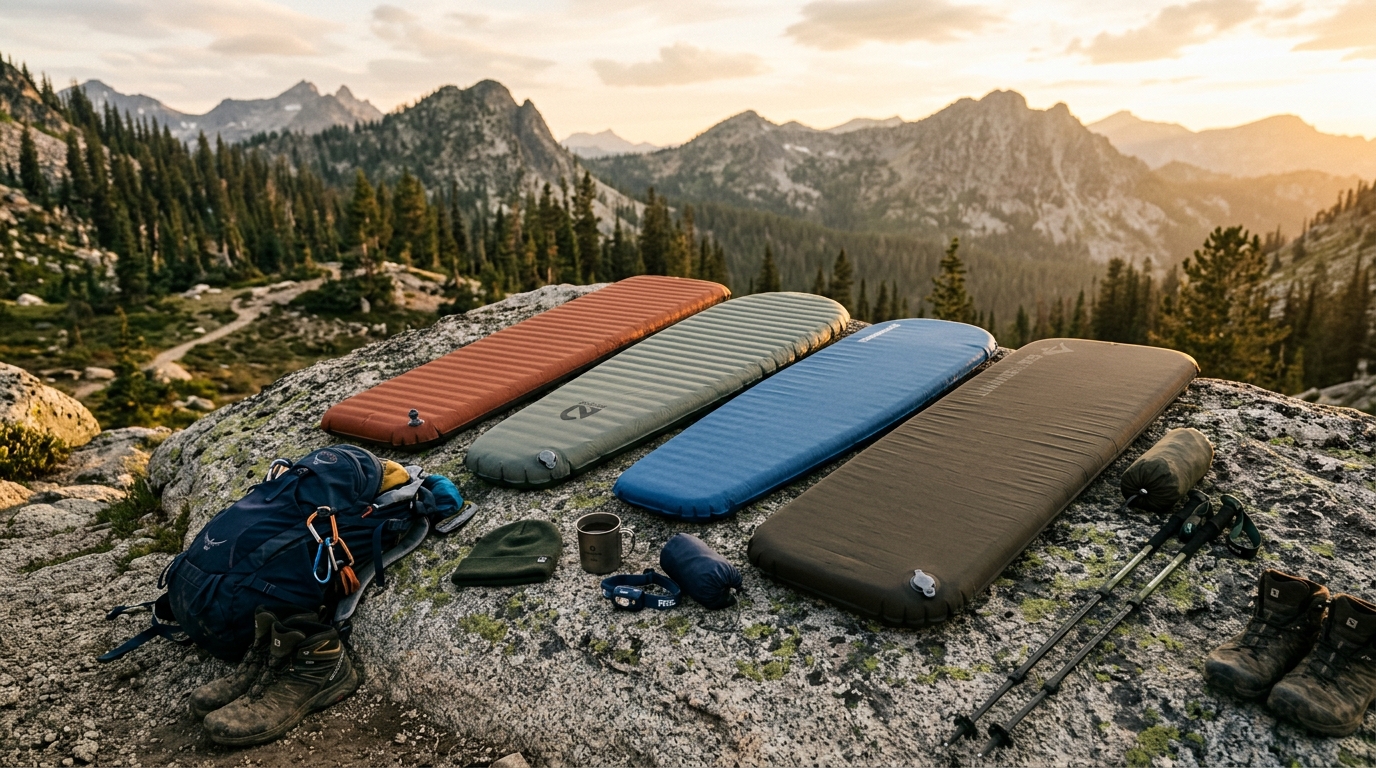
Self-inflating sleeping pads use open-cell foam that expands when you open the valve, drawing air in automatically and providing a cushioned sleep surface with minimal effort. Unlike pure air pads, the foam core offers built-in insulation and puncture resistance, making these pads ideal for rough campsites, cold-weather trips, and anyone who values bombproof reliability over shaving ounces. We tested these three Therm-a-Rest models across a range of conditions—from alpine backpacking trips to car camping in shoulder season—evaluating them on warmth, ease of inflation, packed size, and real-world durability.
Best Overall: Therm-a-Rest Trail Pro MAX Lightweight Self Inflating Backpacking Sleeping Pad, Regular Wide
The Trail Pro MAX strikes the sweet spot for backpackers who want self-inflating convenience without the bulk of a car-camping pad. At $179.95, it delivers a Regular Wide footprint (25 inches across) that accommodates side sleepers and restless movers, while the StrataCore foam construction balances loft with reasonable packed dimensions. The diagonal-cut foam pattern reduces weight compared to solid foam while maintaining structural integrity across the pad's surface. We measured approximately 2.5 inches of loft after self-inflation plus a few breaths to top it off—enough cushion to sleep comfortably on rocky ground without bottoming out. The fabric face feels soft against bare skin, and the brass valve opens wide for fast deflation in the morning. This pad excels in three-season use where you need reliable insulation but can't afford the 3+ pound weight of a full luxury pad.
What we like
Trade-offs
Best for Backpacking: Thermarest ProLite Plus WR Sleeping Mat CAYENNE One Size
The ProLite Plus WR earns our backpacking pick for its tapered mummy cut and WingLock valve system that minimizes packed volume while delivering genuine four-season warmth. Priced at $206, this pad uses diagonal-cut foam with a reflective ThermaCapture layer that bounces radiant heat back to your body—a measurable advantage on cold nights when ground temps drop below freezing. The WR (WingLock) valve is Therm-a-Rest's fastest self-inflating design, featuring a one-way intake that prevents air from escaping while you're topping off the pad. We appreciated the tapered shape (20 inches at the shoulders, 13 inches at the feet) that shaves weight and bulk compared to rectangular pads. The Cayenne colorway uses a durable 50-denier polyester face fabric that resists abrasion from tent floors and gravel. This is the pad for alpinists and winter campers who need maximum warmth-to-weight efficiency.
What we like
Trade-offs
Best for Car Camping: Therm-a-Rest MondoKing 3D Self-Inflating Camping Sleeping Pad
The MondoKing 3D is the luxury option for car campers and basecampers who prioritize comfort over portability. At $259.95, this pad delivers a full 4 inches of loft thanks to vertical sidewalls that create a true 3D structure—you're sleeping on top of the pad, not sinking into a taco shape. The foam core is denser and thicker than backpacking models, providing mattress-like support that eliminates pressure points even for heavy side sleepers. The stretch-knit polyester top feels plush and doesn't slip against sleeping bags or sheets. We measured the packed size at roughly 26 x 9 inches, which is too large for backpacking but fits easily in a car trunk alongside camp chairs and coolers. The TwinLock valve system uses two independent valves—one for rapid inflation, one for fine-tuning firmness—giving you precise control over sleep surface. If you're setting up a basecamp for a week or running a car-camping trip where weight doesn't matter, this pad delivers home-bed comfort in the backcountry.
What we like
Trade-offs
What to Look for in a Self-Inflating Sleeping Pad
Self-inflating pads differ fundamentally from ultralight inflatables in their construction and use case. The foam core provides inherent insulation and structure, meaning these pads won't deflate completely if punctured—a critical advantage on rocky terrain or when camping with dogs. Look for diagonal-cut or StrataCore foam patterns that reduce weight while maintaining support. Valve design matters significantly: brass valves are more durable than plastic, and one-way intake valves (like WingLock) speed up inflation and prevent frustrating air backflow. Pad width is a personal preference—standard 20-inch pads work for back sleepers and weight-conscious backpackers, while 25-inch wide versions accommodate side sleepers and larger frames. Thickness directly correlates with comfort: 2-2.5 inches suits backpacking, while 3-4 inches is ideal for car camping where weight isn't a constraint.
Self-Inflating vs. Ultralight Air Pads
The choice between self-inflating and ultralight air pads hinges on your priorities. Ultralight inflatables like the Therm-a-Rest NeoAir series weigh 12-16 ounces and pack down to the size of a water bottle, making them the go-to choice for gram-counting thru-hikers and alpine climbers. However, they require 15-25 breaths to inflate, offer no insulation if punctured, and can feel unstable on uneven ground. Self-inflating pads weigh 1.5-3 pounds and pack larger, but they inflate automatically, provide backup insulation even when deflated, and feel more stable thanks to the foam core. For weekend backpacking trips, shoulder-season camping, or anyone who values durability and ease of use over absolute minimum weight, self-inflating pads are the more practical choice. If you're counting every ounce for a multi-week thru-hike, an ultralight inflatable makes sense—but you'll sacrifice the bombproof reliability of foam.
Caring for Your Self-Inflating Pad
Proper care extends the life of a self-inflating pad significantly. Always store the pad unrolled with the valve open—this allows the foam to fully expand and prevents compression set that reduces loft over time. After trips, wipe down the pad with a damp cloth to remove dirt and body oils that can degrade fabric coatings. Avoid leaving the pad in direct sunlight for extended periods, as UV exposure weakens polyester and nylon face fabrics. If you do puncture the pad, most Therm-a-Rest models include a repair kit with adhesive patches—clean the area thoroughly, apply the patch, and let it cure for 24 hours before re-inflating. For long-term storage, keep the pad in a cool, dry place away from petroleum products and solvents that can break down foam and fabrics. With proper care, a quality self-inflating pad should deliver 5-10 years of reliable service.
Frequently Asked Questions
+Do self-inflating pads really inflate themselves, or do I still need to blow them up?
Self-inflating pads use open-cell foam that expands when you open the valve, drawing air in automatically. This typically gets the pad to 70-80% of full inflation in 2-5 minutes, depending on the foam density and pad size. You'll still need to add 5-15 breaths to achieve full firmness and customize the feel to your preference. The self-inflation process saves significant effort compared to fully inflating an air pad, which can require 20-30 breaths. In cold weather, the foam expands more slowly, so allow extra time or add a few more breaths to compensate.
+How do I know if I need a wide or regular width sleeping pad?
Regular-width pads (typically 20 inches) work well for back sleepers, smaller-framed individuals, and anyone prioritizing weight savings. Wide pads (25 inches) are essential for side sleepers, larger frames, and restless movers who shift positions frequently during the night. If you tend to roll off narrow pads or feel constricted when side sleeping, the extra 5 inches of width is worth the additional weight and bulk. For car camping where weight doesn't matter, wide pads offer significantly more comfort. Test your sleeping position at home: if your shoulders or hips hang off a 20-inch surface when side sleeping, go wide.
+Can I use a self-inflating pad in winter or do I need something warmer?
Self-inflating pads with reflective layers (like ThermaCapture) and thicker foam cores provide excellent insulation for winter camping, often outperforming ultralight air pads in sub-freezing conditions. The foam itself acts as a thermal barrier, and unlike air pads that rely solely on trapped air for insulation, self-inflating pads maintain some insulating value even if partially deflated. For true winter camping below 20°F, look for pads with R-values above 4.0 and consider pairing with a closed-cell foam pad underneath for additional ground insulation. The ProLite Plus WR with its ThermaCapture layer is a strong four-season choice, while the MondoKing 3D's 4-inch loft provides excellent cold-weather comfort for car camping.