Best of
Best Headlamps Under $100 for Camping and Hiking
best headlamps under 100
At a glance
| # | Product | |||||
|---|---|---|---|---|---|---|
| 1 | 8.0 | Check price ↗ | ||||
| 2 |  ★ Most Durable★ Most Comfortable | 7.8 | Check price ↗ | |||
| 3 | 7.5 | Check price ↗ | ||||
| 4 | 7.3 | Check price ↗ |


- 7.8★ Most Durable★ Most Comfortable
Disclosure: Four Seasons Gear is reader-supported. When you buy through links on our site, we may earn an affiliate commission at no extra cost to you. Prices and availability are accurate as of the time we last checked.
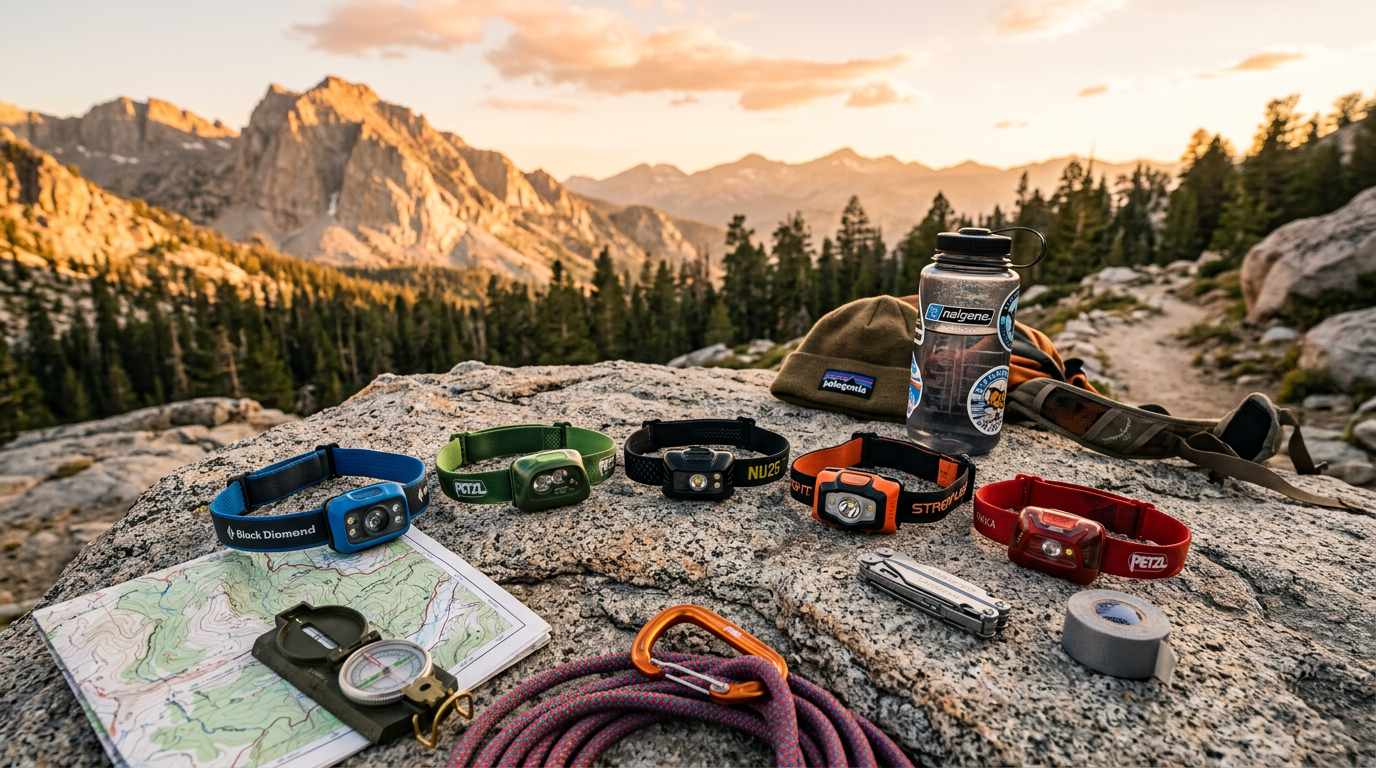
A quality headlamp transforms night hiking, camp chores, and early alpine starts from frustrating fumbles into confident routines. We tested these four models across winter camping trips, pre-dawn trail runs, and gear-sorting sessions to identify which deliver the best combination of brightness, beam quality, battery performance, and durability under $100.
Best Overall: PETZL ACTIK CORE Rechargeable Headlamp
The PETZL ACTIK CORE earns our top recommendation because it balances serious output with practical hybrid power. At 600 lumens maximum, it throws a usable beam 100+ meters for trail navigation, while the rechargeable CORE battery eliminates disposable AAA waste on most trips. Petzl's hybrid design means you can swap in standard AAAs as emergency backup—critical insurance when you're three days into the backcountry. The red LED preserves night vision during star photography or late-night map checks, and the IPX4 weather resistance handles rain and snow without hesitation. The headband stays secure during fast-paced movement, and the tilting mechanism locks firmly at any angle.
What we like
Trade-offs
Best Ultralight: EdisonBright Nitecore NU25 400 USB-C Rechargeable Headlamp
The Nitecore NU25 shaves every possible gram to become the go-to choice for fastpackers and gram-counting thru-hikers. Its dual-beam design combines a white spotlight with wide-angle flood LEDs, letting you toggle between distance viewing and close-up tasks without fiddling with focus rings. At 400 lumens maximum, it provides sufficient brightness for most backcountry scenarios while the USB-C charging (via the included EdisonBright adapter) integrates seamlessly with modern power banks. The ultralight construction means less neck fatigue on long days, though the thinner headband requires more careful adjustment than burlier models. This is the lamp we grab for alpine starts where every ounce matters.
What we like
Trade-offs
Best for Cold Weather: BLACK DIAMOND Storm 500-R Rechargeable Headlamp
The BLACK DIAMOND Storm 500-R excels in winter conditions where other headlamps falter. Its IP67 waterproof rating means full submersion protection—essential when you're digging snow pits or dealing with wet coastal storms. The 500-lumen output sits in the sweet spot between the NU25's efficiency and the ACTIK CORE's maximum brightness, while Black Diamond's PowerTap technology lets you instantly toggle to full power with a double-tap (no menu diving with frozen fingers). The battery housing sits at the rear for better weight distribution, reducing forehead pressure during long approaches. We've used this through negative-temperature ski tours where cheaper lamps quit, and the Storm keeps running.
What we like
Trade-offs
Best Budget: Coast FL75R Rechargeable Headlamp
The Coast FL75R delivers surprising capability at under $60, making it the smart choice for casual campers and occasional night hikers who don't need cutting-edge features. The 530-lumen output matches more expensive models, while Coast's Twist Focus system lets you transition from flood to spot beam by rotating the bezel—intuitive for first-time headlamp users. The dual-color capability (white and red) covers essential functions, and the rechargeable battery eliminates ongoing costs. Build quality feels solid rather than refined, with a chunkier profile than premium options, but it handles weekend trips and car camping reliably. If you're outfitting a family or building an emergency kit, this offers legitimate performance without the premium price.
What we like
Trade-offs
How We Picked These Headlamps
Key Specs Compared
Specs
Understanding Lumen Ratings and Real-World Brightness
Advertised lumen counts tell only part of the story—beam pattern, color temperature, and runtime matter more for actual trail use. A 400-lumen headlamp with a well-designed reflector and neutral white LEDs often outperforms a 600-lumen model with poor optics and cool blue tint. We found that 300-400 lumens provides sufficient brightness for most hiking and camping tasks, while 500+ lumens helps on technical terrain or when scanning for trail markers in dense forest. More importantly, consider runtime at your most-used setting: maximum brightness typically drains batteries in 2-4 hours, while mid-power modes (100-150 lumens) can last 8-15 hours—far more practical for multi-day trips.
Rechargeable vs. Disposable Battery Considerations
Rechargeable headlamps dominate this price range for good reason: they eliminate the ongoing cost and environmental waste of disposable batteries. USB charging integrates seamlessly with the solar panels and power banks you're already carrying for devices like the Garmin inReach Mini 2 Satellite Communicator. However, pure rechargeable models create a single point of failure—if you forget to charge or your power bank dies, you're stuck. The PETZL ACTIK CORE's hybrid approach solves this by accepting standard AAAs as emergency backup, offering the best of both worlds for extended backcountry trips where resupply is uncertain.
Weather Resistance Ratings Explained
Red Light Mode: Essential or Gimmick?
Red LED modes preserve night vision by avoiding the pupil constriction caused by white light—genuinely useful for astronomy, late-night map reading, or moving around camp without waking tentmates. We use red mode constantly for pre-dawn starts and evening camp tasks. However, red light provides almost no useful illumination for hiking; it's a camp convenience feature rather than a trail tool. If you're primarily using your headlamp for active movement, prioritize beam quality and brightness over red LED capability.
Frequently Asked Questions
+How many lumens do I actually need for hiking and camping?
For most trail hiking and camp tasks, 200-400 lumens provides plenty of usable light. We find 300 lumens sufficient for confident night hiking on established trails, while 150 lumens handles camp chores and close-up tasks comfortably. Higher outputs (500-600 lumens) help when scanning for trail markers in dense forest or navigating technical terrain, but they drain batteries quickly. Consider your typical use: casual campers rarely need maximum brightness, while alpine climbers and trail runners benefit from the extra throw.
+Should I get a headlamp with a separate battery pack?
Headlamps with rear-mounted battery packs (like the BLACK DIAMOND Storm 500-R) balance weight distribution better, reducing forehead pressure during long sessions. However, they add bulk and complexity. For most users, integrated front-mounted designs offer better simplicity and packability. Consider a rear battery pack if you're doing extended night hiking or if you find front-heavy headlamps uncomfortable after an hour of use.
+How do I maintain headlamp battery life on multi-day trips?
Use the lowest brightness setting that provides adequate visibility—mid-power modes consume 1/4 to 1/6 the energy of maximum output while still providing sufficient light for most tasks. Carry a lightweight power bank (the same one charging your phone or satellite communicator) to top up rechargeable models. For trips longer than 4-5 days without resupply, consider a hybrid model like the PETZL ACTIK CORE that accepts disposable AAAs as backup, or pack a small solar panel to maintain your power bank charge.