Best of
Best Budget Sleeping Pads for Camping in 2025
best budget sleeping pads for camping
At a glance
| # | Product | |||||
|---|---|---|---|---|---|---|
| 1 | 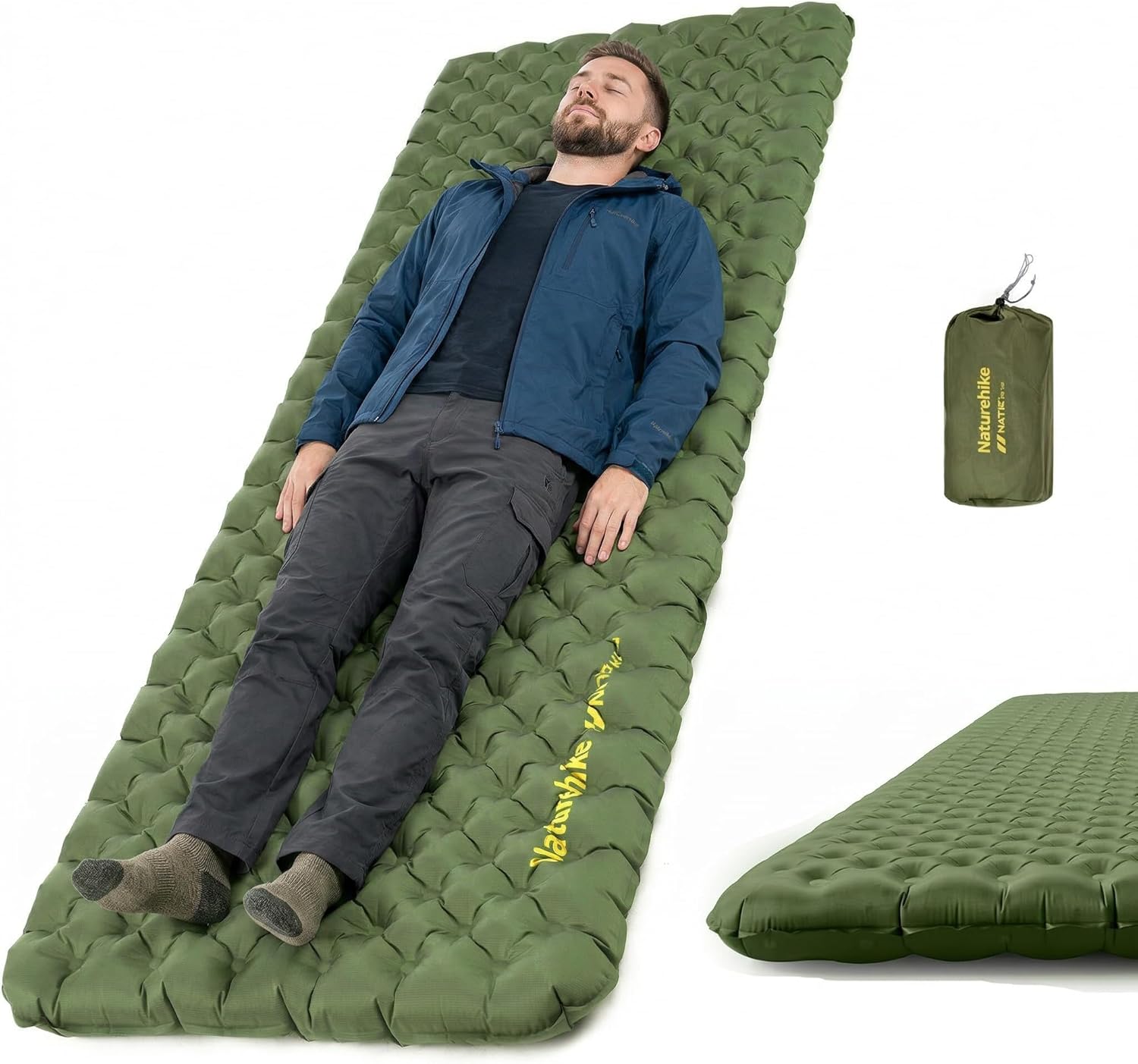 ★ Best Overall★ Best Value★ Most Comfortable | 7.8 | Check price ↗ | |||
| 2 | 7.3 | Check price ↗ | ||||
| 3 | 7.2 | Check price ↗ |


- 7.8★ Best Overall★ Best Value★ Most Comfortable
Disclosure: Four Seasons Gear is reader-supported. When you buy through links on our site, we may earn an affiliate commission at no extra cost to you. Prices and availability are accurate as of the time we last checked.
Budget sleeping pads have come a long way from the crinkly, slippery mats of a decade ago. Today's sub-$100 options deliver legitimate comfort and durability for three-season camping, though you'll need to understand where manufacturers cut costs—typically in insulation, packed size, or premium fabrics. We tested these pads across car camping trips and short backpacking overnights to identify which budget picks deliver the best balance of comfort, warmth, and packability without the $150+ price tags of premium ultralight models.
Best Overall Budget Sleeping Pad: Klymit Static V Sleeping Pad
The Klymit Static V earns our top budget pick because it nails the fundamentals at $49.49: a body-mapped V-chamber design that cradles your shoulders and hips, 75D polyester construction that resists abrasion from tent floors, and a packed size (5 x 8 inches) that's genuinely backpack-friendly. At 18 ounces, it's not ultralight, but it's light enough for weekend trips where you're not counting every gram. The V-chambers create air pockets that reduce convective heat loss better than flat designs, though the 1.3 R-value means this is strictly a warm-weather pad—we'd reserve it for nights above 50°F. The integrated valve inflates in 10-15 breaths and deflates in seconds by opening the valve and rolling from the foot end.
What we like
Trade-offs
Best Insulated Budget Pad: Naturehike Insulated Inflatable Sleeping Pad
If you camp in shoulder seasons or higher elevations where nighttime temps drop into the 30s, the Naturehike Insulated pad is worth the step up to $69.99. The 4.6 R-value comes from synthetic insulation layered inside the air chambers, providing genuine four-season capability that the uninsulated Klymit can't match. At 27 ounces, it's heavier than the Static V, but the XL sizing (76 x 25 inches) accommodates taller or side-sleeping campers who need more real estate. The 40D nylon face fabric is lighter than Klymit's 75D polyester, so we'd recommend pairing this with a footprint or being more careful about sharp sticks and gravel. The included stuff sack doubles as a pump sack, letting you inflate without huffing moisture into the pad—a nice touch that extends longevity.
What we like
Trade-offs
Best for Cold Weather: Klymit Insulated Static V Luxe
The Insulated Static V Luxe pushes the upper boundary of 'budget' at $99.99, but it's the only pad in this roundup engineered specifically for cold-weather camping with Klymit's Klymalite synthetic insulation delivering a 4.4 R-value. The Luxe designation means extra width (30 inches versus the standard Static V's 23 inches), which matters when you're wearing puffy layers inside a sleeping bag and don't want to roll off onto the tent floor at 2 AM. The V-chamber design carries over from the standard Static V, but the insulated baffles eliminate the cold spots we felt on the uninsulated version during 40°F nights. At 30.5 ounces, this is firmly a car camping or short-haul backpacking pad—if you're counting ounces for thru-hiking, look elsewhere—but for winter camping where warmth trumps weight, it delivers.
What we like
Trade-offs
What to Look for in a Budget Sleeping Pad
R-value is the single most important spec—it measures thermal resistance, with higher numbers meaning more insulation. A 1.0-2.0 R-value is fine for summer camping above 50°F, but you'll want 3.0+ for spring and fall, and 4.0+ for winter. Budget pads typically sacrifice insulation first, so if you camp year-round, expect to pay more. Denier (D) rating indicates fabric thickness: 75D is bombproof but heavier, while 20-40D saves weight at the cost of durability. For car camping, prioritize comfort and durability; for backpacking, watch packed weight and volume—anything under 20 ounces and smaller than a Nalgene bottle is backpack-friendly.
Inflation Methods Matter
Budget pads typically use manual inflation—you blow into a valve until firm. This takes 10-20 breaths for most pads, but introduces moisture that can degrade insulation over time and promote mildew. Pump sacks (like Naturehike includes) eliminate this issue and make inflation faster, though they add a few ounces. Avoid pads requiring separate electric pumps unless you're exclusively car camping with shore power—they're dead weight in the backcountry.
Width and Length Trade-offs
Standard pads run 20-23 inches wide and 72 inches long, which fits most back sleepers under 6 feet tall. Side sleepers and broader-shouldered campers should look for 25-30 inch widths (like the Luxe models) to avoid rolling off. Mummy-tapered pads save weight by narrowing at the feet, but full-rectangle designs offer more freedom of movement—budget pads usually stick with rectangles since tapering requires more complex manufacturing.
Sleeping Pad Maintenance Tips
- Store unrolled and partially inflated—never leave compressed long-term, as this degrades foam and insulation
- Clean with mild soap and water after trips, especially if exposed to sand or salt
- Carry a patch kit—even bombproof 75D fabric can puncture on sharp rocks
- Inflate fully at home once a month during off-season to check for slow leaks
- Use a footprint or tent floor protector to extend pad lifespan on abrasive surfaces
Budget Pads vs. Premium Options
Premium pads like the Therm-a-Rest NeoAir series cost $150-250 but deliver ultralight weights (12-16 oz), higher R-values (4.0-6.0), and proprietary fabrics that balance durability with packability. Budget pads sacrifice one or more of these—typically insulation or weight—to hit sub-$100 price points. For weekend warriors and car campers, budget pads are entirely adequate. If you're logging 50+ nights per year or backpacking in alpine environments, the premium investment pays off in comfort and warmth-to-weight ratio.
The gap has narrowed significantly in recent years—today's budget pads would've been considered mid-tier a decade ago. Brands like Klymit and Naturehike have proven you don't need to spend $200 for a reliable three-season pad, though you'll still pay a premium for cutting-edge materials and sub-15-ounce weights.
Pairing Your Pad with Other Gear
A sleeping pad is only one piece of your sleep system. If you're camping in cold weather with a budget pad, compensate with a warmer sleeping bag—adding a 15°F bag to a 2.0 R-value pad is smarter than pairing a 30°F bag with a 4.0 R-value pad, since bags compress under your body weight and lose insulation where you need it most. For car camping, consider pairing your pad with a cot to lift you off cold ground entirely—this extends the usable temperature range of lower R-value pads significantly.
+Can I use a budget sleeping pad for winter camping?
Only if it has an R-value of 4.0 or higher. The Naturehike Insulated (4.6 R-value) and Klymit Insulated Static V Luxe (4.4 R-value) can handle freezing temperatures when paired with an appropriate sleeping bag, but the uninsulated Klymit Static V (1.3 R-value) will leave you shivering below 50°F. For sustained winter camping, consider stacking two pads or investing in a dedicated cold-weather pad with R-values above 5.0.
+How long do budget sleeping pads last?
With proper care, expect 3-5 years of regular use (20-30 nights per year). The main failure points are valve degradation, seam separation, and fabric punctures. Higher-denier fabrics (75D) resist abrasion better than lighter options (20-40D), so the Klymit pads typically outlast thinner competitors. Storing pads unrolled between trips and avoiding over-inflation extends lifespan significantly—over-inflating stresses seams and accelerates wear.
+Do I need a pump sack for my sleeping pad?
It's not required, but highly recommended for insulated pads. Blowing directly into the pad introduces moisture from your breath, which degrades synthetic insulation over time and can promote mildew in humid climates. Pump sacks add 1-2 ounces but keep the interior dry and make inflation faster—the Naturehike includes one, while Klymit pads require purchasing separately. For uninsulated pads like the basic Static V, moisture is less critical, but pump sacks still speed up setup.