Best of
Best 4 Season Tents for Winter Camping
best 4 season tents for winter camping
At a glance
| # | Product | |||||
|---|---|---|---|---|---|---|
| 1 |  ★ Best Overall★ Most Durable★ Most Comfortable | 8.0 | Check price ↗ | |||
| 2 | 7.5 | Check price ↗ | ||||
| 3 | 7.2 | Check price ↗ |

Disclosure: Four Seasons Gear is reader-supported. When you buy through links on our site, we may earn an affiliate commission at no extra cost to you. Prices and availability are accurate as of the time we last checked.
Best Overall: Sea to Summit Alto TR2 Plus Tent
The Sea to Summit Alto TR2 Plus earns best overall honors for its exceptional balance of livability and winter performance. This tent uses a hybrid single-wall/double-wall design with strategically placed venting panels that minimize condensation—a critical feature when you're spending long winter nights sealed inside. The tension ridge architecture creates steep sidewalls that shed snow effectively, while the DAC Featherlite NSL poles provide the stiffness needed to maintain structure under load. At this price point, you're getting expedition-grade construction with taped seams, reinforced anchor points, and a silnylon/polyurethane laminate rainfly rated to handle sustained winds.
What we like
Trade-offs
Best Value: Geertop Portable 2 Person 4 Season Tent
The Geertop 2 Person 4 Season Tent delivers legitimate cold-weather protection at less than half the cost of premium options. This double-layer design uses a full-coverage rainfly over a breathable inner tent, creating an air gap that reduces condensation while adding insulation value. The aluminum pole structure employs a traditional cross-pole design with additional guy-out points—not as sophisticated as the Sea to Summit's architecture, but proven reliable in winter conditions when properly staked. The 210T polyester fabric with 3000mm waterproof coating won't match silnylon's tear resistance, but it handles moisture well and the double-stitched seams show attention to construction quality at this price point.
What we like
Trade-offs
Best for Minimalists: Outdoor Research Helium Bivy 2024
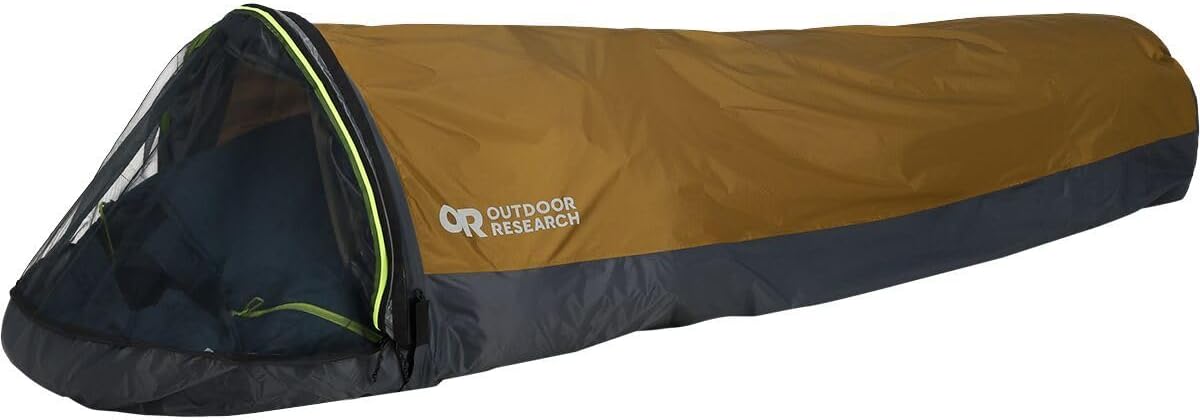
The Outdoor Research Helium Bivy occupies a specialized niche—it's technically a bivy sack rather than a tent, but for solo winter campers prioritizing weight savings, it offers a compelling alternative. The 2024 revision uses Pertex Shield waterproof-breathable fabric on the upper panel with a coated nylon bathtub floor, creating a microclimate that manages moisture while keeping pack weight minimal. The single-pole hoop at the head provides just enough structure to prevent fabric contact with your face, and the side-entry zipper allows ventilation adjustment without exposing your sleeping bag to spindrift. This isn't a shelter for extended storms or claustrophobic sleepers, but for fast-and-light winter objectives where you need more protection than a tarp but less bulk than a full tent, the Helium Bivy delivers.
What we like
Trade-offs
What Makes a True 4-Season Tent
The term '4-season' gets applied loosely, but legitimate winter tents share specific design characteristics. Pole structure is the foundation—you need either thicker-diameter aluminum poles or additional cross-bracing to handle snow loading without collapse. Fabric selection matters equally: silnylon and polyurethane laminates offer better tear resistance than basic polyester, critical when wind drives fabric against poles repeatedly. Geometry plays a crucial role in snow shedding—dome and tunnel designs with steep sidewalls prevent accumulation, while low-angle walls create load points that can overwhelm pole strength.
Ventilation design separates functional winter tents from suffocation chambers. You need adjustable venting that allows moisture escape without admitting spindrift, typically achieved through high-low vent placement or chimney-style exhaust ports. The best systems let you dial ventilation based on conditions—wide open during dry cold, restricted during storms. Anchor points deserve scrutiny: look for reinforced webbing loops rather than simple sewn tabs, and count the guy-out options. Winter camping often requires 8-12 stakes to properly tension a tent against wind, so adequate attachment points are non-negotiable.
Understanding Weight Trade-offs
Winter tent weight reflects the structural requirements of cold-weather performance. Where a 3-season tent might use 9mm poles, 4-season designs employ 10-11mm diameters for rigidity. Fabric weight increases similarly—you're looking at 40D ripstop minimum rather than the 20D fabrics common in ultralight shelters. These specifications add up: expect a 2-person 4-season tent to weigh 5-7 pounds, compared to 3-4 pounds for comparable 3-season models. The Geertop sits at the heavier end of this range due to its double-layer construction and aluminum pole set, while the Sea to Summit achieves better weight efficiency through premium materials and optimized geometry.
For winter backpacking, this weight penalty matters less than in summer touring. You're already carrying insulated sleeping pads, 0°F sleeping bags, and additional clothing layers—the tent's extra pound or two becomes proportionally less significant. The real question is whether you need a full tent at all. The Outdoor Research Helium Bivy represents the minimalist extreme, trading livability for pack weight. For solo travelers on established winter routes with reliable weather windows, a bivy plus a quality sleeping system can suffice. But for exposed locations, multi-day trips, or group camping where you need communal shelter space, the full tent's weight penalty is justified insurance.
Site Selection and Setup Considerations
Winter tent performance depends heavily on proper site selection and setup technique. Look for naturally wind-protected locations—treeline camping, terrain depressions, or the lee side of ridges. Avoid valley bottoms where cold air pools, and stay away from avalanche runout zones or areas beneath snow-loaded branches. Once you've selected your site, spend time preparing the platform: stamp down snow to create a firm base, or dig down to consolidated layers if you're in deep powder. A properly prepared platform prevents the tent floor from postholing during the night, which creates cold spots and structural stress.
Stake placement in snow requires different technique than summer camping. Dead-man anchors—burying stuff sacks filled with snow or using purpose-built snow stakes—provide better holding power than trying to drive standard stakes into unconsolidated snow. For the Sea to Summit and Geertop tents, plan to use all available guy-out points rather than the minimal setup that works in summer. Proper tensioning creates the geometric rigidity that allows these tents to shed snow and resist wind loading. The Helium Bivy's minimal stake requirements simplify setup, but you'll still need to secure the head pole properly and ensure the bathtub floor is fully tensioned to prevent ground moisture infiltration.
Managing Condensation in Cold Conditions
Condensation management is the most challenging aspect of winter tent camping. Your body releases roughly a liter of moisture overnight through respiration and perspiration, and in sub-freezing conditions, this moisture condenses on tent walls rather than evaporating. The Sea to Summit's hybrid ventilation system addresses this through strategic vent placement that creates airflow without admitting spindrift. The Geertop's double-layer design uses an air gap between inner tent and rainfly to reduce condensation on sleeping surfaces, though you'll still see frost accumulation on the fly itself.
Active ventilation management is essential regardless of tent design. Start with maximum ventilation when you enter the tent, allowing initial moisture from snow-covered gear and clothing to escape. As temperatures drop overnight, adjust vents to balance moisture escape against heat retention. Morning brings the critical moment: before the sun hits your tent, brush accumulated frost from interior surfaces toward the door rather than letting it melt and soak your gear. The Helium Bivy's Pertex Shield fabric handles moisture transport better than coated fabrics, but the limited interior volume means any condensation drips directly onto your sleeping bag, making ventilation discipline even more critical.
+Can I use a 3-season tent for winter camping?
3-season tents can handle light snow and cold temperatures, but they lack the structural reinforcement and ventilation design needed for true winter conditions. The thinner poles will flex excessively under snow loading, potentially leading to collapse. More critically, 3-season tents typically have large mesh panels designed for summer ventilation that become liability points in winter—they don't seal adequately against spindrift, and they create massive heat loss. If you're camping below treeline in stable weather with minimal snow accumulation, a robust 3-season tent can work. But for exposed locations, sustained storms, or significant snow loading, the structural and thermal limitations become safety issues rather than mere comfort concerns.
+How do I prevent my tent from collapsing under snow load?
Snow load prevention starts with tent geometry—steep-walled designs like the Sea to Summit shed snow naturally, while low-angle walls require active management. During active snowfall, brush accumulated snow off the rainfly every few hours rather than letting it build up. Pay particular attention to the windward side where spindrift accumulates, and to any flat surfaces on the fly where snow can pile. Proper initial setup with full tensioning creates the structural rigidity that helps snow slide off rather than compress the tent. If you're expecting heavy snowfall overnight, consider setting an alarm to clear the tent mid-sleep—losing an hour of rest beats waking to a collapsed shelter. The Geertop's traditional cross-pole design is particularly vulnerable to accumulation between the poles, so focus clearing efforts on those flat sections.
+What's the minimum temperature rating I should look for in a winter tent?
Tents don't have temperature ratings the way sleeping bags do—they provide wind protection and moisture management, not insulation. Any properly constructed 4-season tent will function in extreme cold; the limiting factor is your sleeping system (bag, pad, and clothing layers) rather than the tent itself. What matters more is the tent's ability to seal against wind while maintaining adequate ventilation. In extreme cold (below 0°F), you actually want more ventilation rather than less, because the air is so dry that condensation becomes a bigger problem than heat loss. Focus on ensuring your tent can seal all mesh panels against spindrift, has adequate guy-out points for wind stability, and provides ventilation adjustment rather than worrying about a temperature rating that doesn't exist for tent shelters.