
Review · spring · summer · fall · winter
YETI Rambler 26 oz Bottle with Chug Cap Review: Premium Insulation at a Premium Price
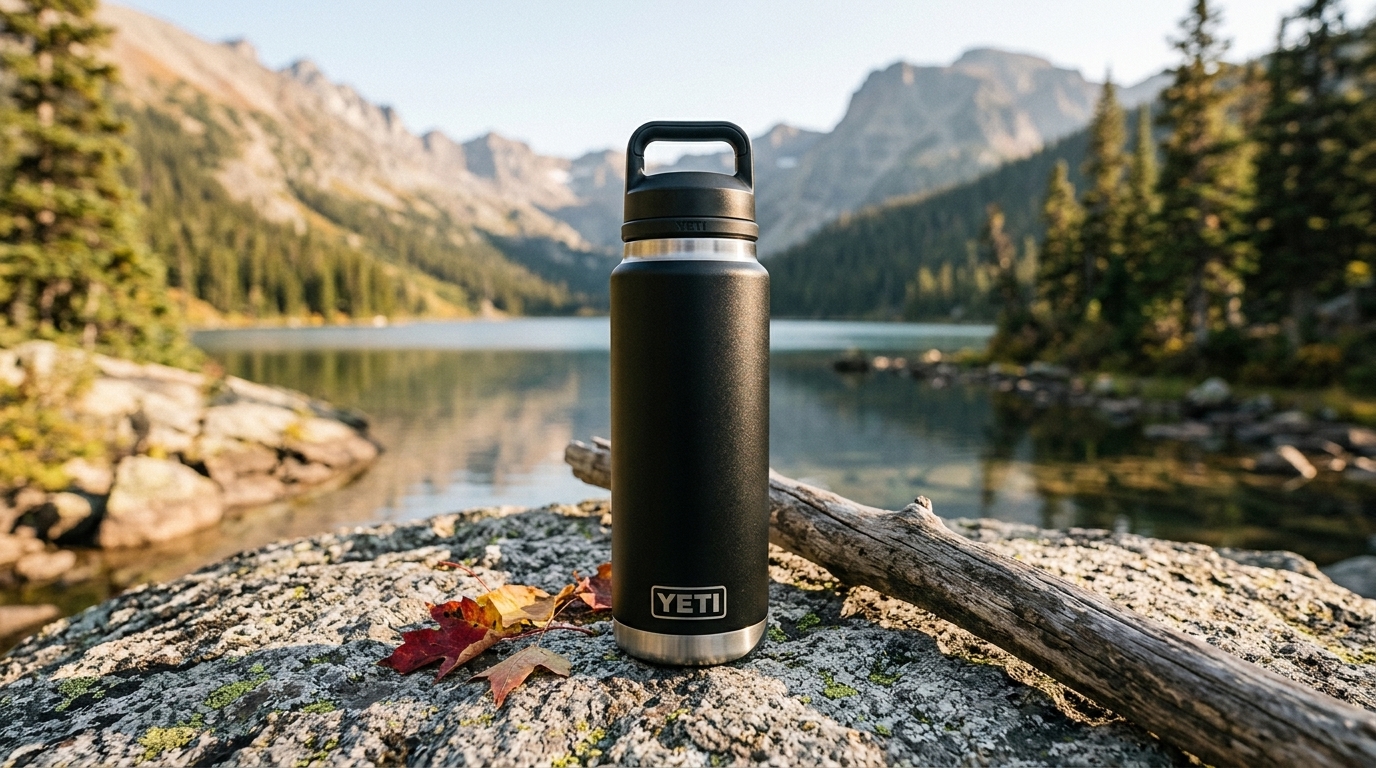
The YETI Rambler 26 oz Bottle with Chug Cap is engineered for users who prioritize maximum thermal performance and bombproof construction over weight and cost. Its double-wall vacuum insulation keeps beverages cold for 24+ hours or hot for 12+ hours, and the 18/8 stainless steel body withstands years of hard use. The tradeoff: at approximately 510 g empty and $40 MSRP, it's 2–3× the weight and price of non-insulated alternatives like the Nalgene 32 oz Wide Mouth Water Bottle, making it ideal for car camping, day hikes, and work commutes where thermal retention matters more than pack weight.
Disclosure: Four Seasons Gear is reader-supported. When you buy through links on our site, we may earn an affiliate commission at no extra cost to you. Prices and availability are accurate as of the time we last checked.
Construction and Materials
YETI builds the Rambler 26 oz from kitchen-grade 18/8 stainless steel—the same corrosion-resistant alloy used in high-end cookware. The double-wall vacuum insulation creates a near-airless gap between inner and outer shells, eliminating conductive heat transfer. The exterior receives a DuraCoat powder coating in colors like Black, which YETI claims resists fading, peeling, and cracking through years of UV exposure and abrasion. The Chug Cap features a TripleHaul handle (a three-finger carry loop) and a half-twist opening mechanism that exposes a wide drinking spout. Bottle dimensions measure 10.5 inches tall by 3.5 inches in diameter, fitting most vehicle cup holders but requiring a side pocket or exterior attachment on packs.
Specs
Thermal Performance and Intended Use
The Rambler's vacuum insulation delivers industry-standard thermal retention: ice water stays cold for 24+ hours in moderate ambient temperatures, and hot coffee holds above 140°F for 10–12 hours. This makes the bottle well-suited for all-day hydration on summer day hikes, keeping water cold from trailhead to summit, or for winter commuters who want hot tea available hours after brewing. The 26 oz capacity strikes a middle ground—larger than a standard 20 oz gym bottle but smaller than the 32 oz Hydro Flask Water Bottle — 32 oz Wide Mouth Flex Lid, which some users prefer for full-day backcountry trips. The Chug Cap's wide spout allows fast hydration during high-output activities, though YETI explicitly warns against using it with hot beverages due to potential splash risk.
Weight and Portability Tradeoffs
At approximately 510 g empty, the Rambler weighs roughly 3× more than the 175 g Nalgene 32 oz Wide Mouth Water Bottle. For ultralight backpackers counting every gram, this penalty is significant: the insulation's thermal benefit rarely justifies the weight on multi-day trips where ambient water temperature matters less than total pack load. Car campers, day hikers, and commuters face no such constraint—the bottle rides in a vehicle cup holder or office desk, and the insulation's convenience (no need to refill with ice, no condensation rings on furniture) outweighs the mass. The 3.5-inch diameter fits standard cup holders but may not slide into narrow pack side pockets designed for 2.75-inch Nalgenes.
Durability Considerations
The 18/8 stainless steel construction resists denting better than aluminum bottles but will show cosmetic dings if dropped on rock or concrete—the vacuum seal typically remains intact unless the impact is severe enough to puncture both walls. The DuraCoat finish bonds at the molecular level during manufacturing, making it more durable than painted coatings that can chip with repeated abrasion. The Chug Cap's plastic components (polypropylene body, silicone gasket) represent the primary wear points: the gasket may compress over years of use, potentially requiring replacement to maintain a leakproof seal. YETI does not publish a specific warranty period for the Rambler line, but the brand's reputation centers on multi-year durability. The bottle is dishwasher-safe, though YETI recommends hand-washing the cap to preserve gasket integrity.
Value and Market Position
At $40 MSRP, the YETI Rambler sits at the premium end of the insulated bottle market—roughly 2× the price of comparable vacuum bottles from brands like Hydro Flask or Klean Kanteen. You're paying for YETI's brand cachet, slightly thicker steel walls (which improve dent resistance), and the DuraCoat finish. The thermal performance itself is functionally identical to competitors using the same vacuum insulation technology. For buyers who value the YETI aesthetic and expect to use the bottle daily for 5+ years, the cost-per-use becomes reasonable. Budget-conscious buyers or those prioritizing weight savings should consider the Hydro Flask Water Bottle — 32 oz Wide Mouth Flex Lid (similar performance, $5–10 less, slightly lighter) or skip insulation entirely with a Nalgene 32 oz Wide Mouth Water Bottle (under $15, 175 g).
What we like
Trade-offs
Frequently Asked Questions
+Can I use the YETI Rambler 26 oz with the Chug Cap for hot coffee?
No. YETI explicitly warns that the Chug Cap is designed for cold beverages only—the wide spout opening can cause hot liquids to splash during drinking, creating a burn risk. For hot beverages, use a Rambler bottle with YETI's HotShot Cap (sold separately), which features a smaller, insulated drinking opening.
+How does the YETI Rambler compare to Hydro Flask for insulation performance?
Both use double-wall vacuum insulation and deliver functionally identical thermal performance (24+ hours cold, 12+ hours hot). The YETI uses slightly thicker stainless steel walls, which improve dent resistance, and the DuraCoat finish is more durable than Hydro Flask's powder coat. The Hydro Flask Water Bottle — 32 oz Wide Mouth Flex Lid offers 6 oz more capacity and typically costs $5–10 less, making it a better value if brand preference isn't a factor.
+Is the YETI Rambler too heavy for backpacking?
For ultralight backpacking, yes—the ~510 g empty weight is prohibitive when every gram counts. The Nalgene 32 oz Wide Mouth Water Bottle weighs 175 g and offers more capacity, making it the standard choice for weight-conscious hikers. The Rambler makes sense for day hikes where you want cold water all day, or for car camping where weight is irrelevant.
+Will the DuraCoat finish scratch or chip over time?
The DuraCoat powder coating is more durable than paint and resists chipping under normal use. It will show scuff marks if dragged across abrasive surfaces (rock, concrete) but won't peel or flake like painted finishes. The underlying stainless steel is corrosion-resistant, so cosmetic wear doesn't affect function.
+Does the Chug Cap leak if the bottle tips over in a backpack?
When properly closed (half-twist until snug), the Chug Cap's silicone gasket creates a leakproof seal suitable for horizontal storage in a pack. Over years of use, the gasket may compress and require replacement to maintain the seal. Always test the seal with water before trusting it with electronics nearby.
The Bottom Line
The YETI Rambler 26 oz Bottle with Chug Cap excels in scenarios where thermal performance and durability justify the weight and cost premium: daily commutes, car camping, gym sessions, and day hikes where cold hydration enhances the experience. Its 18/8 stainless steel construction and DuraCoat finish will outlast cheaper alternatives, making the $40 investment reasonable for users who expect 5+ years of daily service. Backpackers and gram-counters should look elsewhere—the 510 g empty weight and $40 price deliver no functional advantage over a $15, 175 g Nalgene on the trail. If you value the YETI brand and use the bottle daily in non-weight-critical contexts, it's a solid purchase. If you're optimizing for weight, capacity, or budget, better options exist.

Read next
More from this category
REVIEW
Hydro Flask 32 oz Wide Mouth Review: The Benchmark Insulated Bottle
REVIEW
Nalgene 32 oz Wide Mouth Water Bottle Review: The Indestructible Standard
BEST OF
Best Rechargeable Headlamps for Backpacking
BEST OF
Best Beginner Binoculars for Hiking and Bird Watching
GUIDE
How to Choose a Backpacking Tent: The 5 Specs That Matter

GUIDE