
Review · spring · summer · fall · winter
Kershaw Leek Mother of Pearl: Artisan Inlay Meets Everyday Carry Steel
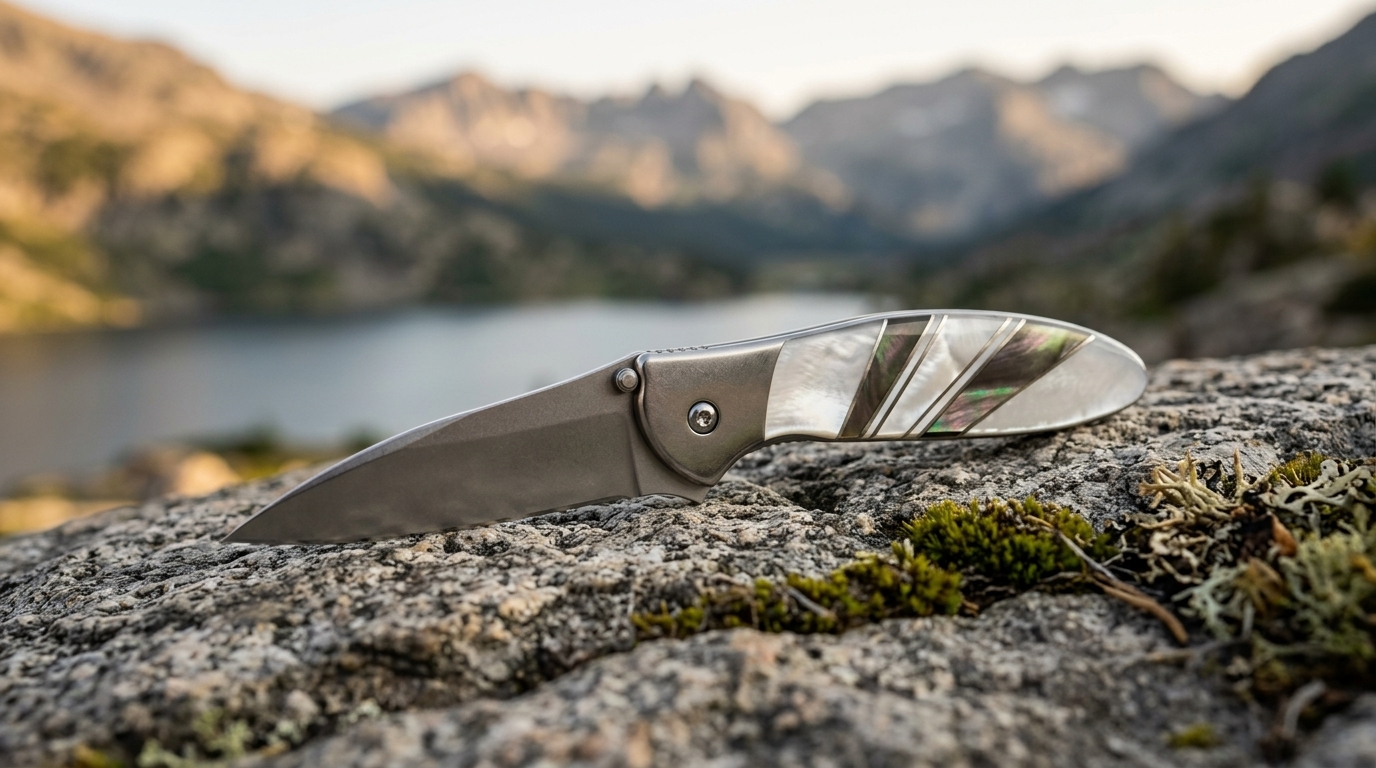
The Kershaw Leek with mother-of-pearl handle scales brings artisan stonework to a proven EDC frame. Built around the Speed Safe assisted-opening mechanism and a 3-inch Sandvik 14C28N blade, this USA-made variant trades the standard aluminum handle for hand-inlaid white and black mother-of-pearl. At $399.99 MSRP, it occupies the premium end of the Leek family—you're paying for the craftsmanship of natural stone inlay rather than performance upgrades. Best for collectors and gift-buyers who value aesthetics and domestic manufacturing, less compelling for users prioritizing weight savings or hard-use durability over decorative materials.
Disclosure: Four Seasons Gear is reader-supported. When you buy through links on our site, we may earn an affiliate commission at no extra cost to you. Prices and availability are accurate as of the time we last checked.
Construction and Materials
The Leek's blade measures approximately 3 inches (76 mm) and uses Sandvik 14C28N stainless steel, a nitrogen-alloyed Swedish alloy developed specifically for knife applications. This steel offers a balance of edge retention, corrosion resistance, and ease of sharpening—Rockwell hardness typically runs 55–62 HRC depending on heat treatment. The straight edge geometry suits general cutting tasks from package opening to food prep.
Handle scales feature artisan-crafted mother-of-pearl with inlaid black stripes, all stonework completed in the USA. Natural nacre (mother-of-pearl) exhibits iridescent optical properties due to its layered aragonite microstructure, meaning each knife carries unique color variation. The stone is bonded to the stainless steel frame lock chassis. Closed length is approximately 4 inches (102 mm); open length around 7 inches (178 mm). Weight is approximately 3.0 oz (85 g)—heavier than the standard aluminum-handled Leek (2.5 oz / 71 g) due to the denser stone material.
The Speed Safe assisted-opening system uses a torsion bar to complete blade deployment after manual initiation via the thumb stud or blade protrusion. A frame lock secures the blade open. The reversible pocket clip (tip-up or tip-down carry) is positioned for right-hand carry only.
Specs
Intended Use and Category Context
This is a dress-carry or collector's variant of the Leek platform, not a hard-use field knife. The mother-of-pearl inlay elevates the aesthetic for office carry, formal events, or display, but the material is more brittle than G-10, Micarta, or aluminum scales. Expect the stonework to show wear or chip if subjected to drops on hard surfaces or prying tasks.
The Leek's slim profile (0.4-inch thickness closed) suits pocket carry in business or casual attire. The 3-inch blade length complies with most US municipal EDC regulations (verify local laws). Assisted opening may be restricted in some jurisdictions—check state and local statutes before purchase.
Within Kershaw's lineup, the standard Leek with aluminum or composite handles starts around $60–$80. The mother-of-pearl variant commands a 5× premium for the artisan inlay work. Competitors in the decorative EDC space include Benchmade's Gold Class series (typically $400–$600) and Chris Reeve's Sebenza Inlay models ($500+). The Leek offers a lower entry point to natural-material handle scales but lacks the refined machining tolerances and premium lock mechanisms of those higher-tier folders.
Durability Considerations
Sandvik 14C28N's nitrogen content improves toughness relative to older 13C26 alloys, but edge retention falls short of modern super-steels like S30V or M390. Expect to resharpen every few weeks under daily EDC use (cardboard, tape, food). The steel's corrosion resistance is good but not exceptional—wipe the blade dry after exposure to moisture or acidic foods.
Mother-of-pearl is a calcium carbonate biomineral with Mohs hardness around 3.5–4.0, softer than most synthetic handle materials (G-10 is ~6.0 Mohs). The inlay can crack or delaminate if the knife is dropped onto concrete or rock. Avoid using the handle as a hammer or prying surface. The frame lock mechanism itself is robust—Kershaw's Speed Safe system has a long track record in the Leek platform dating to 2001—but the decorative scales are the weak point.
The torsion bar in the Speed Safe mechanism can fatigue over thousands of cycles. Kershaw offers warranty service, but replacement parts for limited-edition inlay models may be unavailable long-term. Budget for professional sharpening or learn to maintain the edge yourself; the 14C28N alloy responds well to ceramic or diamond hones.
Value and Purchase Considerations
At $399.99, you're paying $320+ over the base Leek for hand-inlaid stonework and USA provenance. The blade steel, lock mechanism, and cutting performance are identical to the $60 aluminum version. This is a collectible or gift piece, not a performance value play.
Compare to the standard Leek if you prioritize function over form—the aluminum handle is lighter, tougher, and costs 1/5 as much. If you want a premium EDC folder with better steel and machining, consider the Benchmade 940 Osborne (S30V blade, $200–$250) or Spyderco Para 3 (S45VN, $180–$220). If you're drawn to natural handle materials, Chris Reeve's Sebenza Inlay models offer superior fit-and-finish but start around $500.
The mother-of-pearl Leek makes sense for buyers who value the artisan aesthetic, want a conversation piece, or need a gift for a knife enthusiast who already owns the utilitarian variants. It's less compelling for backpackers, tradespeople, or anyone prioritizing weight, durability, or cost-per-cut.
What we like
Trade-offs
Comparison to Related Gear
Unlike the MSR PocketRocket 2 Stove or Sawyer Squeeze Water Filter System—tools optimized for weight and function in the backcountry—the mother-of-pearl Leek prioritizes aesthetics and craftsmanship. It occupies a different niche than utilitarian camp tools, closer to a dress watch than a field instrument. If you're outfitting a gear kit for remote travel, pair this knife with a lightweight backup blade (the standard Leek or a fixed-blade camp knife) rather than relying solely on the decorative variant.
Frequently Asked Questions
+Is the mother-of-pearl handle durable enough for daily carry?
The mother-of-pearl inlay is suitable for office or light EDC use but less durable than aluminum or G-10 scales. Nacre has a Mohs hardness around 3.5–4.0, making it prone to chipping if dropped onto hard surfaces. Avoid prying tasks or impacts. If you need a hard-use folder, choose the standard aluminum-handled Leek or a knife with synthetic scales.
+How does Sandvik 14C28N compare to other EDC blade steels?
Sandvik 14C28N offers better corrosion resistance and toughness than older 420HC or 8Cr13MoV steels, with edge retention comparable to AUS-8. It falls short of premium alloys like S30V, S35VN, or M390 in wear resistance, meaning you'll resharpen more frequently. The tradeoff is easier sharpening and lower cost. For most EDC tasks (boxes, rope, food prep), 14C28N performs well.
+Can I carry this knife on a plane or in restricted areas?
No. TSA prohibits knives in carry-on luggage. Assisted-opening mechanisms are also restricted or banned in some US states (e.g., parts of New York, California) and many countries. Check local laws before purchasing. The 3-inch blade length is legal in most US municipalities for general carry, but verify your jurisdiction's specific statutes.
+What's the difference between this and the standard Kershaw Leek?
The blade steel (Sandvik 14C28N), lock mechanism (frame lock), and Speed Safe assisted opening are identical. The mother-of-pearl variant substitutes artisan-inlaid stone scales for the standard aluminum or composite handles, adding approximately 0.5 oz (14 g) and $320 to the price. Cutting performance is the same; you're paying for aesthetics and USA stonework.
+How do I maintain the mother-of-pearl inlay?
Wipe the handle with a soft, damp cloth to remove dirt or oils. Avoid abrasive cleaners, which can scratch the nacre. Do not submerge the knife in water for extended periods—moisture can compromise the adhesive bonding the inlay to the frame. Store in a dry environment. If the inlay cracks, contact Kershaw warranty service; replacement scales may not be available for limited-edition models.

Read next
More from this category
REVIEW
Cascade Mountain Tech Carbon Fiber Quick Lock Trekking Poles Review
REVIEW
2Pcs Custom Micarta Handles for Benchmade Bugout 535 Review
BEST OF
Best Rechargeable Headlamps for Backpacking

BEST OF
Best Beginner Binoculars for Hiking and Bird Watching

GUIDE
How to Choose a Backpacking Tent: The 5 Specs That Matter

GUIDE