Buying guide
Quilt vs Sleeping Bag: When Each One Is the Right Call
Disclosure: Four Seasons Gear is reader-supported. When you buy through links on our site, we may earn an affiliate commission at no extra cost to you. Prices and availability are accurate as of the time we last checked.
What You're Really Deciding
The quilt-versus-bag debate boils down to three trade-offs: weight efficiency versus foolproof warmth, ventilation control versus simplicity, and sleep style compatibility versus universal fit. Quilts eliminate the insulation underneath you that gets compressed anyway, saving 4–12 oz and packing smaller. But they require you to manage draft gaps at the neck and sides, and they work best for back sleepers or those who stay relatively still. Sleeping bags—especially mummy-cut models—seal you in a continuous envelope of insulation with a hood, making them more forgiving for restless sleepers, side sleepers, and cold-sensitive users, at the cost of extra weight and reduced ventilation options on warm nights.
How Quilts and Sleeping Bags Differ Structurally
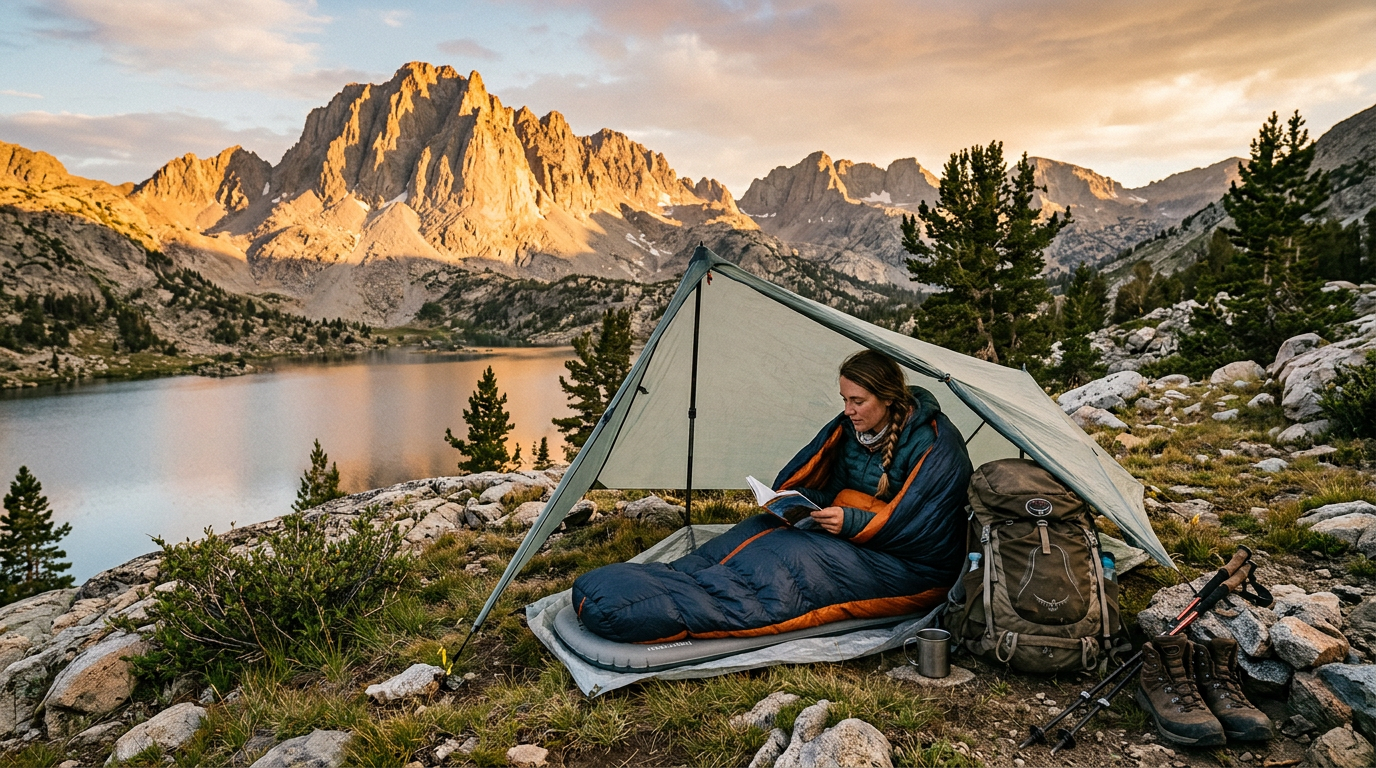
A sleeping bag is a closed insulation system: a shell with a continuous zipper (or zipperless mummy design), a hood, and insulation distributed around your entire body. A quilt is an open insulation system: essentially a topquilt with an attachment system (straps, pad sleeves, or snaps) that secures it to your sleeping pad, relying on the pad's R-value to insulate your back and eliminating the hood in most designs. Some quilts include a footbox (sewn closed at the bottom like a bag), while others are fully open rectangles.
Because quilts omit the back insulation and hood, they typically weigh 20–35% less than an equivalently rated sleeping bag. A 20°F quilt might weigh 18–22 oz, while a 20°F mummy bag runs 24–32 oz. Packed size follows the same pattern: quilts compress into smaller stuff sacks because there's simply less material.
Temperature Ratings: Why Quilts Require More Attention
Both quilts and sleeping bags use EN 13537 or ISO 23537 temperature ratings (comfort, lower limit, extreme), but quilts introduce more user variability. A sleeping bag's rating assumes you're fully enclosed; a quilt's rating assumes you've properly sealed it to your pad with no gaps. If you leave a 2-inch gap along your hip or fail to cinch the neck closure, your effective warmth drops 5–10°F below the rated temperature.
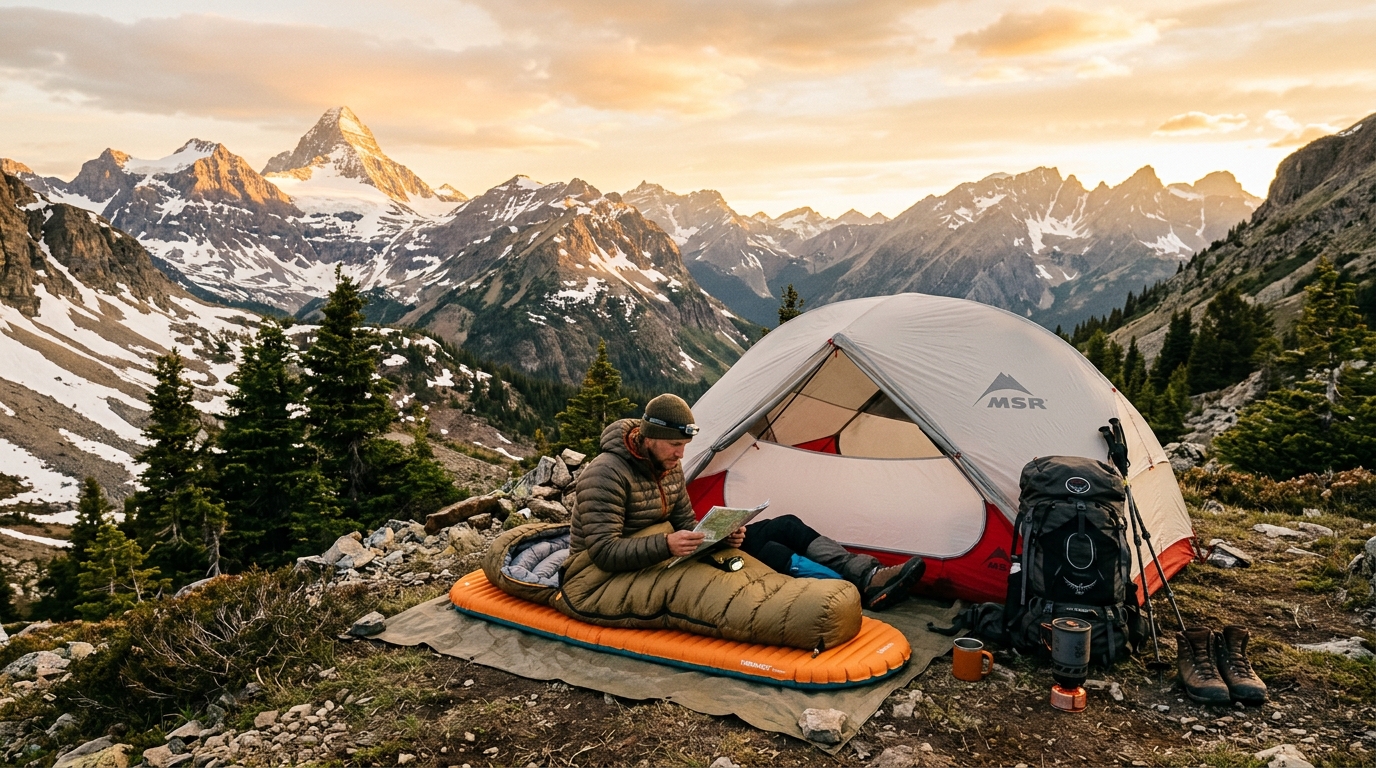
Quilts also assume you're sleeping on a pad with adequate R-value. A 20°F quilt paired with an R-2.0 summer pad will not keep you warm at 20°F—your back will lose heat through conduction. The general rule: pair a quilt with a pad rated for the same season or colder. For three-season use, that means R-3.5 or higher; for winter, R-5.0+. The Therm-a-Rest NeoAir XLite NXT Sleeping Pad Regular, with its R-4.5 rating, is a benchmark example of a high-R-value pad that pairs well with quilts down to 15–20°F.
Specs
Fill Type and Fill Power: Same Considerations, Different Volumes
Both quilts and sleeping bags use either down (measured in fill power: 650, 800, 900+) or synthetic insulation (polyester fibers). Down offers the best warmth-to-weight ratio and compressibility; synthetic insulation retains warmth when wet and costs less. The key difference: because quilts use less total fill, the fill power matters more. A 900-fill quilt might use 12 oz of down to achieve a 20°F rating, while an 800-fill bag uses 16 oz for the same rating. That 4 oz difference compounds when you're chasing ultralight targets.
Hydrophobic down treatments (DWR-coated down clusters) are equally important for both formats, but slightly more critical for quilts because you can't fully seal yourself away from tent condensation or pad moisture. Expect to pay $50–100 more for hydrophobic down in either format.
Attachment Systems: How Quilts Stay Put
Quilts use one of three attachment methods to prevent drafts and keep the insulation in place:
- Pad straps: Elastic or grosgrain straps that loop under your sleeping pad and snap or clip to the quilt's sides. Simple, lightweight (adds ~1 oz), works with any pad. Requires adjustment each night.
- Pad sleeves: A fabric sleeve sewn into the quilt's underside that your pad slides into. More secure, no adjustment needed, but adds 2–3 oz and limits you to pads that fit the sleeve width (typically 20–25 inches).
- Snap/clip hybrid: Combination of snaps along the footbox and adjustable straps at the torso. Offers the most customization but has the steepest learning curve.
Pad straps are the most common and versatile. If you're a restless sleeper or side sleeper who shifts positions frequently, pad sleeves provide better draft protection at the cost of slight weight and pad compatibility.
Fit and Sizing: Quilts Reward Precision
Sleeping bags come in regular (fits up to 6'0"), long (up to 6'6"), and women's-specific cuts (shorter, wider at hips). Quilts use similar length sizing but add width options: narrow (48–52 inches), regular (54–56 inches), and wide (58–60 inches). A too-narrow quilt won't tuck under your sides without pulling; a too-wide quilt adds unnecessary weight.
Measure your sleeping pad width and add 4–6 inches for tuck-under. If your pad is 20 inches wide, a 54-inch regular-width quilt gives you 17 inches of tuck per side—adequate for most back and side sleepers. Stomach sleepers or those who sprawl may want a wide cut.
Ventilation and Temperature Regulation
Quilts excel at ventilation. On a warm night, you can drape a quilt over yourself like a blanket, open the footbox, or unclip one side entirely. Sleeping bags offer limited venting: a two-way zipper you can open from the bottom, or a foot vent. This makes quilts superior for shoulder-season trips where nighttime temps swing 20–30°F, or for warm sleepers who overheat in a sealed bag.
The trade-off: if temps drop unexpectedly, a quilt requires you to actively manage closures (neck cinch, footbox drawcord, side snaps). A sleeping bag just zips shut. For users who wake easily or struggle with fiddly adjustments in the dark, a bag's simplicity is worth the weight penalty.
Durability and Longevity
Sleeping bags and quilts using the same shell fabrics (typically 10D to 20D ripstop nylon) have comparable durability. The difference: quilts have fewer failure points (no zipper to snag or break), but the attachment hardware (snaps, clips, elastic) wears faster than a bag's zipper if you're rough with adjustments. Budget $20–40 every 3–5 years to replace worn straps or snaps on a quilt; budget $50–80 to replace a sleeping bag's zipper if it fails.
Both formats benefit from storage in a large mesh sack (not compressed) to maintain loft. Down loses 10–15% of its loft over 5–7 years regardless of format; synthetic insulation degrades faster (3–5 years before noticeable warmth loss).
Cost Comparison
Quilts cost 10–20% less than equivalently rated sleeping bags from the same manufacturer, reflecting the reduced material. A 20°F down quilt from a cottage brand runs $280–380; a 20°F down mummy bag runs $320–450. Synthetic quilts start around $150; synthetic bags around $180. High-end ultralight quilts (900-fill, sub-20 oz) can exceed $500, but that's still $50–100 less than a comparable ultralight bag.
Match the Gear to Your Trip
Use this decision tree to narrow your choice:
- Summer backpacking (45°F+ lows), you sleep warm, you want minimal weight: 40–50°F quilt, 10–14 oz, pair with an R-2.0+ pad.
- Three-season backpacking (20–40°F lows), you're a back sleeper, weight matters: 20–30°F quilt, 18–24 oz, pair with an R-3.5+ pad like the Therm-a-Rest NeoAir XLite NXT Sleeping Pad Regular.
- Three-season backpacking, you're a side sleeper or move a lot at night: 20–30°F mummy bag, 26–32 oz, draft collar and hood for security.
- Winter camping (0–20°F lows), you prioritize warmth over weight: 0–15°F mummy bag with hood and draft tube, 35–45 oz, pair with an R-5.0+ pad.
- Car camping or casual use, weight doesn't matter: Rectangular sleeping bag, 3–5 lbs, full zipper for easy entry, no need for a quilt's complexity.
If you're unsure, start with a sleeping bag. It's more forgiving and works for a wider range of sleep styles. Once you've logged 10+ nights and understand your sleep temperature and movement patterns, consider a quilt as a second system for weight-focused trips.
Common Mistakes and How to Avoid Them
First-time quilt users often underestimate the learning curve. Expect to spend 5–10 minutes the first few nights adjusting straps, cinching the neck closure, and finding the right tuck. Practice at home before a trip. Second: don't assume a quilt's temperature rating works without a proper pad. A 20°F quilt on an R-1.5 foam pad will leave you cold at 35°F. Third: if you're a stomach sleeper, a quilt will frustrate you—there's no way to seal the sides when you're face-down. Stick with a bag or accept that you'll need to train yourself to sleep on your back.
Maintenance and Care
Both quilts and sleeping bags require the same care: wash in a front-loading machine with down-specific detergent (or mild soap for synthetic), tumble dry low with tennis balls to restore loft, store uncompressed. Quilts dry slightly faster because there's less material. Spot-clean shell stains with a damp cloth rather than washing the entire quilt unless necessary—every wash cycle degrades DWR coatings and stresses seams.
When to Choose a Quilt
- You're a back sleeper or sleep relatively still.
- You prioritize weight and pack size (backpacking, bikepacking, fastpacking).
- You sleep warm or camp in variable conditions where ventilation matters.
- You're willing to invest 2–3 nights learning the attachment system.
- You already own a high-R-value sleeping pad (R-3.5+).
When to Choose a Sleeping Bag
- You're a side sleeper, stomach sleeper, or move frequently at night.
- You sleep cold or camp in consistently cold conditions (winter, high altitude).
- You want foolproof warmth without managing closures or gaps.
- You're new to backpacking and want a simpler system.
- You're car camping or weight isn't a priority.
Frequently Asked Questions
+Can I use a quilt in winter or below-freezing temps?
Yes, but you need a winter-rated quilt (0–15°F), a high-R-value pad (R-5.0+), and excellent technique. Winter quilts include draft collars, longer side baffles, and more fill, which narrows the weight advantage over a bag. Most winter campers prefer mummy bags because the hood and draft tube provide more margin for error when stakes are high. If you do use a winter quilt, practice your attachment system in controlled conditions first—fumbling with snaps at 10°F in the dark is miserable.
+Do quilts work for side sleepers?
They can, but it's harder. Side sleepers create more gaps along the torso and hips as they shift positions. Look for quilts with pad sleeves (not just straps) and wider cuts (56–60 inches) to give you tuck room. Some side sleepers also add a draft collar or neck cinch to prevent heat loss when rolling. If you're a dedicated side sleeper who moves every 20–30 minutes, a mummy bag will be more comfortable and warmer.
+How much does a quilt actually save in pack weight and volume?
For a 20°F down system, expect to save 6–10 oz in weight and 2–3 L in packed volume compared to a mummy bag. That's the difference between a 5 L and 7 L stuff sack—meaningful if you're using a 40–50 L ultralight pack where every liter counts, less impactful in a 65 L expedition pack. The weight savings scale with temperature rating: a 40°F quilt might save only 4 oz over a bag, while a 0°F quilt saves 10–14 oz because the omitted back insulation is thicker.
+Can I convert my sleeping bag into a quilt?
Technically yes, by removing the zipper and adding pad attachment points, but it's not worth the effort or cost unless you're handy with a sewing machine and have a bag you're willing to modify. You'll also lose resale value. If you want to try a quilt, buy a budget synthetic quilt ($150–200) for a few trips before investing in a premium down model. Some manufacturers offer quilt-bag hybrids (zippered quilts that can close into a bag shape) if you want versatility, though they weigh more than a dedicated quilt.
+What's the best way to test whether a quilt will work for me?
Borrow one from a friend or rent from an outdoor gear library if available. If that's not an option, try this at home: sleep under a comforter without tucking it in, and use binder clips to attach it to your mattress edges to simulate pad straps. If you wake up with the comforter bunched or feel drafts along your neck and sides, you'll likely struggle with a quilt in the field. If you stay covered and comfortable, a quilt is worth trying. Also assess your sleeping position: if you naturally stay on your back 70%+ of the night, quilts work well. If you rotate through all positions, a bag is safer.
+Are there any situations where a quilt is objectively worse than a sleeping bag?
Yes: winter camping below 15°F, high-altitude mountaineering, or any environment where you can't afford a warmth failure. Quilts require active management (cinching closures, checking for gaps) that's harder when you're exhausted, hypoxic, or dealing with extreme cold. A mummy bag's sealed hood and draft collar provide passive warmth that doesn't depend on user skill. Quilts are also worse for beginners who haven't yet learned their sleep temperature or movement patterns—a bag's forgiveness is worth the weight until you have that data.