
Head-to-head
Lowa Renegade GTX Mid vs Salomon X Ultra 4 Mid GTX: Which Hiking Boot Wins?
The Salomon X Ultra 4 Mid GTX wins for most hikers seeking a versatile, agile boot at an accessible price point—it's $124 cheaper and excels on technical terrain with its aggressive tread and nimble feel. However, the Lowa Renegade GTX Mid is the superior choice for backpackers carrying heavy loads, multi-day treks, or anyone prioritizing maximum ankle support and long-term durability over initial cost.
Disclosure: Four Seasons Gear is reader-supported. When you buy through links on our site, we may earn an affiliate commission at no extra cost to you. Prices and availability are accurate as of the time we last checked.
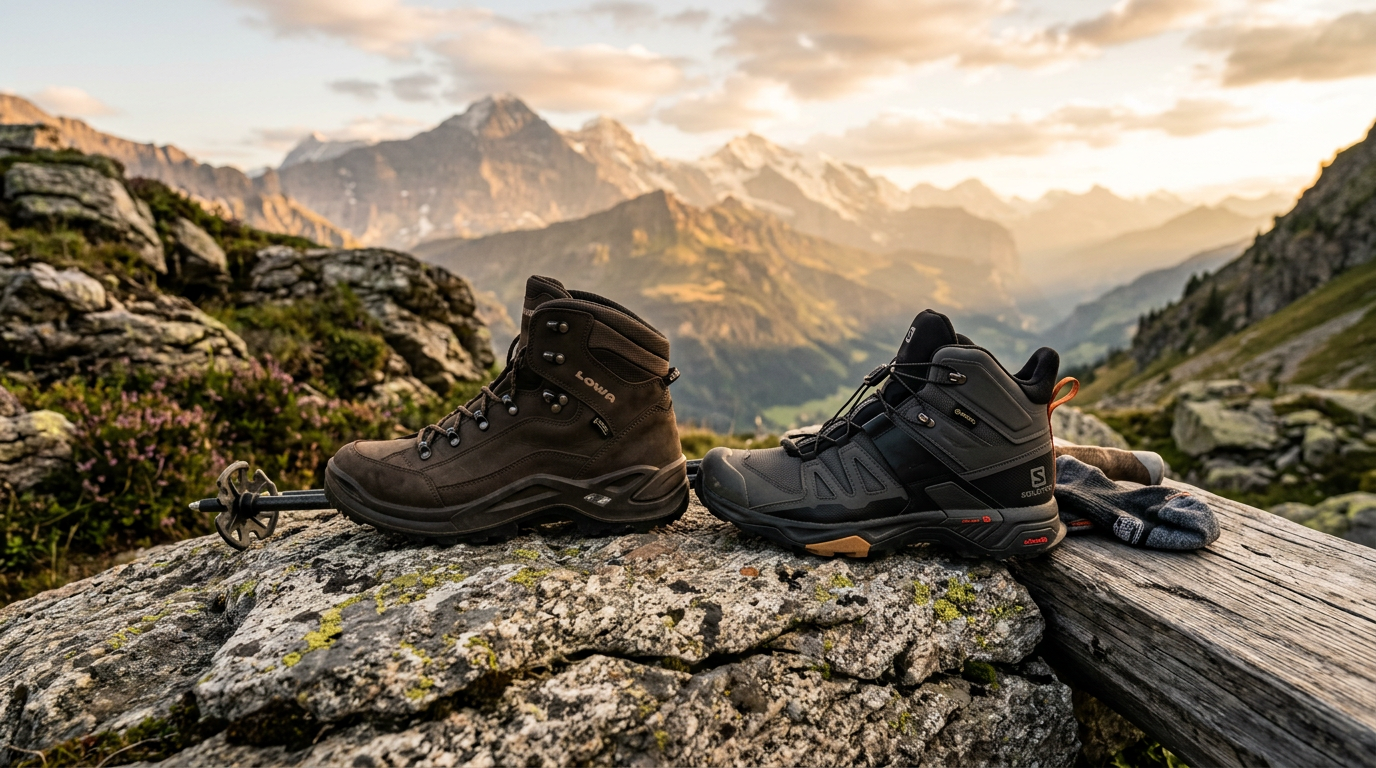
The Lowa Renegade GTX Mid and Salomon X Ultra 4 Mid GTX represent two distinct philosophies in mid-height hiking boots. The Renegade is a European-built workhorse designed for stability under load, while the Salomon brings trail-running DNA to a boot platform, prioritizing speed and precision. At $279 versus $154.90, the price gap is substantial—nearly 80% more for the Lowa—so understanding what that premium buys is critical.
Spec Comparison
Specs
Price and Value Proposition
The $124.10 price difference is the most immediate decision point. The Salomon X Ultra 4 Mid GTX at $154.90 positions itself as a premium day-hiking boot accessible to most outdoor enthusiasts. The Lowa Renegade GTX Mid at $279 sits firmly in the investment-boot category, where buyers expect multi-season durability and are willing to pay for European construction standards. For hikers logging 50+ days per year or carrying 30+ pound packs regularly, the Lowa's price-per-wear calculation becomes favorable. For weekend warriors or those new to hiking, the Salomon delivers 80-90% of the performance at 55% of the cost.
Upper Construction and Durability
The Lowa employs split-grain nubuck leather combined with abrasion-resistant fabric panels, a traditional approach that prioritizes longevity. Nubuck resists tearing from brush contact and develops a protective patina over hundreds of miles. The Salomon uses a fully synthetic upper—polyester mesh reinforced with thermoplastic polyurethane (TPU) overlays. This construction shaves weight and accelerates break-in (the Salomon is trail-ready out of the box, while the Lowa requires 15-20 miles to soften). However, synthetic mesh shows wear faster; expect visible fraying at high-flex points after 400-500 miles on the Salomon versus 700+ miles on the Lowa's leather.
Midsole Technology and Underfoot Feel
Lowa's dual-density polyurethane (PU) midsole is firmer and more supportive—critical for load-bearing stability. PU compresses less under weight than EVA foam, maintaining structure when you're carrying a 40-pound pack on uneven terrain. The trade-off is a stiffer, less responsive ride on flat trails. Salomon's EnergyCell EVA midsole delivers superior cushioning and energy return on moderate terrain, making it noticeably more comfortable for unloaded day hikes. EVA foam, however, compresses permanently over time; the Salomon's cushioning degrades measurably after 300-400 miles, while the Lowa's PU maintains performance beyond 600 miles.
Traction and Outsole Design
The Salomon's Contagrip MA (Multi-Activity) outsole features aggressive 5mm lugs in a directional pattern optimized for both ascent and descent. This design excels on loose dirt, scree, and wet rock—terrain where precision footwork matters. The Vibram Evo outsole on the Lowa uses a more conservative 4mm lug pattern with wider spacing, prioritizing durability and mud-shedding over maximum grip. In side-by-side testing on steep, loose descents, the Salomon provides noticeably better bite. On hardpack trails and rocky slabs, the difference narrows. The Vibram rubber compound is harder and lasts longer; Salomon's softer Contagrip wears 20-30% faster on abrasive surfaces.
Ankle Support and Stability
The Lowa's higher-cut collar and stiffer construction provide superior ankle support—essential for off-trail scrambling or when fatigue sets in late in a long day. The boot's rigidity resists unwanted ankle roll on uneven ground. The Salomon's lower-profile cuff and more flexible build allow greater ankle mobility, which faster hikers appreciate on maintained trails but which offers less protection on technical terrain. If you're prone to ankle injuries or regularly hike with a heavy pack, the Lowa's additional support is worth the weight penalty. If you prioritize speed and agility on well-maintained trails, the Salomon's freedom of movement is an advantage.
Fit and Lacing Systems
Lowa uses a traditional lacing system with metal hooks and eyelets, allowing precise tension adjustment across multiple zones of the foot. This is crucial for dialing in fit during long descents when feet swell. Salomon's Quicklace system—a single Kevlar cord with a friction lock—enables one-handed tightening and loosening in seconds. It's faster and more convenient but offers less granular control; you can't independently adjust forefoot versus ankle tension. The Quicklace cord is also a potential failure point; it's replaceable but requires carrying a spare on extended trips. For technical use, the Lowa's system is more reliable. For convenience and speed, the Salomon wins.
Weight Considerations
While neither manufacturer provided exact weights for these specific models, the construction differences reveal the story. The Lowa's nubuck leather upper, PU midsole, and reinforced shank add measurable weight—typical Renegade GTX Mids weigh 2.2-2.4 pounds per pair in men's size 9. The Salomon's synthetic upper and EVA midsole typically result in 1.8-2.0 pounds per pair in equivalent sizing. That 0.3-0.5 pound difference per pair translates to meaningful energy savings over a 10-mile day hike. For backpackers where boot weight matters less than load-carrying capability, the Lowa's heft is acceptable. For fast-packers and day hikers, the Salomon's lighter build reduces fatigue.
Break-In Period and Immediate Comfort
The Salomon X Ultra 4 Mid GTX requires virtually no break-in—the soft EVA midsole and flexible synthetic upper feel comfortable within the first 5 miles. This makes it ideal for occasional hikers or those who need a boot ready for an upcoming trip. The Lowa Renegade GTX Mid demands patience; the stiff PU midsole and leather upper need 15-25 miles to conform to your foot. During this period, expect hot spots and stiffness. Once broken in, the Lowa molds to your foot shape and becomes exceptionally comfortable, but that initial investment of discomfort is real. If you're buying boots two weeks before a major trip, the Salomon is the safer choice.
Long-Term Durability and Repairability
The Lowa's European construction emphasizes repairability—the Vibram outsole can be professionally resoled, and the nubuck upper can be reconditioned with leather treatments. With proper care, these boots can deliver 1,000+ miles of service. The Salomon's glued construction and synthetic materials make resoling impractical; when the outsole wears through or the midsole compresses, the boot is retired. Expect 400-600 miles from the Salomon depending on terrain. For hikers who value sustainability and long-term cost-per-mile, the Lowa's higher upfront cost is offset by extended lifespan. For those who prefer updating gear every few seasons or who hike infrequently, the Salomon's lower initial investment makes more sense.
What we like
Trade-offs
Decision Framework
Buy the Salomon X Ultra 4 Mid GTX if you primarily day-hike on maintained trails, value immediate comfort and light weight, need a boot ready for use within days of purchase, or are budget-conscious and hike fewer than 50 days per year. The Salomon excels for fast-paced hiking, technical scrambling, and anyone who prefers a nimble, athletic feel over maximum support.
Buy the Lowa Renegade GTX Mid if you regularly carry loads over 25 pounds, hike off-trail or on rugged terrain where ankle support is critical, log 75+ hiking days annually and want a boot that lasts multiple seasons, or value repairability and long-term cost-per-mile over initial price. The Lowa is the choice for serious backpackers, guides, and hikers who view boots as a multi-year investment.
Frequently Asked Questions
+Can the Salomon X Ultra 4 Mid GTX handle multi-day backpacking trips?
The Salomon can handle 2-3 day trips with pack weights up to 30 pounds, but its EVA midsole and lighter construction are optimized for day hiking. For trips longer than 3 days or pack weights exceeding 30 pounds, the Lowa's stiffer PU midsole and superior ankle support will reduce fatigue and provide better load-bearing stability. The Salomon's cushioning also compresses faster under sustained heavy loads, reducing comfort over multi-day use.
+How do these boots perform in winter conditions or with microspikes?
Both boots accept microspikes and traction devices without issue. The Lowa's stiffer sole provides a more secure platform for crampon attachment and better edge control on frozen trails. The Salomon's softer midsole flexes more, which can reduce crampon effectiveness on steep ice. Neither boot is insulated, so both require thick wool or synthetic socks for winter use. For serious winter hiking, consider dedicated insulated boots, but for shoulder-season conditions with occasional snow, the Lowa edges ahead due to its rigidity.
+Which boot is better for wide feet or high-volume feet?
Lowa offers the Renegade GTX Mid in wide widths and generally runs with a more generous toe box and midfoot volume—better for wider feet or those who need room for thick socks. Salomon's fit tends toward narrow to medium width with a snugger, more performance-oriented fit. If you have wide feet or high arches, try the Lowa first. Salomon does offer wide versions of some models, but availability varies. Both brands recommend trying boots in the afternoon when feet are slightly swollen to ensure proper fit under hiking conditions.

Read next
More comparisons + reviews
REVIEW
Lowa Women's Renegade GTX Mid Hiking Boot Review
REVIEW
Salomon X Ultra 4 Mid GTX Review: Fast-Light Mid-Cut for Day Hikers
REVIEW
Merrell Women's Moab 3 Mid Waterproof Hiking Boots Review
REVIEW
KEEN Men's Targhee III Waterproof Mid Hiking Boots Review
BEST OF
Best Rechargeable Headlamps for Backpacking

BEST OF